Who Will Turn the Tables in 2012?

On this Christmas Day, about family, full of the vision of angels and infants, stars and Maggi, and the glitter of decorated trees—on this day Americans have much to consider.  The vacated halls of our national spaces—numbingly quiet after the vitriol of previous months of head-banging—lie quiet and waiting for the dawn of a new year.

It was into such spaces that Jesus was born – the infant who would become the man who overturned the tables of commerce that invaded the temples.  His rage, born of righteous indignation, was hardly a bleep on the screen of the powerful.  Had it occurred today the story would only make the local, petty-crime reports.  “Deranged Dude Goes Beserk”…the rush of money-changing undisturbed, the level of social penetration intensified and engrained in our mental frame of reference:  How much is it worth?—the National Credo.

As Jesus later reflected, new wine requires a new skin to contain it – allow for its full character to evolve, to come into its robust, unique flavor.  I’ve always enjoyed the few stories about Jesus that have survived through the ages.  As a child, I really “got” his message.  I think he would have loved and been a part of the local food movement, biking and alternative energy sector.  He would have worn American-made jeans, drunk fair-trade coffee with his friends.

Jesus would cut to the chase in America.  Per person, Americans consume more energy and goods than any other people on Earth, contributing most of the CO2 that is causing climate destabilization.  Since the poorest people are and will continue to suffer the impacts (drought, floods, disease, and starvation) Jesus would be “in our faces” about our reckless behavior.

But he would have had the same challenge as the nascent sustainability movement:  how do you get the word out to 9 billion people in time to divert a global disaster?

I am sure that Jesus would not have been politically correct nor would he engage in “people-pleasing.”

No, he would march right into the House and Senate, upturn a few tables and shout to the Heavens, “What on Earth do your think you are doing?” He would clear the air and the truth would ring across the Capitol.  For a brief moment, things would go in the right direction by just creating a pause in the fury.  Boy, do we need him now!

I wonder who will turn the tables in 2012?

The Gift of Our Elders

At 66 years of age I am no spring chicken! But I have a father who is 94 and still going strong. Amazing man who last night, over our candle-lit, mid-week dinner conversation, exclaimed that what his generation accomplished in the 1940s was amazing.  “I wish we had a vision like that again.”

Dad is a World War II veteran, B-29 bomber pilot and retired Air Force career officer.  My sisters and I tromped around America for 20 years from military base to military base.  Circumstances led to my move to Pensacola, Florida in 2008 to live near Dad, to help when needed, and to be closer to my own son and daughter who live in the Southeast now.  Sometimes I get caught up in the cares of the day and it is not until the next morning (I am a veteran early riser) when my thoughts are clearer, that I realize the gems of wisdom that roll forth from Dad as he looks back on nearly 100 years of life!  Think of that…nearly a century of personal experience.

Two things he shared last night as we discussed current seemingly intractable problems in America:  fossil-fuel cars, and the Congressional stale-mate over, well, everything it seems.  We simply can’t agree on one important step for millions of Americans.  In the middle of that discussion he remarked that during WWII there was a national vision of where we were going and that together we would accomplish something for the whole world.  That the world of nations looked to us to make things right, to defeat a terrible wave of human to human violence.  And we did.

The second thing Dad said, almost in passing, was that “you just can’t change American’s love affair with their cars.”  He described riding in a big, comfortable Buick that same day with his medical service to his doctor.  ” I remember the model T Ford.  When everyone could afford to get one… it was our greatest joy.”  He grew up on a small farm in eastern Tennessee and recalled trips my aunts and uncles and his family made to Asheville, NC (60 miles on a narrow two-lane, through hair pin mountain roads). Imagine going from horses to a gas-powered vehicle – the transforming impact of that one invention.  The model T opened up so many possibilities and connected people, places, and thus exchange of ideas and goods and services.

This morning as I was writing in my journal, a more than 50 year habit, I realized two key things that might offer us “younger” folks some direction:  1) a national vision everyone subscribes to; 2) an invention that changes the whole paradigm of our lives.  Perhaps if we can discern what these two factors might be in 2012, we could reinvent ourselves even as my father’s generation did so many years ago.

What dream are we chasing as a nation?  What does the world look to us to do?  What could transform our daily lives and rocket us into the next new big vision for America?

[Dad described the city of Chicago’s fleet of hydrogen cars.}

COP17 Results

The United Nations Climate Change Conference in Durban, South Africa ended on December 11, 2011. The conference  included the seventeenth session of the Conference of the Parties (COP 17) to the UN Framework Convention on Climate Change (UNFCCC) and the seventh meeting of the Conference of the Parties serving as the Meeting of Parties to the Kyoto Protocol (CMP 7).

The meetings resulted in the adoption of 19 COP decisions and 17 CMP decisions and the approval of a number of conclusions by the subsidiary bodies. These outcomes cover a wide range of topics, notably the establishment of a second commitment period under the Kyoto Protocol, a decision on long-term cooperative action under the Convention, the launch of a new process towards an agreed outcome with legal force applicable to all parties to the Convention, and the  operationalization of the Green Climate Fund.

Results of COP17 2011     On the first couple of pages you can read a good summary of the history of climate change negotiations since 1992 among the Earth’s countries and leaders.  Its worth reading to refresh the context for the current negotiations at COP17.  See below for articles with different points of view regarding the “success” of the conference:

The National Post (Canada)
The Sacramento Bee (U.S.)

World News service for newspapers around the world on results of COP17


Why don’t we act?

Session 7 of “Ecology, Ethics and Interdependence”, the Mind and Life XXIII conference with His Holiness the Dalai Lama in dialogue with contemplative scholars, activists and ecological scientists who discuss the interconnection between individual choices and environmental consequences. The conference was held at His Holiness’s office in Dharamsala, India, from October 17-21, 2011.

The Future World of Our Grandchildren

After listening to four of five video recordings of the Ecology, Ethics and Interdependence Conference with the Dalai Lama at the Mind and Life Institute, I decided to include it on this COP17 post due to its extreme relevance to our future on planet Earth.  These videos are each about 2hrs long.  So it requires thoughtful listening, yet I feel that the hours I have spent considering the issues and comments on each topic have informed me on a deeper level of all that is at stake and all the promise that the future could hold for our children and grandchildren to come – long after we have left our legacy behaviors and decisions (our non-action and non-decisions) behind for them to cherish and honor or despise and dishonor.  Why should we care?  What does not caring tell about us?  Who’s culpable?  The fourth video is focused on ethics which evoked some of the most interesting reflections from the Dalai Lama on how current generations create the world of future generations much like our world was handed to us by our grandparents and parents.

This podcast includes a presentation by Diana Liverman of the timescale of earth system function up to and after 1950, tracing not just temperature and population (the most common graphs) but use of water, fertilizers, paper, cars, loss of the ozone layer, deforestation of temperate and tropical forests, overfishing, biodiversity and other important indicators.  They discuss the period of the Great Acceleration (1950 being watermark for its beginning.)

The speaker explains what scientists mean when they use the term, Earth Systems.  Carbon Cycle, Water Cycle, and Air Circulation to the Dalai Lama. These is a great section of the video. ***Start at about 35 minutes for this section of the podcast.

~~~~~~

After my last post on the COP17 Climate Talks in Durban, South Africa I realized the links I posted take you, the reader, into a maze of reports and data sites, agendas, and very dense organizational structure.  I apologize for that having just spent time navigating (barely) through the site.  However if you go to the OneWorld blog  you can find up to date news and videos on the floor of the convention.  AFP.com International news for today describes how the whole political scene is in turmoil as delegations of developing countries (“Basic nations”) -the Group of 77 – are insisting that the Kyoto gas emission targets from the previous sessions be maintained to as late as 2020.  Among the 77 is China, now the largest emitter of CO2 on the planet.  Some delegates believe strongly that to not further curb emissions for another 8 years will bode disaster to earth’s operating systems.  In the original Kyoto agreements (1997), developed nations agreed that they have contributed the most to climate change through CO2 emissions and they assumed greater responsibility by agreeing to not only cut emissions but to provide the resources and expertise for developing countries to cope with the worst changes such as flooding, drought, and loss of food productivity due to warming of the planet.  Read the AFP article here.

For ongoing coverage of events and people this is also an excellent site:  iiSD RS @ Durban Climate Change Conference.

COP17 – Climate Conference

The United Nations Climate Change Conference, Durban 2011, will bring together representatives of the world’s governments, international organizations and civil society. The discussions will seek to advance, in a balanced fashion, the implementation of the Convention and the Kyoto Protocol, as well as the Bali Action Plan, agreed at COP 13 in 2007, and the Cancun Agreements, reached at COP 16 last December.

Go to this site throughout the next ten days to keep track of progress toward these goals and to use this information to contact your congressional representatives and local government for energy and economic steps that would contribute toward reduction in greenhouse gases (GHG).  We have an exceptional opportunity to make better decisions today but they are complex, pitting national goals seemingly against one another (jobs versus alternatives to fossil fuels i.e. oil sands, nuclear power, “clean” coal.)

Go to Yes! Magazine to keep a vision of what’s possible and what is already here in new technologies, new ways of knowing, and fresh ideas for sustaining communities with robust local economies.  Improve your ecological knowledge by going to Ecoliteracy Institute  and Small Planet Institute and New Economics Institute.

The Pulitzer Project

Last month I set out to read one Pulitzer Prize (PP) and one National Book Award  (NBA) each month.  My habitual reading has not included the books deemed the best writing in its genre.  Since it is common advice by successful writers to read the best to improve one’s own writing,  I began with fiction hoping to learn something and more, to enjoy reading great works.

November I read A Visit from the Goon Squad by Jennifer Egan (2011 PP fiction)  and Lord of Misrule by Jaimy Gordon (2010 NBA.)  For December I will read Tinkers by Paul Harding (2010 PP fiction winner) and Let the Great World Spin by Colum McCann (2009 NBA.)

Check back this next week for my experience reading Egan and Gordon’s novels. I will create a separate page for the Pulitzer Prize and for the National Book Award discussions.  If you have read any of these books please leave me your impressions, thoughts, and reactions to my reviews.

One thing:  the first two books jolted me from my usual reading expectations—each was very hard to read.  A Visit from the Goon Squad challenged my resolve to carry out the project.  Lord of Misrule did, too, but for different reasons.  I realized its similarity to Mark Twain’s stories that plop the reader into a world, time and characters without an instruction manual.  A Visit from the Goon Squad brings particularities about our culture (digital divide among generations, fractured nature of experience) and historical period into focus.  Lord of Misrule could be just about anytime in horse racing.

The uphill experience of reading the first two novels in itself taught me that true creativity is disruptive by its very nature.  John Steinbeck asserted that writers should strive in their writing to uplift the human spirit.  I wasn’t sure that these books did that for me.  I will have to reread them.

A Turkey Story

Last night PBS aired a remarkable documentary: “My Life As a Turkey.”

From Facebook Page for PBS Nature:  About the film: Based on the true story of writer and naturalist Joe Hutto, portrayed by wildlife photographer Jeff Palmer, this film chronicles Hutto’s remarkable experience of imprinting wild turkey eggs and raising the hatchlings to adulthood. Deep in the wilds of Florida, Hutto spent each day out and about as a “wild turkey” with his family of chicks — until the day came when he had to let his children grow up and go off on their own. As it turned out, this was harder than he ever imagined. Watch a preview.

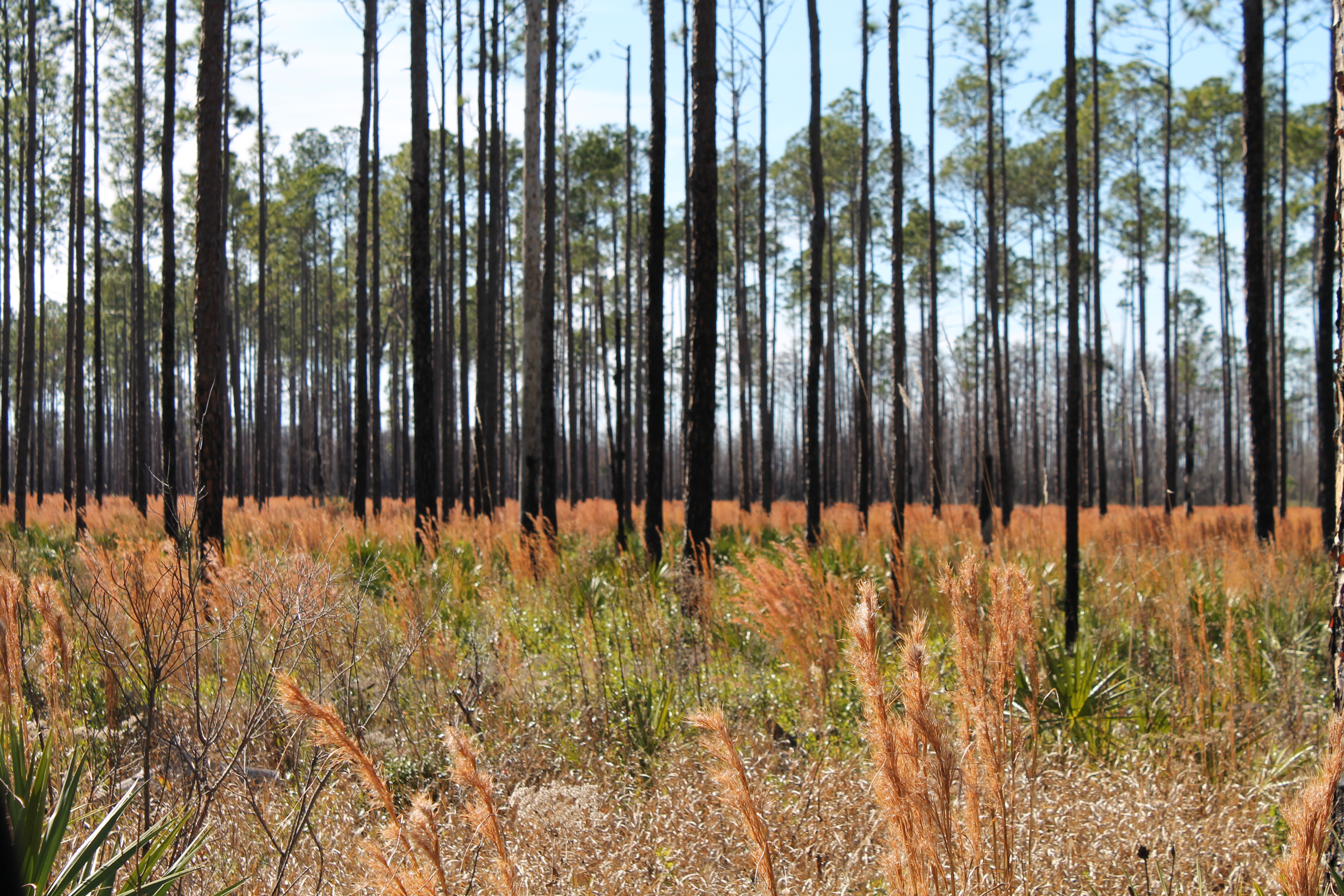
For all of us Floridians, the scenes from hammock communities and the rich biodiversity supported by that habitat should be a reminder of our roots! One of the best books about Florida habitats is Priceless Florida by Ellie Whitney, D. Bruce Means, and Anne Rudloe. On page 86 it shows readers where they can observe temperate hammock communities. For Pensacoleans, Eglin Air Force Base has extensive hammock habitat, camping and hiking.

Go here to learn more about Joe Hutto’s book, Illumination in the Flatwoods. It is next on my reading list.

On Imprinting: Whose Your Mama?, PBS Nature

The Camellia Blossoms in Pensacola

Pensacola is home to America’s oldest Camellia Club, founded in 1937. I had the rare privilege of listening to Gordon Eade on Friday afternoon on the campus of University of West Florida. Gordon is a retired UWF faculty member and active in the Pensacola Camellia Club. In fact as we walked around the UWF Camellia Garden (established in 2007) he told me story after story of the plant’s namesake and showed me three varieties that he himself cultivated.

These photos were taken by moi last winter at UWF before I knew anything about the garden or the club.  I just love the UWF campus—festooned with giant oaks with trains of silver moss above our heads as we walk to the office or to class.  Azaleas, crapemyrtle and of course, camellias make me joyful no matter the cares of the day….