Where American Democray Flows

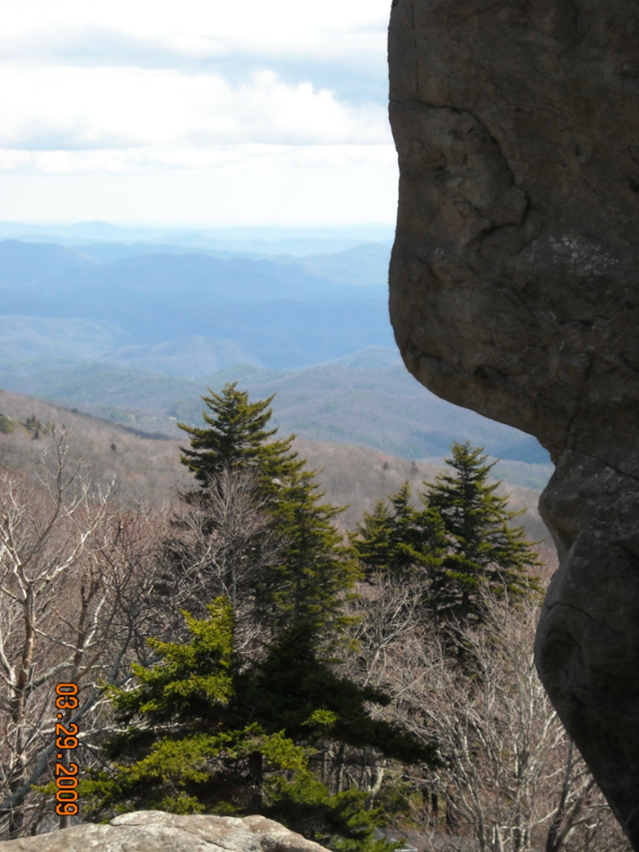
Looking deeply over the oldest mountain chain in America: the Appalachians, heart of America. Photo by Susan L. Feathers

There is a quiescient American life rarely visible to the world at large. It plays out in homes, neighborhoods and small towns and cities over this vast country. We value our family life, the landscapes that make us who we are, and the pulse of democracy that beats in our chest like a second heart. Afterall, we have committed our lives and futures to a grand experiment in the world as it were: that all people are equal in their right to self-determination and self-governing by majority. A government for most of the people.

Over the last 247 years, we’ve more or less kept democracy working. It’s not for the faint of heart. Everyone of voting age has to strive year to year to protect its fragile nature which by and large depends on the character of the people we elect. Yet how curious that this essential element of leadership in a democratic society is rarely examined and may even be ignored when outright unlawfulness is proven in courts of law. We elect crooks and schemers.

It is in the home, the extended family, the church, the schools and universities and in civic clubs and convergences in public spaces where character is discussed, defined, and bulwarked among us. Children learn by observation, through the influence of elders and friends and the public institutions such as libraries and public spaces where community celebrations and historical remembrances take place regularly when and where we renew our devotion to democratic principles. This local democratic practice is like a heart pumping blood through the body politic, removing harmful substances and reoxygenating democratic life. It must be continously reinvigorated among all of us.

I recall fondly how my family of origin discussed the affairs of our government over a meal, taught and retold historical events chronicalling the country’s continuous work to keep democracy healthy and relevant to the Time. In school we were taught basic civics so that all of us knew how our government works. Much of this essential work of democracy has nearly disappeared like an ephermeral stream appearing only where individuals make efforts to revive it.

Yet, I know that stream, that current of American life, runs close to the surface and only requires a quorum of citizens working together in their everyday lives to make it rush again across this land, a bright current against darkened skies.

National Constitution Center – The NCC regularly sponsors zoom educational sessions about American history and constitutional law and lore. Highly recommend this site for contemporary topics that challenge us today. (See video to the right from a recent discussion by two historians about partisanship during Jefferson/Adams govenment, Sedition Acts in particular.)

iCivics.org

The Founding Fathers and the Politics of Character

PBS Interview with Jill Long Thompson, former Congresswoman from Indiana.

Keep Earth in Mind

In such difficult times with so much to hold our attention, let us not forget that our lives utterly depend on the well functioning of ecosystems across the world. Time is of the essence to stop rising temperatures in the oceans and consequently the atmosphere.

Dessication is evident everywhere even as flooding from heavy rains (a consequence of water vapor caused by heat), has taken out crops that the world depends upon and destroyed the lives of so many innocent people swept away in floods or buried in mud slides.

This July scientists recorded the highest average annual temperature rise since recorded history and most probably millenia of Earth’s history. Yet, it does not get our attention. Sea ice is melting, changing the Gulf Stream current, pushing it closer to the Atlantic coastline of America and transferring heat to cities all along the coastline. What does it mean for humanity? Europe depends on the Gulf Stream to heat the atmosphere during very cold winters. Will places which have been inhabited for thousands of years become unsuitable for human habitation? Places like London, Edinburgh, Paris, Madrid?

These are not just projections. We see the changes happening right now before our eyes. I am in Virginia Beach where temps have been in the 80s F when they should be in the 50-60s. I bet you have seen changes in your part of the world.

Temperature spike in 2023.

While we work and pray for peaceful resolutions to human conflicts here and abroad, let us be working simultaneously to stop investment in fossil fuel production and development. In the U.S. during 2021 and 2022, fossil fuel investments have more than doubled. It is a kind of insanity with greed at its roots and on the individual level a crass disregard for people and our kin.

Belief that super wealth can protect a few ultra rich human beings, think again. If you breathe, you will be affected. We are all in this together and we’ll all rise out of it together or not at all. Do eveything you can to reduce your cabon footprint but mostly get on the phone or show up at the offices of banks and congressional reps and demand action now to stop the insane grab for riches.

Here in the U.S. we must not elect climate deniers who spread misinformation nor should we elect traitors who still oppose the peaceful transfer of power and wish to destroy democratic institutions.

We have arrived at a cruicible in which everything that could go wrong has gone wrong. Pick your battle and jump to the fore. Call it what it is: sins against humanity and the Creation itself. On which side will you stand?

Massive changes in ecosystems recorded in deep water lakes in Canada.

Photo by Susan Feathers: Sonoran Desert near Catalina Mts. Tucson, Arizona.

War and Great Leadership During

You never know when a great leader may emerge among us but war brings that process along faster than at other times in history. It may seem an obvious statement but as I have observed President Joe Biden over the last week, I am convinced that he has risen to the needs of this moment in world history and in the political life of our country.

Photo by Susan Feathers

It could have gone many other ways, you know. We could have equilibrated on how to respond to the attack on Israel, even blamed them as some have done these last two weeks. Not Joe. He declared support for Israel to defend itself and the right to have a place on Earth that is theirs. But, he put larger concerns alongside that statement, reminding Israel to not make the mistake the U.S. did after 911 letting our deep sorrow and outrage at the tragic and loss of life as we all watched the twin towers implode and crumble. All those lives lost all those families and communities asunder. That is what Israel experienced and is continuing to experience as their family members and citizens are being held hostage (and Americans). The violations of Hamas in committing atrocities not seen in modern times, on babies, pregnant women, old people and youth. This is trauma with a life of its own. Intergeneration trauma that works its terrible consequences in the bodies and minds of survivors for decades or more.

I recall President George W. Bush dressed in fatigues on a warship declaring “job done” so irrationally and then the brutal “shock and awe” campaign on the people of Afghanistan and later Iraq. We never found any weapons of mass destruction. How we mistreated hostages at Guantanamo Bay prison… These reactions were the result of rage and anger and the feeling of being justified: an eye for an eye, “making the whole world blind” as Mahatmas Ghandi declared when the Hindu and Muslim in India raged against each other after the long British colonization and repression. Yes, we’ve all indulged our need for revenge but now, in a world in conflict and with fascist movements and leaders around the world pitted against democracies, Joe Biden cleared the air. Democracies must come together to defend freedom and self-determination. Biden reminded Americans of a higher purpose that while flawed, America is the country the world looks to when democracies are at risk. He talked to Americans about the need to end the divisions among us – without denigrating any party. He is showing restraint and calling us to respond to a higher calling, to remember who we are.

Clarity, compasssion, wise policy, practical direction – these are the hallmarks of Biden’s leadership in the face of what potentilly could erupt into a broader and complex multistate war. He reiterated this, repeating the caution. Strong leadership when needed most.

We hear about Biden’s age. Well, he demonstrated the only real tangible sign of his age: wisdom. I am so glad Joe Biden is in the leadership seat of our nation at this perilous time

Biden’s Statement on Hamas and Putin

For an astute analysis of the current moment, with an historian’s eye on global political relations, here is Heather Cox Richardson’s daily Letter to Americans. I also recommend her new book: Democracy Awakening.

10-27-23 Update: I am posting a suggested interview on CSPAN with Aaron David Miller for a indepth discussion of where the conflict may or could go from here. Very informative discussion. Thanks to wordwhit for the recommendation.

11=01=23 from today’s Letter to Americans by Heather Cox Richardson with this reference to the discussion. UpdateVox history of “How We Got Here” referring to the history of Palestine and Jewish people. I found this expanding as it shows the long history of how Palestine has been the subject of varying forces with their own intents, starting with Great Britain.

New Book for Hotter Times

The confluence of the climate emergency with the weakening of democracies across the world complicates a coordinated response by the world community to secure our future. Perhaps an outright failure may occur with irrevocable alteration of biological systems such that human life cannot be sustained.

Democracy in a Hotter Time examines the critical need for well functioning democracies to meet the challenges of climate change. It draws upon the wisdom of visionaries in science, politics, economy, and democracy who believe that democracy (dependent upon the people to decide what must be done rather than a dictator who acts from self-interest to stay in power) is key to responding to the climate emergency.

David Orr is the editor of the book and it was his participation that prompted me to read it. David is a leader in sustainable practices on college campuses and led that movement from his position at Oberlin College. His belief is that ecology is not just for science majors but embodies prinicples that are valid in all areas of our lives. His little book that asks What is Education For? made a profound impact on me as a public school science teacher and community college instructor of environmental science.

I am currently reading Democracy in a Hotter Time and so far it offers a way forward that has been missing for me in other books about responding to the climate crisis, specifically it brings attention to the fact that our response has to be much broader than addressing the end result – a safer environment. The contributors call us to consider justice, values and policies – how we live together here and abroad. They question many practices and beliefs that have heretofore defined America. If you have time to read Orr’s article linked above, you will understand this new and more comprehensive approach to theproblems we face together.

Read the Kirkus Review of the book here.

In Spite of Republicans, the Wheels of Democray Turn On, But for How Long?

Listening to Anthony Bliken’s address at the John’s Hopkins School of Advanced International Studies gave me an insight into the critical work of the Biden Administration across the world.

This is rarely seen or heard in the daily cacophony of news resulting from the very bad and sick behavior of a person who has duped Republicans and millions of Americans into following his authoritarian ideas. Rump is dangerous. Everyone of us Americans needs to understand that our current political moment is profound.

This moment mean everything that we hold dear in a democracy: the rule of law, a Constitution that we abide by, civil debate and compromise for the common good (to harken Robert Reich’s definition of the common good).

Instead of being self-seeking individuals who happen to live within the same political and geographic boundaries, we are a group of people with responsibilities to one another.” – Reich from The Common Good,

I hope you will take time to listen to this address to learn how democracies work in the world and why the U.S. democracy is so important to other countries as well as our own.

No we are not perfect by any means but the critical point is that we must strive to fulfill the promise of our founding principle that all people are created equal and are indowed with inalienable rights.

In this address, I hear Secretary Blinken use the term “humility” describing how America is forming alliances with countries that we are responsible for hurting from our past wars and policies. The point is that we are striving to understand and respond to the great principles and values that our forefathers embedded in the Constitution.

Finally, I think the remarks of Mitt Romney, Senator, upon his announcement that he will not run again, are cogent to this post.

UPDATED: Doppleganger – This new book by Naomi Kline is a must read for understanding how AI and social media have created false realities through which, with no discernment, citizens can easily be duped. The book emanated from Naomi’s experience being mistaken for Naomi Wolfe. Folks they look alike but their political and personal values couldn’t be more apart. I have not read this book yet as it was just released, but I am basing my comments here from listening to an extensive interview with Naomi on Democracy Now.

UpDate: Great Center for the Constitution Celebration of the 1st Amendment:

National Constitution Center Free Speech Summit with Salman Rushdie

Deep Democracy Welling

In a joint statement on September 7, Presidential Centers around the nation published a statement and a warning to strengthen our democracy.

This is unprecedented, at least in my lifetime, and to me is a bellwether that citizens pay attention to the forces of autocracy that threaten our way of life.

Dear Friends,

The George W. Bush Presidential Center is joined by fellow presidential centers and foundations to reaffirm our commitment to the democratic values on which this country was founded.

As we constantly strive toward a more perfect union, it is important to recognize inherent human dignity, foster conditions for liberty, advance equality, and promote the general welfare of the United States.  When united by our founding ideals, Americans should reaffirm the importance of democratic values, civic responsibility, civility, and a pluralistic society.

We hope you will join us in this effort by reading and reflecting upon the statement, sharing it with your networks, and practicing the good citizenship that our democracy requires.

David J. Kramer
Executive Director of the George W. Bush Institute 

bushcenter.org

Read the statement here.

Liberty Bell – oh ring, ring clear!

Beyond Margaritaville

Dedicated to Jimmy Buffet and Parrotheads Everywhere

Margaritaville Hotel – Photo by Susan Feathers

On Pensacola Beach on Santa Rosa Island in Florida, Jimmy Buffet bought a half-completed hotel in 2010. After the Deep Water Horizon Oil Spill, tourism – the region’s main economy – went into a tailspin. Purchasing the hotel was Buffet’s gift of support to people of the Florida Panhandle he loved. 

Beyond the Margaritaville Hotel lies the Gulf Islands National Seashore—seven miles of white sand beaches, swaying golden sea oats and translucent-green ocean. Way out on the tip end is Fort Pickens, one our country’s oldest coastal defense fortifications. The National Seashore is a place where sea turtles return to lay their eggs and sea birds migrate to raise their young, and where schools of fish, spotted eagle rays, and pods of dolphins hunt, mate, and play. People swim and snorkel in the warm gentle waves and sunbathe on white sand made of quartz crystals carried by rivers from the Appalachian Mountains into the Gulf.

Still other beach goers wear feathers and strut around on long, skinny legs, or beat the waves with a broad tail. Some soar above or dive into the waves for lunch or dinner. Beyond Margaritaville people, animals, beach and ocean all live and play together.

These are some of their stories. Some are for kids and all are for the “kid in you.” Read them together or alone to learn more about the lives of the people and animals that live in one of Earth’s most beautiful places. When you know about it, you’ll want to keep it for all to come.

[These stories are protected under U.S. Copyright Law. Read but seek permission to print. Contact me: susanleefeathers@gmail.com.]

The River People – Chapter 10

Continued …

Photo by Oleksandr P on Pexels.com

July 6, 1865

His son opened the letter from Col. Boatright and began to read.

“Wait” Chief Joe said, gesturing for his son to hand over the envelope and letter. Joe held both between his palms and closed his eyes. Breathing deeply he opened his eyes and examined the writing, finger following the looped symbols 0f an even hand. Last, he studied the signature.

“Okay, you read now,” he said, handing them back to his son. It was the first letter Joe had ever received, sent in care of the Fort Yuma Commander.

~~~

The Lieutenant had penned a copy of the original letter, written with a bit of flourish at the end as if he had considered it the official closing of a chapter in his life. It was later reprinted in the small book Vicky found in the dusty bookshop overlooking the reservation.

A letter from the Office of Indian Affairs was reprinted – a prophetic answer to the retired Colonel’s inquiry.

August 12, 1865

Noting receipt of a letter from the Office of Indian Affairs, U.S. Department of the Interior

Re: Correspondence from Benjamin Boatright, Colonel, U.S. Army, Ret. Regarding the current and official status of Indians in the United States of America.

Dear Sir:

Tribal members are not considered citizens of the U.S. and by that are not protected by the 13th or 14th Amendments. The Office of Indian Affairs has established its own set of regulations regarding Indian tribes as negotiated in treaties between said tribes and the U.S. Federal Government.

If the River People refuse to live on the Colorado River Indian Reservation, they will be acting outside of the federal laws established in the Treaties. While we do not have sufficient means to force them onto that reservation at present, should they resist the U.S. Army, they will not have access to food or any other kind of service the U.S. Army normally provides to tribes during removal. It is the opinion based on reports from Ft. Yuma that the reservation lands set aside for the Colorado Indian tribes are sufficient to provide them with their traditional ways of living.

Efforts are underway to establish a process by which native children can be boarded and educated in the ways of our civilization, and for assimilation to our country’s laws and principles. The legal basis for these matters can be found in the Doctrine of Discovery and Manifest Destiny policies of our nation. It is the wish and fervid desire of our leaders and citizens that this country’s Indian tribes assimilate into our civilized and democratic ways of life and governance. Having done this, their families can benefit from the fruits of a democratic society where every man is considered equal and deserving of the freedoms inherent in that status.”

In your service,

Capt. Larry Haskell

Assistant Secretary

1870

Chief Joe dictates to his son who records his father’s thoughts in a diary he is preparing for the People.

“More settlers establish themselves near Ft. Yuma. The white flood never ceases. Our people’s existence is threatened.

“Col. Boatright is unable to help us. We have not received another letter from him since he last wrote stating that he would try to learn more on our behalf.

“Among our steamboat pilots and the men who supply the wood to fire them, I’ve noticed some buy alcohol in town after they are paid. Despair is high among us and I confess that I feel a kind of deep fear and grieving as I realize there will be no cease in the white man’s efforts to herd us to some place far from our homes and without the bounteous river and forests that have been our source of life for so long.

“There is no regard for original land rights, nor respect for the traditions of our nation. We are looked upon as lesser than the whites, ignorant because most of us do not read or write. At least our sons can do that, but now I wonder what good it might do for them if they are hated for being Indian, as the whites have named us. But something in me will not give up; I still hold that there must be a way to survive as a people, to preserve our ways even while we try to live among these strange human beings. Our people have never shied from a challenge, and we have embedded within our ways, our stories, and practices a certain resilience and adaptability that will sustain us—I just know it—but I cannot seem to see the way forward in this white onslaught.

“Col. Boatright is different I believe. Yet few among his people share his vision – or possess his courage.”

Read more about the Doctrine of Discovery.

Photo by Isaque Pereira on Pexels.com

The River People – Chapter 10

Joe’s Letter

Years have passed since writing in this journal.  Shortly after I made the last entry, I received orders to report to another assignment in Colorado. The diary was packed with my belongings and later placed with other books on a shelf in my library. When I received a letter from Chief Joe—penned by his eldest son—I looked for that old diary.  Today, I am making a late, perhaps last, entry. 

July 5, 1865

Joe’s letter described a move by the U.S. to gather all the tribes along the Colorado River and settle them onto one reservation, far to the north of the traditional lands of his people. The River People were resisting the move from their traditional homeland—as was proper in my view. The U.S. government has long regarded all native people as one nation. Anyone with half a brain would know that these are sovereign nations living on the same continent, much like the countries of Europe.

Looking back on my military experiences, I am free to express my indignation about our treatment of this continent’s first settlers. Manifest Destiny. In the name of that policy, my country is herding nations onto poor lands to make way for white settlements. I am personally ashamed of it, but my fellow Americans seem to think it right and proper, especially the U.S. Army.

I am now retired and free to express my views. But I’ll admit my views are not well shared by my countrymen, even by my own family. I was fortunate to come to know a man, known as Chief Joe, who is every bit as honorable as any friend or family member I have ever had. We live very differently, but if Joe were afforded the opportunity to make a decent income, I have no doubt he would live as honorably as any white man and probably exceedingly so, as I know many a scoundrel and ruffian in these parts that I call my homeland.

Joe’s letter described how he’d piloted steamboats for all the years since I last saw him on the deck of Uncle Sam. Apparently, his people are still farming in the floodplains, holding onto their traditions and excellent food supply. But the Army is now offering people canned goods, milled flour, sugar, and blankets. Many are accepting the handouts and becoming dependent on the government post. They have even moved their dwellings closer to the fort, his son writes – in a very nice hand, I might add. I’ve left it here between these sheaves for whomever may read this diary in years to come.

In this missive, I heard the voice of my old friend—and the desperation in it to find some way to exist beside a modernizing society.  I could not sleep last night.

Instead, I wrote him a letter.

Dear Joseph,

Your letter came yesterday and I am up in the early morning writing to you. I could not sleep after reading about the attempt to move many nations to a reservation. I cannot know what agony this must cause you and your people. My nation does not understand the first thing about native people, especially that all tribes are not alike, and creating one reservation for many nations is just another example of our ignorance and ambition. I am personally ashamed of it.

I will write to President Lincoln for a process whereby you might be able to establish a reservation of your own to protect your lands and secure your location. The President has secured passage of the 13th Amendment to our Constitution, which contains our written laws for governance of all our affairs. The 13th amendment states that “all men are created equal and by rights must be free and equal under the law.”  

I am most grateful for your letter, the description of what is happening there, and to see the fruits of your decision to educate your sons. He writes with a fine hand and good grammar. That you should keep before you as securing a place for your sons in whatever the future may bring.

With greatest respect,

Ben Boatright

Note to Readers: Many who follow this blog know that “land and people” is a major theme in my writing. I would like to share with you a recent beautiful essay published by Emergence Magazine and writtern and narrated by Chelsea Steinauer-Scudder, “Speaking Wind-Words.” The author’s essay goes much deeper into the taking of land by societies without understanding of how people are intricately a part of land as much as trees and streams. Take time to listen.

The River People – Chapter 9

Ancient Songs

I learned more about David Tejano on this trip. We met again at The Crossing restaurant. David brought his wife, Sharon, and their three children who were 8, 10 and 14. I learned that David worked a 14-hour day as one of three social workers. I observed some friction between David and his wife in their exchanges about his busy life. Sharon explained that David was a spiritual leader as well, a Bird Singer, and he participated on several committees.

The kids were quiet but lively. I told Sharon about my job at the university as an environmental educator, and how I hoped that we could organize an interesting project for youth. The older boys made suggestions, mostly about sports, and the youngest, a girl, wanted to do an art project. I was glad to see that at least children thought it was a good idea.

We ordered. David went for the fried foods again for which Sharon admonished him and patted his round stomach. Later he slathered butter on his corn tortillas as Sharon looked on and he laughed.

“So, I managed to get a small grant for whatever project the River People may wish to do,” I said, changing the subject.

David nodded approval and said that would be good for the meeting with the elders, to show we had some skin in the game. I marveled at his use of language and how he seamlessly managed the two worlds he navigated with apparent ease.

“Do you know what the elders have in mind?” I asked.

“Not a clue. They don’t share much with me either.”

I laughed. “That makes me feel better.” Sharon smiled in recognition of my position. David had filled her in on the Tribal Chairperson’s welcome.

“That was brave,” she said.

“Self-defense, I believe!” I said.

“You were honest. That goes a long way among our people.”

David filled me in on where to meet him as we parted ways. I took a carton of flan back to the hotel. That had to be the best dessert in the world. A caramel custard to rival my mother’s egg custard. I was feeling more comfortable in Yuma and with the idea that I might be able to establish a lasting relationship with this amazing nation of people. They were still present, and they were reviving their cultural traditions. But much had been lost.

~~~

I met David at his office. It was the first time I noticed how many people, mostly men, were in wheelchairs . . . amputees from advanced diabetes. They stared right through me or did not look anywhere at all. I felt very uncomfortable there in the waiting room of his building. The weight of what has happened here is manifest in these people, sick and depressed about their conditions.

David greeted me about ten minutes late and apologized. By my demeanor, it must have registered how difficult that time had been for me. I could not shake a profound sense of guilt.

“Don’t go down taking the sins of the fathers upon you,” he said as we walked down a long hallway into the sunlight at the back entrance.

“I can’t help it. Our policies, our theft . . . I am struggling with it.”

“Well, then do something about it. It’s not like it’s over,” he bluntly stated. I looked up at him and saw that he was smiling.

“I guess that’s why I am here, though I am not sure how a little environmental education program can make a difference.”

“You might be surprised. Some things get done by just continuing to show up.” David was wise beyond his years.

~~~

I was pleasantly surprised to join the museum director and elders at the new cultural center. It was small but beautiful, featuring the art of the River People and their history and material culture: clothing, fishing and hunting implements, war clubs, and many other everyday objects from times past. The director was a tall stately woman dressed impeccably in a long flowing skirt and jacket top, with dramatic makeup and jewelry. Her long dark hair was pulled back on both sides with beaded hairpins. She looked almost Asian, with very pale skin and watery grey eyes. Her assistants, though younger, presented themselves as grandly as their director. A breakfast buffet with coffee and juice had been prepared. Compared to my last meeting with the elders, this felt closer to how I greet guests at our offices in Tempe. However, later I was told by the director that the cultural center and museum always prepare a lavish spread for the elders. That was a reality check. This was for them, not me.

David left me there to mingle in the all-women gathering. He said he would return at noon. I would miss his supporting presence. I gulped and joined the group. I felt too casually dressed compared with the museum crew. My culture’s ways of relating were varied, and my workplace had gone casual. For a moment, I wondered if I should upgrade how we do things in the almost all male Southwest Center. As a daughter of a military officer, my mother had taught her girls how to dress to show respect, but then the women’s liberation movement shattered that tradition. The culture of casual dress at the University sealed the deal. I made a mental note to clean up my act on the next visit.

Marion, the director, introduced me to her assistants and then invited the elders to the table, suggesting her assistant could also bring them a plate if they preferred. I waited with her as the elders were served; then she indicated I should go next. After we all had our plates and beverages and returned to our seats, which were arranged in a circle, we simply ate in silence with an occasional comment from someone about the food, or an observation about the beautiful morning, and so on. It was an old fashioned social meeting among women. I had not been in on a scene like that since sorority days in college with tiny sandwiches, frosted demi-cakes, and punch.

After everyone finished and the plates were collected, we began a formal meeting with the elders. Marion led the way.

“The elders have discussed the idea of a project for youth. They think it might work well if the children learn something about gardening in the old way and then learn the names of the traditional plants and farming practices. It could also be a way to add to the language recovery efforts.” She paused and looked among the elders to make sure she was communicating what they intended. “Do any of our elders wish to comment?” she asked.

A woman named Georgina spoke up. She had wavy, graying hair, shoulder length, fleshy cheeks with many wrinkles, and dark merry eyes. She was rotund and wore a flowing rose-patterned dress over her large bosom and belly. She was wearing support hose and heavy black orthopedic shoes. Her ears were adorned with long shimmering pink and white beaded earrings.

“Back when I was a little girl, we still farmed in the mud of the river after the flood was finished. The seeds we planted are the old ones, the ones that grow well here.” She pointed toward the landscape visible through the large glass windows in the meeting space. “Most of our kids today have neither seen nor tasted the native melons, beans, and greens that were all we had to eat back then. I think that kids could grow some of these old ones in a garden near the museum.” She looked over at Marion.

Marion was quiet for a while. Another elder spoke up. “It will be a challenge to interest the teens; they are too far into the modern culture to care. But the little guys might want to do it.”

We sat in silence while thinking about this idea, to start with much younger members of the nation.

Another elder spoke. “Teens are lost, you know. Many are already showing negative attitudes.” She was a little younger than the other elders, slim by comparison, with beautiful hands, Vicky noticed. “I am thinking we should ask them to help the little guys. Give them a leadership role. They will learn along with the kids. Saves face.”

That made the women giggle.

“Miss Greenway, do you think the university would support such a project?” Marion asked.

“Yes. I think it fits very well with the intent of the center,” I said. “Learning the native plants is directly connected to land and water and will be a wonderful, fun . . . a delicious way for children to learn at the same time.” Then I decided to announce that the center had agreed to invest $5,000 in this project. “That should be enough to buy whatever you may need and have some money left over to support the ideas the kids may come up with.”

There were murmured comments among the elders. Marion cautioned it would only be successful if kids wanted to do it. She suggested that the project be based in the museum programs and that the museum staff manage the money. The elders and Marion had already determined a place for a garden in their original blueprints for the museum.

That seemed to be a good way to implement it, so I agreed.