From the Bookshop, a new book by Graciela Chichilinsky, a climate expert who created the Global Thermostat, is described HERE in a book interview with the author.
HERE is the link to the book.
See the Video on the landing page for walkearth.org.

From the Bookshop, a new book by Graciela Chichilinsky, a climate expert who created the Global Thermostat, is described HERE in a book interview with the author.
HERE is the link to the book.
See the Video on the landing page for walkearth.org.
Dear Readers,
Like me, you may be wondering how our country can ever come together again as one nation. In every way, we appear to have moved into a new reality, two “countries” in our borders.
What separates us? Misunderstanding that results in two visions of not only who we were and who we are but also of what we are.
We are reminded by historians and previous presidents that democracy – a principle – is what we were founded upon and there are never any guarantees that we can keep it, as John Adams famously warned us at our very beginning.
There is no denying that social media and even our news networks polarize the public discourse and give easy venue to every voice no matter how glorious or how despicable. These changes have occurred in such as short span of time that most of us don’t recognize the impact unless we have the fortitude to turn it off — the constant electronic feed of images, information, and angst.
To save ourselves and our Republic, we each now must make a decision. How will we take responsibility in our own circles of influence to grasp hold of the treasure of that idea – a democratically motivated public – to save it and to improve it?
I would offer this. M. Scott Momaday, author and Kiowa elder, has written in A Man Made of Words, that words matter — words carry in them a force for good or evil, repair or destruction. Words also carry a nation’s experience and deep culture and history.
We must use words with care, more care now than ever. How can you and I speak, write, and create words that will bring us together again for that noble goal of creating a self-governing society in which each individual is treated equally, his or her rights considered as sacred among us?
How can we each use our voices to unite the nation again, and even though we may disagree, use words of respect and acknowledgement while disagreeing?
Our republic, a representative form of government, is built on words. We can oppose ideas as a loyal opposition, i.e. loyal to the ideal, the principle, that is the basis of our national identity.
What might happen if each of us choose our words with democracy in mind, with the knowledge that words can protect it or destroy it?
That is our choice now.
Emergence Magazine Essay about words, words expressed in the language of trees. Relates to this article by shaking up our imagination. https://emergencemagazine.org/story/deciphering-words-in-the-woods/
Who doesn’t love a tree? Its beauty, fruits, colors and graceful lines. Trees are important characters in the play of life. We pass by them everyday but most of us have little understanding of all the things trees are doing. Yes, we’ve all learned the O2- C02 exchange between living creatures and trees, but there’s much more going on. If we knew about it all, might we value trees more, not cut them down and plant the native trees of our region? Here is one older tree that sits in a hedgerow near a medical complex in the industrial park near my apartments.
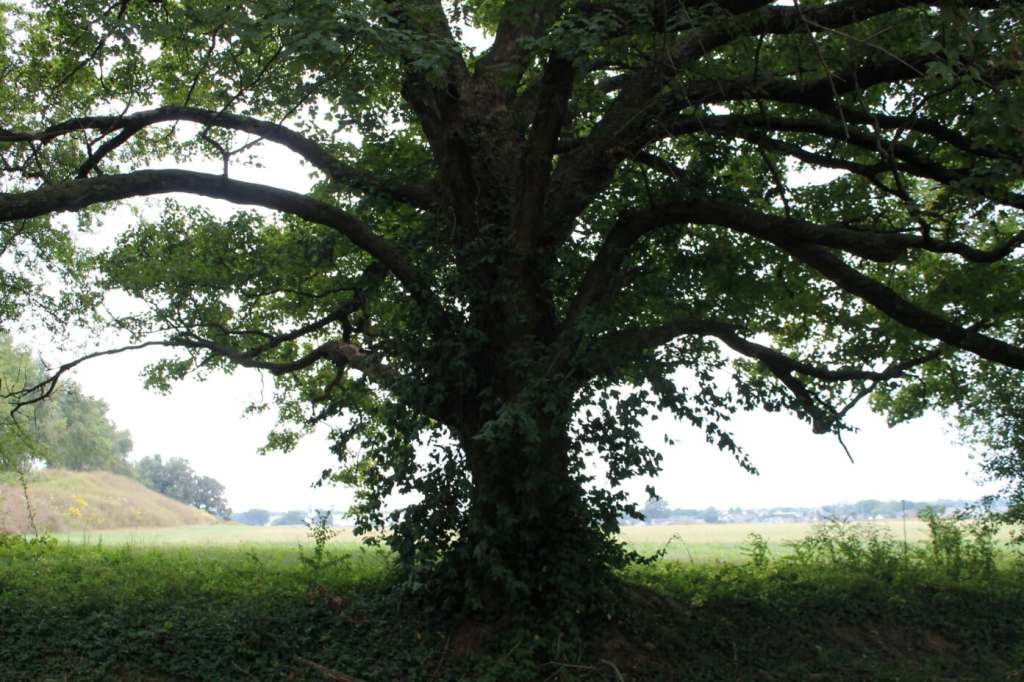
It is a sugar maple. It is a “mother tree” providing benefits to all the trees and plants, and animals that are part of its area of influence. It has provided a hard wood for human needs and provides syrup that is used by animals and humans, insects and myriad organisms. But, its most important contribution may be its brilliant colors in the Fall.
Trees also provide other critical benefits to human health by providing the connectivity in the natural environment from which health arises.

Diana Beresford-Kroeger is a scientist and writer whose work is devoted to understanding the numerous roles of trees in the ecological health of natural habitats, plants and wildlife, and of the human species. Follow the link below to learn more.
Hurricane Sally swept through Pensacola, Florida leaving a trail of destruction, disconnected power lines, and broken water mains. But among the trees of the city, it was the native Coastal Oaks that danced in the wind and stood true in the after calm.
Native trees, plants, and species are adapted to the place where they originate. There is a reason that they are there, adapted, and contributing.
Trees are the hope of our time. Research about the function and role of trees in ecosystems across the world is unfolding rapidly. Diana Beresford-Kroeger, a biochemist, teacher, and tree expert, is actively teaching the public around the world about the function of their native trees. Much of her work will amaze you. Two films are critical to watch. The Call of Trees: The Forgotten Wisdom of Trees is one film that I recommend that you watch. The other is an interview from VanCouver that will show you how she advises cities and regions. Very practical steps and hopeful vision of the world. Restore the Trees!
You can watch and/or buy the film on Amazon Prime
See Dr Kroeger’s website Global Forest Revival.
You can also go to YouTube and type in her name to find dozens of wonderful presentations. Let’s all plant 1 native tree each year for 6 years! We’ll change the world for the better if we do.

In July I turned 75. Over a long life I’ve accumulated myriad experiences across this nation. First, as a child of a career military family, and then as the wife of a Vietnam War veteran and conservative businessman. Later, after an egregious divorce and the shattering of our family, I experienced near poverty, grief and loss. I wandered for years, in gorgeous natural places, and met some of my best friends who helped me and my children pull our lives together. I have learned about this country by direct experience, not by the false narratives I’d been taught as a child.
A measure of a life is how one learns, grows, changes with experience and knowledge; how one softens soulfully in kindness and compassion as the understanding dawns that every person, and every living thing, shares a similar struggle to live, love, and find happiness. This process is not even but occurs in giant leaps, regressions and rescue, and a certain God given striving to be the best person possible no matter what. And then, accepting how we fail at that. Just accepting it.
My vision, contrary to what we think about aging, has sharpened. I see a country on the verge of destroying itself. I see gross injustice for the majority of Americans. We’ve achieved horrendous outcomes that measure us as a third world country in the ways that we do NOT care for each other. Not surprised, however, for the economic system that has driven this country from its beginning is based on values that presaged these outcomes.
The man who now leads this country is exemplary of our immaturity. A man who has not learned, grown in wisdom, nor recognizes our shared humanity which lifts no life above another. Until we remove him from office, we risk falling further into disgrace, disorder, and dissolution.
Once we remove him, then we must examine honestly how we regard each other, and GROW UP. Democracy is serious business and it requires serious citizens who engage in its work and provide guidance to our leadership. We must require that the people we elect are mature people who realize what is at stake should they play games, hold grudges, lust after money and power, and misuse the privilege of leadership.
We have serious problems: injustice, climate change, Covid-19 pandemic, and failed international leadership and cooperation. We must elect women and men who show the character of people who learn, grow in wisdom and compassion, and who can cooperate with others to achieve outcomes for all.
We must.

As I listen to residents and advocates in Louisville regarding the black community’s cry for justice for Breonna Taylor, I could not help but think of Isabel Wilkerson’s book, Caste: The Origins of Our Discontents.
Wilkerson describes eight pillars of caste designed to keep black citizens in their lowest caste designation:
I Divine Will and the Laws of Nature
II Heritability
III Edogamy and the Control of Marriage and Mating
IV Purity versus Pollution
V Occupational Hierarchy
VI Dehumanization and Stigma
VII Terror as Enforcement, Cruelty as a Means of Control
VIII Inherent Superiority versus Inherent Inferiority
At present I am reading Caste in which Wilkerson methodically describes the historical events and people who laid down and built a system of privilege and safety that is designed to keep African Americans impoverished and disempowered. The system is based upon the essential belief that anyone with a drop of black blood is unworthy and incapable, good only for the lowest labor jobs that keep the most privileged in wealth, privilege, and safety (the dominant caste).
Breonna Taylor is now being implicated with involvement in a drug trafficking operation. Yet the police officers who made mistakes and killed an innocent young person on a drug investigation gone awry, are walking free. The attention is on the black community, on Breonna and her friends, and not on the action of the police officers.
We can observe how this system works as we observe the police, justice departments, and privileged citizens blame the victim, divert attention from the violence of police officers to the victim, the family, and the black community itself. As Wilkerson describes, “terror and cruelty are used as a means of control to keep an entire group of sentient beings in an artificially fixed place.” [Caste, p. 151]
Then there was the murder of George Floyd. The policeman who crushed his neck and killed him with assistance from three other officers are free on bail. Attention is on the community, high crime, and minor misdemeanors. Not on the brutality of police who clearly overreacted. All these “conditions” relate to the oppression of people in the lowest caste.
Now, Jake Blake. Again, we see the terror, the cruelty by a police officer perpetrated on an unarmed black man actually walking away from him. The law forbids police to use deadly force unless they are themselves at risk of bodily harm.
I am strongly urging readers in the dominant caste to read Wilkerson’s book to learn how the American Caste System was built, the values of the men who built it, and how we all participate in maintaining it by our ignorance or our lack of caring about it.
Note: Wilkerson compares the American Caste Structure to India’s caste structures, and to the systematic elimination of Jews built by the Nazis.
In the most frightening chapter of the book, Wilkerson relates how shocked she was to learn about the Nazi’s study of America’s enslavement of African Americans to the lowest level of caste, much like India’s untouchables, and that the Nazi’s believed, and wrote about, their aversion to our system because it “went too far”. [Chapter 8, p. 75]
See how Shaun King, a civil rights advocate, describes the problem:
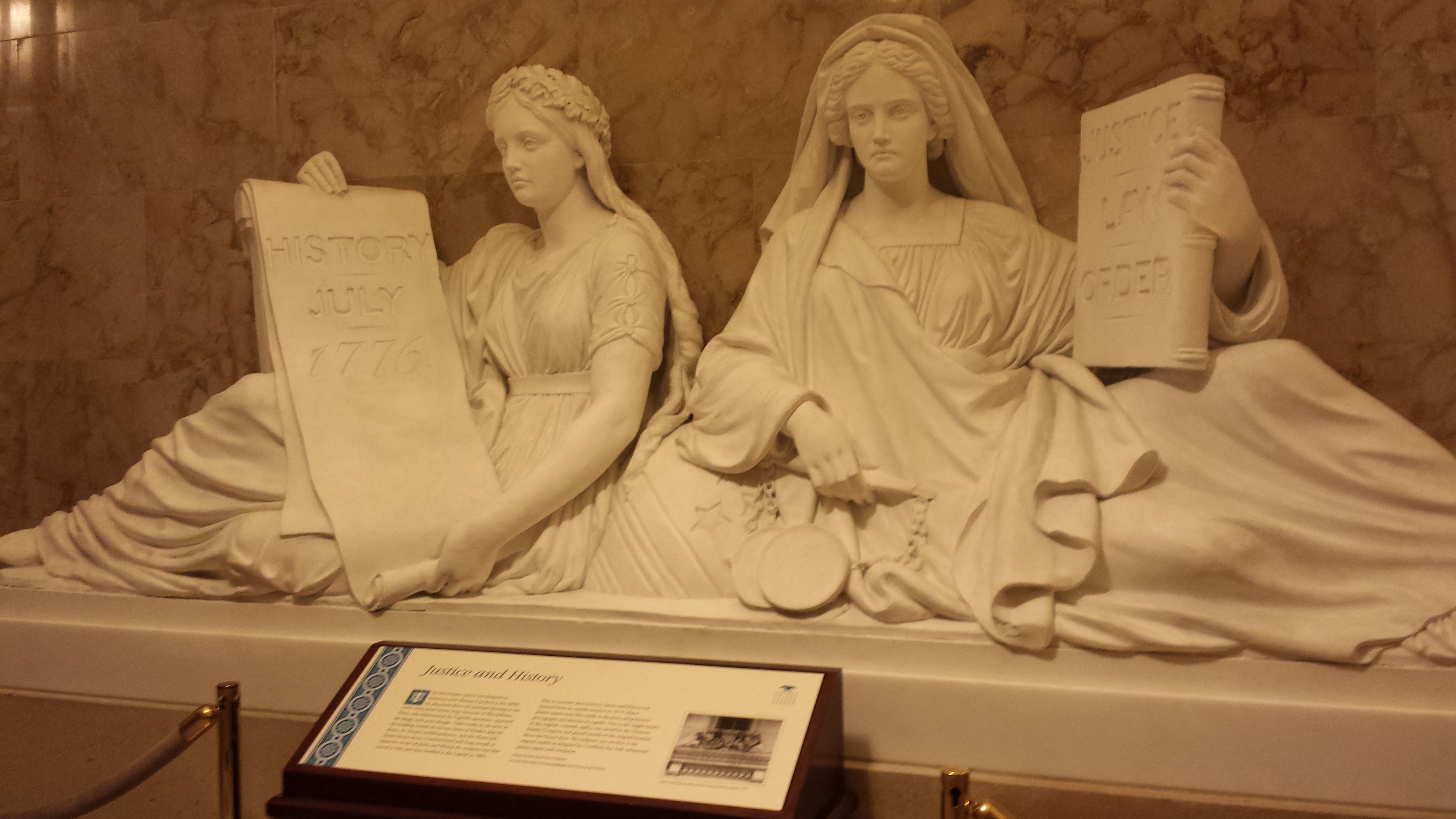

“History will judge us by the difference we make in the everyday lives of children….”
— Nelson Mandela (1918-2013)
The Trump Administration is promoting full opening of schools, backed by Betsy Devos, Secretary of Education. This to help parents get back to work and the economy rolling again, and to get children back into the classroom with teachers. These actions might be good ones without a pandemic in which children ARE at risk and can bring the virus home. It is another blinders-on recommendation from an inept and reckless Republican administration. (Note: Many Republicans are currently distancing themselves from a Toxic Whitehouse.)
I wish to reflect on Nelson Mandela’s quote which is pertinent to the present moment as leaders suggest using children as political vectors.
A new academic book, The Ecology of Childhood, by Barbara Bennett Woodhouse, was published early this year and then swiftly subsumed into the background as the Covid-19 Pandemic broke into our awareness. Yet it is a book relevant to the present moment. This I cannot emphasize enough.
Woodhouse is L.Q.C. Lamar Professor of Law at Emory University and director of the Emory Child Rights Project. She has devoted her career in law to defending the rights of children while studying the systems that impact children’s worlds. Read a biography.
The true measure of a just and sustainable society is whether it meets the basic needs of children and whether its policies foster environments in which children, young people, and families can flourish. ~ The Ecology of Childhood
Using this as a basic premise, Woodhouse presents a compelling argument for reexamining the values which inform our social contract with each other. The book analyzes the macrosystems that impact a child’s microsystem. These are: globalization, unrestricted capitalism, technological change, rising inequality, mass migration, racial conflict, and human-made climate change.
Do our policies foster environments in which children, young people, and families can flourish? If we the people create the macrosystems (which Woodhouse writes are comprised of the “ideas, values, prejudices, and powers that create hierarchies that can damage children”), then we the people can reform and reshape those macrosystems.
Listen to an NPR program rethinking the values that underlie the economy. Here are TED Talks with innovative ideas. Discussion is about stakeholder capitalism rather than shareholder capitalism.
Related are TED Talks by innovators thinking about how to reform the economy to reflect valuing people. See the TED Talk on this page and go to another one by Kate Ravorth here.
I believe that the current Black Lives Matter movement, which is now a rising wave of aligned movements joined in awareness that this IS the moment for such reform, then we can gain focus from Woodhouse’s approach which is to work with children’s rights in mind.
What should be our Covid-19 policies toward the health and welfare of children and families? I suggest that using the GDP as the prime measure of how we answer that question IS an example of a policy that needs reform.
The lack of proper healthcare, inadequate income, missing maternity and sick leave policies for every person and worker, racial inequalities, and climate change — these are harmful outcomes of errant policies that are currently under scrutiny in the piercing spotlight of the pandemic.
Read a review of The Ecology of Childhood.
Buy the book for your legislator, candidate, or changemaker.

Rock the Vote seeks to maximize the power of young people by supporting, educating, and providing tools for them to vote, organize, and grow in numbers to realize their collect power to shape the future.
Among the rich resources provided on the website is Democracy Class. This is a curriculum that can be taught at schools to educate youth about all aspects of voting in America. It teaches the history of voting in the U.S. and preregisters and registers young people to vote. The curriculum is nonpartisan. The website, resources, and messaging demonstrate how to effectively organize and use social media. There are numerous virtual tools.
As I have watched young protesters across the country grieving for criminal justice reform and an end to the racists roots that plague the body politic, I am so encouraged. Young Americans today are much less caught up in stereotypes, fluid in their acceptance of diversity among themselves, indeed celebratory of their differences. THAT is the direction we must follow.
Take Action to Assure Safe Voting for 2020.
I am from the Boomer generation, turning 75 in just a few days. The world being born is one that belongs to young Americans and I can be a part of its realization by helping their new world birth itself. Not for myself, but for young Americans who will make this a healthier nation. With them we’ll realize the dreams written in the Constitution which our forefathers never truly understood yet made possible. Young Americans will realize the dream more fully, and on and on, as a nation devoted to freedom grows in understanding of what that means and can possibly bring to everyone.
Go to Rock the Vote and engage in all the opportunities there. I am going to work on a Democracy Class for Bowling Green students.
As a little girl I had complete trust in the Post Office as I mailed an envelope filled with babysitting money to invest in what I hoped would be a lucrative business: selling holiday cards.
I venture most Americans have a fond relationship with the P.O. that emanates from a lifetime of taking it for granted that, like a basic organ of the body politic, will always function as essential to life as we know it.
Yet, the United State Postal Service needs $89B to stabilize its critical infrastructure which has grown and reinvented itself continuously with population growth, globalization, and technology innovation since its founding in 1775 by the first Continental Congress. Covid-19 has only added to its woes.
Benjamin Franklin was appointed the First Postmaster General. He and his family members established the first business model and infrastructure. Read the history of his leadership here.
Many of us cannot imagine our lives without the USPS which remains a trusted service that connects us to the federal government and to each other. With the likelihood of its key role in the upcoming Presidential election in November, it is a critical institution for our continued smooth transition of power. Yet it is teetering and our current leader has called it out as a joke and has not included it in the Covid-19 bailout.
[A personal note here about the recent Kentucky Primary: the automatic clock device at the P.O. marked mail-in ballots by the next day’s date as they counted ballots through the night. It was caught by the postal personnel, who set aside the ballots processed past midnight and thus were counted in the primary vote. If it were not for their oversight, an unexpected technological blurp would not have been identified. this served to alert Post Offices across the country to adjust for it.]
Jason Linkins, deputy-editor of The New Republic, writes in the July-August issue, “Going Postal”: “But, we shouldn’t stop at merely providing the $89 billion it has asked for. Rather, this is a moment when we can revitalize the agency and use it to restore our faith in America.”
Linkins suggests that we see the revitalization of the USPS as a critical infrastructure project. He supports not only postal banking services (especially important to millions of Americans without banking services) to an advisory office for federal agencies through which Americans can get advice on things like a government-provided health plan, or learning about available federal grants.
Linkins points out that the USPS is one of the largest employers of veterans and suggests that these Americans are experts at navigating bureaucratic agencies and experienced in overcoming life challenges. He writes, “instead of laying asphalt or stacking concrete, it would deploy human potential and the spirit of civic duty.”
His article heartened me and gave me hope that we as citizens, communities, and a nation can look at the current challenges we face with renewed imagination and build the postal service, as Franklin did, to meet the needs of a nation inventing itself.
Not by cynicism as Trump displayed in his glib suggestion that the USPS bleed Jeff Bezos’ Amazon to pay higher fees. Unlike our privileged president, most Americans rely on the USPS as a kingpin of their life as citizens in this great but wounded nation. Let’s get rid of this cynical leader and reinvent the Post Office to work for all of us!

 Susan Feathers