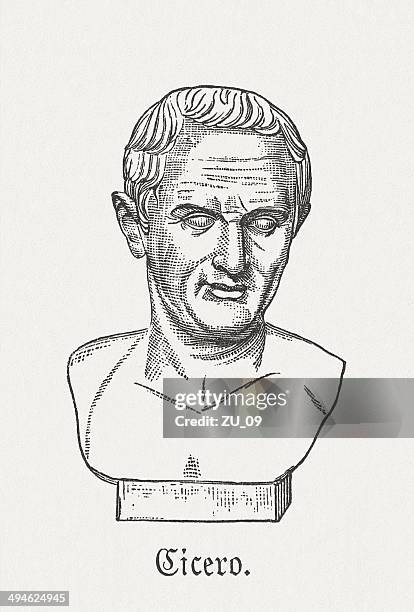
I highly recommend readers take time to listen to this session of We the People podcast from the National Constitution Center and how the founders read from Cicero’s TheTusculan Disputations in their quest for personal virtue – which none achieved but strived toward, followed by historians and writers reflecting on civic virtue in maintaining a democracy.
Think for yourself and the ability to reason – these must be resurrected.
Panelists include Jeffrey Rosen, Director of the National Constitution Center, and University of Chicago Professor Eric Slauter, Pulitzer Prize-winning columnist George Will; and Melody Barnes, executive director of UVA’s Karsh Institute of Democracy.
As I would not be a slave, so I would not be a master. This expresses my idea of democracy. ~ Abraham Lincoln
I’ve tasked myself with reading more about our history and our changemakers. In Our Ancient Faith by Allen C. Guelzo, Lincoln is preparing for a debate with Frederick Douglas and jots down this idea above.
Democracy at its root is relational.
If an indiviudal would not be a slave, he must not deny the same to others. Consent of the governed is the fundamental principal on which our government carries forth the will of the people.
In these very turbulent times, most recently demonstrated in a violent asassination attempt on the life of former President Trump, the nation has paused to consider how this could happen and what caused the youmg man to engage in such an act. We also reexamine how separated we have become, how violent rhetoric has caused people to distrust each other exemplified in the last seven years of political divide, vitrieolic language and extreme othering.
Lulu Garcia-Navarre revisits Robert Putnam’s study of the state of our Republic in the New York Times (July 14, 2024). In light of a new 2oth year edition of his book Bowling Alone, updated to include social media, they discuss why there has been little progress, even worsening separation among us, deepening the loneliness epidemic and consequent fear of each other.
Putnam discusses Alexis de Tocqueville‘s famous studies of American democracy published in 1835 and 1840. He observed that we were joiners – members of dozens of clubs and group affiliations. We were intensely relational including both close relationships and more social relations from hunting to sewing clubs, societies and guilds.
Garcia-Navarre and Putnam exmine how these kinds of relationships over the life of a citizen facilitate democracy. This brings me full circle to consider how Abraham Lincoln described democracy as relational. If I would not be a slave, I would not be a master.
Would more frequent nonpolitical relating to each other prevent the growth of misunderstanding and mistrust among us?
Related to this is how our founders understood morality. Founders thought about how each person manages oneself: restraint, kindness, courtesy, honesty, etc. It had nothing to do with the imposition of values on free citizens. To founders it was about improving oneself and continually self correcting by personal inventory over a lifetime of striving to be the best person possible. Self management.
Perhaps this is honed in an array of relationships throughout our lifetimes and that is why we see a weakened American democracy for which our relational lives is its essence. See the National Constitution Center’s discussion of how our founders thought about morality as self control and self management. Character.
Our rights and duties to engage in Civil Dialogue is at the heart of democracy.
What do you think? Leave a comment so that we can discuss this matter.
The National Constitution Center, a place for citizens to learn and to engage with scholars on American history and constitutional law, is a quiet sunny island in an otherwise turbulent stream of contemporary life.
Clarity and Purpose
When all of us rise to a new day only to open a fire hose of information from our phones, home stations, and television, I turn a lot of that off now. I go to the library and check out David McCullough’s 1776, a gritty and personal record of the people and places, and gestalt of colonial America and 18th Century England. What were they thinking? These are the deep roots of our Constitution. We observe our heroes and heroines just as confused as we are in times of tumult and an uncertain future. It lends some comfort as well as reflection.
RX: Attend a Town Hall at the NCC
Click here to watch the Town Hall debates on relevant topics to the state of U.S. politics and how historians and Constitutional scholars understand short comings in our three branches of governance that are not meeing the needs of today’s Americans and why Originalism can trip us up.
David McCullough brings the Road to Revolution alive!
Jeffrey Rosen, CEO and Executive Director of the National Constitution Center (NCC) and Professor of Law at The George Washington University Law School is as enthusiastic a scholar of the American Constitution as any man. His respect and love of the principles embedded in the Constitution’s DNA is infectious.
The National Constitution Center brings together people of all ages and perspectives, across America and around the world, to learn about, debate, and celebrate the greatest vision of human freedom in history, the U.S. Constitution.
Here below are links to a podcast and a video on the Constitution Drafting Project in which three scholars – conservative, liberal, and libertarian – draft five new amendments to the Constitution.
Below is the YouTube video of the full discussion among these scholars. I was struck by the fact that in spite of different viewpoints, their five amendments were very similar which also came as a surprise to them. Their discussion provides citizens with understanding of how a broad range of viewpoints can converge on how to govern ourselves.
What can modern American citizens and our political leaders learn from Hume? How were the views of our founding fathers shaped by the great philosophers of their time? How do they influence modern understanding of our Republic today? See this link to Federalist Paper 10 which considers the power of a government system to stem the tidal pull of dangerous fractions.
Jeffrey Rosen leads the discussion with three scholars of Hume. Original sources are suggested and links embedded in the chat during the discussion and provided on the wesite link above.
These same ideas are not only alive and well in our current political deliberations but also illuminate what has gone wrong and why. We can all use a dose of Hume and Madison to understand the forces that can threaten or aid the pursuit of happiness, meaning the common good.
Highly recommended to readers on this blog. Please forward to friends, neighbos and teachers and leaders in your communities. It is a non partisan discussion for all political persuasions to consider and for understanding the original thoughts and ideals that influenced the founding of America.



 Susan Feathers