
John Adams: Delivering the most happiness to the people.

…happiness is the end of government…consent the means…sovereignty the people…these are the foundations of government. from Thoughts on Government, John Adams.

My ruminations have turned to reading the founders and I can find no better founder than John Adams as a reference to what was forming in the minds of Americans brought together in Philadelphia to consider whether to declare independence or keep negotiating with Great Britain, hoping for mercy.

Adams was already thinking about the structure of the new government. He drew from the well of classic and modern scholars of governance and the rights of man. Both links on this post take you to the original document, Thoughts on Governance, where you can see why and how our Constitution came to the structure we have upheld for nearly 250 years.

Adams was for Independence from the start. In his own mind, he contemplated what a new government structure would best support the full flowering of a republic, which he asserted was the only form that could promote the general happiness of the people. By happiness Adams espoused an understanding it meant a government founded on virtue which would deliver the most happiness to the most people. (McCullough, John Adams, p. 102).

Further, Adams argued that good government was republican in nature, and the true idea of a republic was founded on the idea of an ’empire of laws and not men’. Thoughts on Government, National Constitution Center.

Question to Readers: What evidence do we observe today in American government that derives from a government based on virtue?

Leave a reply on this post for all to consider!
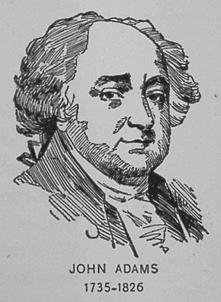
Wikipedia Commons: https://images.app.goo.gl/Exs3CFZaBPCHCfxg8

To Govern Ourselves

Fundamentally grounded in values, ethics are a moral sense of right and wrong. Ethics are demonstrated through one’s actions in everyday life; when a person cares about someone or something, their conduct conveys that care and respect, inviting the same in return. Ethics direct all members of a community to treat one another with respect for the common good. ~ The Land Ethic essay by Aldo Leopold.

As I learn more about the writing of our Constitution, it is clear to me that at least a few Founders, if not all, adhered to moral and political philosophies from classic literature to John Locke. To read from these foundational documents, is a window into the quality of education and personal pursuit of truth and morality that defined these men. Our Founders dared to establish a nation based on the belief that all people are have equal rights to life, liberty and the pursuit of happiness. They also believed that societies are capable of governing themselves without the need for a King or despot to control them.

However, to live in such a manner, communities function best when there are ethics and processes by which individuals can strive to become their best self.

In the Declaration of Independence, these words encompass centuries of human understanding about an ethical basis for living your life. John Adams in particular understood Happiness to mean the freedom to pursue a life of learning to understand and practice our moral obligations to each other.

Aldo Leopold, centuries later, would broaden the Declaration to include the ecology of the Earth in his essay, “The Land Ethic.”

A Land Ethic®. expands the definition of “community” to include not only humans, but all of the other parts of the Earth, as well: soils, waters, plants, and animals – “the land”. In a Land Ethic®, the relationships between people and land are intertwined; care for people cannot be separated from care for the land. Thus, a Land Ethic® is a moral code of conduct that stems from these interconnected caring relationship. Aldo Leopold

Today’s post bringing the Declaration of Independence together with The Land Ethic is my way of pausing to reflect on the turmoil created by persons in power who follow no true ethic in governing America in 2025. There is no moral code or ethical basis in hurting citizens or the community of living beings that make our lives possible in the first place.

What is our moral and ethical basis for living in contemporary America?

[Next post will consider how Albert Schweitzer discovered the ethical basis for living.]