Family, friends, nature, books, writing, a good pen and journal, freedom of thought, culture, and peaceful co-relations - these are the things that occupy my mind, my heart, my time...
Tucson became my home from 1999 to 2008, but I had been a resident in the Old Pueblo when I was just a babe. Dad (Major E. B. Feathers at the time) was stationed at Davis Monthan Air Force Base in Tucson. I was 2 years old when we moved there. I remember photos of my mother, sister and me in sundresses and sandals in front of a house with a large shaded porch, cacti and sand.
Little did I know that I would one day return to Tucson as an adult. When I was just getting started in life, I had an early encounter with the desert by falling into an Opuntia (prickly pear). Mom recalled she was pulling needles out of my arms and legs for a month.
Global surface temperature will continue to increase until at least the mid-century under all emissions scenarios considered. Global warming of 1.5°C and 2°C will be exceeded during the 21st century unless deep reductions in CO2 and other greenhouse gas emissions occur in the coming decades.
Compared to 1850–1900, global surface temperature averaged over 2081–2100 is very likely to be higher by 1.0°C to 1.8°C under the very low GHG emissions scenario considered (SSP1-1.9), by 2.1°C to 3.5°C in the intermediate scenario (SSP2-4.5) and by 3.3°C to 5.7°C under the very high GHG emissions scenario (SSP5-8.5)24. The last time global surface temperature was sustained at or above 2.5°C higher than 1850–1900 was over 3 million years ago (medium confidence).
Based on the assessment of multiple lines of evidence, global warming of 2°C, relative to 1850– 1900, would be exceeded during the 21st century under the high and very high GHG emissions scenarios considered in this report (SSP3-7.0 and SSP5-8.5, respectively). Global warming of 2°C would extremely likely be exceeded in the intermediate scenario (SSP2-4.5). Under the very low and low GHG emissions scenarios, global warming of 2°C is extremely unlikely to be exceeded (SSP1-1.9), or unlikely to be exceeded (SSP1-2.6)25. Crossing the 2°C global warming level in the mid-term period (2041–2060) is very likely to occur under the very high GHG emissions scenario (SSP5-8.5), likely to occur under the high GHG emissions scenario (SSP3-7.0), and more likely than not to occur in the intermediate GHG emissions scenario (SSP2-4.5)2
Many changes in the climate system become larger in direct relation to increasing global warming. They include increases in the frequency and intensity of hot extremes, marine heatwaves, and heavy precipitation, agricultural and ecological droughts in some regions, and proportion of intense tropical cyclones, as well as reductions in Arctic sea ice, snow cover and permafrost.
It is virtually certain that the land surface will continue to warm more than the ocean surface (likely 1.4 to 1.7 times more). It is virtually certain that the Arctic will continue to warm more than global surface temperature, with high confidence above two times the rate of global warming. With every additional increment of global warming, changes in extremes continue to become larger. For example, every additional 0.5°C of global warming causes clearly discernible increases in the intensity and frequency of hot extremes, including heatwaves (very likely), and heavy precipitation (high confidence), as well as agricultural and ecological droughts in some regions (high confidence).
It is very likely that heavy precipitation events will intensify and become more frequent in most regions with additional global warming. At the global scale, extreme daily precipitation events are projected to intensify by about 7% for each 1°C of global warming (high confidence). The proportion of intense tropical cyclones (categories 4-5) and peak wind speeds of the most intense tropical cyclones are projected to increase at the global scale with increasing global warming (high confidence).
8-5-21 Update: Just watched this YouTube interview of the author by the Post Carbon Institute program, What Can Possible Go Right?
Kim Stanley Robinson’s new speculative fiction novel, The Ministry for the Future, is revelatory. The breadth of imagination, depth of scholarship on climate change science, and international movements to organize nations to respond to it–plus a complex plot and range of characters–I finish reading each chapter with renewed awe. That includes the one-page, sometimes one paragraph, chapters with a voice for the market, history, and even a carbon atom. With each of these unique stopping points, the author offers us an invitation to rethink our place in the whole huge planetary system, or how we make history, or the long, long arm of time in which we are but a flash.
As the Earth warms, regions across the world may experience a heat phenomenon that can quickly kill people. Why? It prevents the body from sweating and thus cooling internal organs. It can be fatal.
What is wet bulb temperature?
Wet-bulb temperature accounts for both heat and humidity, unlike the standard temperature measurement you see on your weather app. It reflects what that combination means for the human body’s ability to cool down. [Washington Post, July 24, 2021 by Caroline Anders] To take a wet bulb temperature, wrap a moist cloth around a thermometer to measure at what temperature the body can no longer sweat to release internal heat into the atmosphere.
“Humans’ ability to efficiently shed heat has enabled us to range over every continent, but a wet-bulb temperature (TW) of 35°C marks our upper physiological limit, and much lower values have serious health and productivity impacts. Climate models project the first 35°C TW occurrences by the mid-21st century. However, a comprehensive evaluation of weather station data shows that some coastal subtropical locations have already reported a TW of 35°C and that extreme humid heat overall has more than doubled in frequency since 1979. Recent exceedances of 35°C in global maximum sea surface temperature provide further support for the validity of these dangerously high TW values. We find the most extreme humid heat is highly localized in both space and time and is correspondingly substantially underestimated in reanalysis products. Our findings thus underscore the serious challenge posed by humid heat that is more intense than previously reported and increasingly severe.” (35°C × 9/5) + 32 = 95°F)
In the last week of abnormally high temperatures and high humidity in Bowling Green, KY, Weather Bug notifications issued warnings on wet/bulb temperature conditions that threatened human health. I looked on the Warren County Health Department website and the Bowling Green Daily News and found no information on these conditions.
Heat exhaustion and heat stroke – how to recognize them and what to do:
Both heat exhaustion and heat stroke are serious conditions. Heat exhaustion begins with general muscle weakness, sudden excessive sweating, nausea and vomiting, and possible fainting. A heat stroke is when your body’s internal temperature reaches over 103 degrees. You begin experiencing a loss or change of consciousness, agitated, unexplained behavior changes, hot, red, and dry skin. All of these symptoms should be taken seriously. This is from Comanche County Hospital in Oklahoma: Heat Exhaustion versus heat stroke. Instructions on how to recognize each and how to prevent these conditions, as well as what to do if either are recognized.
As citizens we need to make sure our county health departments are educating the public about these conditions. Make sure they do.
Amsterdam is shifting to “Donut Economics”. Kate Raworth developed a “donut-shaped economic model” as a substitute for the traditional models of growth-driven economies. Watch below:
What do you think about this sea change in the economic model that the human community has traditionally embraced (growth-based economy)? An economy based on an Earth-sustaining economy that is equitable as well as prosperous? Learn more here.
Here is a slide deck from a presentation with Kate Raworth and Hazel Henderson during a discussion sponsored by the Security and Sustainability Forum:
8-5-21 Update: Just watched this YouTube interview of the author by the Post Carbon Institute program, What Could Possibly Go Right?
Kim Stanley Robinson’s new speculative fiction novel, The Ministry for the Future, is revelatory. The breadth of imagination, depth of scholarship on climate change science, and international movements to organize nations to respond to it–plus a complex plot and range of characters–I finish reading each chapter with renewed awe. That includes the one-page, sometimes one paragraph, chapters with a voice for the market, history, and even a carbon atom. With each of these unique stopping points, the author offers us an invitation to rethink our place in the whole huge planetary system, or how we make history, or the long, long arm of time in which we are but a flash.
The Ministry for the Future is an agency created at The United Nations Conference of the Parties in 2024 to operate independently to protect the futures of unborn generations and all the living plants and animals without a voice to advocate for the future. [For reference the upcoming Conference of the Parties (COP) is scheduled for Glasgow in November. It is COP26. I am currently reading the book during COP48 (2043).]
The novel is contemporary and that makes it relevant. Robinson is charting the possible course of humanity over the next couple decades. That makes it a page-turner. The author delves into the monetary system, global movements in Africa, Europe, and smaller island nations. Shit happens as the saying goes. Each time there is breakdown of a system or a climate catastrophe, or millions of people who refuse to repay their student loans, possibilities open up or, there is at least a potentiation for something good. Sometimes several things, like a market crash coupled with political movements in Africa, and climate imperatives result in a shift in the global mind so that people opposed to certain ideas now consider them. It moves like a train without a conductor but its path seems sure. And we are all passengers (human and nonhuman) and collectively our presence, thoughts and actions are steering it.
The first line in the book. “It was getting hotter.”
It’s probably unwise to review a book while still reading it, but folks, I think it is so important that I needed to stop reading to alert you, and to beg you to read it. Then we should talk!
Scroll to the bottom of this page for the YouTube video review of The Ministry by the Bioneers. Or link here. Also I have posted a more recent interview with A Skeptics Path to the Enlightenment. Here.
As a novelist who writes climate change stories, I try to show characters who are experiencing the impacts of climate disturbance. The forces that impact people are multifaceted, ranging from emotional to economic to physical. I feel it my duty as a writer to also suggest solutions and to empower characters who represent communities that traditionally are affected disproportionately. See my 2016 novel, Threshold.
High Country News conducted an interesting project in 2019 from the premise that speculative journalism could potentially accomplish more than strict fact-based journalism has not been able to accomplish. Read this article below included here with permission from High Country News.
The case for speculative journalism Climate fiction can help us imagine the impacts of climate change in a way that science journalism can’t. Brian Calvert | Aug. 19, 2019 | From the print edition of High Country News
In June 1988, James Hansen, director of NASA’s Goddard Institute for Space Studies, testified before a congressional committee, where he announced, with 99% certainty, that human-caused global warming was real. A year later, the Global Climate Coalition, an industry group formed by fossil fuel companies, began a determined effort to stymie climate action. Hansen, being a scientist, based his testimony on scientific fact. The GCC lobbyists, being slimeballs, based their efforts on telling stories — including, incredibly, the 1992 release of a video claiming that adding CO2 to the atmosphere would boost crop yields and end world hunger.
Thirty years later, we are still fighting stories with facts, and the results have been underwhelming. While it is easy to get frustrated by this state of affairs, it is also easy to understand why it’s happening. Global warming is a human-caused phenomenon that exceeds the human capacity for understanding. The typical institutions that we rely on to guide government policy — science and journalism — have not been fully up to the task. We know this at HCN because we cover, over and again, a changing climate. The facts are there, and the problem is still there — and getting worse. So last December, when the U.S. government issued a damning, detailed assessment on the climate, even we were at a loss with what to do with it. How, we wondered, can we help people understand the importance of all these facts, if the facts aren’t enough to speak for themselves?
One possible answer is this issue, a departure from our usual rigorous, fact-based journalism, and a foray into the world of imagination. Call it science fiction, or, if you prefer, speculative journalism. We took the projections of the Fourth National Climate Assessment, interviewed scientists, pored over studies — then imagined what the West would look like 50 years from the release of the report.
The result is a multiverse of future Wests, all set in the year 2068. No two stories take place in the same reality, but each is a reflection of possibilities presented in the climate assessment. In some, the West verges on satirical catastrophe. In others, technology steps up as reality melts away. Some of us imagined a better world; others imagined how much worse things might get. Readers weighed in, too. Taken together, we hope these stories inspire further exploration of the national climate assessment, which is available online and is an impressive body of work. For our hardcore readers, we’ve provided a citations page, where more information on the relevant science and studies can be found.
None of these stories are true, but any of them could be. The fact is, we don’t really know what climate chaos will bring … but we do know that enormous challenges — and opportunities — lie ahead. Our chance to change the future is now, but we’ll need a better story first.
Poring through all of this peer-reviewed scientific literature wasn’t easy. Luckily, the writers in this issue were aided by countless experts, including climate scientists, rangeland ecologists, hydrologists and others, who helped us interpret climate models and clearly imagine these many possible future Wests. See references to scientific research each piece was based on at the end of the story.
Onpoint, NPR, broadcast and interviewed three scholars to discuss the state of American democracy. Go here to listen. It is worth listening more than once. During the discussion, Americans contributed their thoughts to the discussion. These are very insightful and encouraging in terms of action and belief in our democratic way of life.
On the Onpoint site there are other resources to continue reading and listening to scholars who have deep understanding of what comprises a democracy, our current situation. Let’s start a discussion here. Please post your thoughts.
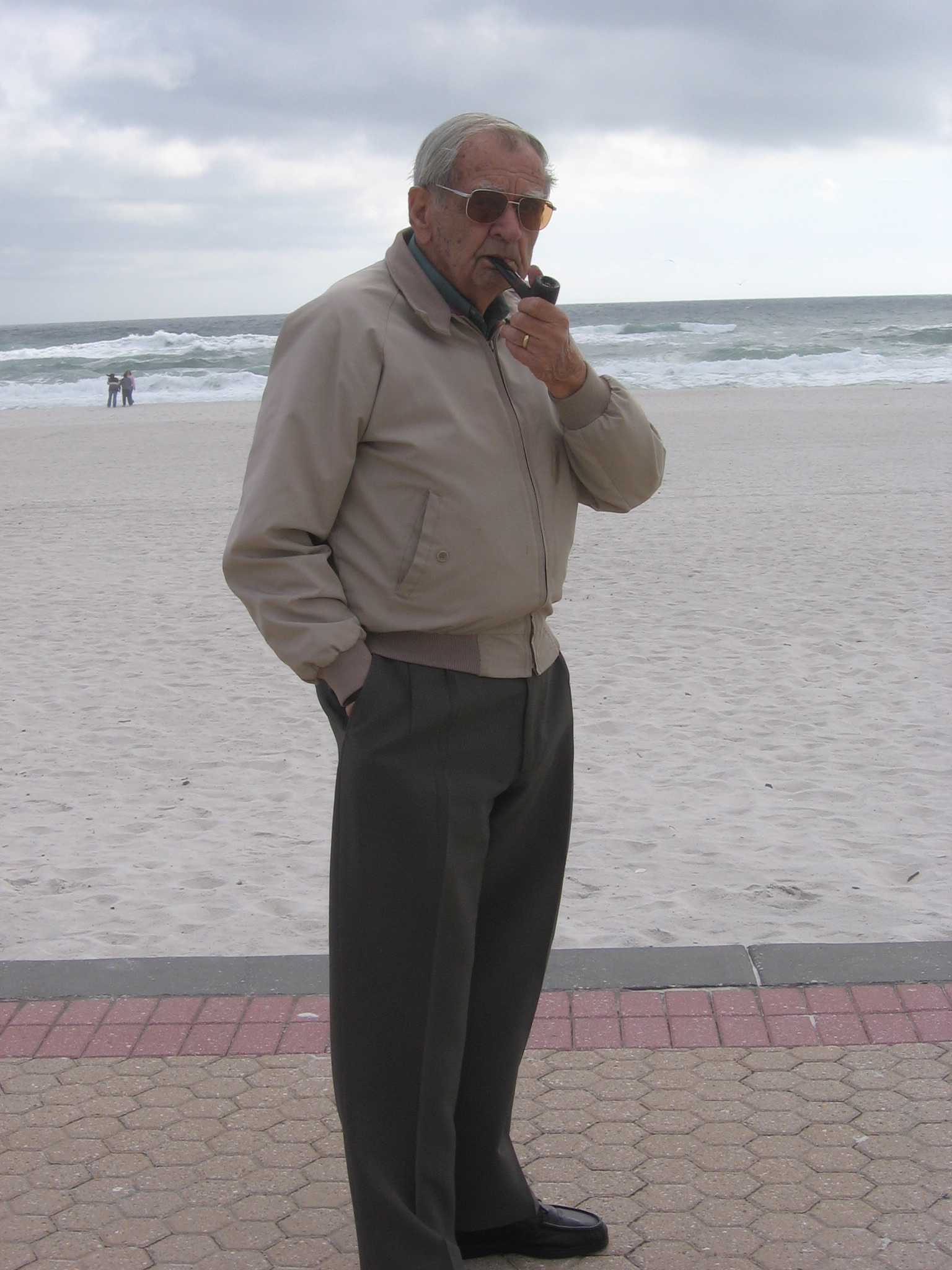
All he wanted was to learn to fly. He was a teenager in rural Tennessee, inspired by the heroic flights of the Wright Brothers and then Lindbergh, Dad worked in a little village of Watauga and saved to take flying lessons in near by Johnson City. Soaring over the green hills, he then was seized with a huge desire to leave the poverty and inward directed community of his youth to see the world, to break free.
He had a wonderful mind for math and science, eventually graduating with a degree in physics from East Tennessee State College (his mother walked the graduation stage for him as the US colleges awarded a full degree to all the men and women serving in the military in WWII in their last year of college but not able to finish due to the war).
Dad joined the Army Air Corps when Pearl Harbor was bombed. All the country kids who had not made entry into the military were now able to join up as the USA took everyone willing. Most of the rural kids did not have the best of health, having suffered as children through the Depression, a time my Dad recalled as being hungry all the time. America’s poor citizens comprised a good half of the country back then. Farmers all.
He became a bomber pilot, Captain of a B-29 crew, which he ably led through terrible, death defying excursions in the Pacific, flying over Saipan and Tokyo on bombing raids. His crew included men as young as 19. Dad told many stories from this period of his life, naturally, as it remained the most dramatic of the remaining 75 years (he lived to 95 in reasonably good health to the end).
I think of him every Memorial Day since he passed in 2012 on Pearl Harbor Day ironically. To the end, he worried he’d not be forgiven for killing people on those low level bombing raids. “We could smell flesh burning, Susan!” he recalled often.
The men and women who serve in the nation’s military carry the burden of killing, of maiming in the name of us. We must always remember that what we ask them to do in defense of our way of life is very serious and has life long consequences for them. Honor your war heroes, and let us never forget them and their devotion to the cause of America.



 Susan Feathers