You never know when a great leader may emerge among us but war brings that process along faster than at other times in history. It may seem an obvious statement but as I have observed President Joe Biden over the last week, I am convinced that he has risen to the needs of this moment in world history and in the political life of our country.
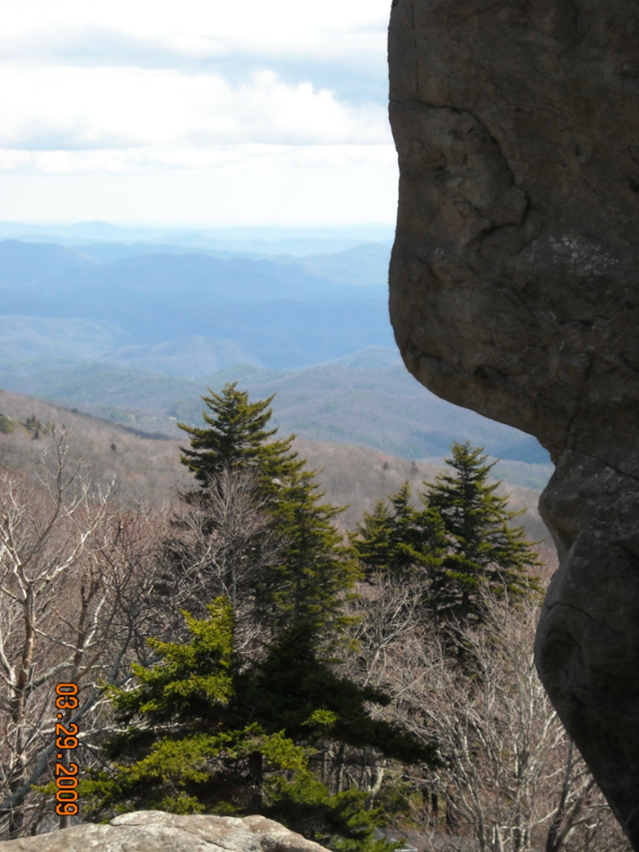
Photo by Susan Feathers
It could have gone many other ways, you know. We could have equilibrated on how to respond to the attack on Israel, even blamed them as some have done these last two weeks. Not Joe. He declared support for Israel to defend itself and the right to have a place on Earth that is theirs. But, he put larger concerns alongside that statement, reminding Israel to not make the mistake the U.S. did after 911 letting our deep sorrow and outrage at the tragic and loss of life as we all watched the twin towers implode and crumble. All those lives lost all those families and communities asunder. That is what Israel experienced and is continuing to experience as their family members and citizens are being held hostage (and Americans). The violations of Hamas in committing atrocities not seen in modern times, on babies, pregnant women, old people and youth. This is trauma with a life of its own. Intergeneration trauma that works its terrible consequences in the bodies and minds of survivors for decades or more.
I recall President George W. Bush dressed in fatigues on a warship declaring “job done” so irrationally and then the brutal “shock and awe” campaign on the people of Afghanistan and later Iraq. We never found any weapons of mass destruction. How we mistreated hostages at Guantanamo Bay prison… These reactions were the result of rage and anger and the feeling of being justified: an eye for an eye, “making the whole world blind” as Mahatmas Ghandi declared when the Hindu and Muslim in India raged against each other after the long British colonization and repression. Yes, we’ve all indulged our need for revenge but now, in a world in conflict and with fascist movements and leaders around the world pitted against democracies, Joe Biden cleared the air. Democracies must come together to defend freedom and self-determination. Biden reminded Americans of a higher purpose that while flawed, America is the country the world looks to when democracies are at risk. He talked to Americans about the need to end the divisions among us – without denigrating any party. He is showing restraint and calling us to respond to a higher calling, to remember who we are.
Clarity, compasssion, wise policy, practical direction – these are the hallmarks of Biden’s leadership in the face of what potentilly could erupt into a broader and complex multistate war. He reiterated this, repeating the caution. Strong leadership when needed most.
We hear about Biden’s age. Well, he demonstrated the only real tangible sign of his age: wisdom. I am so glad Joe Biden is in the leadership seat of our nation at this perilous time
11=01=23 from today’s Letter to Americans by Heather Cox Richardson with this reference to the discussion. UpdateVox history of “How We Got Here” referring to the history of Palestine and Jewish people. I found this expanding as it shows the long history of how Palestine has been the subject of varying forces with their own intents, starting with Great Britain.
The confluence of the climate emergency with the weakening of democracies across the world complicates a coordinated response by the world community to secure our future. Perhaps an outright failure may occur with irrevocable alteration of biological systems such that human life cannot be sustained.
Democracy in a Hotter Time examines the critical need for well functioning democracies to meet the challenges of climate change. It draws upon the wisdom of visionaries in science, politics, economy, and democracy who believe that democracy (dependent upon the people to decide what must be done rather than a dictator who acts from self-interest to stay in power) is key to responding to the climate emergency.
David Orr is the editor of the book and it was his participation that prompted me to read it. David is a leader in sustainable practices on college campuses and led that movement from his position at Oberlin College. His belief is that ecology is not just for science majors but embodies prinicples that are valid in all areas of our lives. His little book that asks What is Education For? made a profound impact on me as a public school science teacher and community college instructor of environmental science.
I am currently reading Democracy in a Hotter Time and so far it offers a way forward that has been missing for me in other books about responding to the climate crisis, specifically it brings attention to the fact that our response has to be much broader than addressing the end result – a safer environment. The contributors call us to consider justice, values and policies – how we live together here and abroad. They question many practices and beliefs that have heretofore defined America. If you have time to read Orr’s article linked above, you will understand this new and more comprehensive approach to theproblems we face together.
Listening to Anthony Bliken’s address at the John’s Hopkins School of Advanced International Studies gave me an insight into the critical work of the Biden Administration across the world.
This is rarely seen or heard in the daily cacophony of news resulting from the very bad and sick behavior of a person who has duped Republicans and millions of Americans into following his authoritarian ideas. Rump is dangerous. Everyone of us Americans needs to understand that our current political moment is profound.
This moment mean everything that we hold dear in a democracy: the rule of law, a Constitution that we abide by, civil debate and compromise for the common good (to harken Robert Reich’s definition of the common good).
“Instead of being self-seeking individuals who happen to live within the same political and geographic boundaries, we are a group of people with responsibilities to one another.” – Reich from The Common Good,
I hope you will take time to listen to this address to learn how democracies work in the world and why the U.S. democracy is so important to other countries as well as our own.
No we are not perfect by any means but the critical point is that we must strive to fulfill the promise of our founding principle that all people are created equal and are indowed with inalienable rights.
In this address, I hear Secretary Blinken use the term “humility” describing how America is forming alliances with countries that we are responsible for hurting from our past wars and policies. The point is that we are striving to understand and respond to the great principles and values that our forefathers embedded in the Constitution.
Finally, I think the remarks of Mitt Romney, Senator, upon his announcement that he will not run again, are cogent to this post.
UPDATED: Doppleganger – This new book by Naomi Kline is a must read for understanding how AI and social media have created false realities through which, with no discernment, citizens can easily be duped. The book emanated from Naomi’s experience being mistaken for Naomi Wolfe. Folks they look alike but their political and personal values couldn’t be more apart. I have not read this book yet as it was just released, but I am basing my comments here from listening to an extensive interview with Naomi on Democracy Now.
UpDate: Great Center for the Constitution Celebration of the 1st Amendment:
National Constitution Center Free Speech Summit with Salman Rushdie
In a joint statement on September 7, Presidential Centers around the nation published a statement and a warning to strengthen our democracy.
This is unprecedented, at least in my lifetime, and to me is a bellwether that citizens pay attention to the forces of autocracy that threaten our way of life.
Dear Friends,
The George W. Bush Presidential Center is joined by fellow presidential centers and foundations to reaffirm our commitment to the democratic values on which this country was founded.
As we constantly strive toward a more perfect union, it is important to recognize inherent human dignity, foster conditions for liberty, advance equality, and promote the general welfare of the United States. When united by our founding ideals, Americans should reaffirm the importance of democratic values, civic responsibility, civility, and a pluralistic society.
We hope you will join us in this effort by reading and reflecting upon the statement, sharing it with your networks, and practicing the good citizenship that our democracy requires.
David J. Kramer Executive Director of the George W. Bush Institute
Dedicated to Jimmy Buffet and Parrotheads Everywhere
Margaritaville Hotel – Photo by Susan Feathers
On Pensacola Beach on Santa Rosa Island in Florida, Jimmy Buffet bought a half-completed hotel in 2010. After the Deep Water Horizon Oil Spill, tourism – the region’s main economy – went into a tailspin. Purchasing the hotel was Buffet’s gift of support to people of the Florida Panhandle he loved.
Beyond the Margaritaville Hotel lies the Gulf Islands National Seashore—seven miles of white sand beaches, swaying golden sea oats and translucent-green ocean. Way out on the tip end is Fort Pickens, one our country’s oldest coastal defense fortifications. The National Seashore is a place where sea turtles return to lay their eggs and sea birds migrate to raise their young, and where schools of fish, spotted eagle rays, and pods of dolphins hunt, mate, and play. People swim and snorkel in the warm gentle waves and sunbathe on white sand made of quartz crystals carried by rivers from the Appalachian Mountains into the Gulf.
Still other beach goers wear feathers and strut around on long, skinny legs, or beat the waves with a broad tail. Some soar above or dive into the waves for lunch or dinner. Beyond Margaritaville people, animals, beach and ocean all live and play together.
These are some of their stories. Some are for kids and all are for the “kid in you.” Read them together or alone to learn more about the lives of the people and animals that live in one of Earth’s most beautiful places. When you know about it, you’ll want to keep it for all to come.
[These stories are protected under U.S. Copyright Law. Read but seek permission to print. Contact me: susanleefeathers@gmail.com.]
His son opened the letter from Col. Boatright and began to read.
“Wait” Chief Joe said, gesturing for his son to hand over the envelope and letter. Joe held both between his palms and closed his eyes. Breathing deeply he opened his eyes and examined the writing, finger following the looped symbols 0f an even hand. Last, he studied the signature.
“Okay, you read now,” he said, handing them back to his son. It was the first letter Joe had ever received, sent in care of the Fort Yuma Commander.
~~~
The Lieutenant had penned a copy of the original letter, written with a bit of flourish at the end as if he had considered it the official closing of a chapter in his life. It was later reprinted in the small book Vicky found in the dusty bookshop overlooking the reservation.
A letter from the Office of Indian Affairs was reprinted – a prophetic answer to the retired Colonel’s inquiry.
August 12, 1865
Noting receipt of a letter from the Office of Indian Affairs, U.S. Department of the Interior
Re: Correspondence from Benjamin Boatright, Colonel, U.S. Army, Ret. Regarding the current and official status of Indians in the United States of America.
Dear Sir:
Tribal members are not considered citizens of the U.S. and by that are not protected by the 13th or 14th Amendments. The Office of Indian Affairs has established its own set of regulations regarding Indian tribes as negotiated in treaties between said tribes and the U.S. Federal Government.
If the River People refuse to live on the Colorado River Indian Reservation, they will be acting outside of the federal laws established in the Treaties. While we do not have sufficient means to force them onto that reservation at present, should they resist the U.S. Army, they will not have access to food or any other kind of service the U.S. Army normally provides to tribes during removal. It is the opinion based on reports from Ft. Yuma that the reservation lands set aside for the Colorado Indian tribes are sufficient to provide them with their traditional ways of living.
Efforts are underway to establish a process by which native children can be boarded and educated in the ways of our civilization, and for assimilation to our country’s laws and principles. The legal basis for these matters can be found in the Doctrine of Discovery and Manifest Destiny policies of our nation. It is the wish and fervid desire of our leaders and citizens that this country’s Indian tribes assimilate into our civilized and democratic ways of life and governance. Having done this, their families can benefit from the fruits of a democratic society where every man is considered equal and deserving of the freedoms inherent in that status.”
In your service,
Capt. Larry Haskell
Assistant Secretary
1870
Chief Joe dictates to his son who records his father’s thoughts in a diary he is preparing for the People.
“More settlers establish themselves near Ft. Yuma. The white flood never ceases. Our people’s existence is threatened.
“Col. Boatright is unable to help us. We have not received another letter from him since he last wrote stating that he would try to learn more on our behalf.
“Among our steamboat pilots and the men who supply the wood to fire them, I’ve noticed some buy alcohol in town after they are paid. Despair is high among us and I confess that I feel a kind of deep fear and grieving as I realize there will be no cease in the white man’s efforts to herd us to some place far from our homes and without the bounteous river and forests that have been our source of life for so long.
“There is no regard for original land rights, nor respect for the traditions of our nation. We are looked upon as lesser than the whites, ignorant because most of us do not read or write. At least our sons can do that, but now I wonder what good it might do for them if they are hated for being Indian, as the whites have named us. But something in me will not give up; I still hold that there must be a way to survive as a people, to preserve our ways even while we try to live among these strange human beings. Our people have never shied from a challenge, and we have embedded within our ways, our stories, and practices a certain resilience and adaptability that will sustain us—I just know it—but I cannot seem to see the way forward in this white onslaught.
“Col. Boatright is different I believe. Yet few among his people share his vision – or possess his courage.”
Years have passed since writing in this journal. Shortly after I made the last entry, I received orders to report to another assignment in Colorado. The diary was packed with my belongings and later placed with other books on a shelf in my library. When I received a letter from Chief Joe—penned by his eldest son—I looked for that old diary. Today, I am making a late, perhaps last, entry.
July 5, 1865
Joe’s letter described a move by the U.S. to gather all the tribes along the Colorado River and settle them onto one reservation, far to the north of the traditional lands of his people. The River People were resisting the move from their traditional homeland—as was proper in my view. The U.S. government has long regarded all native people as one nation. Anyone with half a brain would know that these are sovereign nations living on the same continent, much like the countries of Europe.
Looking back on my military experiences, I am free to express my indignation about our treatment of this continent’s first settlers. Manifest Destiny. In the name of that policy, my country is herding nations onto poor lands to make way for white settlements. I am personally ashamed of it, but my fellow Americans seem to think it right and proper, especially the U.S. Army.
I am now retired and free to express my views. But I’ll admit my views are not well shared by my countrymen, even by my own family. I was fortunate to come to know a man, known as Chief Joe, who is every bit as honorable as any friend or family member I have ever had. We live very differently, but if Joe were afforded the opportunity to make a decent income, I have no doubt he would live as honorably as any white man and probably exceedingly so, as I know many a scoundrel and ruffian in these parts that I call my homeland.
Joe’s letter described how he’d piloted steamboats for all the years since I last saw him on the deck of Uncle Sam. Apparently, his people are still farming in the floodplains, holding onto their traditions and excellent food supply. But the Army is now offering people canned goods, milled flour, sugar, and blankets. Many are accepting the handouts and becoming dependent on the government post. They have even moved their dwellings closer to the fort, his son writes – in a very nice hand, I might add. I’ve left it here between these sheaves for whomever may read this diary in years to come.
In this missive, I heard the voice of my old friend—and the desperation in it to find some way to exist beside a modernizing society. I could not sleep last night.
Instead, I wrote him a letter.
Dear Joseph,
Your letter came yesterday and I am up in the early morning writing to you. I could not sleep after reading about the attempt to move many nations to a reservation. I cannot know what agony this must cause you and your people. My nation does not understand the first thing about native people, especially that all tribes are not alike, and creating one reservation for many nations is just another example of our ignorance and ambition. I am personally ashamed of it.
I will write to President Lincoln for a process whereby you might be able to establish a reservation of your own to protect your lands and secure your location. The President has secured passage of the 13th Amendment to our Constitution, which contains our written laws for governance of all our affairs. The 13th amendment states that “all men are created equal and by rights must be free and equal under the law.”
I am most grateful for your letter, the description of what is happening there, and to see the fruits of your decision to educate your sons. He writes with a fine hand and good grammar. That you should keep before you as securing a place for your sons in whatever the future may bring.
With greatest respect,
Ben Boatright
Note to Readers: Many who follow this blog know that “land and people” is a major theme in my writing. I would like to share with you a recent beautiful essay published by Emergence Magazine and writtern and narrated by Chelsea Steinauer-Scudder, “Speaking Wind-Words.” The author’s essay goes much deeper into the taking of land by societies without understanding of how people are intricately a part of land as much as trees and streams. Take time to listen.
I learned more about David Tejano on this trip. We met again at The Crossing restaurant. David brought his wife, Sharon, and their three children who were 8, 10 and 14. I learned that David worked a 14-hour day as one of three social workers. I observed some friction between David and his wife in their exchanges about his busy life. Sharon explained that David was a spiritual leader as well, a Bird Singer, and he participated on several committees.
The kids were quiet but lively. I told Sharon about my job at the university as an environmental educator, and how I hoped that we could organize an interesting project for youth. The older boys made suggestions, mostly about sports, and the youngest, a girl, wanted to do an art project. I was glad to see that at least children thought it was a good idea.
We ordered. David went for the fried foods again for which Sharon admonished him and patted his round stomach. Later he slathered butter on his corn tortillas as Sharon looked on and he laughed.
“So, I managed to get a small grant for whatever project the River People may wish to do,” I said, changing the subject.
David nodded approval and said that would be good for the meeting with the elders, to show we had some skin in the game. I marveled at his use of language and how he seamlessly managed the two worlds he navigated with apparent ease.
“Do you know what the elders have in mind?” I asked.
“Not a clue. They don’t share much with me either.”
I laughed. “That makes me feel better.” Sharon smiled in recognition of my position. David had filled her in on the Tribal Chairperson’s welcome.
“That was brave,” she said.
“Self-defense, I believe!” I said.
“You were honest. That goes a long way among our people.”
David filled me in on where to meet him as we parted ways. I took a carton of flan back to the hotel. That had to be the best dessert in the world. A caramel custard to rival my mother’s egg custard. I was feeling more comfortable in Yuma and with the idea that I might be able to establish a lasting relationship with this amazing nation of people. They were still present, and they were reviving their cultural traditions. But much had been lost.
~~~
I met David at his office. It was the first time I noticed how many people, mostly men, were in wheelchairs . . . amputees from advanced diabetes. They stared right through me or did not look anywhere at all. I felt very uncomfortable there in the waiting room of his building. The weight of what has happened here is manifest in these people, sick and depressed about their conditions.
David greeted me about ten minutes late and apologized. By my demeanor, it must have registered how difficult that time had been for me. I could not shake a profound sense of guilt.
“Don’t go down taking the sins of the fathers upon you,” he said as we walked down a long hallway into the sunlight at the back entrance.
“I can’t help it. Our policies, our theft . . . I am struggling with it.”
“Well, then do something about it. It’s not like it’s over,” he bluntly stated. I looked up at him and saw that he was smiling.
“I guess that’s why I am here, though I am not sure how a little environmental education program can make a difference.”
“You might be surprised. Some things get done by just continuing to show up.” David was wise beyond his years.
~~~
I was pleasantly surprised to join the museum director and elders at the new cultural center. It was small but beautiful, featuring the art of the River People and their history and material culture: clothing, fishing and hunting implements, war clubs, and many other everyday objects from times past. The director was a tall stately woman dressed impeccably in a long flowing skirt and jacket top, with dramatic makeup and jewelry. Her long dark hair was pulled back on both sides with beaded hairpins. She looked almost Asian, with very pale skin and watery grey eyes. Her assistants, though younger, presented themselves as grandly as their director. A breakfast buffet with coffee and juice had been prepared. Compared to my last meeting with the elders, this felt closer to how I greet guests at our offices in Tempe. However, later I was told by the director that the cultural center and museum always prepare a lavish spread for the elders. That was a reality check. This was for them, not me.
David left me there to mingle in the all-women gathering. He said he would return at noon. I would miss his supporting presence. I gulped and joined the group. I felt too casually dressed compared with the museum crew. My culture’s ways of relating were varied, and my workplace had gone casual. For a moment, I wondered if I should upgrade how we do things in the almost all male Southwest Center. As a daughter of a military officer, my mother had taught her girls how to dress to show respect, but then the women’s liberation movement shattered that tradition. The culture of casual dress at the University sealed the deal. I made a mental note to clean up my act on the next visit.
Marion, the director, introduced me to her assistants and then invited the elders to the table, suggesting her assistant could also bring them a plate if they preferred. I waited with her as the elders were served; then she indicated I should go next. After we all had our plates and beverages and returned to our seats, which were arranged in a circle, we simply ate in silence with an occasional comment from someone about the food, or an observation about the beautiful morning, and so on. It was an old fashioned social meeting among women. I had not been in on a scene like that since sorority days in college with tiny sandwiches, frosted demi-cakes, and punch.
After everyone finished and the plates were collected, we began a formal meeting with the elders. Marion led the way.
“The elders have discussed the idea of a project for youth. They think it might work well if the children learn something about gardening in the old way and then learn the names of the traditional plants and farming practices. It could also be a way to add to the language recovery efforts.” She paused and looked among the elders to make sure she was communicating what they intended. “Do any of our elders wish to comment?” she asked.
A woman named Georgina spoke up. She had wavy, graying hair, shoulder length, fleshy cheeks with many wrinkles, and dark merry eyes. She was rotund and wore a flowing rose-patterned dress over her large bosom and belly. She was wearing support hose and heavy black orthopedic shoes. Her ears were adorned with long shimmering pink and white beaded earrings.
“Back when I was a little girl, we still farmed in the mud of the river after the flood was finished. The seeds we planted are the old ones, the ones that grow well here.” She pointed toward the landscape visible through the large glass windows in the meeting space. “Most of our kids today have neither seen nor tasted the native melons, beans, and greens that were all we had to eat back then. I think that kids could grow some of these old ones in a garden near the museum.” She looked over at Marion.
Marion was quiet for a while. Another elder spoke up. “It will be a challenge to interest the teens; they are too far into the modern culture to care. But the little guys might want to do it.”
We sat in silence while thinking about this idea, to start with much younger members of the nation.
Another elder spoke. “Teens are lost, you know. Many are already showing negative attitudes.” She was a little younger than the other elders, slim by comparison, with beautiful hands, Vicky noticed. “I am thinking we should ask them to help the little guys. Give them a leadership role. They will learn along with the kids. Saves face.”
That made the women giggle.
“Miss Greenway, do you think the university would support such a project?” Marion asked.
“Yes. I think it fits very well with the intent of the center,” I said. “Learning the native plants is directly connected to land and water and will be a wonderful, fun . . . a delicious way for children to learn at the same time.” Then I decided to announce that the center had agreed to invest $5,000 in this project. “That should be enough to buy whatever you may need and have some money left over to support the ideas the kids may come up with.”
There were murmured comments among the elders. Marion cautioned it would only be successful if kids wanted to do it. She suggested that the project be based in the museum programs and that the museum staff manage the money. The elders and Marion had already determined a place for a garden in their original blueprints for the museum.
That seemed to be a good way to implement it, so I agreed.
It had been about a month since I last heard from David Tejano when he called my office to tell me that the elders and the museum director had a project in mind. He asked if I could I come down early next month to meet with them and attend a community meeting in the afternoon.
“Yes,” I eagerly replied. “I wondered if anything might come of the initial meetings. I was about ready to call you. I would also like to spend a few days in Yuma. Before I left town last month, I stopped at that used bookstore near the entrance to the reservation. Do you know it?” I asked.
“One of my favorite haunts,” David affirmed.
“The owner helped me find a diary of an Army officer who was stationed at Ft. Yuma in 1851. I’ve read nearly all of it and have some questions for you.”
“Ah, yes, dear Mr. Whitestone. He has a sixth sense. I hope you know he can read minds…he put just the right book in your hands for this…environmental education program,” he said, laughing into the phone.
David’s pause and change in tone of voice when he said, “environmental education” communicated his understanding that it was I who was being educated. I kind of resented that, but I’d had the same thought not long after the first visit, so I let it go.
“Well, I have dozens of questions from what I’ve read so far. I’ll make sure to finish it before I see you next month,” I said, and we agreed on a meeting time and place.
Just before I was ready to hang up, David asked me to be prepared to describe the kinds of resources my center will bring to the project. The museum director wanted to know.
~~~
Later that day I met with my director. He was glad to learn there was some movement toward the education project, but he hadn’t planned on providing any resources other than me. We talked for some time about this until I convinced him we should make a show of good faith by offering a small grant to cover costs.
“It might be that the project is part of the larger language recovery efforts . . . perhaps by incorporating a lexicon on the wildlife and natural history of the area.”
“Uh-huh,” the director said tenuously with a stern glance in my direction. “I’ve seen a lot of money go down rabbit holes when working with tribes.”
“And they’ve seen their land and rights go down rabbit holes when working with us,” I said. “How about $5,000 to start?”
He took a quick breath, straightening his back and turning squarely toward me. “Alright. But that’s it.”
~~~
The Book Shop
Vicky returned to the Winterhaven bookshop a day before she was to meet with David and Marion. She wondered if there were other diaries, especially about the Gold Rush and how the city became known as The Crossing.
It was midafternoon when she entered the shop, jingling the bell that announced a customer. She spotted the proprietor reclining in a swivel chair whose spring-loaded base appeared to strain under his robust weight. He was sound asleep, snoring with his mouth open under his bushy white beard. Vicky decided not to disturb him and began to explore the dusty piles of books in the back of the shop where the proprietor had found Lt. Boatright’s diary.
After some time, the proprietor became aware of Vicky’s presence, sat up and cleared his throat.
“You caught me napping!” He grinned wiping a drool of saliva from his chin.
“Business is that good?” she teased.
“You’re here. I count that a banner day. Are you on the hunt for treasure?” He rose from his chair with effort and ambled toward her.
Vicky thought for a few minutes. “You know, I am curious about how the Yuman Indian tribes along the river changed over the years. I see the long-term results, but how did it all actually happen?”
The proprietor nodded, extending his hand to her, and said, “I am Vern.”
“Vicky,” she reciprocated.
Vern ran thick hands through his pure white hair and stroked his beard. “How much time have you got?” he asked, considering her almond eyes.
“Well, I have no appointments tonight, so the afternoon, let’s say.”
“Drink coffee?” he asked, turning toward his office area.
“Would love a cup,” Vicky replied, eagerly following him.
“Pull up a chair, my dear.” Vern pointed to one of two rockers. Vicky plunked down in one and sank into its velvet cushions, putting her feet up on the rest, realizing she was road weary.
Vern returned with two steaming mugs of coffee. “Cream or sugar?”
“Both, thanks.”
Once he settled in his chair, he related to Vicky that he’d collected many stories over the years of his proprietorship of the store, many from native people, others from history buffs. He frequented the local historical societies as well.
“There are other journals here, but how about if I just tell you some of what I’ve learned from hearsay and research about the earlier days?”
“That would be wonderful. Nothing I love more than a great storyteller.” She could not believe she’d lucked into an afternoon with a true spinner of tales.
Vern sipped his coffee thoughtfully, then began. “You know, if you could return to those times when settlers had not yet taken up residence here, you would find it a dynamic natural and human landscape. Its human nature to vie for your family’s safety and wellbeing, no matter one’s culture or race. That is just basic humanity. The other truth is that scoundrels rise and fall in every exploitable era.” He looked up. “The river would be the victim, whatever was said and done. From 1848 – 1855, the Yuma Crossing was everybody’s game.
“Both the River People and the citizens in Yuma saw in the gold seekers people with whom they could do business. Having the home court advantage, the People helped by providing food to exhausted, hungry travelers in exchange for goods such as shirts, blankets or mules. The men of the tribe were superb swimmers. They could easily pull mules through swift-moving water from one side of the river to the other. They knew to avoid the treacherous areas of the riverbanks where quicksand engulfed unwary animals and people. The men could do all this even while balancing baskets on their heads, loaded with supplies.”
Vicky listened intently, imagining the scene Vern was painting.
“Remember the river at that time was a half mile wide with strong currents. But the People navigated the river with apparent ease. Not so for the emigrants, who feared for their lives and their livestock.”
“That sounds like a great exchange between the two peoples,” Vicky reflected.
“Well, there were also the scoundrels. It was not uncommon for some members of the tribe to drown a mule or direct it far downstream where they slaughtered the beast and roasted the meat on bonfires. Journals from travelers record how the native people regarded mule meat as a delicacy.”
Vern paused. He stared at the sagging flooring, shaped by the sheer weight of the books and papers that filled every flat surface. His eyes widened in thought. Then he appeared to come back to present time.
“Well, the gold hunters learned. When their wagon trains reached the river and they negotiated a crossing, men were positioned on the bank of the river with rifles pointed at the heads of native swimmers. That eventually put an end to the theft of mules.”
“More coffee?” He was already on his feet to retrieve the coffee pot.
“It gets even stranger,” Vern said, refilling Vicky’s coffee mug.
She grinned up at him in anticipation.
“The People asked the emigrants to write letters of recommendation stating that they were reliable river guides which they showed to wagon trains in hopes of promoting their business. The problem was that the People couldn’t read, so many times they handed a letter to a potential customer that read something like, ‘This man is a scoundrel who will steal your cattle and rob you blind.’”
Vicky thought about a time when the two groups seemed to be on somewhat even ground; how lively the interactions must have been to everyone. For the travelers it was about life and limb just as it was for the People. And both sides were vying for economic opportunities, taking risks.
“But that time was short-lived because the migrant flow became overwhelming. By the time the emigrants arrived at the Crossing they were half starved and their emaciated animals needed grain and fodder. The People shared melons, squash, and greens from their gardens, but soon the emigrants discovered the mesquite bean. It was a perfect food for their livestock. Later the emigrants learned to grind the beans for flour and a kind of coffee. Many emigrants realized that the People depended on the mesquite harvest as a main staple, and thus they foraged in the scrublands to avoid competing for the harvests under the main canopy of the mesquite forests. However, as I said, there are always scoundrels. Many of the emigrants hauled off loads of beans for their journey into the California gold country.”
Vicky imagined the scene. “It must have occurred to the tribe that these exchanges had consequences.”
“Indeed,” Vern confirmed. “The native people who visit my shop say the elders long realized their country was becoming occupied by a foreign people. It was the younger members of the commnity who took advantage of short-term gains…plus, the natural generosity of the people promoted the gifting of food and grains that grew abundantly along the river. It was their way.”
Vern got up and walked to the back, pulled out a couple of books from the prodigious stacks, and returned to his easy chair.
“Read these, on me,” he said, handing them over ceremoniously. “Once the U.S. built Ft. Yuma on the California side of the river, the wild territory of the lower Colorado River and its communities of life would undergo huge changes. For one thing, the ferrying of people and livestock to and fro would no longer line the pockets of early military men assigned to protect travelers. In fact, these early Army officers milked everybody crossing the river, demanding high fees and gold booty until the U.S. Army put a stop to it. 1855 marked the official end of the Gold Rush, Verned stated and then sighed. “And the end of the River People’s claims to their homeland.”
After a thoughtful silence between them, Vern said, “By the time the Gold Rush fizzed out, the People’s daily life was permanently disrupted. That realization spurred great animosity among them. What followed were years of skirmishes up and down the lower Colorado that took the lives of U.S. cavalry and the lives of Colorado tribes alike. Alliances among tribes formed and fumed. The River People avoided much of that warfare, but when it came to protecting life, limb, and hunting grounds, they too fought and were mighty warriors. Murder, abduction, rape, and violence were perpetrated on both sides. It was a desperate fight to hold onto the natural rights to land, water, food … identity. Everything of one’s life.”
Vern appeared spent at that declaration. Vicky understood how personally the old bookshop proprietor had embraced the history of the region and felt responsibility for what the U.S. had done to the local people he had come to know and respect.
Vicky thumbed through the pages of the journals in her lap, stopping to look at portraits of the River People in photographs taken by travelers and ethnologists during all those years of change. She teared up. When she looked up at Vern, he was staring out the window at the sunset which lit the interior of the little bookstore in gold.
At her motel, Vicky returned to Lt. Boatright’s diary. She was beginning to understand the long history of disruptions in the River People’s lifeways. Settlers of the young United States and their government dreamed of shaping a river to become the artery for the nation to turn deserts into gardens and grow the nation to encompass the whole of the Southwest. Western capitalism had sunk its roots in the mighty Colorado River.
Lt. Boatright’s Diary Entry
March 15, 1852
Demands have been made by the River People to protect their hunting and fishing lands, and to not use the mesquite forests for a stretch along the east side of the river near their main village. Chief Joe came in today to make the case. He has met several times with the elders and men who wish to become steamboat pilots. Joe shared these concerns slowly in a soft voice that communicated this was a negotiation. His demeanor called me to my own best action, though I spoke for those of higher rank, without authority to make any final decisions. I suppose we were both in similar positions. I thanked him for bringing these conditions to me and assured him I would take them to my superiors. We agreed to meet again at the end of the week.
The matter of time is problematic with the tribe, even Joe. They do not measure the passage of time by hours and days or weeks, but by some mysterious knowing when the right time has come for a meeting or function. Chief Joe explained to me that he was not sure when he would return—that it might be what we call a week, or not. Several old people had passed away and their traditional cremation ceremonies, lasting days, would be initiated soon.
On this visit, he brought me a large basket of rice, gathered along marshland in the delta region. I reciprocated by giving him a container of tobacco and a box of rolling papers. He does not drink but loves a good smoke. I also gave him a bag of white flour and one of sugar.
~~~
Chief Joe had never seen anything on the scale of the steamboat. His people traveled on small rafts, even a single log, to navigate their river. On the pilot’s deck, the captain demonstrated how the ship was steered, the strange ways the pilot could mark the depth of the river from below his deck, and the pattern of bells that signaled the crew to various tasks. When the captain invited Joe to take the wheel and move the throttle, he felt the large ship move away from shore into the river, and he was oddly thrilled while also terrified. A million thoughts flew through his mind. Images flashed on his People’s simple ways, as he compared them with this feat of engineering. Surely this way was a miracle.
That night he shared his experiences with the elders of the tribe who gathered in their meetinghouse. They, too, had seen the amazing creature. Everyone tried to say it: steeam boooat. Joe related the way the men from their village would be hired to work as pilots to navigate up and down the river, carrying supplies for the Army to places where whites were settling. The men would be paid money, American coins and dollars, Joe said. Others in the tribe could be hired to help harvest wood to burn in the engines that produced steam. Then, there was silence—silence like a thundercloud moving over the low desert before a deluge. Silent strokes of lightning arched out across the room, lighting up the drawn faces of the River People as they began to fully comprehend the storm gathering around them that would threaten their very existence.
Lt. Boatright Journal Entry
June 16, 1853
Today the Gadsden Purchase was signed into law. It will cede 30,000 square-miles to the U.S. from Mexico. The border will separate Chief Joe’s People, who lived primarily in what is now Mexico, in the delta of the Colorado to Sea of Cortez. These are the traditional lands. The river and its people know no artificial borders, lines drawn on an occupier’s maps.
I must let him know, but this will be hard. It is another blow to the integrity of the tribe. Not much will change for a while. It’s just a line on paper right now, but changes will come in due time. In the meantime, Chief Joe and the men of his tribe are able pilots. We have a thriving operation delivering needed supplies. The forests along the river are disappearing, but we’ve honored our agreement with the River People to not harvest any of the forest they need. If the water flows, those forests should continue to produce the wood and food needed to maintain their way of life. But I must confess that I’ve been the principal proponent for honoring this agreement. I am sure that I will soon be reassigned, as my work here is done.
Chief Joe
My people still farm in the old way, after the spring floods recede. But we are more and more surrounded by a sea of military buildings and roads, and by thousands of settlers streaming into our region or passing over the river to California and back. All of them stop in Yuma—what the growing settlement is now called, after our People. We are from the Yuman-speaking peoples. Many other tribes north of us are distant relatives, though over many generations we have our own languages and ways.
Last winter there was a gathering of our peoples near Parker. Concerns that the U.S. military may seize our lands and move us onto what they call reservations have energized our warriors and leaders. My People will never move, never leave their traditional homelands. I will fight to the death if I must.
A woman, a schoolteacher, is helping our sons learn to read and write. They are making progress. But many in our community ostracize the teachers, believing our sons’ brains have been ruined with white thinking and ideas. I really do not know, myself, whether it may end up doing so, but I know of no other way than to prepare them for what is here now, their reality.
My parents have passed into the next world. I talk to them often and occasionally they request something for use in their world. It comes to me in dreams. We give ceremony and burn the clothing or object they request to send to them. In this way, I stay connected until I will join them.
Yuma and Fort Yuma across the Colorado River (circa 1875 lithograph).[1] Steamboat is downriver from the ferry crossing that is equipped with masts on both banks to raise the ferry’s tow cables above the smokestacks of passing steamboats. Note two of the cables holding the mast up are tied to discarded boilers, presumably taken out of George A. Johnson & Company or Colorado Steam Navigation Company (C.S.N.C) steamboats when they were rebuilt or dismantled here.
I am assigned to find the best navigation route from the Gulf of California up through the Delta of the Lower Colorado River. The purpose is to support settlements all along the Colorado with supplies. The Army plans to freight supplies by steamboat if a navigable route can be found. Navigating through the delta region will require expert knowledge. The river branches and splits and turns back on itself. My commander tells of vessels mired in shallows or lost in the tangle of waterways. If a safe passage can be found, fortunes are to be made. The freighting boats will also bring supplies to Ft. Yuma and Ft. Mojave. With the anticipated rush of gold seekers through Yuma to California, reinforcements and artillery will be required.
My plan is to find a reliable member of the local tribes who knows routes up and back on the delta. I will need a reliable guide, whom I can trust to make an accurate map.
P.S. It is unbearably hot here. I do not know how any people could have lived and thrived in this god-forsaken country.
October 3, 1851
All the officers have recommended the same man: Chief Joe. Private Hansford related that Joe had once taken him to fish and demonstrated how to pull trout out of the water using a spear:
“Damned if he didn’t pull ‘em out like forking beans from a can.”
I asked if Chief Joe was really the chief of his tribe. The answer bothered me. “Everyone just calls him Chief because he seems to know everyone and everything that’s going on.”
One thing I know about the U.S. Army is that we don’t know a damn thing about protocol. I asked the men to get word to Chief Joe about our mission to find a navigable route.
October 10, 1851
The man they call Chief Joe came by my office today. I must say he is not to be forgotten. For one thing, his formidable size and seeming ageless face made quite an impression on me. He removed his sweat-stained hat in a show of respect, which I appreciated. I invited him to look at our maps. He showed great curiosity about the diagrams. After some time, he indicated where our map needed adjustment. When he pointed out the error I saw it immediately.
I showed Joe the map of the delta that our cartographers had been able to construct. He studied it for several minutes. When I asked him if he could assist me in making an accurate map, he did not answer right away. I wondered what he might be thinking. White men had literally invaded his people’s lands and disrupted an old way of life. But that was progress. I hoped he would agree to help.
Chief Joe said he knew a lot about the delta waters, where they were the deepest, which estuary to launch from, and so on. But he never agreed to help. He simply excused himself and left. Rather than press the matter, I’ve decided to wait. There is something very fine in his manner that invokes my respect. I just have a feeling that he may help me.
Today, General Hopkins and I led a small party out to survey the available sources of wood that would be needed for the steamboat business if it should ever materialize. The forests along the river are thick with mesquite trees that will make excellent fuel for the engines. The only thing holding back the whole enterprise is a navigable route up the delta.
On the way back to camp, I noticed several native women carrying woven baskets. They wore calico dresses with numerous strings of multi-colored, beaded necklaces. I gestured to inquire what they were harvesting, pointing to the basket. A younger woman lifted the basket top and handed me a mesquite pod bursting at its seams. Another woman motioned how they would grind the pod. It is a special kind of flour they make. I said goodbye. They smiled, and continued on their way.
I must say I am very curious about these people. Hopefully, Joe will agree to help me with mapping. Perhaps he can also tell me more about his people.
The Catholic priest had given him his name, Joseph, though his family and people still used his tribal name, Navigator. In the nearby town, explorers, armies, trappers, and seekers of fortune called him Chief Joe. He explained to me that any Indian was called Chief “in the white way,” he nodded as if I should understand that.
“All along the river, strange people came and settled,” Joe recalled, recounting the oral history of first contact with Europeans.
When Camp Yuma was established to find a navigable route from the Sea of Cortez, I had been assigned that task. After a space of time, during which I believe Joe was thinking about whether he should assist me, he agreed to assist me. It was later, on this expedition that I learned much more about the River people.
Joe described his people as peace-loving and independent. They’d managed to continue their way of life—even as whites arrived for temporary gain but then stayed along the wild river and thick dark forests that lined it. The River People held counsel, watched and worried, Joe explained. The first explorers and their priests had not convinced the River People to believe in their god, but they kept trying. Many in his village attended meetings in the Whites worship place, believing there were similarities between the white religion and their own. But none intended to give up their way of knowing or their origin stories.
“These things are the very roots of any people,” Joe asserted. He never attended the White church.
Many generations had passed since Joe’s ancestor plumbed the maze of routes through the meandering delta where it flowed into the Sea of Cortez. The river’s spring floods came in spring and receded by early summer. The River People planted and raised their crops in the flooded plains, he explained as we pontooned up river with long poles. These rhythmic ways of the land and its people provided the stability Joe sought to maintain against the disturbing patterns of behavior he observed in the whites. He described wave upon wave of emigrants, over ten generations from far distant lands, and how their way of being defied all he understood about living in harmony with the earth and her creatures.
“You see, the river and its thick forests held life in abundance. Beavers were so numerous that we found it hard to navigate along its shores. White trappers, however, took many beavers only for the pelts, leaving behind bloody carcasses, taking more than they needed. When my ancestors learned that the pelts were being sold to whites who lived on the other side of the great waters, they began to understand that the coming ‘white flood’ would never stop.
“It was a time of great dread,” Joe recounted. “Trade no longer worked.”
I thought about this story afterward. It was clear that the expansion of commerce along the river would be an enigma to the River People. Yet, it became essential to obtain goods as the settlements became more permanent. He said that many of his people wanted blankets, beads and other things they had never really needed before. Money creates want, he observed. Whites were obsessed with it.
I did not comment but had to agree with him on that point. It was apparent to me that all these changes disturbed him. His tribe’s elders discussed these matters often as Joe was growing up. Eventually, they realized they lived in a different place. The whites transformed their land. Several treaties had been negotiated already, each time requiring the River People to give up more land in hopes it would staunch the bleeding. “But,” Joe said in his matter of fact tone, “they all knew the taking would never stop.” As their current-day Navigator, he could see ahead to troubled waters.
And so, Chief Joe decided to help me find that route, if only to assure himself that our activities would not harm the river or the tribe’s traditional harvesting grounds. Perhaps good relations would help preserve his people’s traditional way of life.
I told him I hoped that, too, and would do all I could to make that a reality as far as the Army was concerned. But, I think we both understood forces were greater than either of us could influence. Still, we made a good trade between us. That was something.
~~~
Chief Joe’s Memories
That same night, Joseph the Navigator had a dream. The conversation with Lt. Boatright had dislodged old memories from their bed to dance again for one star-spangled night. He recalled how he felt when he was growing up.
I am learning the bird songs of my people. My grandfather gave them to my father and he to me. Among my brothers, I was chosen. They carry the memories of long ago, of the stories and the ways. The songs connect our generations through time.
The women collect gourds. My mother dries them and my father shows me how to scrape the flesh and seeds from inside, how to find a good handle among the willows, and how to place small stones or dried seeds inside to get a good sharp sound when the rattle is held and moved in circles to accompany the songs. The handle is Father Sky and the orb of the gourd is Mother Earth. Together they are the living universe.
Joseph awakened with a song on his lips. To learn the songs, to remember and to sing them well had taken from his youth into manhood. So, it was for me, he thought, as he sat up in bed. And now I am teaching one of my sons to carry the tradition forward.
But now Joseph saw that his sons would need more than the River People’s traditions to navigate this new world of the Europeans that engulfed them like a sea, threatening to drown their ways. He thought, I spoke with my family and wise men and women among our people about my idea to get an education for my sons and any of the youth whose families recognize the need to prepare their youth for a White Man’s World.
Joseph realized it was controversial; many members of the community believed he had “gone to the other side.” But Joseph thought long and hard about this. The Lieutenant is trustworthy and listens well. Learning to read and to make numbers will help our youth in interacting with whites. We cannot be fooled as we have been in the past.
Joseph envisioned that his tribe might someday write their history to achieve understanding among the whites. We’ll need to make our own maps, maps of our lands, to hold fast during the white’s stampede across this region.
It may come to pass that my people will disappear from this land. But I will not be the one to give up, to let that happen. We are the River People, strong, loving, and successful in our own ways. We know this land better than any white ever will, though they do not seem to care to know. They are a strange people to me. Some, like the Lieutenant, are human beings, but most seem like hungry dogs looking for their next stolen meal.
The sun had risen while Chief Joe was thinking about all these things. Pulling on his shirt and donning his hat, he walked outside, where he turned toward the golden orb rising above the horizon and gave thanks for another day.
November 1 – 10, 1851
Chief Joe and I met at dawn to travel down the delta area and hopefully meet Uncle Sam in the estuary he’d indicated would be best for launching upriver. We gave ourselves five days to get there and traveled in canoes. The cartographer was set up to make compass readings and sketch a route on a temporary map. Private Barnes, an expert canoer, paddled his craft. Chief Joe and I navigated in front. Two supply canoes followed behind. I felt excited to be away from the fort and to be on the water. My brothers and I often hunted with our father in a similar manner in Virginia on the Chesapeake. This delta proved as beautiful and full of wildlife as that treasured bay. As we paddled closer to where the waters spread out, I noticed large beaver dams, a wide variety of ducks, and overwintering geese and cranes that must have just arrived. White herons lifted from shallows as we approached and alighted soundlessly in tall trees lining the water’s edge.
Joe demonstrated how he measures the depth of the river, by watching currents, observing what swam below the canoes, and using cane poles he’d marked at varying lengths. He said that was the way his people had navigated for over 300 years—the living memory passed generation to generation to the current tribal members. The information was encoded in their songs and stories. I gained even more respect for Chief Joe on that day. Here was a man who knew this river like his own hands.
We camped that night in a secluded lagoon whose waters were a deep emerald green. In the woods, we found tracks of deer, bobcat and what Joe said was cougar. My troops built an especially bright fire from mesquite and kept it well-lit until dawn. We dined on roast duck that dripped and sputtered in the fire. Joe served it with a pan of bread, sweet and fine. If I had not been charged with an Army directive to find a route, I would have preferred to fish and hunt with Chief Joe and listen to his stories under the stars. We did do a good deal of that our first night.
The next few days were very slow going to allow the cartographer to draw as best he could the natural mileposts and compass markings that would be clear to a boat captain. We learned that there could be trouble if a boat passed through the lower delta region in a spring equinox tide, which caused tidal surges that could upend a craft. That would never be something we would have guessed or known. Chief Joe’s experience was astronomical.
The third night we dined on abalone, so sweet and soft it melted in our mouths. We baked clams in the fire. My men and I had not dined on a better meal anywhere.
Yesterday we made better progress (day 4), and we paddled into the estuary at dusk, a day early. It was as Joe said it would be—a broad bowl with enough depth for the keel and paddle wheels of a steamboat. Chief Joe had never seen a steamboat, but he knew the depth of the estuary was more than his longest pole, which we estimated to be about eight feet. Joe also described how he sometimes observed groups of large air-breathing fish, which he drew for the cartographer and me. When he sketched the broad fluted tail, we knew he had seen dolphins.
Tonight, we are camping on a sandy knoll on the estuary, grilling fish and drinking the last of our provision of whiskey. Chief Joe did not join us in that, nor did he say why. I cannot emphasize enough how utterly reliable he has been, amiable and genuinely interested in helping us find the best route possible. We could never have found this route without him and may have gone on for years trying unsuccessfully to navigate this maze of tributaries.
It was during the night that I had a prophetic dream. I saw Chief Joe piloting Uncle Sam up the river. When I awoke, I remembered and felt the stupidity one feels when the obvious has been revealed to them. The River People would be the perfect pilots and it could be a source of income for them. I will speak with General Hopkins about this matter after we return to Camp Yuma.
1852 Chief Joe
I’ll never forget that day when I first saw the billowing black smoke rising over the treetops beyond the horizon. I thought it must be a fire. As its bow came into view, the drone of the engines came with it and then the sight of the wheels churning through the waters. A bell rang out, followed by a horn blast. Birds on the water and in the trees flew in crazed patterns and left the area altogether. I was transfixed at the sight before me. This was the way of the whites: shocking, magnetic and confusing. Part of me was thrilled, even intrigued, but in my heart, I felt foreboding. Perhaps I had been misguided in assisting the Lieutenant.
December 10, 1851
Chief Joe was invited aboard the Uncle Sam, and I introduced him to the captain. Joe asked how the wheels moved, so the captain took him into the engine room. I watched Joe’s face as he discovered the fires that made steam and examined the way the pipes connected with the wheels how the structure brought hundreds of paddles into the water as they turned forward.
Chief Joe looked up at me and placed his finger on his temple indicating ingeniuity. Then he gestured to the captain with an index finger that he understood how one boat had the power of a hundred men! It was obvious to both the captain and me that Chief Joe was thrilled by it, even sucked in by its magic, as was I.
But then I watched as a dark cloud passed over that same beaming face just a minute later. Joe was staring at the mesquite logs piled high in the engine room. He understood that the fuel for the boats would be the forest that harbored his people.
January 1, 1852
We are refining the maps as I write this note. Our trip back up the river went without a hitch; the water route Chief Joe helped us map is perfect. This is a huge advance for the U.S. Army and the republic. I am sure that I will receive an accommodation for this work. The next phase of the project is to construct landings along the way and to chart waters farther up the river.
There has been a mysterious development with Chief Joe, whom we now need more than ever. He appeared to be overwhelmed on the Uncle Sam and remained completely quiet and withdrawn on the return trip to Ft. Yuma. We honored this. I thought it might be the shock of encountering technology, even new kinds of materials never seen in his lifetime. I tried to imagine what that would be like. To this very day his people have lived well, without any modern amenities, with natural materials and appropriate technology. Then we came along with the major forces of science and technology, pulling us ever forward in progressive development. No one in the U.S. would be content to just remain the same, to not try to invent something better, solve a problem, or accomplish goals never dreamed possible. I felt as though something profound had been done to Chief Joe. Yet, I knew that whether the River People of his tribe became riverboat captains or not, the march of progress would go forward.
As out trip upriver ends, I hope that he will choose to be a part of it because he is such an intelligent man, and I have genuinely learned to like him as a friend.
February 5, 1852
Late in the day, Chief Joe showed up unannounced. He said he’d been thinking about being a steamboat captain, and that he would meet with elders soon to discuss others among their men who might be interested in joining him. I felt hope at the same time I wondered what process Joe had gone through to arrive at his decision. He sat before me in his simple dress—long cotton pants, a muslin shirt, and sandals on his dark thick feet. Joe wore his long hair pulled back; it reached to his hips. He probably had never cut it. Other men in the tribe wore their hair long, but I had noticed a few who frequented the posts who had gone to our barber. Something about his manner this morning, and my own hunch that he’d stepped over an emotional divide—that his visit was ceremonial in its feel—caused me to give him a field hat, adorned with gold braids along the brim and the Army’s insignia on the front. He received it gratefully and put it on. I stepped from behind my desk and asked if it was okay to adjust it. He nodded yes. I set it a little more squarely and dipped toward his face to maximize shade. He grunted his approval. I stepped back and saluted him with a smile. He did not salute me back but simply turned and walked out the door.
February 7, 1852
Today Joe came to meet with the Captain of the Uncle Sam to learn more about the steamboat, how it ran, what he would need to tell his elders about the training, and the job that would be offered to the young men of his people. He had adorned his field hat with three white heron feathers held in place with a bright red bandana. I said it looked good, though my superiors probably would be aghast. I thought it was the least I could do to allow him to wend his way along the cultural divide.
I did not attend the training. I did, however, accompany Joe to the boat and introduce him to the captain before leaving him on board.
Today I must solve another problem: the lawless hordes of gold seekers have caused more disruption in the settlement. There was a shooting in a bar last night and the General wants me to help mediate a hearing. One thing for sure: I will allow no one to travel across the river to California who has caused such clamor. That should stop much of the crime among these gold-crazed Americans.
The murderer will surely be hanged. That alone should sober them up.