Aldo Leopold on the Colorado

Aldo Leopold has been a lifelong inspiration for me and someone whose writings I turn to often.  For the first time, however, I am reading Round River, published in 1953 by Oxford University Press.  The second chapter, The Delta Colorado, chronicles his trip with Carl Leopold on the Colorado Delta region below the U.S. border starting in San Luis and going deep into a wetlands wonder before the Hoover Dam caused its long slow death.

What struck me were two things: 1) the amount and variety of wildlife that dwelt therein (now vanished or reduced to small numbers), and 2) the amount of game it took to keep two grown men from hunger.  Leopold’s daily journal entries are fun, informative and definitely from a “guy’s” point of view.  He’s getting to know the land by hunting, canoeing, hiking, and exploring its contours.  They meet and try to talk with a Cocopah youth on horseback – unheard of today in that region.  The record is point-in-time, when that region and all its communities were at the brink of massive environmental and cultural change that most did not fathom.  Up stream three hundred miles near Parker, Arizona the realization of other men’s dreams would radically change the lives and fortunes of many by siphoning off water for development in the seven states of the Colorado River Compact.  Ironically this agreement was signed the very same year Leopold made his now famous trek.

Round River is a collection of lyrical prose.  Leopold is one of our best writers in this genre.  Sometimes I just read his works for the sheer joy of its language and easy style.  This little book of essays includes many gems including one about the nature of hobbies (A Man’s Leisure Time) that is still instructive today:

A good hobby may be a solitary revolt against the common-place, or it may be the joint conspiracy of a congenial group.  That group might be the family.  In either event it is a rebellion, and if a hopeless one, all the better. ~ p. 8, Round River, 1953, first edition.

Where does the sidewalk end?

by Shel Siverstein

There is a place where the sidewalk ends

And before the street begins,

And there the grass grows soft and white,

And there the sun burns crimson bright,

And there the moon-bird rests from his flight

To cool in the peppermint wind.

Let us leave this place where the smoke blows black

And the dark street winds and bends.

Past the pits where the asphalt flowers grow

We shall walk with a walk that is measured and slow,

And watch where the chalk-white arrows go

To the place where the sidewalk ends.

Yes we’ll walk with a walk that is measured and slow,

And we’ll go where the chalk-white arrows go,

For the children, they mark, and the children, they know

The place where the sidewalk ends.

This is a profound poem that I read to my children when they were small and somehow they just “got it”—the feeling that I think Shel Silverstein tried to convey.  Only now I wonder if today’s children turn to a beautiful virtual world where they can control what happens…a place that is more engaging than the real world outside their door.

What do the children mark?  What do they know, today?

America is a creative process…

America has always been a creative process—preserving what is good and true; burning away the old to make room for the new, or changing opinions and actions by slow accretion through dialogue, hopefully, or conflict.  This weekend we landed a car-sized robot on Mars with the precision of a surgical procedure even while confronted by a citizen gone mad and the tragic loss of lives in an American religious community.   When we begin to see differing opinions, ways of life, and religious persuasions as “other” or evil, we forget what American was established to do:  unify.  While this drama took place, the Olympics put teamsmanship and international, friendly competition in our living rooms.  What a dramatic kaleidoscope of events all happening in the big shadow of Super PAC ads that seek to divide us. There is no dialogue between political parties anymore, only acid rebuttles and smear tactics on both sides of the aisle.

Thus the soft landing of Curiosity and the ecstatic faces of Olympians were momentary antidotes to the virulence parading as democracy.  Let us remember these words of Abraham Lincoln in his Second Inaugural Address on the eve of the ending of the Civil War:

With malice toward none, with charity for all, with firmness in the right as God gives us to see the right, let us strive on to finish the work we are in, to bind up the nation’s wounds, to care for him who shall have borne the battle and for his widow and his orphan, to do all which may achieve and cherish a just and lasting peace among ourselves and with all nations.

Paradise Screwed?

“On Florida’s Energy Future” – an article by Amy Keller in this month’s Florida Trend – interviews Adam Putnam, the commissioner of the Florida Department of Agriculture and Consumer Services.  His office has oversight for energy and climate change policies and programs.  The article includes invaluable charts of the types of energy (i.e. coal, natural gas, solar, etc.) currently utilized by each of the state’s four investor-owned energy providers and projections for each by 2019.  Alternative energy sources are not projected to change substantially.

To Putnam’s credit, he wants to see more diversity in energy sources and asserts that we have to develop “all of the above” when it comes to steady energy delivery as Florida grows.  He notes the “game changer” has been the discovery of huge reserves of natural gas inland. Putnam even reflects that increasing drilling in the oceans is not very compelling now that a cleaner and more abundant source of energy has been discovered on land in such abundance.  Gulf Power, our local energy provider, is drawing over 84% of its energy from coal-burning whereas all the other providers are using less than 60% coal, with one as low as 45%.

However, diversification in the mind of Florida’s energy commissioner means development of nuclear power, or at least bringing existing nuclear power plants that are shut down back into operational status.  Florida Power and Light  operates two nuclear power plants near Port St. Lucie and has two pending applications to build two more plants at a Turkey Point site, 25 miles south of Miami near the Everglades.  Progress Energy owns a nuclear power plant that has been shut down since 2009 but may reopen in 2014 with repairs, while they have two pending applications to build power plants in Levy County.  Gulf Power in Pensacola is considering building a nuclear plant in Escambia County but has no pending applications.

The discussions about renewables was a minor bleep on the screen during this discussion; the bottom line as always is cheap energy.  Why then are we considering a total of 8 nuclear power plants in Florida in key ecological areas that will impact human health and wildlife, and by default, the state’s key tourism dollars?  It makes no sense.  Experts point to the relative high costs of developing nuclear power to the long-term cheap costs of maintaining it. So, then, why not make these same investments in “expensive” alternatives which promise even better outcomes?

Everyday I watch tractor trailers pull gigantic wind turbines, manufactured in Pensacola by General Electric, to other states, like Texas, where wind now comprises about 20% of the state’s total energy.  In 2005, the Texas Legislature passed legislation which established five Competitive Renewable Energy Zones (CREZ) to ensure that electric transmission infrastructure was aggressively developed to deliver wind energy throughout the state. The projected increase from the current wind generation capacity to an estimated 18,000 megawatts should happen by 2015.  Why has the sunshine state, a state with potential to develop wave and geothermal energy, not developed a big vision like Texans have done?

TEXANS!  If they can do it, should Floridians be able to do it?  What’s keeping us from forming a sustainable vision?

Florida operates like a rambunctious territory with wildcat development, graft and dark deeds.  The nation has been the recipient of its bird plumes, alligator hides, pine trees, red snapper, sugarcane, spring water, and tourist destinations…all at the expense of a vulnerable landscape. Miami journalist and popular fiction writer Carl Hiaasen has been making a good income off all these stories, based on real people and events. Hilarious to read, the longer I live in Florida the less funny they seem.  (Read Paradise Screwed for example.)  While making fun of the state (he is a native God bless him) Hiaasen is dead serious.  His Miami Herald column has angered many a politician, developer, or investor in the wild schemes that plunder The Swamp.  These precious springs and shores are priceless treasures of biodiversity, and beauty with important functions in the larger ecosystems to which the state is connected.

Don’t get me wrong: air conditioning, bug spray, and roads have made Florida habitable, and no one loves the beach more than me.  But we must join other states in figuring out how to live here sustainably.  Nuclear power plants have no place in Florida.  That is a NO BRAINER!  Carl?

Staying above the political fray…

Now more than ever I believe each of us must learn how to stay above the political fray to get very clear again about what it means to be an American, and what America means.  Many of us are alarmed at what seems to be the loss of our ideals – those principles of truth and goodness from which our country emerged.  Philosopher Jacob Needleman, in The American Soul, offers that the people who helped form our democratic government, cherished by the whole world, were animated by big ideas—ideas that are at the basis of all the world’s great wisdom traditions.  Needleman argues that what our country was founded upon is the right of every person to seek self-knowledge and to develop their character and life guided by the values of duty, hard work, compassion, and community.  Liberty did not mean do anything you want; it meant the mental and spiritual “space” to develop your highest good, your highest purpose.  It comes with a lot of responsibilites but it is the “elixir” of the spirit, the source of meaning and thus the fount of hope without which we cannot persist.

What is your definition of liberty?  Please share with us here….

The Nature of Liberty

Liberty presses on the American mind.

A true American cannot be moved from his or her conviction about Liberty.  No eloquent speaker, powerful force, mind-altering influence; no bribe, or set of tragic circumstances, no ideology can shake an American from the knowledge that Liberty is at the heart of America:

When in the Course of human events, it becomes necessary for one people to dissolve the political bands which have connected them with another, and to assume among the powers of the earth, the separate and equal station to which the Laws of Nature and of Nature’s God entitle them, a decent respect to the opinions of mankind requires that they should declare the causes which impel them to the separation.  ~ Declaration of Independence 1776

Liberty caused these thoughts to be written when minds were shaped by an America present long before the Europeans walked upon our shores.  Liberty presses on the American mind still:  Let them all be free – black, brown, red, yellow, woman, child, plant and animal!  Liberty stands firm on this.  True Americans understand it.

Americans believe all people should know Liberty.  A true American will not participate in, or support, anyone or any nation (even her own nation) that would deny Liberty to another human being.  Americans look across the globe with the hope of Liberty’s promise for all.  A true American is generous and long-suffering for just causes.  Listen:

We hold these truths to be self-evident, that all men are created equal, that they are endowed by their Creator with certain unalienable Rights, that among these are Life, Liberty and the pursuit of Happiness.–That to secure these rights, Governments are instituted among Men, deriving their just powers from the consent of the governed….  ~ Declaration of Independence 1776

Those who deny freedom to others deserve it not for themselves; and, under a just God, can not long retain it. ~ Abraham Lincoln, 16th President of the United States (1809 – 1865)

He that would make his own liberty secure must guard even his enemy from oppression; for if he violates this duty he establishes a precedent that will reach to himself.

~ Thomas Paine, American Patriot (1737 – 1809)

Americans raise their flag to honor Liberty and burn their flag when Liberty is in jeopardy.  Liberty for All is the creed of true Americans.  They cannot be swayed. They have tasted her intoxicating liberation.  No government, no religious doctrine or person can deter true Americans from their pursuit of freedom.  Liberty is their only religion, their only banner.  True Americans are free to think and free to live.

Liberty whispers in their ear throughout the land.

Is Technology Changing Us?

Sherry Turkle, MIT psychologist who studies how technology is used and how it may be changing us.  Are we Alone Together? she asks in her recent book.  Here in this riveting TED.com TALK Turkle warns us about what technology is doing to us.  From embracing the new online communication technologies as they came into our lives fifteen years ago, to today where she is now alarmed at how online communication tools are interfering with our ability to listen to ourselves and others, Turkle observes how technologies are leading to isolation and loss of the ability to have real, messy conversations and relationships with each other.  Sit down, take time to listen to this short talk to consider how your use of technology might be changing you and your loved ones, colleagues, and country:

Share your thoughts with us!

Why Do We Need Nature?

Years ago Vogue Magazine asked this question, “Why do we need nature?” and solicited essays for one winner to be published. At the time it seemed like a ridiculous question with an obvious answer – until I tried to answer it.  I tried to answer it through thinking about it.  I did not win of course.

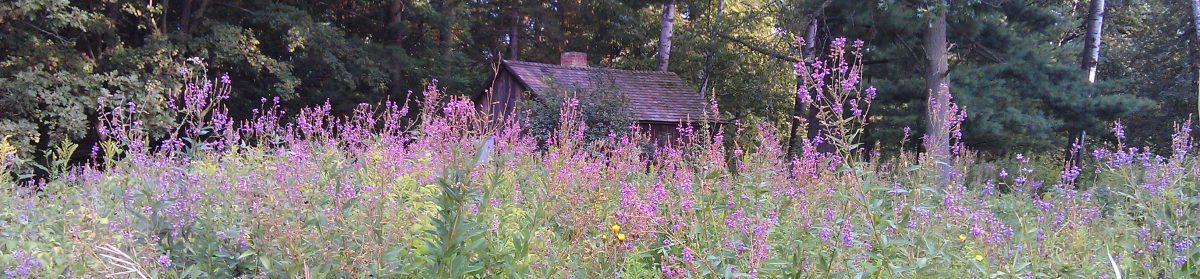
Well, I just experienced the answer.  In July I left for a cabin in a semi-wilderness area of the Pisgah National Forest on privately owned land that abuts the Smoky Mountain National Park.  With only the Dogwood Flats Creek gurgling by and the sound of waterfalls below the cabin, and the echos of bird song ringing through the forest, I finally heard what my heart had to tell me as thoughts and cares of  urban living fell away like an old skin and suddenly I was Present.

It had been many years.  I also became aware of how unhealthy I was after many years of stress and working in an environment that does not promote activity and healthy eating.  But by American standards I even appear relatively healthy.  But up in the mountains, breathing clean air, getting lots of activity on hikes and watching birds; drinking spring water and being in the quiet all day, I realized the full cost of work that is centered around a computer.  It has drained my strength and dulled my imagination.

The only reason I had this chance to make the realization of my lifetime is because of the Queen family in Waynesville, NC who own the cabin and 100 acres on which it sits.  The “cabin” is a two-story log cabin with a large living area and three spacious bedrooms and two baths, a full kitchen and satellite TV.  So it’s a comfortable place to stay while giving guests the time to concentrate on the beauty of the natural surroundings, with lots of rocking chairs on the front porch to sit, rock, and let all the stress or whatever emotions may be present to minimize and finally slip away.  I was there to write and to find out what was ailing me.  The book of essays that I completed on this mountain retreat came easily in the space of this beautiful, isolated environment.  I realized that my original impulse to persuade the public to protect the Earth, in particular to encourage children, teachers and parents to take time in nature, is my true path.  Along the way I got off track mostly due to financial necessity.  Over the next ten months I will be making a transition to focus my energies and talents back in that direction.

The American Soul

I want to share the interview with Jacob Needleman at OnBeing.org, NPR this morning. I frequently listen to “Being” which is the creation of Krista Tibbet a wise and talented woman who brings the thinkers and religious leaders of our time to her program.

Jacob Needleman is a philosopher who grew up in Philadelphia.  He was not particularly inspired to explore American History due to the very stereotyped history classes he experienced – indeed most of us have experienced.  However, through his journey to understand how the wisdom traditions of all religions and philosophies related to the problems or our era, he rediscovered America and the need for America.

For the 4th of July, go here to find a deeper meaning to our democracy that has been lost or at least pushed to the background.  It is in this interview that I found perhaps a clue to why I have been feeling depressed and lost; the loss of this country’s great path to explore the truth and to uphold that freedom for all.  Needleman wrote The American Soul in which he describes what he has come to understand and how he answered this question: Is America necessary?  He contrasts the individual with our current craze of individualism.  He writes that obligations go along with freedoms.  And, he implores us to think together for a while, not act, not shout…but to stop and consider what being an American truly means.

Mountain Sojourn

Climb the mountains and get their good tidings. Nature’s peace will flow into you as sunshine flows into trees. The winds will blow their own freshness into you, and the storms their energy, while cares will drop off like autumn leaves.  ~ John Muir

Tomorrow I “trek” to a cabin in the Pisgah National Forest.  The owner, a writer like myself, assures me it is quiet and its spring water the best tasting in that country, the Appalachians.  There is a stream with trout and waterfalls; a big porch with rocking chairs and forest.  I can’t tell you how much I need this time to refresh in nature, how much of my natural rhythm (if I even have one left)  may remain in tact after mind and body numbing technical writing in an isolated office at a university writing other people’s dreams.  The art is perception, some might say.  But I wonder now if that is just a fool’s strategy to drink the undrinkable.

But I am blunt in my ability to judge; worn from forcing that which goes against my grain.  Weary, foggy, and unsure…I go to the mountains to listen to a stream passing by, making melodies from the stones it must traverse on its journey.  I will learn something from the river full of trout outside the cabin door and maybe follow it for a while to see where it goes.