When despair for the world grows in me and I wake in the night at the least sound in fear of what my life and my children’s lives may be, I go and lie down where the wood drake rests in his beauty on the water, and the great heron feeds. I come into the peace of wild things who do not tax their lives with forethought of grief. I come into the presence of still water. And I feel above me the day-blind stars waiting with their light. For a time I rest in the grace of the world, and am free. ~ The Poetry Foundation
My spiritual center, i.e. the physical and psychological tether of my soul on this planet is the ancestral home of my grandparents in Watauga, Tennessee. The Hilltop Farm they inhabited and farmed, and welcomed their children and grandchildren is the place where I felt Mother Earth’s presence as a child. I have written that I’m tethered there, grounded there psychologically and spiritually. For my entire life it hovers in my imagination and pulls me toward it.
America was first an agrarian nation with millions of family farms by the time I was born in 1945. But during my life up to now (81 years and counting) we have lost millions of small family farmers and their lands to industrial scale one crop operations owned by corporations with no human face. With that theft the soil of our geographical home has been robbed of its biological wealth and resilience. Young farmers today – our pioneering youth – face insurmountable barriers to small farm, biodiverse farming. The American Farmland Trust reports that we lose 2,000 acres of farmland every year. Most of these are farms where the farmer ages out. Sons and daughters do not carry on the farming business because its almost impossible to make a living growing wholesome food for Americans in their local communities. The farm is sold. American is sold out for some corporatized replacement that drains the community of its wealth.
Wendell Berry, whose poem has always resonated with me as a fellow guardian of the sacred nature of the Earth. If we cannot learn to live on Earth without ruining it, we are doomed. This is everywhere apparent across the planet.
Why have corporations come to rule over us? Why is capitalism a no-win system? Get a tea or coffee, or a clear glass of that sacred beverage – agua pura – and listen to Wendell Berry discuss America’s un-settling by greed.
I promise you this interview with the late great Kentucky farmer-poet, writer and philosopher – at a Sustainable Agriculture conference – will settle you with his eagle vision of a way forward in an uncertain time.
“Any fool can destroy trees.” ~ John Muir, from “Save the Redwoods” essay in John Muir, Nature Writings, The Library of America, p. 830, 1997, N.Y., N.Y.
Study the maps from the Berkeley Climate Monthly Report (previous post on this blog). Study Europe, especially France and Spain. This heat pattern was long predicted by climate scientists yet with all we know, and without any hope of a global effort to reduce heat producing carbon emissions, it may yet all come true and then some.
Heating on land takes human lives, destroys forests whose carbon sequestration is fundamental to the gentle climate we have known for at least the last 10,000 years. We have depended on weather patterns known to us as seasons of the year. Farmers have known these patterns and have planned accordingly.
As agriculture varies over the centuries and location, humans have learned how to extract the most food out of a given piece of land. Extraction from tilling the land we have recently observed destroys the underlying networks of mycelia that are the conduits of water and minerals and the central hub of the lives of millions of microbes and invertebrates whose lives make our abundant foodshed possible.
We are entering a new era of life on Earth. Across the world people and organizations labor to restore ecosystems and to protect species. Notable too are the family by family efforts to plant natives to support insects and birds and other of our kin at risk from climate change, pesticides, and general disruption of their life cycles in their habitats.
In spite of these local or regional efforts, we have passed a point where Earth’s biological systems are irrevocably disrupted by climate forcing that has caused drought, floods, fire, mega-storms and now, these play back on each other for a forcing effect. The fires in the NE USA, Canada, and Europe are illustrative. The fires are so intense now that they are creating their own weather. When this happens, no human intervention can stop them. More people are displaced.
We have passed tipping points now. No going back. This could have been stopped or slowed down had we stuck together across political and social divides but we did not. We know Mother Earth’s creatures are malleable and ultimately able to adapt under favorable conditions. Its still possible that there are things we can do now but they are hard and will need big collaborations to achieve.
This fact has been hard for me personally to acknowledge. Generally, I am an optimist believing there is hope to make change happen soon enough. But those changes, at least in America, have been stymied and denigrated by leaders and some of the public alike. All that fossil fuel lobbying paid off? No one will be unscathed by the coming Earth changes. Nature will endure but in some form we cannot predict nor whether we’ll survive to be part of it. Nature is responsive and ultimately able to change under different conditions.
America embraces capitalism as its economic religion and oath. The vagaries of the system have boomeranged over the decades between the forces of greed and the forces of prudence and justice. In America the forces of avarice and greed are in the White House at present, half the Congress unwilling to stop it, and the other half powerless. Citizens and representatives still in touch with reality are forming coalitions and I feel a groundswell forming to stop them. But when? The world is burning around us. How much longer can rich and powerful people live in altered realities with all their power and wealth? Don’t hold your breath. Better to join with friends and people who DO possess reason and power through the Constitution.
I am not giving up nor are you. There is a growing coalescence among neighbors and communities across the U.S. We can do amazing things together; we can’t stop climate change but we can adapt to it using not only our wits, but also by cultivating a reverence for the Earth we forgot somewhere on the way to “get the gold”.
The reason our culture has not embraced an intelligent relationship with our planet is the way we consider humans separate from other species and the land and waters of Mother Earth. Yet nothing could be further from the truth no matter what some religions may teach. We are a biological species. Our contribution to the whole biota is that we are reasoning creatures and we have an opposable thumb and we make stuff. We could be very useful to Mother Earth by understanding how the natural world works and that we are one among millions of species. I am no fool that that change of worldview could happen in America soon enough, but a great deal of our people are coming to this understanding. So, a major action we can take is to be in a spiritual posture of humility and take actions to undo the conditions that are causing climate change.
We can’t stop it now, but we can mute the impacts and then learn what the new realities will mean for ALL life on Earth and adjust how we live. That is, we embrace and recall reverence for life which our species once embraced. We should turn to the original keepers of North America, the Tribal Nations across this land. We can learn from their understanding of our place in the great panoply of life on this land.
I had accepted a teaching position at Crane Junior High School in Yuma, Arizona. In turn, this would be an education for me beyond my wildest imagination. My degree in special education for students with hearing loss was a rarity. The administration decided that I could teach any kind of learning disability as well. It was a rich if not chaotic teaching experience for me and my brilliant classroom aide, a Yuma local.
The Lay of the Land
The city had gained the name “the Crossing” when people traversed the Colorado River at Yuma into southern California during the Gold Rush. It was my first encounter with the river which is channeled to water America’s vegetables and grains in the Imperial Valley of California. Its precious water also flowed along quiet canals among date farms and citrus groves throughout the city of Yuma. My school was surrounded by broccoli fields and orange groves. The whole environment was blooming with diversity.
In many ways I felt at home in Yuma which is a sprawling western town with a mashup of cultures and languages. It is a major location for Marine, Naval and Army facilities. I thrived in the milieu and while there, I discovered the history and cultures of the region from my students and their families. They represented the Cocopah and Quechan tribal communities, migrant-farmer and military families, and locals whose families had lived in the region for generations. They grew cotton, dates, fruit and vegetables.
Most of my students spoke Spanish fluently but could not do so at the public school which observed a strict English-only rule. For some of my students, sign language solved the language gap, but for others it burned in their soul with indignation. The area’s history of settler dominance repressed Mexican and Indigenous cultures. Colorado River tribes were numerous up and down the river between Parker, Arizona near Lake Mead and down into Mexico to the Sea of Cortez. Their cultures had lived along the wild river for at least 20,000 years. They farmed in the rich silt left after the spring floods receded, leaving rich silt for planting. The ancient Lower Colorado River has been likened to a Nile culture. Curious about the river’s history and ecology, I spent my time exploring historical sites and learning from elders and regional scholars.
When I first encountered the Colorado, it was unrecognizable to me as it was sprayed at high velocity from circulating sprinklers across the Imperial Valley on the California side of “the crossing”. Precious water evaporated in the dry hot atmosphere before falling to the ground. Row upon row of lettuce, broccoli, and cabbages lapped up what water fell to the ground. As far as the eye could see, this preposterous apparition filled my windshield as I drove through the Imperial Valley at sea level.
My first sight of this phenomenon occurred as I descended from the Continental Divide atop the Laguna Mountains (6500 feet above sea level to below sea level at the base of the mountain and the vast plain of the Imperial Valley. I was driving my son’s El Camino, a great San Diego beach buggy but treacherous in a place as hot as the valley. By the time I pulled into a watering hole near Yuma, I was growing faint. My education in Yuma would include heat stress and heat stroke prevention and how to equip a car for travel through the desert.
In its natural state, the Colorado River began as melt water that ran down through the Rockies, gathering size and speed, carving deep canyons in the red sandstone of northern Arizona. The river ran red where it dropped suddenly down toward the Sonoran Desert, flooding its banks in the spring as it flowed down into Mexico and emptied into the Sea of Cortez (Gulf of California). Where it slowed and spread from its banks, a delta region of marshlands formed that were places of high biodiversity. Plenty of fish and game abound. Indigenous fishers and hunters found a wide margin of mesquite tree forests on the banks of the river, as did French fur trappers and Spanish explorers. During the Gold Rush, however, these trees were cut down to burn in the steamboat business that developed to ferry gold hunters back and forth over the river which was a mile wide near Yuma. Loss of this tiny tree forest meant fewer deer and loss of a foodshed. The mesquite trees release bushels of nutritious bean pods seasonally. Later, scientists discovered the pods, when ground and made into flour, provide natural immunity to diabetes by regulating blood sugar. Mesquite bread is still made and sold regionally. It is naturally sweet and easily digested. (I made pancakes from it). Legends record that people walked across the river on the backs of large fish.
The Lower Colorado River was once a thriving place of wildlife and river cultures. In our Anthropocene era, the river is most recognizable at its highest elevations where it continues to cut the stone of Colorado and Northern Arizona and carry it tumbling south. Lake Mead collects the lion’s share of water, but starting at Parker, Arizona, water is pumped 700 ft into the air where it falls into an open canal system (Central Arizona Project or CAP) and travels by gravity toward Phoenix, then shimmies through and on to Tucson and drips into Mexico. The rest goes to Nevada and California. All these artificial truncations are due to something called The Law of the River. In short, this is the pact formed originally in 1922 between states on how to parcel out water to each.
Over decades and extensions of the canal system to accommodate burgeoning populations and infrastructure, the river no longer reaches the Gulf of California. It peters out above the marshy delta region and slowly dries up. Recent efforts by federal, state and tribal nations have managed to restore enough river flow to fill key areas of the marshland again. However, a regional 100-year drought is drying the land, while increasing temperatures from climate change have robbed the Rockies of its snowpack and thirsty alpine soil soaks up more river water reducing flow from the source.
At this writing, Hoover dam and Glen Canyon dam and their respective reservoirs, Lake Mead and Lake Powell, are at historically low levels. Hoover dam was built in the first decade of the 20th century on faulty predictions of average flow. Calculations were made during an unusually high snowpack in the Rockies. This did not become apparent for many decades. Conservation of water did not start in earnest until about 25 years ago. Development pressures continued until, at present, 40 million people rely on the Colorado River for drinking water, farming and ranching, electrical generation and industrial uses parceled out among the seven western states in the Colorado River Compact. A prolonged drought, increasing temperatures, and changing precipitation patterns threaten this broad area of the United States.
Water is the limiting factor in a desert. My students and I gained insights about overharvesting a natural resource—the river in their backyards.
Watch a video from Democracy Now about Data Center development on Tribal Lands. Many governing bodies like Tribal Councils or City Councils sign nondisclosure agreements (NDA) with developers of data centers that prevent citizens from knowing what kinds of deals their governing body makes. Link below to segment.
Krystal Two Bulls, Executive Director of Honor the Earth is interviewed by Amy Goodman about tribal nations pushing back on data centers on their lands, many in water stressed regions such as Utah.
Nature teaches more than she preaches. There are no sermons in stones. ~ John Burroughs
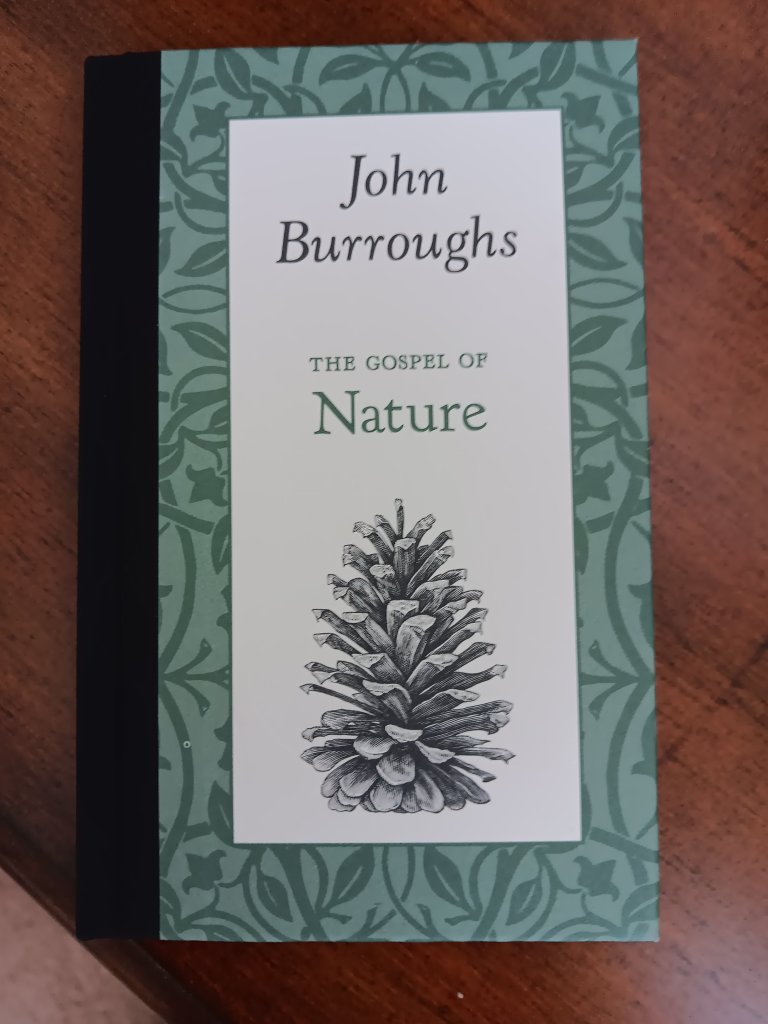
In 2024 my daughter gifted me a small book, John Burroughs, The Gospel of Nature published by Applewood Books. The book is part of the American Roots series of books published by Applewood. It is a treasure that can be carried in your pocket as you take your walk in the woods.
Nature writing is an American tradition and we have many great writers who have each been inspired by this wonderful land we call America.
At present, however, we have leaders who look upon our most iconic landscapes only for the minerals or forests to be exploited for industry and profit. Many of our public lands are vulnerable today due to legislation signed into law by our current president and Republican party. The president has devoted most of his business career to exploitation of people and places. Now in this 250th year anniversary of our nation, we are understanding the full impact on the values we have enshrined as fitting – for our Republic. We as yet know whether the American psyche and will can withstand the forces of anarchy that currently pillage our natural and economic treasure. My own belief is that liberty and truth will win out. I just hope I live to see it.
To salve my broken heart I turn to nature. Below is a first draft of A Long Walk in the Woods, a memoir I am crafting which is almost entirely based on the principle that the land where we live forms much of our character.
Introduction
It began in Tennessee.
As an infant “the woods” encompassed a living room, and my bare feet searched for purchase only months after my arrival. From there to the front yard, and much later to the street on a Schwinn bike. My paternal grandparent’s farm in nearby Watauga served as a touchstone. All the while my body stayed close to the soil, the trees and the miraculous creatures of ground, water, forest and air that delight youngsters who are awake to the Creation.
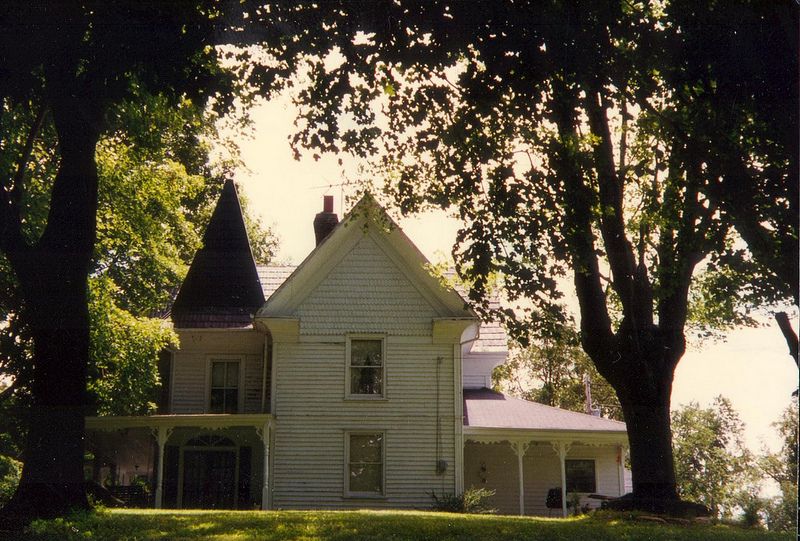
The Watauga House, still unfinished in 1906, was purchased for $600 when my grandparents were married. My grandfather and uncle finished the interior. Here it is today still maintained in its classic beauty:
My grandparents’ farm house in Watauga, TN.
I was born into a military family so my adventures were destined to encompass “the woods” of a continent. For eight decades I’ve been in discovery of “woods” and curious about the humans who call them home. These stories are a memoir of hope and conviction that we can restore “the woods” when we realize we are a part of them.
Awareness of “woods” is present in the body as we grow up and all through our lives. Each infant comes equipped with knowledge of Earth begun in their Mother’s body, listening to the sound of her voice and the beating of her heart. All through gestation, a newly developing life gains greater awareness of interconnectedness, i.e. association, as life-sustaining and that awareness persists in us to our death. It may dull over a life in which a child is not afforded access to the greater scope of nature, and it can also be deaf or blind to the life-giving natural world by living in unnatural conditions. Parents must cultivate that essential knowing though wonderment and exposure. Every little person should touch Earth soon after birth. Feet in the warm soil, face in the sunlight and breezes, a garden of scents and color, or a puppy are delightful means to the know the “woods”.
Though I currently live in an urban environment, I consciously seek out little havens of nature and there are plenty: a simple window box of flowers, the deep grass in an unmown lawn into which we may roll in its cool embrace breathing in the scents of plant and earth. Other “woods” may be:
A bench on a trail in a botanical garden under shading trees;
A walk in an urban forest animated by birdsong or cicada choruses;
The wonder of farm, field and stream; a vibrant farmers’ market among neighbors;
The fragrance of upturned soil basking in the noonday sun in your garden;
The joy with friends on a golf course edged by trees; the feel of spikes penetrating the closely mowed green and the scent of rich earth underneath;
A long walk on the beach where white sails fly and skimmers dip and dine;
The lovely song of a Carolina warbler that cheers the heart;
Fishing along a stream, lake or ocean; plop of frog and buzz of dragonfly wings;
Light playing through water or rainbows sparkling across the mist from a sprinkler;
Rain on a hot day with the window open and the curtains afloat;
A teacup tidepool of hermit crabs and keyhole limpets on a rocky beach.
The fact is every living being is born of nature. We “recognize” its features, scents, and touch in myriad ways because we all belong to the same Mother. We are all made of the same “stuff”. Wherever I have resided for a time, there are perceptible Earth energies, no matter how much concrete may lay over it. That lovely little plant will find its way through a crack in the surface, or a tree root lift that sidewalk. I cheer my kin on!
“A thing is right when it tends to preserve the integrity, stability, and beauty of the biotic community. It is wrong when it tends otherwise.” ~ Aldo Leopold
We see this phenomenon in the seven states who have been drawing down the Colorado River Basin water resources to the point of an emergency, and now in the proliferation of data centers in support of AI. In both cases large scale industrial projects drive decisions rather than prudent decision making with a land ethic (meaning the best decision making by a thinking community).
Citizens are finding themselves in a water crisis across seven states who utilize Colorado River Water, or in the fact that citizens in U.S. states are in a quandary as data center developers pressure them to either sell their homes or face the whine, pollution, grid and water overuse of mega data centers built in their backyards.
These kinds of abuses and overuses of the planet’s generosity occur without an ethic that all agree upon. Aldo Leopold made the greatest contribution to this discussion in his landmark essay, The Land Ethic. Leopold considered a land ethic as a dynamic outcome of a thinking community working together for the best outcomes for both the biotic health of the land and for people. The quote above sums up the concept.
When the Colorado River Compact, which includes seven states that utilize its waters, discussed how they could work together to share this great river’s resources, they did so in spite of a basic fact: the river experiences periodic one-hundred year droughts as shown in fossil records and tree rings.
Americans living in these states have witnessed a long-term drought that has all but emptied the two giant reservoirs, Lake Mead (lower basin states) and Lake Powell (upper basin states).
Desert states like Arizona and California, have sucked the regions dry to support enormous growth in cities and agriculture. Before building the Hoover Dam to create Lake Mead, Congressmen in 1878 sent John Wesley Powell to assess the southwest region for its potential for development of the western states. He returned after 18 months to deliver a sobering conclusion: the arid region is unsuitable for large scale development based on available water supply and geological aspects of the west. Read a summary of his report here.
Today, nearly a century later, mega-wealthy oligarchs who developed artificial intelligence (AI) want to build huge (thousands of acres) data centers to power AI. The horses are ahead of the cart again as the public isn’t sure they want AI to be developed without careful discussion and oversight. Virginia, a drought-stressed state, has hundreds of data centers clustered in the northern part of the state and are salivating for land in rural area. They bully landowners, promise huge tax income while drawing large amounts of fresh water from aquifers. The trend is to push out home owners, farmers, and even small townships, by offering as much as $12M an acre. Some owners are pressured when neighbors sell and leave other land owners whose homes, farms and enterprises are their treasures. Emissions from gas-powered turbines, noise pollution, and hidden impacts such as the water required to produce the power to run the data center are unsustainable and undemocratic. Read this recent executive summary of data centers pros and cons from CERES, a nonprofit that supports sustainable business solutions.
What is missing is the values-discussion that Aldo Leopold described that is a dynamic process within a thinking community. It is an ongoing discussion that considers the health of the land when making decisions that could decrease its well-functioning. Read The Land Ethic Below. **This is one of the most downloaded files on my blog. People from all over the world read it. My own view is that no one from the scientific community has analyzed “how to live on a piece of land without ruining it” better than Aldo Leopold. See the Aldo Leopold Foundation located in Baraboo, Wisconsin for more about his legacy.
And a small cabin build there, of clay and wattles made;
Nine bean-rows will I have there, a hive for the honey-bee,
And live alone in the bee-loud glade.
And I shall have some peace there, for peace comes dropping slow,
Dropping from the veils of the morning to where the cricket sings;
There midnight’s all a glimmer, and noon a purple glow,
And evening full of the linnet’s wings.
I will arise and go now, for always night and day
I hear lake water lapping with low sounds by the shore;
While I stand on the roadway, or on the pavements grey,
I hear it in the deep heart’s core.
Copyright Credit: W.B. Yeats, “The Lake Isle of Innisfree” from The Wanderings of Oisin and Other Poems. (London: Kagan Paul, Trench and Co., 1889.) Public domain.
Source: The Wanderings of Oisin and Other Poems (Kagan Paul, Trench and Co., 1889)
When I was a teenager, I would ride my horse deep into the Northern California wilderness. I came of age living in big nature. Given California’s growth and development, that ride would now be impossible. Yet phylogenetically, big nature is deep in all of our psyches. So I began to wonder why we were so rapidly destroying it. Years later at my first job at the University of Houston, I was studying children and parents’ environmental views and values. I found the children knew what air pollution was; but when we asked them if Houston had a problem with air pollution, they said, “No, we don’t have pollution here.” At the time, Houston was the most polluted city in the United States. – Peter Kahn, Environmental Psychologist
Environmental Generational Amnesia (EGA) was identified by Peter Kahn when I was working as an environmental educator. It began to answer my puzzlement about why people could not see the degradation of nature over time.
Kahn explained this phenomenon occurs as each generation takes the environment in their time as the norm.
Now, in America, I am wondering if this phenomenon works with memory of a democracy. We take what is before us as what it has always been.
In Kahn’s recommendations to counter environmental generational amnesia he worked with urban planners, for example, to build in features that allow local residents to experience more robust nature in a built environment.
Could we do the same for each generation to remember and know the origins of our Republic by experiencing aspects of a democratic society through out our lives as The People. Our form of governance is dependent on robust citizen and representative action and participation.
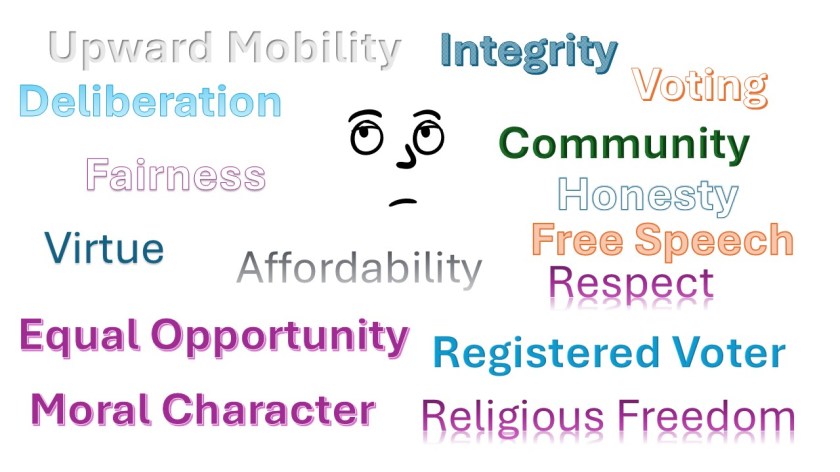
We could start by considering how to identify fairness, developing respectful listening; teaching check and balance by designing situations where kids can participate in situations demonstrate how it works to protect representation, free speech, and other key characteristics of a democratic society.
I recall a teacher in high school who designed his homeroom to function in this manner. He did something else: he taught us the Latin and Greek derivation of many words in our language so that we could derive meaning from root words
Do you agree that a type of democratic generational amnesia may be a force that works to undermine democratic governance which is dependent on individuals possessing more than rudimentary knowledge (i.e. memorizing definitions).
For too long, the dominant culture has cleaved humans from the web of life, insisting upon human separation from and superiority to the larger living world. That assumption has been translated into law, governance, and other realms of practice, justifying the treatment of nonhumans and nature as treasure troves for endless exploitation. However, the grip of this mode of thinking is beginning to ease, leaving space for new ideas and actions to sprout through. MOTH – More Than Human Life Program, https://mothrights.org/about/
Among thoughtful people across disciplines, the understanding that human beings are woven into the fabric of Nature – animal, plant, river, ocean – all is part of a whole that is interconnected beyond the human imagination. Recent research on trees, for example, demonstrate how certain trees “mother” others and pass on their knowledge to new generations. We’ve learned how fungi are a living glue and generative structure that is ubiquitous in nature and microbes in human beings are a living brain in the gut lining. The more we learn, the more we are humbled before the whole of life on earth.
Now, as great harm is evident through the combined activities of human beings which weakens and disappears species, robs whole forests or rivers of its life sustaining powers, we are called to reconsider whether the Earth is for human taking. What of the rights of all beings who make human life possible?
Emergence Magazine Podcast my readers will note is a well I return to frequently to gain new perspectives on the nature of our relationship to the whole of life. Western philosophy separates humans from nature, thereby providing rationale for extraction and overharvesting for economic gain and for power over others. Ironically for America, present at the time of exploration were millions of Americans with intricate knowledge of how to live on a piece of land without ruining it (Aldo Leopold) and a conceptual understanding of the web of life and its spiritual nature. To me this is one of our nation’s greatest sins. Yes, I consider it a sin because a thinking person through observation alone can observe how life is wildly interconnected and sacred.
In Song of the Cedars listeners experience the oneness of life with an exceptional group of humans interwoven in the panoply of a healthy rain forest.
Consider whether the exploitation of a mineral from the earth should come with a cost paid back to that mountain based on the legal rights of nature. While listening to this podcast, I thought, “Wow. to think there are people who are engaged in integration in the web of life. I thought these are our most important people, guides and wisdom keepers.”
Let me know what you think about this movement. What is your experience with the rights of nature if any.
At present Lake Mead and Lake Powell on the Colorado River distribution system are at record lows (Lake Mead 34% and Lake Powell 27%).
From 1990 to 2008 I called Arizona home. I lived first in Yuma where the Colorado River channels into myriad canals to water America’s vegetables and grains in the Imperial Valley of California.
It was in this vast valley that I first encountered the Colorado, unrecognizable to me as it was sprayed at high velocity from circulating sprinklers. Precious water evaporated in the dry hot atmosphere before falling to the ground. Row upon row of lettuce, broccoli, and cabbages lapped up what water fell to ground. As far as the eye could see, this preposterous apparition filled my windshield as I drove through to Yuma at the confluence of Arizona, California and Mexico borders.
In its natural state, the Colorado River ran down through the Rockies, gathering size and speed, carving deep canyons in the red sandstone of northern Arizona. The river ran red where it dropped suddenly down toward the Sonoran Desert, flooding its banks in the spring as it flowed down into Mexico and emptied into the Sea of Cortez (Gulf of California). Where it slowed and spread from its banks, marshlands formed that were places of high biodiversity. Plenty of fish and game were found by Indigenous peoples and later explorers. All along the river near Yuma, forests of mesquite trees released bushels of nutritious bean pods. Later, university scientists discovered the pods, when ground and made into flour, provide local people with immunity to diabetes. Mesquite bread is naturally sweet and easily digested. River peoples grew crops in rich deposits of mud left by the receding waters. Legends of fish so large and numerous the people could walk across the river.
In our Anthropocene era, the river is most recognizable in its highest elevations where it continues to cut the stone of Colorado and Northern Arizona and carry it tumbling south. Hoover Dam at Lake Mead collects the lion’s share of water, but starting at Parker in Arizona, water is pumped 700 ft into the air where it drops into an open canal system (Central Arizona Project or CAP) and travels by gravity toward Phoenix, shimmies through and on to Tucson and then drips into Mexico. Over decades after the canals grew with a burgeoning population and larger farms, the river never made it to the mouth of the Sea of Cortez. It petered out above the marshlands of northeast Mexico which slowly dried up. Recent efforts by environmentalists and indigenous communities managed to restore the flow enough to fill key areas of marshes again. The once rich biodiversity is returning.
At this date, two dams and their respective reservoirs, Lake Mead and Lake Powell, are at historically low levels. Hoover dam was built in the ’30s of the 20th century on assumptions made during an unusually high snowpack in the Rockies that was not the norm. The dam at Lake Powell was later built to collect water and generate electricity for business, farming and cities. Desert lands where the canals distribute water are biomes with limited water. Turns out that the Colorado River flows are normally lower than the projected. Long-term tree ring studies show regular drought periods of up to 100 years. The area is in one now.
Warming from climate change is causing snowpack changes – faster melting rates and new evaporation of ice crystals directly into a gaseous state.
As American food security, economy, science and culture face a potential crisis, how will 40 million people live in a hot, dry desert? From LA to Phoenix to Tucson and points between, much will be unsustainable without reliable Colorado River water. Cities have mostly drained their ground water. Some like Tucson are replenishing it with CAP water but that, too, is a scenario with a short horizon.
Now the powers that made the Law of the River (Upper and Lower Colorado coalition of states, municipalities and tribal nations) are talking about draining Lake Powell and sending water to Lake Mead. All partners will see reduced acre feet per year, and some will no longer receive any water from the river. Ongoing talks and mediation have reached no agreement yet. Arizona’s tribal nations are adamant that they must be part of that negotiation.
Lake Powell in southern Colorado was constructed under a huge outcry by residents and tribal governments who ultimately suffered the sacrifice of their homes and property and traditional homelands to fill the huge reservoir. Traditional lands of Indigenous nations must be returned. What about all the people who lost their homes and farms?
Will humanity learn anything from this tragic miscalculation? I’m skeptical given history.
When Congress commissioned John Wesley Powell to survey the West and determine its potential for farming and building cities, he traveled extensively in the West and was one of the first expeditions to make the wild trip down the Colorado River from the headwaters to Yuma. Result? He reported to Congress that the area held limited water for most of the land mass and that if the government should sell lands to enterprising ranchers, farmers and speculators, they should bear the financial burden of providing what water supply they could find. Imagine if they had followed Powell’s advice. Many fewer people would reside in the Western deserts; the food supply would be regionally grown, and the international food markets would be in places where rain naturally falls. The River would run free, nourishing human and natural communities to the sea.
I once wrote a speculative fiction novel in which, due to changes in climate, local communities formed enterprises that fit the bioregions where they lived. Later, they became small nations with a shared ethic that recognized the ecology of place and innovated within natural limits.
The American Southwest is a 2025 award-winning documentary with updated information and spectacular photography. It shows the biodiversity and the role of many animals, plants and insects adapted to the river, and how their lifeways provide sustainable strategies for human life in arid lands.
It traces the original agreements (The Law of the River) on how the Colorado River water would be allocated, the construction of Lake Mead, and subsequent construction of Lake Powell. I recommend the film for citizens and students of ecology and bioregionalism as we enter a defining period when we will all need to work together to mitigate and adapt to a changing climate. If we consider the land and water in that partnership, I believe we can live within the limits of the Earth while innovating in our communities.

 Susan Feathers