The Land and Waters Speak

At present Lake Mead and Lake Powell on the Colorado River distribution system are at record lows (Lake Mead 34% and Lake Powell 27%).

From 1990 to 2008 I called Arizona home. I lived first in Yuma where the Colorado River channels into myriad canals to water America’s vegetables and grains in the Imperial Valley of California.    

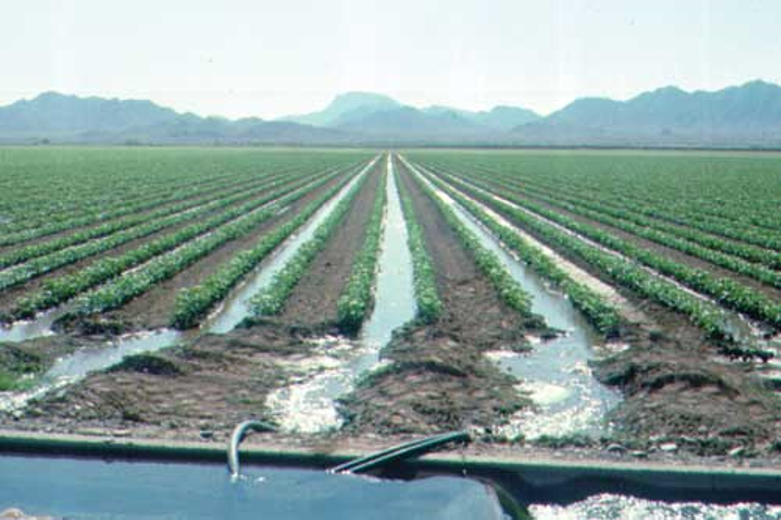
It was in this vast valley that I first encountered the Colorado, unrecognizable to me as it was sprayed at high velocity from circulating sprinklers. Precious water evaporated in the dry hot atmosphere before falling to the ground.  Row upon row of lettuce, broccoli, and cabbages lapped up what water fell to ground. As far as the eye could see, this preposterous apparition filled my windshield as I drove through to Yuma at the confluence of Arizona, California and Mexico borders.

In its natural state, the Colorado River ran down through the Rockies, gathering size and speed, carving deep canyons in the red sandstone of northern Arizona. The river ran red where it dropped suddenly down toward the Sonoran Desert, flooding its banks in the spring as it flowed down into Mexico and emptied into the Sea of Cortez (Gulf of California). Where it slowed and spread from its banks, marshlands formed that were places of high biodiversity. Plenty of fish and game were found by Indigenous peoples and later explorers. All along the river near Yuma, forests of mesquite trees released bushels of nutritious bean pods. Later, university scientists discovered the pods, when ground and made into flour, provide local people with immunity to diabetes. Mesquite bread is naturally sweet and easily digested. River peoples grew crops in rich deposits of mud left by the receding waters. Legends of fish so large and numerous the people could walk across the river.  

In our Anthropocene era, the river is most recognizable in its highest elevations where it continues to cut the stone of Colorado and Northern Arizona and carry it tumbling south. Hoover Dam at Lake Mead collects the lion’s share of water, but starting at Parker in Arizona,  water is pumped 700 ft into the air where it drops into an open canal system (Central Arizona Project or CAP) and travels by gravity toward Phoenix, shimmies through and on to Tucson and then drips into Mexico. Over decades after the canals grew with a burgeoning population and larger farms, the river never made it to the mouth of the Sea of Cortez. It petered out above the marshlands of northeast Mexico which slowly dried up. Recent efforts by environmentalists and indigenous communities managed to restore the flow enough to fill key areas of marshes again. The once rich biodiversity is returning.

At this date, two dams and their respective reservoirs, Lake Mead and Lake Powell, are at historically low levels. Hoover dam was built in the ’30s of the 20th century on assumptions made during an unusually high snowpack in the Rockies that was not the norm. The dam at Lake Powell was later built to collect water  and generate electricity for business, farming and cities. Desert lands where the canals distribute water are biomes with limited water. Turns out that the Colorado River flows are normally lower than the projected. Long-term tree ring studies show regular drought periods of up to 100 years. The area is in one now.

Warming from climate change is causing snowpack changes – faster melting rates and new evaporation of ice crystals directly into a gaseous state.   

As American food security, economy, science and culture face a potential crisis, how will 40 million people live in a hot, dry desert? From LA to Phoenix to Tucson and points between, much will be unsustainable without reliable Colorado River water. Cities have mostly drained their ground water. Some like Tucson are replenishing it with CAP water but that, too, is a scenario with a short horizon.

Now the powers that made the Law of the River (Upper and Lower Colorado coalition of states, municipalities and tribal nations) are talking about draining Lake Powell and sending water to Lake Mead. All partners will see reduced acre feet per year, and some will no longer receive any water from the river. Ongoing talks and mediation have reached no agreement yet. Arizona’s tribal nations are adamant that they must be part of that negotiation.

Lake Powell in southern Colorado was constructed under a huge outcry by residents and tribal governments who ultimately suffered the sacrifice of their homes and property and traditional homelands to fill the huge reservoir. Traditional lands of Indigenous nations must be returned. What about all the people who lost their homes and farms?

Will humanity learn anything from this tragic miscalculation? I’m skeptical given history.

When Congress commissioned John Wesley Powell to survey the West and determine its potential for farming and building cities, he traveled extensively in the West and was one of the first expeditions to make the wild trip down the Colorado River from the headwaters to Yuma. Result? He reported to Congress that the area held limited water for most of the land mass and that if the government should sell lands to enterprising ranchers, farmers and speculators, they should bear the financial burden of providing what water supply they could find. Imagine if they had followed Powell’s advice. Many fewer people would reside in the Western deserts; the food supply would be regionally grown, and the international food markets would be in places where rain naturally falls. The River would run free, nourishing  human and natural communities to the sea.

I once wrote a speculative fiction novel in which, due to changes in climate, local communities formed enterprises that fit the bioregions where they lived. Later, they became small nations with a shared ethic that recognized the ecology of place and innovated within natural limits.

Resources:

  1. Colorado River Management: https://www.azwater.gov/crm/dashboard#
  2. Bioregionalism: https://en.wikipedia.org/wiki/Bioregionalism
  3. The American Southwest: video on YouTube – https://youtu.be/K96ly_uLAPk

The American Southwest is a 2025 award-winning documentary with updated information and spectacular photography. It shows the biodiversity and the role of many animals, plants and insects adapted to the river, and how their lifeways provide sustainable strategies for human life in arid lands.

It traces the original agreements (The Law of the River) on how the Colorado River water would be allocated, the construction of Lake Mead, and subsequent construction of Lake Powell. I recommend the film for citizens and students of ecology and bioregionalism as we enter a defining period when we will all need to work together to mitigate and adapt to a changing climate. If we consider the land and water in that partnership, I believe we can live within the limits of the Earth while innovating in our communities.

The River People – Chapter 4

Chapter 4

Child of the River Spirit

1500 – 1535

The water was refreshing though warm from the late summer’s heat. It was the Moon of the Early Harvest, and I was full of baby, ready to give birth any moment. This would be my third birth. I knew what to do. My mother and sisters would be by my side to help me. I was not as fearful as I had once been.

My friends were bobbing with me above the middle of the riverbed when the first sharp pain struck; I felt my whole body quicken and go into action. I shouted to my friends and we rushed to shore as fast as we could swim, but I felt the baby slipping from between my legs! I screamed, and we all frantically dived to find the little one below the green water.

Feeling a small form brush against my leg I dove under to see my baby turn toward the river’s flow and move his tiny arms and legs just like a frog! I snatched him up and he gasped as he rose into the air! He wailed loudly like a fish might if it could when pulled from its water world. We were all amazed as we swam slowly to shore with my friends surrounding me and my baby so he would never slip from us again! From that day forward, we understood he belonged to the river spirit. And today, look at him. He is our tribe’s Navigator.

~~~

            This is how my mother related my birth story, repeated from when I was young even until now, twenty summers later. I confess, I never tire of hearing it because it reminds me of my purpose. After I became old enough to accompany my brothers and father on river trips down to the Big Waters, I found that I understood the river better than anyone, but I do not know how or why. It is a gift from the creators I believe.

This is the red river of our origin. It can rage and then calm; it can be red, black, grey, green, or golden. In the Moon of the Melting Snow the river carries red swirling silt down into the valleys and low desert and outward to forested riverbanks, depositing it as water receded.

Below us the river meanders, twists and turns back on itself like a coiled snake. On it goes, breaking into many streams and bayous that spread out as far as we can see. Within its form are shallows and deeps, and places men disappear in soft mud. Near the big waters, the rice grows along the way. We dig up clams and abalone, net crabs and shrimp, and marvel again at the abundance of the world around us. We harvest with respect for the spirits who guard the land and water and fill all things with life. We net turtles from the Big Waters and roast their meat on the beaches. The multicolored sparks from driftwood gathered by children fill the sky above our fires, and we study the black sky and shimmering stars, long into the quiet night. We read the heavens and tell ancient stories from elders who passed them down from time immemorial. We sleep in deep restful bundles, our feet to the fire, until the morning sun awakens us, and the screech of the shorebirds picking through the remains of our evening meal makes us rise to chase them away.

We remain on the ocean and lower delta of the river for weeks, watching the river run itself out to sea. When we return upriver to our ancestral fields, our work begins to plant the seeds we have stored and to tend them to harvest.

I pole and probe the river bottom to determine the best routes for my people. Like a game, it changes with each season, challenging me to observe its moods in currents, speed, and colors. As we pole on rafts to the sea, I watch for deer people, the otter tribe, and clans of feathered ducks in every shape and color. I collect the feathers dropped in my path, and I give thanks for the swimmers, crawlers, and stalkers that are also my family. We watch for the mountain lion and jaguar that come into these wooded paths along the river to hunt the same game we seek. We are stalkers all.

My days are spent in this way, but when the cold season comes, and the river is resting, I find quiet rest inside our hut with the fire reaching toward the smoke-hole, and all of us making something with our hands and telling stories to entertain us.

Until my mother joined her family on the other side, I always heard the story of my birth. I am the Navigator of my tribe.

In a far distant time …

Albert Pope was already on the river in the cool of the morning having launched his small fishing boat in the gray dawn. He allowed the slow current to carry him south, past the RV park with its trailer city. The gauzy traces of last night’s moon lingered above the horizon. Albert had spent the night outside of his own trailer on the rez. He’d told stories to his family and neighbors about the old times until one by one they each disappeared to lay their heads upon a pillow and dream. Albert had stayed up all night, watching the golden moon’s light illuminate the sky while he listened to the desert’s nocturnal creatures flit and scurry about. Going fishing was a natural extension of night to day.

Albert sat in quiet contemplation watching where his fishing line cut into the green water. He focused on the wedge-shaped pattern on the surface where his line plunged down. A quiet man in his late sixties, Albert had outlived most of his peers. The average lifespan of tribal men was only forty-eight years. Diabetes, alcoholism, and heart problems took them before their time. Albert had quietly watched as generations of Yuman men gave in to depression and anger—turning to alcohol or drugs— to dampen the pain of living in two worlds.

Suddenly his concentration was broken by a strong tug on the line. He pulled back reflexively. The fish went wild beneath the boat. Leaning forward, he peered into the opaque water where he glimpsed a brief movement—a pinkish-gray flank illuminated by the soft light of the rising sun. He held the line taut, reeling it in slow and steady. Beads of sweat rolled down his forehead from where his broad Stetson hat met his dark skin. Finally, he lifted a large tilapia out of its watery world. It twisted and turned in protest, eyeing him as it flapped its tail hard on the boat’s aluminum shell. Albert removed the hook from the fish’s thick lower jaw. For a trash feeder, the tilapia was a beautiful creature, he thought. It briefly glimmered in rainbow colors before the air dimmed its radiance. He thanked the fish and tossed it into a five-gallon bucket to join its ill-fated cousins. Then, he prepared another line to set out.

Albert felt a great deal of satisfaction that he could still feed himself and his neighbors. Drifting downriver, he thought about the stories his elders had told about the river, how it once ran red and wild, chockful of six-foot salmon “so numerous you could walk across the river on their backs.” He had long imagined the wildlife, thick forests and gardens that once lined the riverbanks. He felt a pang of sadness that long ago hardened into a permanent knot in his center, a steely resistance to a lifetime of mourning the demise of his people and a once-great river. Yet both persisted, outcome uncertain.

Lower Colorado River as it meanders to the great delta and the Sea of Cortez.

How does your river flow?

Of Time and A River

I know the Colorado River where it flows through canals across sweltering fields of lettuce, and where it runs under highways, past skyscrapers and homes. It spreads over shallows where it rises into a cerulean sky to join with clouds.

Yet, the ghost of another river abides here, too.

My first encounter with the Colorado River occurred as I travelled over the Laguna Mountains in California into the Imperial Valley of southern Arizona. My body understood before my brain that I had entered a place of tight margins.

It was early March. I thought the region would be cool. As I reached the desert floor—a descent of 6,000 feet—the temperature rose and the balmy sea air from which I had emerged, dried into hot metal fumes off the hood of my truck. Air streamed hot and unfriendly past the open windows. Yet I was surrounded by a surreal sight of sprinklers throwing arcs of water over row upon row of broccoli and lettuce. Discovering farms in a desert initiated my long meditation on the conundrum of how 40M people came to live in a place where water is the limiting factor, where life balances on a sharp edge.

At the time I did not know that I was meeting the river itself.

In Yuma, Arizona I instructed children descended from the River People who were among my middle school students. Through them I learned the long history of human settlement along the river. For them history reached back thousands of years. Their culture observed the river’s spring floods and tranquil summer flow by moving to the hills when it flooded, returning as it receded to plant crops in the flood plains. They were expert fishers. Legends of people walking across the river on the backs of abundant fish persist in memory. They hunted game in the mesquite forests and among the reedy banks of the river developing a sustainable technology and material culture.

When the first Europeans began to explore the area, one tribe alone had an estimated 20,000 people living above and below what is now the U.S. – Mexico border. Today, desert people abide in and around current day metropolises of the American West. The old cultures knew how to live well on the land under their feet—knowledge that persists to this day.

Read about the history of the Cocopah Nation in Yuma, Arizona.

Fast forward to the 20th century. The United States sent John Wesley Powell to answer a question: “Could the West be farmed like the eastern half of the United States?” Powell made three expeditions to determine the feasibility of farming and city-making in dry lands. A scientist, he studied the watersheds, which was logical. He consulted native people, farmers, and cattle owners. His answer to the lawmakers was not popular. He reported that any development in the west should be done according to the watershed and a set of rules. Annual rainfall for replenishment of ground water would provide the limitations for growth. For example, if a farmer buys land in dry country, he should pay to bring that water to his enterprise and observe the natural recharge limits.

Powell mapped the available water sources. He had lost an arm in the Civil War making his accomplishments even more astounding, including navigation through the Grand Canyon by raft and boat when the Colorado was still running free and fierce.

Congress and colluding business tycoons paid no heed to Powell’s report (1879), lusting over the profits. They asserted that the country could prevail over nature, somehow, someway, with massive dams, canals, and all manner of concrete and steel. The river became the locked and labored one that I came to know. Now, a record drought, dwindling ground water, and water wars over a jerry-rig of litigation known as the Law of the River, exhibits their folly. Forty million people face a doubtful future.

Powell was right.

What gives me hope is the knowledge that the Colorado River Indian Tribes exist today. Could they lead us out of this crisis? Help us reset to a new relationship with the river?

Over my years of meditating on “the water issue,” I have imagined that not too far in the future children bicycling through abandoned roadways, past forlorn and silent high rises, might ask their parents, “What place is this? What happened here?”

Preposterous, you say. What could be more so than what we created in a land where life exists in narrow margins? A river has a body and a spirit that is interrelated with ours and all living creatures that imbibe its life-giving waters. That is not fiction but science and lived experience. These principles can never be violated without consequences. Eventually the river dies and all life dependent upon it. Desert peoples observed, experimented and then fit their lifeways to the river’s way. That is what we must learn to do, using our advanced technologies to mimic nature’s circular systems that regenerate energy and recycle materials.

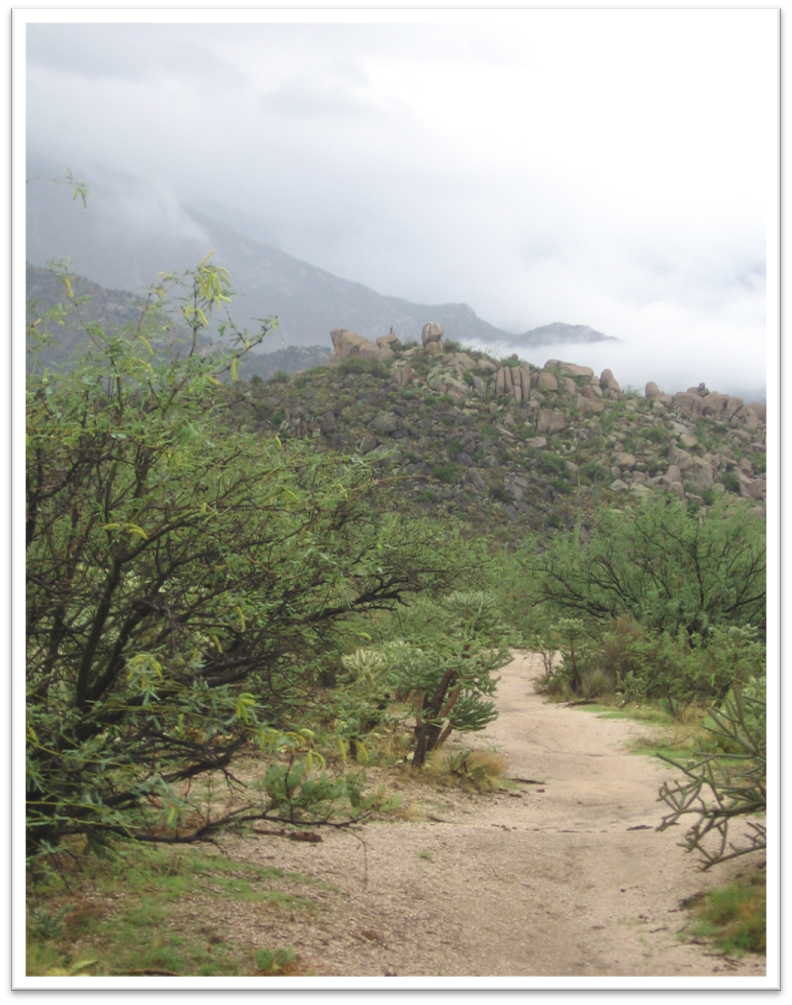
Monsoons over Sonoran Desert – Photo by Susan Feathers

When I moved to Tucson, the first night there I attended a poetry reading by a Tohono O’Odham elder who described her childhood living in a one-room adobe far from the nearest river. Ofelia Zepeda’s nation captured water from rainfall during the summer monsoon. The people practiced “dry” farming in which no irrigation was available, only rainfall and gratitude. She told us how the old women pulled the rainclouds from the sky with their harvesting sticks. I was moved by her beautiful poems and stories.

Upon walking to my car, thunder rolled above and a deafening crack of lightening played in a vast display across the heavens. Dark monsoon clouds released buckets of rain that filled streets, making gullies in the soil, and immediately chilling the air. It was July and the monsoon rains. For me it was a baptism, an initiation and welcome to the real and living desert.

Places – Imperial Valley

Yuma, Arizona Farm Fields

Imperial Valley, Below Sea Level, 1990

The Colorado River was a wild, red fury in its natural state. It flooded its banks in southern Arizona and Northern Mexico on its way from the Rockies to the delta on the Sea of Cortez, Gulf of California. This was true for thousands of years. Early people learned its rhythms and developed cultures in sync with the river’s seasonal flows. They are called The Colorado River Indian Tribes—distinct communities that still exist along the river’s course. Their history encompasses the dramatic changes wrought by damming the great river to create one of the most extensive desert gardens known to humankind.

When I crossed the Continental Divide atop the Laguna Mountains, under a brilliant star-studded black sky, I was entering a dimension so subtle it would take me years to define it. Something more than gravity pulled me down the steep, winding road as it descended into the Imperial Valley. The sun was just breaking above a distant horizon as my vehicle finally leveled out onto the valley floor. Immediately an aroma of soil, mist, and something close to boiled peanuts filled my nostrils. It is a scent that I have only experienced in this part of the U.S. – distinct and overtaking. It is not unpleasant but haunting in a way. You know it is not natural for the valley but something created by a great deal of struggle, sweat, and industry.

In the far distance a range of ruddy red mountains formed the eastern border of the valley with Picacho Peak soaring into unbroken blue. I recall my daughter’s reminiscence after moving to Washington, D.C. from Arizona: “Mom, I miss that big dome of sky that made me feel protected under its blue canopy.”

Openness, expansion, mystery and fear were the emotions that churned in me that day.

The Imperial Valley stretches over 100 miles from the foothills of the Laguna Mountains in southern California to Yuma, Arizona at the juncture of California, Arizona and Mexico. It is a vast alluvial plain, rich in minerals and, before the irrigation of the valley, a low desert dotted by barrel cactus and rolling tumbleweed. Once the dams and extensive canals were built (a colorful history of drastic measures, tragic mishaps, and powerful men with big dreams and money to back them) the desert floor flowered into one of America’s most productive bread baskets. In 1990 the lettuce crop alone harvested $16M for growers.

As the sun rose higher, row upon row of lettuce and blue canals appeared and disappeared from view like an old-time flickering movie. Egrets and gulls flew above or walked among the rows! Did they migrate from the oceans of southern California or up from the delta on the Sea of Cortez?The whole experience was surreal. Then I began to notice the heat…oh, dear. My un-air-conditioned beach mobile! I was unprepared for this region of the world. I was sweating profusely now and had brought only a small bottle of water with me. Suddenly I felt threatened. Where was the nearest town?  Where were the people? I saw nothing but huge sprinklers like warriors from Star Wars on thin metal legs rolling across fields throwing streams of precious Colorado River water onto American grown vegetables and cotton. On and on I drove, past a feedlot that stank for miles, past an ostrich farm and more green flushed with blue sparkling water. Was there any water left in the Rio Colorado? I wondered.

The heat grew ever more oppressive. At below sea level, the Imperial Valley is a heat sponge. I nearly fainted before finding a small town and limped into Wendy’s where I remained for three hours slumped over a table. The waitresses were empathetic. Many California beach combers succumbed to the valley’s record temperatures. It reached 119 degrees that day in May.

Cadillac Desert Video

Imperial Valley, CA