Oceans, Bays, Rivers of Life

Today I placed a Social Vibe charity widget on my blog to support the work of The Surfrider Foundation. My goal is to bring attention and resources to a citizen’s advocacy network that is making an impact worldwide, but that is also represented here in the Emerald Coast’s chapter by surfer and nature advocates.

Today I placed a Social Vibe charity widget on my blog to support the work of  The Surfrider Foundation.  My goal is to bring attention and resources to a citizen’s advocacy network that is making an impact worldwide, but that is also represented here in the Emerald Coast’s chapter by surfer and nature advocates.  We each have a natural interest in sustaining the foundation of life on Earth: water.

Whether saline, brackish or fresh – bodies of water create oxygen, absorb carbon dioxide, clean toxins, and spawn untold generations of life at the base of numerous human food and economic resources.  The awe-inspiring beauty, complexity, and biodiversity in the world’s oceans can still be found across our planet, though diminished.  Science is uncovering that ocean acidification and warming are causing changes in basic processes such as shell formation in marine invertebrates at the base of food chains.  Changes from more localized impacts like the British Petroleum Deepwater Horizon Oil Spill, are harder to follow but observed by many local beachcombers and surfers including moi.

Our coastal communities with the state and federal governments are engaged in major economic diversification efforts for the reason that remaining a tourism-dependent community leaves us vulnerable (Restore the Gulf).  Human error robs us of the certainty that our oceans and watersheds can provide us the beauty, food, recreation and inspiration that humans have relished for all time.

The Surfrider Foundation in Pensacola has joined the Florida Wildlife Federation campaign (Save our Seas, Beaches and Shores) to place a ban on offshore drilling on the November 2012 ballot.  They need to collect 700,000 verified petitions.  Go to this link to download a petition and fact sheet.

See the Ocean Conservancy for more on the health of our oceans overall and for their reports on the Gulf ecosystems post BP Oil Spill.

In Memory of Anne Rudloe

Anne Rudloe – author, scientist, conservationist, and Zen Teacher passed away on Friday, April 27th at her home in Panacea, Florida.  For those of you who have not read her books about the natural ecology of Florida habitats, you are in for a real treat when you do so.  She had just published a second book on Zen practice before  she died (Zen In a Wild Country).  Her passing leaves a cavern in the heart and soul of the Forgotten Coastal area where she and her husband Jack Rudloe founded the Gulf Specimen Marine Laboratory and Environmental Education Center.  Anne and Jack Rudloe are passionate defenders of Florida’s long leaf pine communities, coastal marine life, and sea turtles.  Their efforts span decades and they are notorious for preventing development to overrun critical habitats in Florida.  Anne was an adjunct professor at Florida State University where she mentored many young scientists and future conservationists.

Anne’s best work of natural history in my view is Priceless Florida  coauthored with Elie Whitney and Bruce Means.  I spent days pouring over the descriptions of the State’s major ecosystems, watersheds, and wildlife communities. This is a Florida Nature Bible for readers who wish to learn the amazing and fragile landscapes and natural resources that humankind has been diminishing since we first arrived on its bays bayous swamps beaches and forested land.

To truly experience the expertise and care that Anne and Jack put into the books they wrote together, I recommend that you read Shrimp, The Endless Quest for Pink Gold.

I met Anne and Jack last summer on a trip to explore the Forgotten Coast and my quest as a new Floridian to find the “Olde Florida” way of life.  A year earlier my sister pointed me toward Jack’s books which she read and loved over the years:  The Living Dock, The Erotic Ocean, The Sea Brings Forth and others written in the 60s, 70s and on. I decided to visit the lab and see if I could chat with Jack and Anne about writing some grants for them.  I ended up spending the afternoon with them and buying a couple hundred dollars worth of their books and conscripting them into signing each one!  How fortunate I was to have any time at all with this wonderful family and the places that they have created for all of us to learn more about nature and thus more about ourselves.  Anne shared her experiences with cancer from when she first learned about it to that day when she was feeling good because she was in between chemotherapy treatments.

Jack drove me out into their beloved swamp – 18 acres that abuts a natural wildlife refuge – the place where Anne meditated.  We drove right up to her on no roads, Jack swerving around the broad base of a virgin cypress, as she sat dressed in all white flowing clothing and straw hat, a colorful umbrella over her head.  It was threatening rain.  How generous both Jack and Anne were to take me to lunch and then to spend hours describing how it all came to be – their dream, wrought out of years of toil and shaky finances – living on grants and what they gleaned from their marine specimen service to research labs all over the country.

For months after I met Anne and Jack I had Anne’s YouTube video – the Nature of Cancer – on my blog.  A close friend of mine received tremendous comfort from it as she was also going through her own struggle with cancer at the time. Many people wrote me that her words were profoundly meaningful to them.  Anne’s practice of Zen Buddhism undergirded her personal perspective on nature and toward the end of her life the full flowering of her understanding comes through dramatically in this latest book which I am reading.  In fact, two days before she passed away I thought of her and went online to the laboratory website and saw that she had a blog. She had made a recent post so I did not even imagine that she might be gone two days later.  I ordered the book and intended to drive down to Panacea in a few weeks to capture that signature again and see how everyone was doing.

To Anne:  I thank you for the legacy of your life’s work and dreams.  And, I bless you on your path into the wonderment that you glimpsed so recently.  May we all reach that place of wordless union with all things.

Pensacola Fishing Pier

About 100 fishermen and women and kids were on the pier yesterday pulling in Spanish mackeral and an occasional red drum.  The weather was spectacular, the Gulf strong with a brisk southeasterly breeze prevailing.

Small dolphins (or porpoises?) were also fishing near by, and Golden eagle rays sped by as dark forms under the pier.  A variety of bait, tackle, and techniques could be observed.  I learned that a small silver fish – thin fins – are used to attract King Mackerel.  Most were using something called a “Gotcha!” lure that swims with the slightest tug on the line and shimmers like a menhaden.

I enjoy watching young fishermen and certainly love the fisherman’s garb and paraphernalia!

I am gathering images, ideas, and information for a new book that I am planning now, about a young boy who fishes, but who is fishing for his meals and not necessarily for sport.

When the Gulf Oil Spill (BP Deep Water Horizon) occurred, the fishing was only catch and release for a year.  I wondered what all the families did who fish every weekend for protein.  Many do here…fish for food.

The Pensacola pier was rebuilt after Hurricane Ivan to be much stronger and will probably endure for many decades to come.  There is a nice fishing and tackle shop there, a breakfast and lunch concession, t-shirt concession, and a snow cone cart:

Dolphins and Beachcombers Save Each Others Lives

My good friend sent this video to me of an remarkable event and interaction between beach goers in Brazil and a group of grounded dolphins. I am fascinated with how people along the beach react and how naturally the species interaction goes off.  How did the people who helped them feel after that interaction?  For me, it might be life changing.  For the dolphins it surely was….

direct link

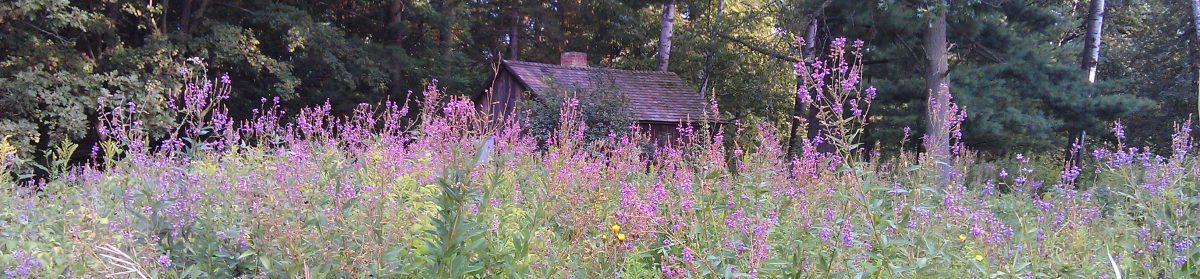
Ode to a Mountain Cabin

To find a mountain cabin.

To go there to listen, walk the trails, revel in its forest.

To sit among old logs, the musk of ashes from long ago

Winter fires in a large stone hearth.

To be…still.

Thunder, rain, rivulets running down the stones

Converging in pools; to know the rhythm

Of Earth again.

To want to give again,

To feel filled-up in heart as well as mind.

Body waits return of soul.

The Hunger Games and Civil Disobedience

This week the universe delivered a wake up call through my sister’s recommendation that I read The Hunger Games by Suzanne Collins.  My sister is a master teacher in a Montessori community in Brooklyn.  I respect her opinions on youth literature which we often discuss in light of how she integrates books into her 4th-6th grade curricula.  I began reading The Hunger Games a few hours ago and am engrossed in a dystopic world in which its young characters fight for their very existence through a perverse scheme by their government.  On the Scholastic website, the author’s bio states “she continues to explore the effects of war and violence on those coming of age.”

That gave me a chill.  I have wondered about growing up in a world of intimidation, fear, and violence and what kind of impact that might have on the coming generations.

It is no surprise to me that I would be directed to this story while I am reading John Haidt’s new nonfiction book, The Righteous Mind (2012), which challenges us to step outside of our political framework to examine what is moral and ethical.  Serendipity occurs even as the truth becomes increasingly hard to discern when complexity envelops every issue.  I typically turn to beacons of light, for me at least.  One is Orion Magazine which gives voice to our society’s most creative and perceptive minds, and is not afraid to explore controversial issues even as it strives to inspire community, cooperation, and celebration of all that is good and beautiful in nature and in humankind.

On Orion Magazine’s podcast “Punishing Protest: Patrick Shea and Heidi Boghosian Discuss Law and Civil Disobedience” (February 23, 2012) the speakers explore “What is the justice system for?”   This is a very intelligent discussion of  the Tim DeChristopher prosecution (Shea was his defense lawyer).  These two lawyers describe what citizens in the Occupy movement can expect from our justice system and offer them directions. Shea encourages listeners to strive on even in the milieu of government intimidation of citizen-activists who act to preserve our freedoms – to do the right thing.

So I see in these three current products of our culture – The Hunger Games, The Righteous Mind, and the Orion podcast on civil disobedience – as interrelated discussions rippling through our country, our community, our collective mind.

Have you read The Hunger Games?  If so, tell us what you think about the story.

From iris scans to drones, we are in a dramatic period of governmental oppression, a society of haves and have-nots that uses technology to oppress the people and is eerily similar to the world experienced by characters in The Hunger Games.

Real Neighborhood

Looking for a new place to walk I remember an old neighborhood in Pensacola, Florida—my hometown.  I drove to one of our family owned markets, parked and headed on foot toward the bay side of Scenic Highway which wiggles its way along Escambia Bay to Downtown.

As soon as I was one block from the main drag I began to hear a chorus of birds and saw my first robin of the springtime.  A canopy of old oaks greeted me as I turned down the narrow streets.  It was degrees cooler and flowers and trees were in bloom in the asymmetric yards and thoroughfares.

Camellias are a signature blossom in this City of Five Flags:  they came from Asia probably on ships that brought international goods from all over the world to Pensacola’s famous deep water port.  Here is a beauty blooming in one resident’s yard:

When you walk in older neighborhoods the first thing that is noticeably different is the diversity in homes, plantings, economic strata, and biodiversity.  Far from a groomed look that we find in the modern developments in Pensacola, there is brush, tall grasses, undulating yards, and all sorts of individual touches from owners: tree swings, sculpture, bubbling ponds or water fountains, colors and textures of siding; shape and sizes of the homes and lots.

As I passed one home, up a dark trunk scampered a fat white squirrel—perhaps a protective totum for endangered neighborhoods.   Why endangered?  I happened upon an old friend, a poet, who was out canvassing the neighborhood with a clipboard and information.  A proposed change in codes would make a large stretch of land, a path to the bay and marshes,  off-limits to everyone, essentially giving one lot owner in that area private property without paying a dime.

Real neighborhoods are like climax communities in nature: they take a long time to develop into the kind of rich interrelatedness and diverse habitats that Pensacola Heights can boast.  Take a look:

Reviving “Sense of Place”

Rachel Carson’s assertion that a child must first form an emotional attachment with nature before he is willing to protect nature is an assumption in the sense of place movement.

When the education community was “atwitter” with the concept of a sense of place (1990s), I was an environmental educator in Arizona.  Much of the theoretical basis for this movement derived from studies that showed increased learning from experiential education (out in nature, hands-on, etc.)  Rachel Carson’s assertion that a child must first form an emotional attachment with nature before he is willing to protect nature is an assumption in the sense of place movement.  A National Endowment for the Humanities article by William R. Ferris (1996) is an excellent statement of the importance of place in human development:

Each of you carries within yourself a “postage stamp of native soil,” a “sense of place” that defines you. It is the memory of this place that nurtures you with identity and special strength, that provides what the Bible terms “the peace that passeth understanding.” And it is to this place that each of us goes to find the clearest, deepest identity of ourselves.

As Ferris explores the critical importance of the arts and humanities in education he offers a ten point plan that addresses the problems we face even now in 2012 (16 years later):

Those in politics have voiced their concern over the impoverishment of American life and values, but no one has found an answer to our problems. I suggest that the solution lies in the indigenous culture about which Alice Walker wrote, the familiar worlds into which we each are born. We must study and understand the worlds that make each of us American and through that journey we will renew American culture.

What is that postage stamp of place that makes you who you are?  Please share more and I also suggest that readers visit the link above to the Ferris article. Other resources to explore are:  Children’s Nature Network, A Sense of Wonder (film), The Solace of Open Spaces by Gretel Ehrlich.

Places

To be disconnected from any actual landscape is to be, in the practical or economic sense, without a home.  To have no country carefully and practically in mind is to be without a culture.  In such a situation, culture becomes purposeless and arbitrary, dividing into popular culture,” determined by commerce, advertising, and fashion, and “high culture,” which is either social affectation , displaced cultural memory, or the merely aesthetic pursuits of artists and art lovers.  ~ Wendell Berry, Citizenship Papers, “Two Minds”