More Places

Deer Springs Inn

Up on the mountain,

Tracing the Mogollon Rim,

We hike and return by way of

The towering Outlook,

Black clouds overhead

We climb 80 feet up to

Join Ranger GS3-1in his lair.

 He scans the horizon for fire.

We chat and then leave for

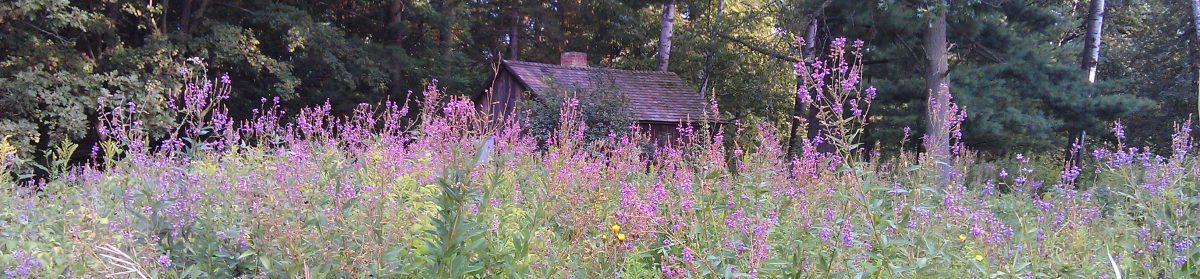
Hopping-Hare cabin

 We are dreamily breathing

In the sulfur laden air of

Lightening-split sky

 Lying up in the loft,

Baptized by tumbling waters

When I was a youthful biology teacher in Buckeye, Arizona, a rural community southwest of Phoenix, a colleague privately shared information about a place he and his family vacationed – a place carefully guarded by all who frequented its cabins and woodlands.  It was Deer Springs Inn.  For forty years a retired publishing editor from Phoenix and his wife ministered to a little community of hand-built log cabins nestled in a grove of towering Ponderosa pines and to the families who frequented its beds, trails and campfires.  The first time I visited Deer Springs Inn, my daughter Heather and I drove up to meet the owners on a day trip.  What an adventure.  After climbing the Mogollon Rim from Phoenix to Payson, we traveled along a two lane highway dotted by tourist hotels and cabins, local grills and hunting and fishing outfitters.  We turned off the highway onto an unpaved forest road and drove on an undulating surface of rounded stones and rain carved gullies for 14 miles back into virgin Ponderosa Pine.  Deer Springs abuts the White Mountain Apache reservation which acts as a wildlife refuge, harboring elk from hunters.  Lou and Bea greeted us warmly and showed us around.  Each little cabin sported a jaunty name like Silver Squirrel, Hopping Hare, Bounding Bear and so forth.  There were five cabins that slept anywhere from 2 to 11 people.  Lou had installed solar panels to heat the water and barely light the cabins. Each cabin has a good supply of aromatic wood and big potbellied stove. There were no phones, TVs or other accoutrement from the so-called civilized world.  There was one Hamm radio at the main cabin.  At that time hardly anyone had a cell phone or laptop.

Heather was studying drawing at Arizona State University.  She left with dreams of drawing and painting on vacations and I with a plan to spend six weeks that following summer writing my first ever book.  I look across my dining room today and there hangs a gorgeous painting of one meadow near Deer Springs painted by Heather, reminding me of how imbued our psyches become with the places we love and cherish.

August 9, Monday 1999

Lingering-on at Deer Springs Inn…Heather off to photograph, I to write…sitting on a redwood seat by a little statue of St. Francis – lover of nature. Annie, big black lab of Ed and Mary, is barking at some distance through the woods.  Only the hum of a generator can be heard, and the mountain winds….

Places

Places define much of what we become and in myriad ways determine the things we do.  Far from a “backdrop” to the drama of our lives, the places we inhabit, grow to love, defend fiercely as we would our children, are intimately a part of us.  We breathe their air, drink their waters, eat from the table of their mantles until they form our flesh and blood and point of view.

My family history begins in the Smoky Mountains where many Irish, Welsh, and Scottish immigrants settled.  Though I was born there at the tail end of WWII, when my father – a native of east Tennessee – returned to the States, I was whisked up into 20 crazy years of military assignments and reassignments that took my family from coast to coast in the U.S. with one gentle, magical time in Honolulu at Hickam AFB.

Changing places frequently lends to a sense of loss and confusion precisely for the reasons that place is not  a location but is the font of our biological and psychological lives.  I am only now beginning to appreciate this phenomenon, now looking back, and frankly savoring all the rich, diverse places on my “dance card” in life.

I believe that as a child I innately understood this essential relationship and became a great explorer of natural places, lithe and intentional about getting to know each new place.  From laying on my tummy watching the miniature world of grass forests to the thrill of rolling down a leaf covered hill letting the Earth pull me to her breast – I longed for that intimate attachment.

Reading books like Janisse Ray’s Ecology of a Cracker Childhood is a powerful testament to the influence of land on our lives and livelihoods.  She describes like no other the long leaf pine communities that she has defended since early in her life…a community that once covered millions of acres in southeast Georgia and northern Florida and is now only little islands left to behold.

As Ray describes in poetic narrative, this community evolved with fire as its renewing element.  The canopies of long leaves are high up on the straight trunks wrapped in thick bark. The community of wiregrass below waits for fire to open its seeds and renew the land.  Among these towering pines animals and insects of unique character inhabit the land, air, water, and trees.  I recently visited the Okefenokee National Wildlife Refuge, not too far from where Ray grew up.  When I shared this fact with friends recently, one remarked that she had no use for visiting swamps.  I thought to myself how wrong she is and how that is precisely what has destroyed so much of this land I now inhabit called Florida.

Okenfenokee lake normally receives 60 inches of rainfall each year and is the source of two rivers – the St. Mary’s which drains into the Atlantic, and the Suwannee which drains all the way to the Gulf of Mexico (280 miles).  Rangers at the refuge told me that the swamp has only received 8 inches of rain for each of the last two years and it has been on fire for one whole year.  Even as they spoke, the fire was still raging in some areas.  At the bottom of the swamp is a thick layer of peat which produces methane gas that bubbles to the top and lifts up soil and debris.  Seeds land on these natural flotillas, take root and grow.  That’s how the swamp had “grown” islands and isthmuses that provide critical habitat for birds, alligators, and fish, beavers, and deer, bobcats and before they were forced out, panthers. Because of this watery origin, the land “trembles” when you stomp your foot.  Okefenokee is the remnant of an old sea.

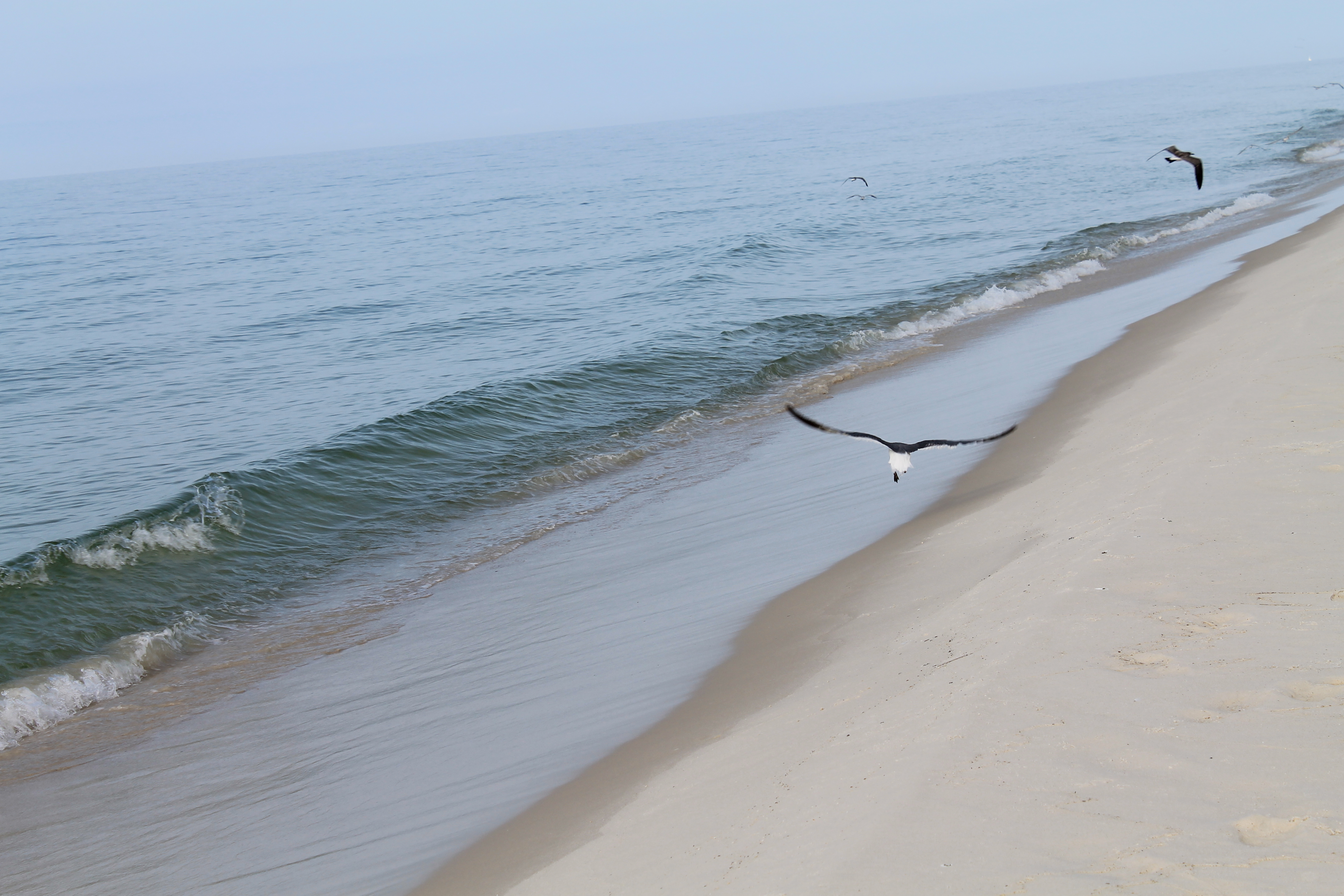
In my hometown of Pensacola, in northwest Florida, we are surrounded by oak and pine hammock and privileged to live by a barrier island network that stretches from Mississippi to the Great Bend of Florida.  Marshes once thickly lined these islands and dunes towered as high as thirty feet.  Development of the landscapes has radically altered these protective barriers to our natural renewing element: hurricanes.  Now when they come on shore, there is little to stop their ravaging ways.  But, forward thinkers – lovers of their home-scapes – have acted to save little slices of what once was a great Turtle Island, America.  In P-cola the main man is Jesse Earle Bowden who spearheaded the campaign to protect the islands by establishing the Gulf Islands National Seashore.

What places have formed an integral part of who you are?  How do you experience that relationship?  What are your concerns and your joys about the places where you live and breathe and go about your day?  Please let readers know so that we can share your experience here.

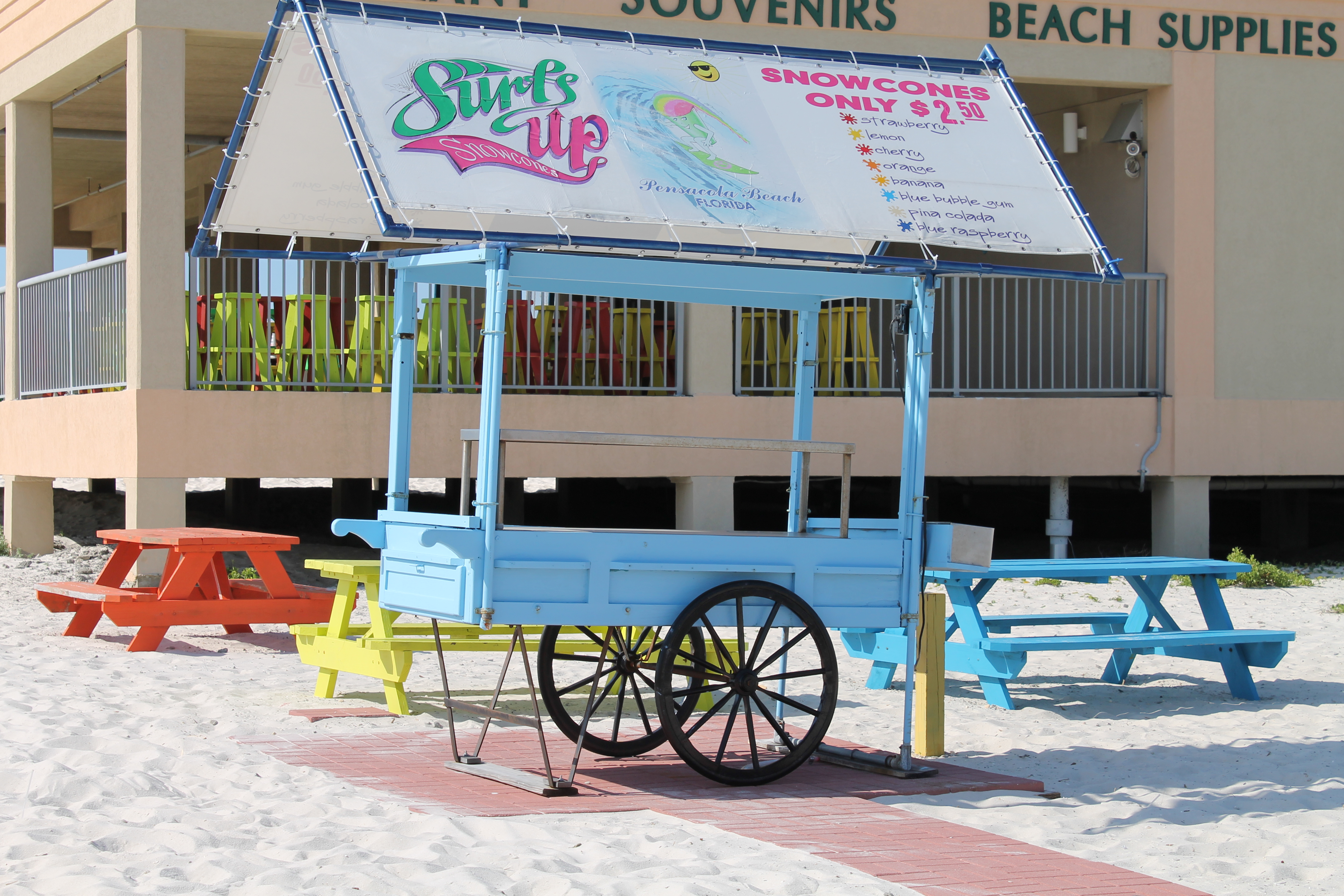
Meals on Wheels: Food truck dining in Florida – from Florida Trend, Florida’s Source For Business News

Another way to adapt to changing times is to – as PBS suggests – GET CREATIVE. Not only are overhead costs lower, but people don’t need to get in a car to go to lunch or dinner. They can just step off the curbside and dine!

Meals on Wheels: Food truck dining in Florida – from Florida Trend, Florida’s Source For Business News.

Thriving is not just surviving!

In 2008 I moved from Tucson, Arizona to Pensacola.  I’d spent 20 years in the Sonoran Desert, writing and photographing the beauty of the high desert with its myriad cactus sculpture which bloomed in psychedelic orange and magenta, brilliant red or pink flowers each winter.  From the driest, withered-looking plant, desiccated by the hot summer, emerge magnificent blooms that feed the birds, bats, and bees. It always seemed miraculous to me until I  understood how plants adapt to the dry lands.

The famous saguaro cactus is pleated so that on hot days a shadow is cast to keep the plant cool, and the structure is such that when it rains, the saguaro sucks up surface rain across a wide area through its shallow root system.  The pleated trunk expands like an accordion, gradually releasing the water to its cells over the dry season until the monsoon rains bless the landscape once again.

Dr. Mark Dimmit, Director of Living Collections at the Arizona-Sonora Desert Museum exclaims, “Desert plants do not just survive, they thrive through their seasons.”

How can we as a community living through hard times thrive instead of just coping, just surviving?  This is on my mind today as we set out into the year 2012.  How can we thrive?  There is something spirited about this approach—enabling us to bring forward all that is best in us, clever, joyful and resourceful.

What would that look like?  The new Admiral Mason Park storm water reclamation pond is a good example of what we can do to turn a site into a multi-use location with beauty and outdoor exercise tied into it.  Dedicated in 2011 adjacent to the Veterans’ Memorial Park, it now serves as a beautiful entrance to the city, a place to read, meditate, or just walk and bike.  As the eight live oaks grow and cast their shadows on the 3.5 acre pond, it will season into a place of beauty to honor our veterans.  After building the Aragon community the need to mitigate storm water became evident.  We combined ecosystem function with the human need for places of inspiration and physical exercise.

Another example of what we can do is the children’s recreation area at Lucia M. Tryon Branch Library.  Now that the playground, trees, and pond are in place, it will evolve into a natural habitat that attracts birds and bees and people to its lovely walking paths and to the many opportunities for kids to practice rock climbing, pretend play in the big pirate’s ship and watch fish and ducks through the tall reeds that line the pond.  It will become a place where children and parents are immersed in nature.

At UWF President Judy Bense is planning to build residential halls that are models of sustainable energy design with ecosystem services leading the design.  Living in an energy smart building is a teachable moment.  The UWF School of Science and Engineering was built to foster interdisciplinary collaboration.  Its design is the highest LEED standard for construction.  The environment stimulates creative thinking.

We might also think about going further by shaking off standard incremental improvement to design buildings that act like ecosystems.   Jason McLennan, architect at Kansas City-based BNIM Architects, is known for “living building” design.  To be certified as a living building (park or street) criteria in seven areas must be met:  site, water, energy, health, materials, equity, and beauty.  With Gulf Power’s support for geothermal energy designs, we have an opportunity to build something revolutionary next time we begin the design process.  We’ll save energy, restore environment, improve our health, offer good jobs to people who are most in need and involve students in learning futuristic planning while creating a surrounding that makes us feel great.  What could be better?

In 2012 I challenge myself and my fellow Pensacoleans to stop, wait and consider with each decision before us, how could we plan and act together to thrive- not just survive-in the New Year and decades to come?

Who Will Turn the Tables in 2012?

On this Christmas Day, about family, full of the vision of angels and infants, stars and Maggi, and the glitter of decorated trees—on this day Americans have much to consider.  The vacated halls of our national spaces—numbingly quiet after the vitriol of previous months of head-banging—lie quiet and waiting for the dawn of a new year.

It was into such spaces that Jesus was born – the infant who would become the man who overturned the tables of commerce that invaded the temples.  His rage, born of righteous indignation, was hardly a bleep on the screen of the powerful.  Had it occurred today the story would only make the local, petty-crime reports.  “Deranged Dude Goes Beserk”…the rush of money-changing undisturbed, the level of social penetration intensified and engrained in our mental frame of reference:  How much is it worth?—the National Credo.

As Jesus later reflected, new wine requires a new skin to contain it – allow for its full character to evolve, to come into its robust, unique flavor.  I’ve always enjoyed the few stories about Jesus that have survived through the ages.  As a child, I really “got” his message.  I think he would have loved and been a part of the local food movement, biking and alternative energy sector.  He would have worn American-made jeans, drunk fair-trade coffee with his friends.

Jesus would cut to the chase in America.  Per person, Americans consume more energy and goods than any other people on Earth, contributing most of the CO2 that is causing climate destabilization.  Since the poorest people are and will continue to suffer the impacts (drought, floods, disease, and starvation) Jesus would be “in our faces” about our reckless behavior.

But he would have had the same challenge as the nascent sustainability movement:  how do you get the word out to 9 billion people in time to divert a global disaster?

I am sure that Jesus would not have been politically correct nor would he engage in “people-pleasing.”

No, he would march right into the House and Senate, upturn a few tables and shout to the Heavens, “What on Earth do your think you are doing?” He would clear the air and the truth would ring across the Capitol.  For a brief moment, things would go in the right direction by just creating a pause in the fury.  Boy, do we need him now!

I wonder who will turn the tables in 2012?

The Gift of Our Elders

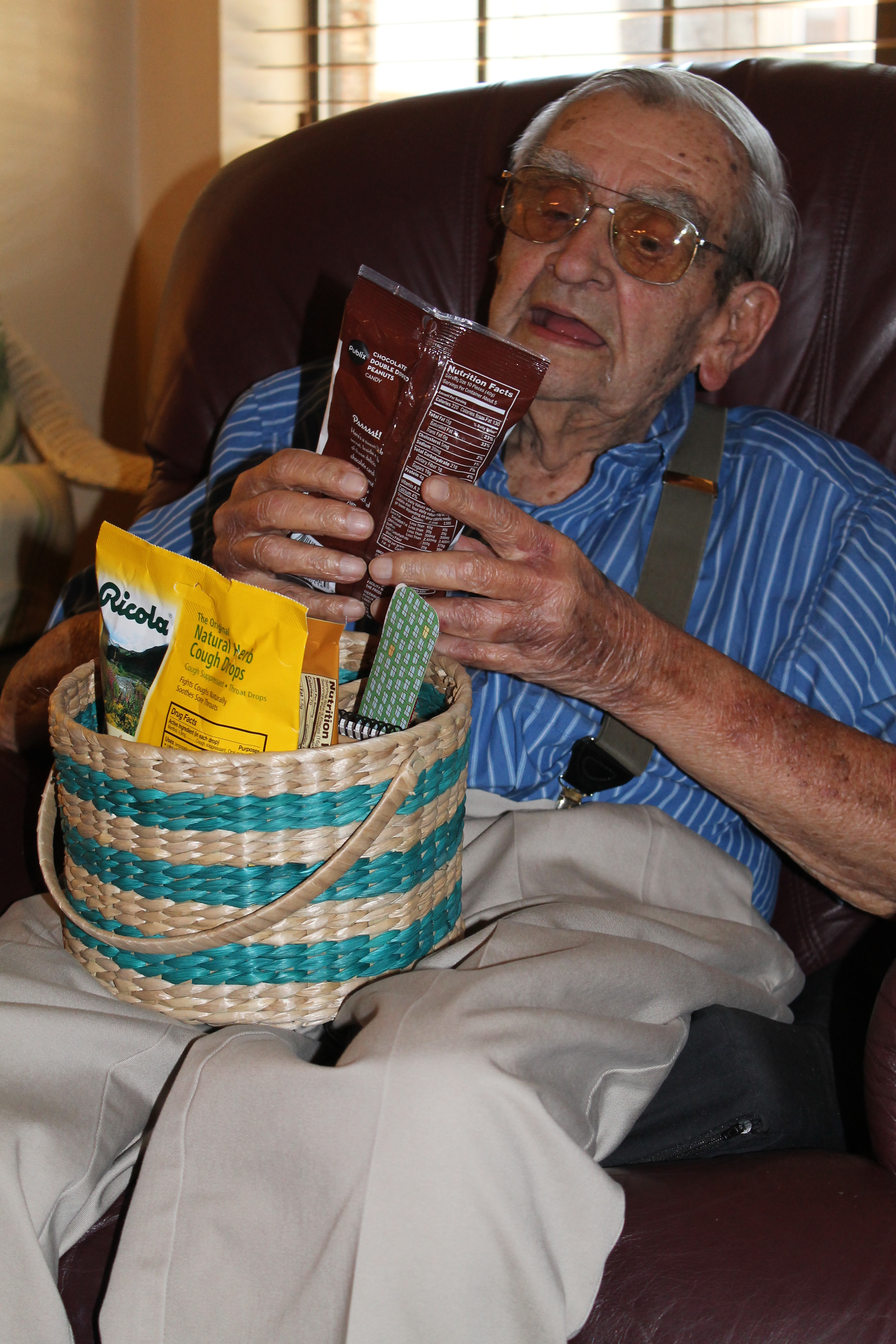
At 66 years of age I am no spring chicken! But I have a father who is 94 and still going strong. Amazing man who last night, over our candle-lit, mid-week dinner conversation, exclaimed that what his generation accomplished in the 1940s was amazing.  “I wish we had a vision like that again.”

Dad is a World War II veteran, B-29 bomber pilot and retired Air Force career officer.  My sisters and I tromped around America for 20 years from military base to military base.  Circumstances led to my move to Pensacola, Florida in 2008 to live near Dad, to help when needed, and to be closer to my own son and daughter who live in the Southeast now.  Sometimes I get caught up in the cares of the day and it is not until the next morning (I am a veteran early riser) when my thoughts are clearer, that I realize the gems of wisdom that roll forth from Dad as he looks back on nearly 100 years of life!  Think of that…nearly a century of personal experience.

Two things he shared last night as we discussed current seemingly intractable problems in America:  fossil-fuel cars, and the Congressional stale-mate over, well, everything it seems.  We simply can’t agree on one important step for millions of Americans.  In the middle of that discussion he remarked that during WWII there was a national vision of where we were going and that together we would accomplish something for the whole world.  That the world of nations looked to us to make things right, to defeat a terrible wave of human to human violence.  And we did.

The second thing Dad said, almost in passing, was that “you just can’t change American’s love affair with their cars.”  He described riding in a big, comfortable Buick that same day with his medical service to his doctor.  ” I remember the model T Ford.  When everyone could afford to get one… it was our greatest joy.”  He grew up on a small farm in eastern Tennessee and recalled trips my aunts and uncles and his family made to Asheville, NC (60 miles on a narrow two-lane, through hair pin mountain roads). Imagine going from horses to a gas-powered vehicle – the transforming impact of that one invention.  The model T opened up so many possibilities and connected people, places, and thus exchange of ideas and goods and services.

This morning as I was writing in my journal, a more than 50 year habit, I realized two key things that might offer us “younger” folks some direction:  1) a national vision everyone subscribes to; 2) an invention that changes the whole paradigm of our lives.  Perhaps if we can discern what these two factors might be in 2012, we could reinvent ourselves even as my father’s generation did so many years ago.

What dream are we chasing as a nation?  What does the world look to us to do?  What could transform our daily lives and rocket us into the next new big vision for America?

[Dad described the city of Chicago’s fleet of hydrogen cars.}

COP17 Results

The United Nations Climate Change Conference in Durban, South Africa ended on December 11, 2011. The conference  included the seventeenth session of the Conference of the Parties (COP 17) to the UN Framework Convention on Climate Change (UNFCCC) and the seventh meeting of the Conference of the Parties serving as the Meeting of Parties to the Kyoto Protocol (CMP 7).

The meetings resulted in the adoption of 19 COP decisions and 17 CMP decisions and the approval of a number of conclusions by the subsidiary bodies. These outcomes cover a wide range of topics, notably the establishment of a second commitment period under the Kyoto Protocol, a decision on long-term cooperative action under the Convention, the launch of a new process towards an agreed outcome with legal force applicable to all parties to the Convention, and the  operationalization of the Green Climate Fund.

Results of COP17 2011     On the first couple of pages you can read a good summary of the history of climate change negotiations since 1992 among the Earth’s countries and leaders.  Its worth reading to refresh the context for the current negotiations at COP17.  See below for articles with different points of view regarding the “success” of the conference:

The National Post (Canada)
The Sacramento Bee (U.S.)

World News service for newspapers around the world on results of COP17


Why don’t we act?

Session 7 of “Ecology, Ethics and Interdependence”, the Mind and Life XXIII conference with His Holiness the Dalai Lama in dialogue with contemplative scholars, activists and ecological scientists who discuss the interconnection between individual choices and environmental consequences. The conference was held at His Holiness’s office in Dharamsala, India, from October 17-21, 2011.

The Future World of Our Grandchildren

After listening to four of five video recordings of the Ecology, Ethics and Interdependence Conference with the Dalai Lama at the Mind and Life Institute, I decided to include it on this COP17 post due to its extreme relevance to our future on planet Earth.  These videos are each about 2hrs long.  So it requires thoughtful listening, yet I feel that the hours I have spent considering the issues and comments on each topic have informed me on a deeper level of all that is at stake and all the promise that the future could hold for our children and grandchildren to come – long after we have left our legacy behaviors and decisions (our non-action and non-decisions) behind for them to cherish and honor or despise and dishonor.  Why should we care?  What does not caring tell about us?  Who’s culpable?  The fourth video is focused on ethics which evoked some of the most interesting reflections from the Dalai Lama on how current generations create the world of future generations much like our world was handed to us by our grandparents and parents.

This podcast includes a presentation by Diana Liverman of the timescale of earth system function up to and after 1950, tracing not just temperature and population (the most common graphs) but use of water, fertilizers, paper, cars, loss of the ozone layer, deforestation of temperate and tropical forests, overfishing, biodiversity and other important indicators.  They discuss the period of the Great Acceleration (1950 being watermark for its beginning.)

The speaker explains what scientists mean when they use the term, Earth Systems.  Carbon Cycle, Water Cycle, and Air Circulation to the Dalai Lama. These is a great section of the video. ***Start at about 35 minutes for this section of the podcast.

~~~~~~

After my last post on the COP17 Climate Talks in Durban, South Africa I realized the links I posted take you, the reader, into a maze of reports and data sites, agendas, and very dense organizational structure.  I apologize for that having just spent time navigating (barely) through the site.  However if you go to the OneWorld blog  you can find up to date news and videos on the floor of the convention.  AFP.com International news for today describes how the whole political scene is in turmoil as delegations of developing countries (“Basic nations”) -the Group of 77 – are insisting that the Kyoto gas emission targets from the previous sessions be maintained to as late as 2020.  Among the 77 is China, now the largest emitter of CO2 on the planet.  Some delegates believe strongly that to not further curb emissions for another 8 years will bode disaster to earth’s operating systems.  In the original Kyoto agreements (1997), developed nations agreed that they have contributed the most to climate change through CO2 emissions and they assumed greater responsibility by agreeing to not only cut emissions but to provide the resources and expertise for developing countries to cope with the worst changes such as flooding, drought, and loss of food productivity due to warming of the planet.  Read the AFP article here.

For ongoing coverage of events and people this is also an excellent site:  iiSD RS @ Durban Climate Change Conference.