Sweet Leilani – Our Mother

Sweet Lailani, Our Mother Performing Hula She Learned at the Bishop School in O’ahu in 1949Mom Performing Hula in Michigan[Also see links on blog about Hawaiian history and culture.]

Our mother was known as Mickey Jones when she was a teenager and “20-something”. Born in a small town in Tennessee she longed for places far and away. She loved beautiful things and wanted adventure in her life. Mom loved to sing and to dance. She was an excellent cook. As a military wife of a career Air Force pilot, Mom set up homes all across the U.S. and in Hawai’i.  I have very lovely remembrances of Mom and Dad in Hawai’i. They were very much in love. These are kid memories so fuzzy and sensory. A sweet scent of plumeria wafted from my Mother. She was happy in Hawai’i. Dad was a pilot on Hickam Air Force Base established in 1941 to protect Pearl Harbor and near by Honolulu.

Hawai’i was still recovering from the Japanese attack on Pearl Harbor. Yet the natural beauty of the islands was already transforming the tragedy to the pervasive love and ease natural to the island kingdom. Mom hummed Hawaiian songs, Dad played a lot of slack key guitar music on a phonograph. He wore colorful silk shirts; Mom wore sarongs filled with flowers. She wove flowers in our hair and we often wore leis. I remember making leis from aromatic blossoms at a picnic table under a towering banana tree with leaves like green rafts hovering above.

Mom learned traditional hula from a teacher who told stories about her ancestors who came from Polynesia. Later Mom performed more modern forms of hula for military families at bases where we were stationed around the U.S. The photo above is in Michigan at Selfridge AFB. Through our mother we carried the heart and soul of Hawai’i in our hearts. This day the stories told through the dance and chanting of traditional Hawaiian music remain with me as some vestige of a true connection with the Earth Mother. See link to the Merrie Monarch Festival and the Prince Lot Hula Festival.

[I recently found this new story and art animation about the original Hawaiians, and authentic experience in the form of old time storytelling: Voyagers – The First Hawaiians. **Highly recommended.] “The discovery of Hawaii told through the art of Herb Kawainui Kane in stunning 2.5 animation.”

I often think about my mom. She would have many struggles later in her life but in her youth and early days of rearing kids and being a wife she was a joyful person, filled with hope and love of nature. She was high-spirited. This is the mother I remember, honor and love with all my heart. She brought elegance to simple spaces, traditions to an otherwise mobile lifestyle, and always a sense of wonder about the world at large. On this Mother’s Day I honor her for what she gave me and my sisters and all who come after us….
Starting Over

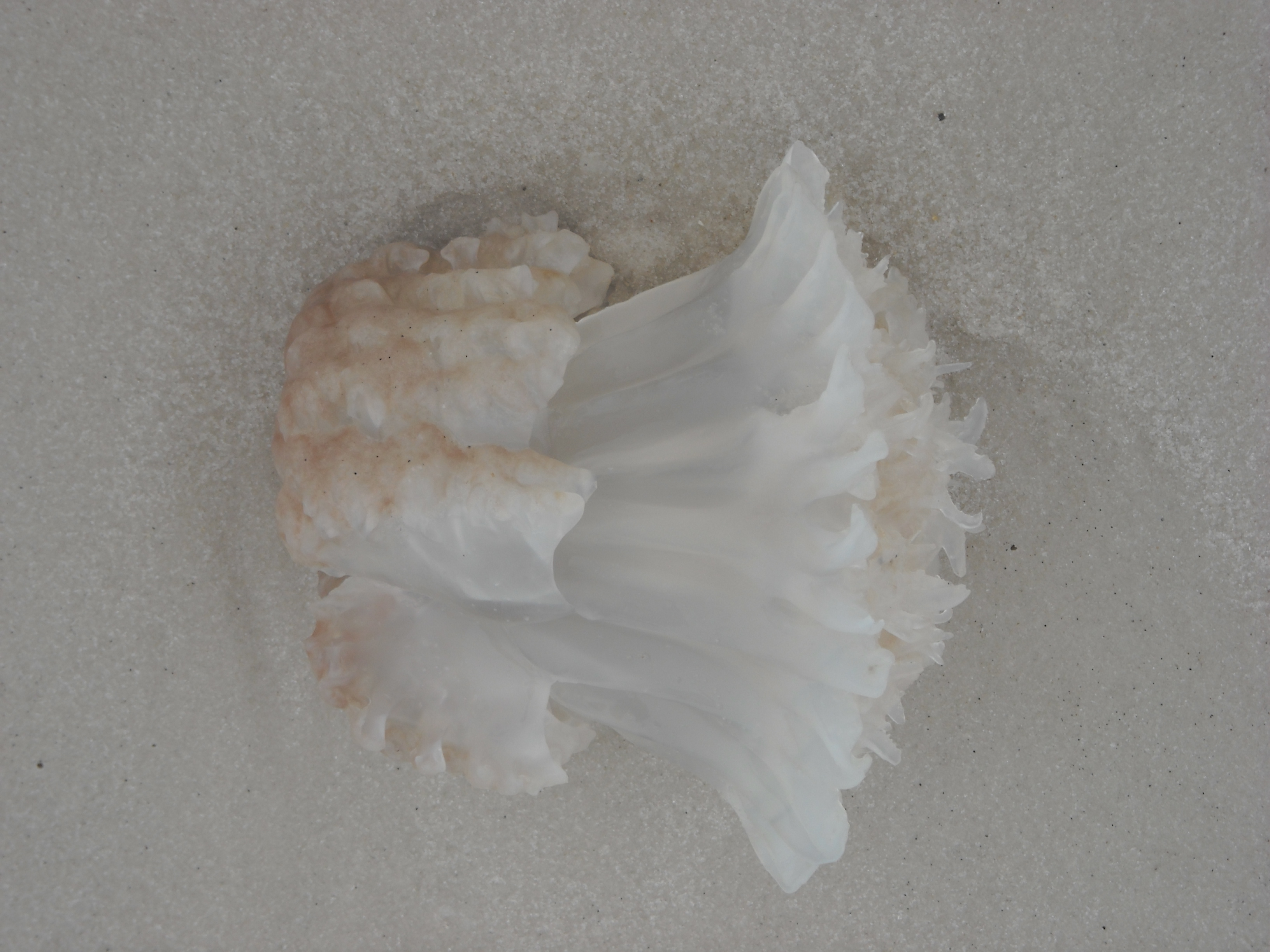
BeachedWith the passing of my father last month I realized that I am no longer anyone’s child and that I have entered full adulthood – at 67 and counting. That is remarkable in and of itself but even more startling is the realization that I am starting over with the perspective of both my parents’ lives, beginning to end. The earth shifts. I had not read about this and am taken entirely by surprise.

What does it mean? I think it brings my own life more sharply in focus. Here’s what they inherited and what they did with it in the world they helped create. Now what am I doing, creating? Quite sobering as I approach my seventh decade on Earth.

While I have grieved my father’s passing, I have also experienced an unexpected sense of joy and peace, the deep understanding that I need not worry about anything. This has to be coming from a realm other than this planet because there IS certainly much to worry about. I choose to follow the guidance but to not stop working for a better future for my children and all the children to come. Is the message that we are to do what we can to help but to also find joy and to celebrate the gift of life on Earth?  I think so. Perhaps even it is a direct message from Dad and Mom (the original worry-wart).

Dad’s common refrains were “this too shall pass” and “in all probability things are unfolding just as they should be”.  I remember being frustrated by both when I wanted him to engage in cerebral hand wringing about climate change or poverty  or some other massive, intractable problem. He just refused to go there. I thought then it was a flaw but now I am rethinking that.


Where does the sidewalk end?

by Shel Siverstein

There is a place where the sidewalk ends

And before the street begins,

And there the grass grows soft and white,

And there the sun burns crimson bright,

And there the moon-bird rests from his flight

To cool in the peppermint wind.

Let us leave this place where the smoke blows black

And the dark street winds and bends.

Past the pits where the asphalt flowers grow

We shall walk with a walk that is measured and slow,

And watch where the chalk-white arrows go

To the place where the sidewalk ends.

Yes we’ll walk with a walk that is measured and slow,

And we’ll go where the chalk-white arrows go,

For the children, they mark, and the children, they know

The place where the sidewalk ends.

This is a profound poem that I read to my children when they were small and somehow they just “got it”—the feeling that I think Shel Silverstein tried to convey.  Only now I wonder if today’s children turn to a beautiful virtual world where they can control what happens…a place that is more engaging than the real world outside their door.

What do the children mark?  What do they know, today?

Reviving “Sense of Place”

Rachel Carson’s assertion that a child must first form an emotional attachment with nature before he is willing to protect nature is an assumption in the sense of place movement.

When the education community was “atwitter” with the concept of a sense of place (1990s), I was an environmental educator in Arizona.  Much of the theoretical basis for this movement derived from studies that showed increased learning from experiential education (out in nature, hands-on, etc.)  Rachel Carson’s assertion that a child must first form an emotional attachment with nature before he is willing to protect nature is an assumption in the sense of place movement.  A National Endowment for the Humanities article by William R. Ferris (1996) is an excellent statement of the importance of place in human development:

Each of you carries within yourself a “postage stamp of native soil,” a “sense of place” that defines you. It is the memory of this place that nurtures you with identity and special strength, that provides what the Bible terms “the peace that passeth understanding.” And it is to this place that each of us goes to find the clearest, deepest identity of ourselves.

As Ferris explores the critical importance of the arts and humanities in education he offers a ten point plan that addresses the problems we face even now in 2012 (16 years later):

Those in politics have voiced their concern over the impoverishment of American life and values, but no one has found an answer to our problems. I suggest that the solution lies in the indigenous culture about which Alice Walker wrote, the familiar worlds into which we each are born. We must study and understand the worlds that make each of us American and through that journey we will renew American culture.

What is that postage stamp of place that makes you who you are?  Please share more and I also suggest that readers visit the link above to the Ferris article. Other resources to explore are:  Children’s Nature Network, A Sense of Wonder (film), The Solace of Open Spaces by Gretel Ehrlich.

Hope Beneath Our Feet

Hope Beneath Our Feet, Restoring Our Place in the Natural World is a new anthology of essays by authors who responded to this question: In the midst of environmental crisis, how can we live NOW?

I am unabashedly promoting the book because I am one of the authors. To be published along with the writers and thinkers to whom I have turned for inspiration over the last twenty years, is a huge honor for me. Some of these mentors are: Frances Moore Lappé, Bill McKibben, Wendell Berry, Barry Lopez and Howard Zinn.

The book’s genesis is the work of Martin Keogh, its Editor.  In the forward, Martin describes how his children expressed a sense of hopelessness about the future as they considered climate change or nuclear war—challenges that dwarf our sense of being able to make a difference. He wondered how human beings can keep hope and live well in very uncertain times. In 2006 Martin issued a call to writers to submit an essay answering the question above.

The book is published by North Atlantic Press and is now in its third printing – barely a month after its release.

Oil Globs on Santa Rosa Island: It’s Here

The People of the Forward Stampede

Late this afternoon I drove to Santa Rosa Island, to the entrance of a seven-mile stretch of undeveloped barrier island, protected by the Gulf Islands National Sea Shore, one of our priceless U.S. National Parks. While there was a long stretch of beautiful beach, as I walked west toward the end of the island, I began to see oil – firsts dime-sized, then bottle-cap, then hand-sized: thick crude oil, pooled and hardened among shells and sea grasses on the high tide line. Adjacent to this pollution, black skimmers sailed by with their long lower jaw skimming in the shallow edge of the surf and Least Terns dive-bombed for small fish not far off shore. Surely they must be tasting and smelling this invasion of foreign substances. We can only guess what is happening to fish, corals, jellies, dolphins, plankton…I am so profoundly sad about this awful time when we are facing our ourselves –  our ways and wants. It is NOT a pretty picture.

Only a few days ago this was the image of this treasured coast at sunrise:

And to think we are risking this and our families health for a culture addicted to speed and consumption and which cannot function without an enormous and uninterrupted supply of oil. Will it be worth it when all this plays out? And, it will continue to playout over months and years and there will be other catastrophes like it where we have taken enormous risks as the People of the Forward Stampede.

They will all be impacted by the oil catastrophe and eventually it will reach to our children and us through our air, food, and spirit.

Lag Time

Lag time is “doing nothing”. Today it is revolutionary, even suspect.

LAG TIME

What ever happened to daydreams?

Recently I heard a story that reminded me of after school time when I was in grade school. The author describes an era I call B.T. – Before Television. He came home after school to a quiet house, an afternoon snack awaiting him. He changed into play clothes and then boredom would set in. He lay on the living room rug wondering what to do. The clock ticked rhythmically.  He felt his heart beating in the silence of the moment. Then suddenly, he seized upon an idea, and off he would go to find a friend to share his imagined adventure!

I remember those days when there was plenty of time for the imagination. A special teacher of mine later named these seemingly vacuous moments as “lag time”- suspended time when fruitful thought can develop. It is a portal through which one perceives her true feelings, innermost urges, and clear thoughts.

Lag time is “doing nothing”. Today it is revolutionary, even suspect.

Children today have virtually no lag time.  American children suffer from a lack of time to develop a fertile ground for their imagination. But the good news is it is still possible to capture these moments at home if you are willing to turn off the television, the computer, the music, and slow the pace.  Just sitting is something I had to learn again from an Iroquois teacher when I was an adult.  Often the lesson for the day would be sitting in total silence for several hours.

In our fast-paced world of multi-tasking, digital games, cell phones, e-mail (the new drug – Crackberry), television, and the personal IPOD loaded with hundreds of songs – there is virtually no down time unless we are asleep. This is even true with young children, most of whom have never experienced the “lazy days of summer.”  Dragged from place to place, weary and irritable, many young children cannot be still or tolerate unplanned time. Today’s adults and youth experience withdrawal symptoms without external stimulation.

My children and I have been vacationing at Deer Springs Inn in the White Mountains of Arizona for the past nine years. There are just a few cabins set back on the edge of the Mogollon Rim. It is Ponderosa Pine Country where tall red trunks soar to 100 feet.

This place has become a refuge to many families. You learn about it through word of mouth. Everyone guards its whereabouts like buried treasure. There are no phones, televisions or any outside communication except the radiophone for emergencies. Due to the 14-mile trek on forest service roads, guests rarely leave until its time to go home.

There is sleeping time, reading or drawing time, chatting on the front porches, hiking, and writing time.  And there is silence and the drawing of wind through pines as if the forest invites us to breathe with it.

At night, a campfire beckons everyone to wander down to roast marshmallows, drink wine, laugh and commiserate into the night. Our faces are ruddy and lit by a blazing fire, poked lovingly by Ed or Mary King, the owners. The low hoot of an owl and the pine sap popping in the fire are the only music. Towering pines encircle a portion of jet black sky dotted with glittering stars and a big, white moon. The air is crystal clear. Every cell in your body lays back and sighs.

My son recently stayed up there with my daughter and me. He is a businessman from Nashville and lives a commuter life with a stressful job in the healthcare industry. He told me later how those four days at Deer Springs completely reoriented his mind and spirit. He felt deeply renewed. Whittle on a stick, let the chips fall where they may. He had forgotten about lag time.

With all of the technological advancements marketed as convenience, we have enslaved ourselves in a frenzy of driving, working, planned recreation, planned “free time” and – more driving! Often, children never set foot at home until after 6 p.m. as weary parents pick them up from day care. Chasing our consumer driven dreams we have neglected the imagination, the soulful, the spontaneous – in short, the spice of life!

But, it can be recaptured with very simple acts and it costs nothing. It just takes a little retraining:

1)  Practice turning off the television, radio, stereo for brief periods. Later go for longer periods.

2)  Remove clutter from rooms. Don’t replace any of it.

3)  Put plants in your home. Hang a bird feeder.

4)  Practice sitting and doing nothing for 15 minutes. Breathe deeply and then settle down to regular breathing. Smile. Notice the change in how you feel.

5)  Just keep it simple.  Your place of repose might be a hammock or a chaise lounge. Invite the kids.

Revolutionary Acts in Lag Time

Allow the spontaneous to return.

Reclaim your own thoughts and feelings.

Seek silent places.

Stay away from crowds.

Keep it simple.

Go for a walk and smell the roses.

Feel your body, listen to your heart.

Act accordingly.

Resources for Parents:

Inspired Parenting Web Site

This is a fabulous site for parents to learn tips from child development specialists and family counselors.

Resources for Adults:

Coming to Our Senses by Jon Kabot-Zinn

Reading this book will add years to your life!

The Center of My Heart

We can, at any time, align with the true self.

I wonder at life’s myriad opportunities to keep learning – from others’ stories, from friends and family, from our own experimental, risk-taking steps.  What prompts us to move beyond ourselves: that glob of preconceptions and messages from the “outside” that we either accept or not? Something pure – the bedrock of who we truly are, that cannot be changed no matter how terrible or traumatic (whether torture drop-by-drop from a critical parent, spouse, or boss nor by one horrendous accident of time or nature) – the deep, authentic soul of us cannot be touched.

We can, at any time, align with the true self. This is a lesson I am learning for myself and it is a good practice to occupy my days and nights.  What I understand is that by plumbing my real feelings,  observing the thought streams and how I respond to things and people around me, I come to truly know that deep self.

Most of us engage in this kind of self-awareness at some point in our lives because it is impossible to live well without the essential knowledge of oneself and a life in accord. Like me, you may have many interludes over your life during which you plumb deeper and reconsider how its going…this Earth Walk.

Albert Schweitzer, a man whose life has been a compass for my own, said this about a person who achieves respect for life: “We come to understand that this life is a precious thing and that to develop it to its fullest is the work of the conscious [person].” ~ Out of My Life and Thought (Henry Holt & Co. 1939)

Haiti in the Long Run

Most of us have been glued to the news about the immediate assistance to Haitians following the 7.2 magnitude earthquake and its continuing aftershocks. We all most likely contributed initially to the Red Cross and other humanitarian aid organizations. Aid is finally arriving but much is still in the emergency phase.

What remains is the larger logistical questions about how to rebuild a devastated infrastructure and how to rebuild entirely differently to provide people with the safety and resilient systems many developed countries are not only used to but expect. What does this massive restoration and innovation mean for the world community?

While there have been many preceding natural catastrophe’s to the collapse of Haiti’s infrastructure, this event has to become a kind of flag and marker for humankind about the much greater work we may share as climate change, entwined with nature’s natural furies, makes Haiti one of dozens of catastrophic events. We cannot let that happen.

While humankind cannot control the natural cycles of the Earth’s systems, we can control how we as a species add to the impact of them. As a Gulf coast resident in Florida, I am eying the predictions for an average of 11 Atlantic storms in the 2010 hurricane season. Haiti is right in their path as well. How will the people there, how will all the countries who are going to be there helping to rebuild Haiti, deal with major storms?

An article in Science Daily recently described how climate change could impact poverty, deepening it by virtue of collapsing food systems due to climate change.

I watch my countrymen and women and representatives in Washington and realize how easily distracted we are by seemingly more pressing problems like health care and jobs. But up the road we need to be charting our next moves to prepare for many more natural disasters. Resilience to them can be seen in a country like ours which has such a high standard of living, so much social and economic infrastructure, that we find it hard to imagine a place where there are no options and everything that could go wrong does.

What hurt the Haitian people so much is poverty. How can we get to work to make sure poverty does not deepen but is turned on its head and becomes a solution? All the people without jobs…all the things that need doing…is there a bridge between these two realities that might create a third: better living standards by investing our time, talent, money, and sweat into GOOD WORK, and in quitting our bickering, deal playing and investment in wars.

For now, I plan to set up an affordable monthly withdrawal from my bank for Haiti relief, however small, and keep it there for the time it takes to get the job done.  What we are investing in is not so much clean-up as raising a standard of living so that whatever may come their way, Haitians will have the resources to protect themselves and to build structures with the latest safety standards and materials that we Americans have come to expect.

Every Haitian child is one of ours, our future in an increasingly connected world community.