When I Discovered the Living Web

“Conservation is getting nowhere because it is incompatible with our Abrahamic concept of land. We abuse land because we regard it as a commodity belonging to us. When we see land as a community to which we belong, we may begin to use it with love and respect.” ~ Aldo Leopold

When I was 13, my family moved to Plattsburg, New York. We rented a model home built at the edge of the forest surrounding St. Bellarmine College and Noviate. It was housed in what had been the 2nd Hotel Champlain and surrounding grounds with trails winding down to Lake Champlain.

When I left our home, I walked on the monastery trails toward the lake with our family beagle who loved exploring the grounds with nose and long velvet ears with which he breathed in the fragrances of the woods and touched the rocks and trails sensing creatures who had passed by.

I was pensive on this day. Military families, as we were, suffer trauma through moving which separates children and youth from new found friends and causes stress in parents through absense of the father or mother, and often living in less than ideal housing and circumstances. I longed to belong somewhere.

It was fall in the Adirondacks and the woods were aflame in nature’s palette of red, gold, purple, orange and yellow. I stopped in a spot ablaze with autumn leaves which appeared as a mosaic. As I stared into its palette, I became aware that I was becoming a part of the wholeness of it. At that moment “I” no longer existed. I was lifted out of body.

This realization of the oneness of life in varying forms, colors and beingness profoundly changed me. At 13 I realized there is no separation between the “natural world” and me nor any other life form. We are part of a living mosaic moving through space on a spinning planet.

After that seminal day, I have felt that I belonged, wherever I may be; I draw no distinction between myself and the mosaic of life around me. And now, wherever I live, I belong. This has brought me great peace and satisfaction. Desert, mountains, grasslands, tropical zones – I’ve lived in each one loving it and learning from the people and the land, waters, and all the life there.

Rising Sun Redbud in VA Beach at Tidewater Community College

Explore Further:

The Land Ethic by Aldo Leopold

The Gaia Hypothesis

Dream Acres

DREAM ACRES FARM

Holding-Out and Holding-On in America’s Heartland

Dream Acres Farm in Bowling Green 2018

Golden meadow grasses wave in the afternoon breeze along a far bank of dark green pine and hardwoods aflame in fall colors. The trees form the meadow’s northern border. Lover’s Lane, Old Towne Apartments, and Interstate 65 serve as other borders to Dream Acres Farm—a sliver of Kentucky farmland and noble hold-out against development.

The white picket fencing, farmer’s house, and rolling green lawn that face Lover’s Lane were built when this land near Bowling Green was “the country”. I imagine teenagers romanced in a car along a moonlit dirt shoulder, and that dense forests still grew to the horizon. The farm’s 15 acres are worth millions now that the town has grown up around it. Everyday another few acres of Lover’s Land churn under the blade in becoming hotel, medical center, nursing home…

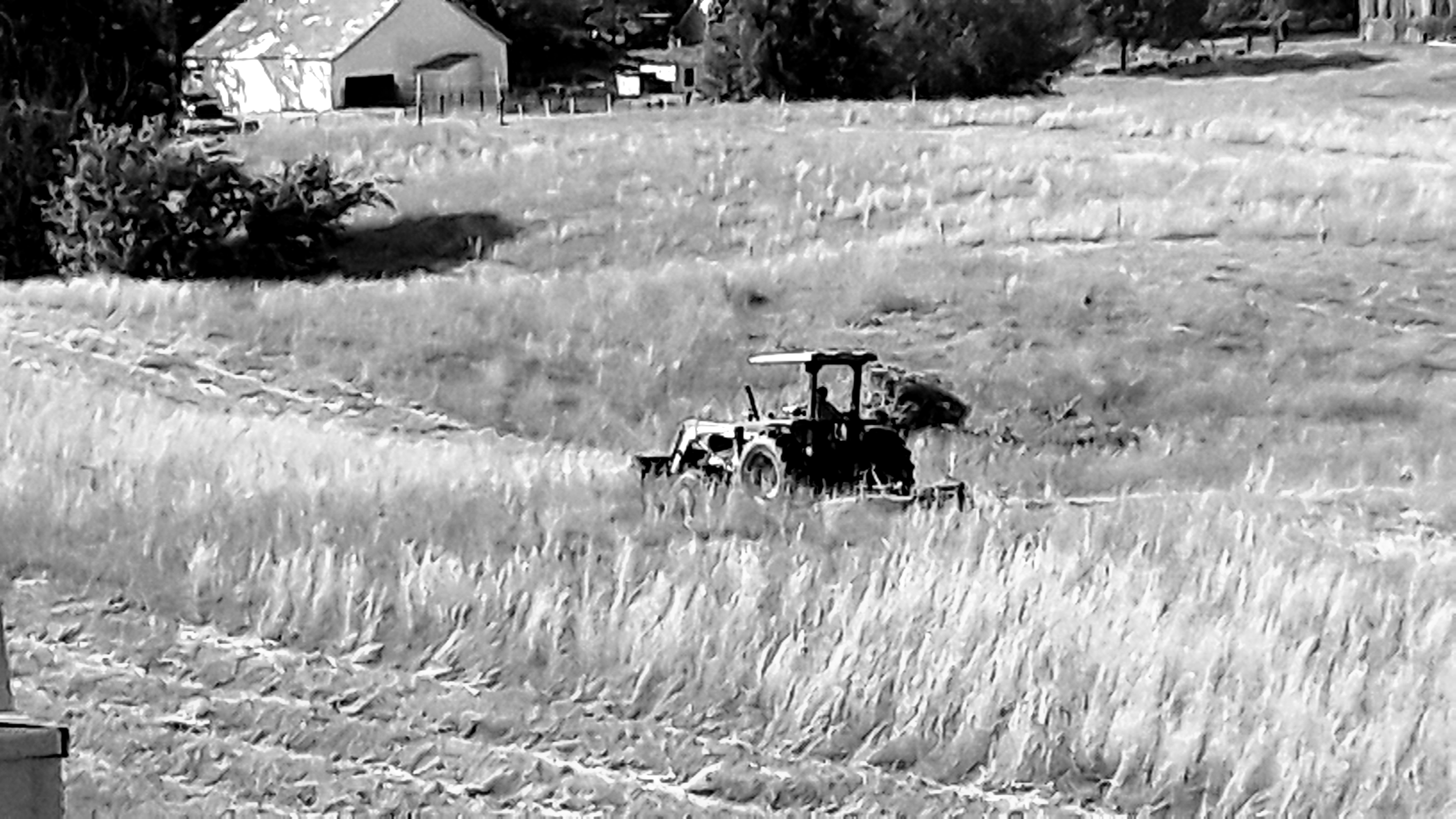
Cutting the Meadow

Every day I thank the farmer for holding fast to his farm amidst the pressure of land sales. He tends a dozen fine steer and occasional cow and calf to graze and grow in his meadow. Because the windows of my small apartment face the meadow, I am a constant observer of the herd’s movement, their presence or their absence. When the first hard frost arrives, they are gone to groceries and restaurants, and suddenly the meadow feels abandoned. Slowly, I’ve learned much about bovines: how they form attachments with the farmer, running and frolicking around him whenever he drives his rusty tractor out to inspect fences. I never knew cattle could move so fast. I’ve sketched their charcoal-black postures in the emerald grass of springtime and photographed them hip deep in a field thick with golden grasses in the fall.

This spring a community of swallows took up residence at my apartment complex, nesting on windows and gables facing the meadow and from which they emerged and returned with lightening-speed, providing me with more entertainment. After some time, I realized why they had come. As the cattle moved in the high grass, grasshoppers and gnats rose in swarms. The swifts careened in and around the thick calves and heavy hooves like fighter pilots after targets. When the insects’ life-cycles ran their course, the swifts disappeared into thin air.

Daily observation helped me discover the diversity of life in the meadow beyond the obvious farmer-bovine-grass relationship. Black silhouettes circled in the late afternoon sky portending prey moving in the grass sea: rodents, rabbits, snakes, perhaps frogs. I am sure there is an owl perched in the far border of trees whose throaty hooting I cannot hear over the constant roar of I-65. The life in the meadow also includes a neighbor’s acre of goats attended by sheepdogs that escort them in and out of a sagging, grey barn. Dream Acres Farm has its own barn from which the cattle emerge and return, but most days they sleep out under the stars.

When the farmer dies, will his heirs sell the farm and make millions? Probably—in the way of progress. When they do, I will disappear as the swifts to find another teacup of wild. And then, when no teacups remain, shall we all disappear like the swifts, into thin air?

I pray for the old farmer to live another day—my knight, my muse.