… every day, 2,000 acres of farmland are lost to non-agricultural uses, many farms continue to lose topsoil at alarming rates; and one-third of America’s farmland may change hands in the next 15 years as aging landowners sell their properties. These trends jeopardize the future of agriculture and our environment. Farmland is essential for food production—the demand for which is expected to increase by 60% by 2050. But farmland is also essential for a wide array of ecosystem services on which our future depends.~ American Farmland Trust
The American Farmland Trust is where I first learned about the importance of land trusts as a means of conserving land for farming, forestry, and soil improvement. I was living in Bowling Green, Kentucky when I was learning about the organization and its goals. This was during the Pandemic years from 2019 – 2022. I was an avid supporter of Community Supported Farmers (CSF).
Land Trusts Help Young Farmers
My farm family was a young couple with a growing family. They supplied me and their subscribers with a beautiful box of fresh farm produce with occasional surprises like local jam or sauces. And during the Pandemic, this enterprising family delivered the produce to our door.
A land trust conserves farmland and leases it to farmers in long-term leases as long as they fulfill the terms of the lease. Some leases can be as long as 99 years and inheritable. With some, farmers can gain equity for buildings and equipment they invested in farming the land leased. This can be passed on to relatives. Land trust have formed to specifically address inequities such as farmable land being bought by industrial farming operations that drive up the cost of land. Young farmers wanting to do the right thing by the soil, water, and air often cannot find land they can afford to buy. A lease with a Land Trust makes it possible. Black Soil KY is an innovative agribusiness model.
No-Till Growers: the Innovators
Young farmers and entrepreneurs put together podcasts about regenerative, no-till farming. I helped them with a start up grant from the government to provide educational videos for farmers to learn the art and practice of regenerating their farmland or market gardens. Today, this is a nationally recognized nonprofit business: No-Till Growers.
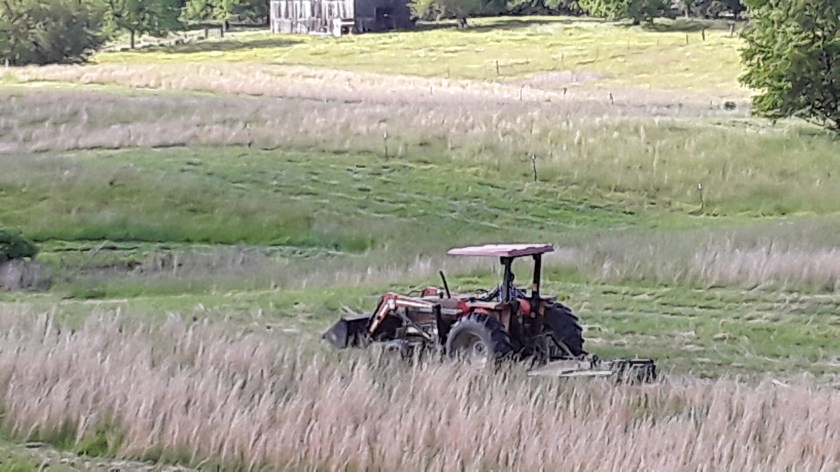
During these heavy, Pandemic years, I found hope in Kentucky farmers, especially the young farmers. Most could not afford to buy land and thus joining a Land Trust allowed them to lease land long term and even gain equity on it should they wish to pass it on to relatives.
My mind was on fire with stories I could write about a quiet revolution happening on farms with dreamers regenerating the soil. The outcome? A novel! The Last Farm on Lovers Lane is complete and I am now looking for a publisher. Below is an excerpt, protected by copyright law. Read it here.
CHAPTER 1
Belle Patterson
I parked the truck in the shade of a sprawling sugar maple. The redolence of warm soil and spice of wild grasses filled the cab as I rolled down the window. On this day I would continue an experiment on a worn out field on my grandfather’s property. Two centuries of extractive farming had depleted our farmland of its natural soil diversity. Teaming up with my friend Janelle, we were conducting a 2-year capstone project to restore the soil.
Stowing the instruments of my trade in a tool belt – spade, sample bags, soil test kit, thermometer, syringe, and Draeger tube – I headed for the field with anticipation. Kneeling in the spongy soil near the first metal cylinder, I inserted a needle into the aperture on the lid to draw a sample of air and pump it into a Draeger tube to measure the gas concentrations, recording them in a field notebook. Knowing the relative amounts of carbon dioxide, nitrogen, and oxygen, we could determine the health of the soil’s ecosystem. Next, I drove my spade into the dark loam for a sample. An earthworm oozed out.
“There you are earth-queen,” I whispered to the soil denizen. A drop of my sweat splashed onto its glistening skin causing the worm to contract and plunge out of sight. Small insects worried their bodies through the soil while a sow bug rumbled along my glove like an invertebrate Humvee. Under a hand lens, springtails were busy at life and ants went about their well-ordered societies. The soil community was reawakening.
Hours passed happily as I continued this process at each of the cylinders placed at intervals across the field. A flock of sparrows in the old maple chattered amicably. Engrossed in the process, I jumped when my flip phone vibrated in my pocket. It was Pops.



 Susan Feathers