Family, friends, nature, books, writing, a good pen and journal, freedom of thought, culture, and peaceful co-relations - these are the things that occupy my mind, my heart, my time...
Numerous American films portray the desert as a place where victims crawl across the sand, silently screaming – “WAAATTTERRRR!”
There is nothing worse, or more dangerous, than thirst. Without enough water, anyone crossing or living in a desert region will become dehydrated. Athletes have to pay attention to the hydration of their body or risk serious health risks. If the weather or climate is also hot and dry, it is even easier to become dangerously overheated.
How much water do we need each day? We have all been advised to drink 8 glasses of water per day. Another rule of thumb is to drink half your body weight in ounces. Most of us do not drink that amount. We walk around dehydrated and functioning below our maximum energy level.
Heat stroke or hyperthermia has been identified as the two most dangerous health impacts of climate change on populations living in hot, dryland habitat. See how Tucson, Arizona professional community is addressing this with citizens:
Today I begin a new phase of writing and communicating on this blog. My first novel will be released in November by Fireship Press.
Threshold is a labor of love for the Sonoran Desert region and the people of Tucson, Arizona.
The Sonoran Desert is one of Earth’s most unique landscapes. It’s evolution from a semi-tropical region to its present-day high desert community, makes today’s Sci-Fi settings and characters pale in comparison. For example, there is a species of tree that sheds its foliage in the extreme heat to conserve water. It photosynthesizes through its pea green trunk instead. Another tree expands and contracts with rainfall or drought, while its fluted trunk casts shade upon itself.
I will tell some of those stories on this blog over the next 6 months as a preview to the novel.
Of equal fascination is the evolution of Tucson’s multicultural landscape. For example, the Tucson basin near the modern day, metropolitan city of Tucson, has been continuously farmed over the last 4,000 years. Successions of people came, split up, and formed new groups, ebbing and flowing in the desert’s own tidal rhythms of rainfall and climate, and cooperation or conflict among local human communities, and nation-states arriving with dreams of glory and conquest.
Look for links and pages that lead you to sources to learn more.
Teachers! This is a great way for your students to explore a very different ecosystem.
Questions and comments can be submitted to me on this blog page. I look forward to hearing from many of you as we begin to explore the land where my characters live, work, and struggle to find a way forward in an uncertain time.
Daniel Pink recommended Dave Pell‘s online news commentary, Next Draft, in a recent podcast. I subscribed and am so happy I did. Pell connects readers with fresh perspectives on news, not the same analysis barked from every media outlet. Pell is terribly funny, too. Today’s menu of stories included “Netflix and Ch-Ch-Chilly, a blog post by Rex Sorgatz on his return to Napoleon, a tiny community on the plains of North Dakota where he grew up. First, Rex is also funny, and a good writer who reflects on his childhood and adolescence growing up in Napoleon. Rex discovers that the Internet is a game changer for digital natives in his hometown. In fact, these kids are living a dual experience: small town America networked to a world community. Worth checking out. Wonderful photography. I highly recommend that you subscribe to Next Draft. You will not be disappointed. Pell selects excellent articles and stories that are relevant as well as rich in surprising content.
The community of Croton-on-Hudson was the place where we raised our wonderful kids – Tom and Heather. It is a beautiful place, on the Croton River Gorge with the slow moving Hudson along its shoreline.
The community in 1981 when the Run Against Hunger was first imagined, was a diverse congregation of tradespeople, especially stone and brick layers, commuters to New York City, and artists of note. But, most importantly, it was a community of dreamers.
Fast forward 36 years, and this community through times of war, recessions, and all kinds of woes and worries, has kept this event alive. Check it out.
We must never forget that our dreams are more powerful than armies, awful people, and the cynicism of modernity. What is your dream today? Make it happen.
See article about how the race became a memorial to Harry Chapin – another big dreamer and wonderful musician.
U.S. Marines from the 26th Marine Expeditionary Unit unload food and supplies to Pakistanis in support of the flood relief effort in Pano Aqil, Pakistan, Sept. 11, 2010. (U.S. Army photo by Sgt. Jason Bushong/Released)
Tonight 350 Pensacola brought Brigadier General John Adams, Ret. to describe how the military is involved in preparation for the consequences of climate change. Among them are sea level rise, food shortages, migration of large groups of people from countries destabilized by climate change impacts, and larger and more powerful storms. See this link to The Center for Climate and Security.
General Adams reviewed changes in the Arctic that will eventually keep it open (free of ice) for global trade and military maneuvers for as much as six months out of the year. Arctic Patrolling is now another security responsibility of the U.S. Military.
Where troops train and in major ports that harbor military ships, adaptations must be made now because the infrastructure take years to develop. We are likely to see relocation of military bases–which will also impact communities that rely on the economic income from their presence. He mentioned Norfolk bases as likely impacted. Pensacola Naval Air Station (PNAS) will not be impacted because Hurricane Ivan destroyed coastal infrastructure which the Navy decided not to replace. PNAS is the home of Naval Aviation, the main activity that will not be affected by sea level. However, it is subject to stronger than normal storms as is our whole coastal area.
General Adams explained that the drought in California and other areas in the Southwest is making it impossible to conduct troop training (major fires and the risk of setting off fires from troop fire) and these conditions are likely to drive base relocation.
General Adams began by describing climate change as a global security threat. Adams is the CEO of a global security consulting firm, Guardian Six. They have an impressive team assembled to analyze security risks for clients. He speaks from experience and current projects his team is conducting around the world to assess security risks.
As General Adams focused his comments country by country, targeting regions most vulnerable to climate change impacts, it was obvious that national security will be greatly affected, if for no other reason than troops deployed for disaster relief will take the focus away from national security activities. While only 17% of the world’s land base will be subject to sea level rise world wide, 50% of the world’s population lives in those regions.
The military looks at climate change from a risk management perspective, Adams explained. We plan for the worst case scenario, expect the most likely outcomes, and then hope for a better future. This is a cautious approach, but proactive, accepting the facts – the science – to plan for any future contingency.
A participant asked the General how the military manages to act proactively when half of our congressional representatives do not even accept there is such a thing as climate change. He answered military leaders just go about the business they are charged to implement. We strive to speak truth to power, but in the end the military has to protect the nation. That is our mission.
A special concern of mine is local, national, and global food security. Hunger and poverty drive insurrection, wars, migrations. We know this. I do not believe most Americans are paying attention to the fraying food system in the U.S. General Adams explained that over the next six years, it is projected that million’s of acres of California’s farming operations will come to an end due to the long-term drought and heat.
The NOAA satellite system known as G.R.A.C.E. – gravity measurements of the world’s aquifers by changes in the mass of water in aquifers that underlay the world’s vast agricultural areas – shows the shrinking mass of available fresh water for food production. The Ogallala Aquifer is one of them. It underlies the U.S. Great Plains under 8 states. It has been in a state of overdraft. Its recharge is from rain and snow melt.Drought and overdraft could see this major source of water depleted in just a few years.
We would all do well to act as our military and start planning for the worst case scenario in order to ensure good outcomes down the road. I will continue working with my own local, state and federal representatives to move in that direction.
When Tiffany Shlain thinks of her favorite quote from naturalist John Muir, she thinks of the internet: “When you tug at a single thing in the universe, you find it’s attached to everything else.”
My Sunday “church: is OnBeing.org, moderated by Krista Tippet. The program examines the questions, What does it mean to be human, and how do we want to live, by interviewing the greatest thinkers, religious leaders, and artists of our time.
This week’s guest is Tiffany Schlain creator of the Webby Awards and prolific film maker.The program, Growing Up on the Internet, examines how the Internet is changing us. Schlain asserts:
The Internet connects us like neurons in the brain. It is in its infancy and we are its parents; how it “grows up” – its character – is up to us. (Paraphrased by me from the discussion. )
This interview and the film below left me more hopeful that humankind can beat the odds, and make the climate curve together if we shape the Internet intentionally creating a global brain that acts as a force for good.
*Purchase or rent the film here: Connected: An Autoblogography about Love, Death, and Technology Online. Film home.
Every Kid in a Park recognizes the role of national parks as a premier provider of place-based education. U.S. Virgin Islands National Park offers a variety of natural and cultural curriculum-based educational opportunities, including field trips and park ranger visits to classrooms. The website www.nps.gov/teachers contains lesson plans and content on more than 125 subjects, ranging from archaeology to biology to Constitutional law.
“Every Kid in a Park recognizes the role of national parks as a premier provider of place-based education. U.S. Virgin Islands National Park offers a variety of natural and cultural curriculum-based educational opportunities, including field trips and park ranger visits to classrooms. The website www.nps.gov/teachers contains lesson plans and content on more than 125 subjects, ranging from archaeology to biology to Constitutional law.” ~ Department of the Interior News Release
I believe that exposing children to nature, even if its more time in the yard or local parks, and with an adult mentor who shows them a sense of wonder, is the most important education for young people in this new century.
350 Pensacola will host a talk by Brigadier General John Adams, (U.S. Army, Retired) on April 12. He will discuss how the U.S. military is making plans for climate change at home and abroad.
When I worked in the Office of Research and Sponsored Programs at the University of West Florida, I reviewed grant opportunities from the various military branches for research related to climate change. Going back to 2010 when I began serving UWF as a Senior Grant Specialist, I became aware that our own military was well “down the road” in planning for climate change. In contrast, our city and state were hard-pressed to let the words climate change leave their lips.
This disconnect is critical to American citizens working in their own communities to help plan for climate change. Check out these sites below to see what our military is doing to prepare to mitigate climate change, and be sure to mark April 12 on your calendar. Go here for time, location, and more about General Adams’ lecture and discussion.
Everywhere there is evidence that the Earth is warming at rates not seen in recorded history. Ice ages and temperate periods like the epoch in which we live (the Holocene) have come about over thousands of years. As human populations have increased exponentially, and as we have mined and refined carbon rich ores and deposits of oil, the concentration of greenhouse gases has increased in concert with emissions.
Warming the planet, changing the dynamics of wind and ocean currents, we are beginning to see changes in our ways of life. Agricultural changes include drought, floods, insect booms, and altered growing seasons. The ranges of tree and plant populations, and the insects and birds associated with them, are moving to higher altitudes in many places–changes that go unnoticed except by scientists and Peoples of Place (farmers, naturalists, indigenous cultures).
Without significant and coordinated actions at all levels of human government, we are likely to see major disruptions in our ways of life, and social conflict from disparities in resources to respond and survive.
Find out what your community is doing. Do you have solar companies? Other alternative energy companies? What is your state doing about carbon dioxide emissions?
SOLUTIONS ABOUND: WE NEED CITIZEN PARTICIPATION TO GET THERE
On March 23, Pensacola citizens, ranging from age 7 to 70, traveled to New Orleans to protest the sale of 45M acres of Gulf Coastal waters and land for oil and gas exploration. 350 Pensacola rallied citizens to represent our area. Forty members of the community made the trip–nearly 20% of the 200 protesters who disrupted the sale of coastal lands at the Superdome on Wednesday.
During the protest, representatives from the oil and gas industry bid on the lands. Two chilling aspects of the experience were: 1) hearing the actual bids, some very low, for our precious resources called out during the chants from protesters; 2) observing the implacable faces of the industry representatives in the face of uninterrupted chanting and singing from protesters.
Later, as we enjoyed a beautiful day in New Orleans, I kept thinking about those faces, unmoved, like masks. I wondered what happens to people to become part of a violent process that is destructive to marine waters and impacts the health and well being of the people who live in the path of oil spills or areas where petroleum is refined. Hilton Kelley, a Texas citizen and winner of a Goldman Environmental Prize, addressed the protesters and media about the struggle and successes of his community in Port Arthur, Texas to work with industry to protect people from harmful chemicals and spills from petroleum refining. Kelley is also a poet:
Escambia and Santa Rosa County face their own threats to ocean and estuary habitats. Florida – a state which has notoriously exploited its own natural resources – banned offshore drilling to protect its major industry: tourism. Now, however, the state legislature is opening up its fragile aquifers to fracking and oil exploration. Santa Rosa County has already approved applications from oil companies for exploration in the shared aquifer with Pensacola. Escambia County has an application from Breitburn Operating for one as of July 2015. In a parallel process, the Escambia Board of County Commissioners is making decisions about how to spend $10M in BP fines from the Deepwater Horizon Oil Spill which devastated Pensacola’s economy and impacted the health of marine environments locally.
As I think back about my experience on Wednesday, this chant, and the little children up front chanting with their homemade signs rang in my memory:
 Numerous American films portray the desert as a place where victims crawl across the sand, silently screaming – “WAAATTTERRRR!”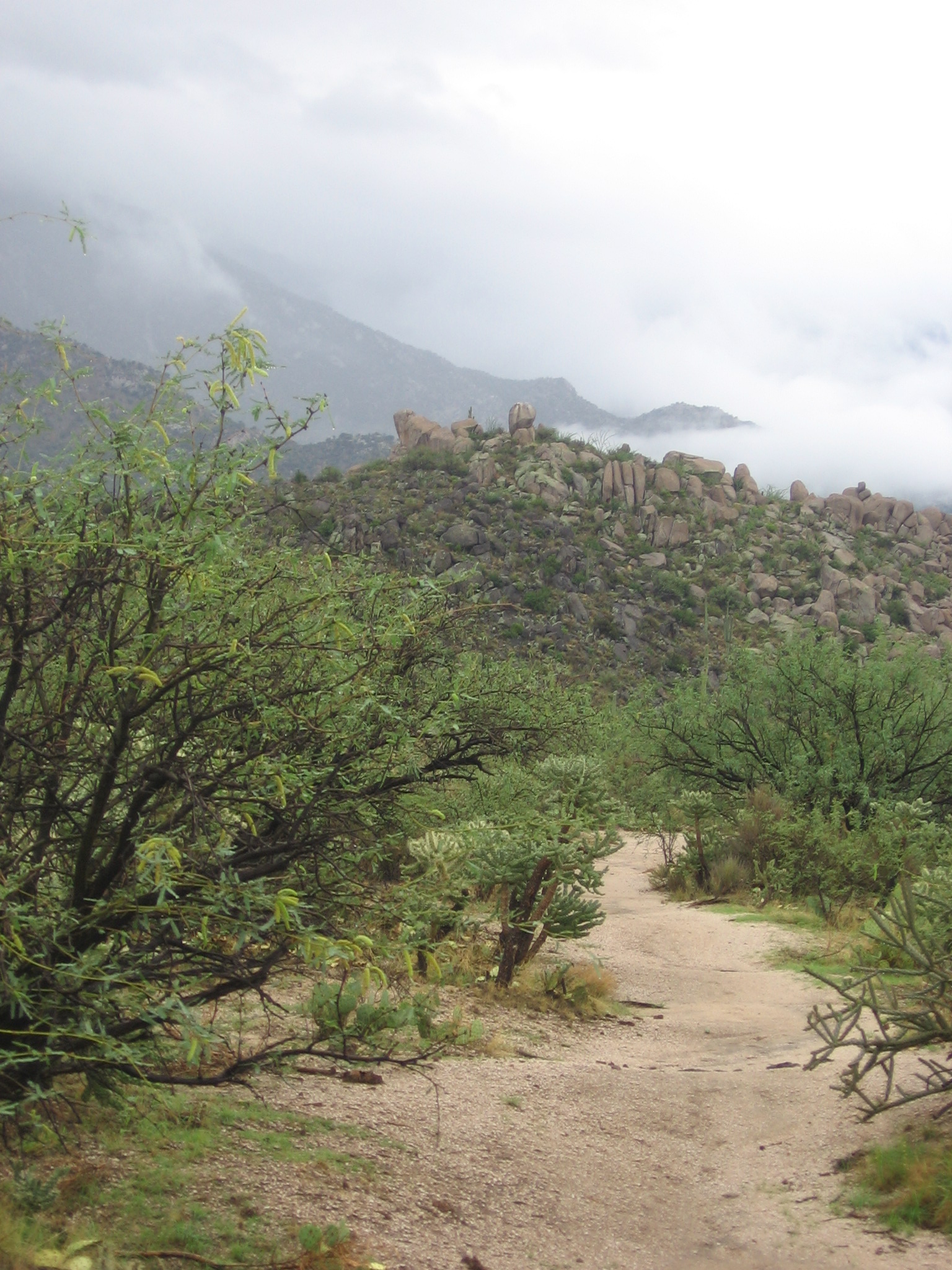



 Susan Feathers