Living Dangerously

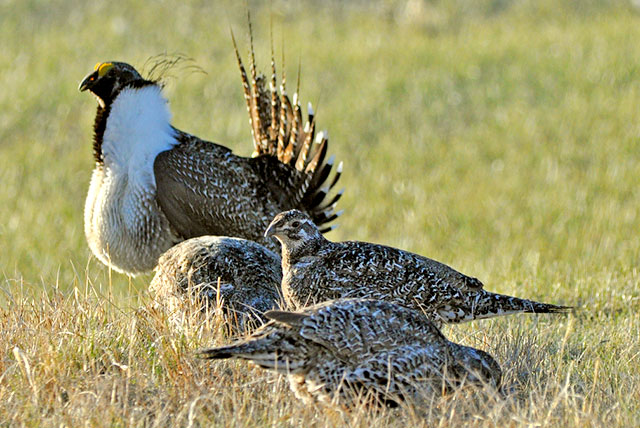
Fish and Wildlife Photo: www.fws.gov
Fish and Wildlife Photo: http://www.fws.gov

“We are living dangerously by not being able to change in a time of climate change.” ~ Terry Tempest Williams

To the Best of Our Knowledge broadcast an interview with Terry Tempest Williams. Here she talks about researching and writing her soon to be released book (The Hour of Land) on the history of our public parks, in this the centennial year of the founding of the National Parks.

Here is the interview.

For a look at how Terry relates to our public lands and actualizes her beliefs, here is a short interview with her on Democracy Now where she describes buying more than 1700 acres of public lands in a rather private sale of public land for oil leasing where an acre costs about a $1.50 for the right to drill and keep the profits. She is redefining “energy” in how she intends to explore these public lands. This is a very enlightening and motivating example of what one person can do to stop the destruction of critical, sacred habitat.

http://www.democracynow.org/2016/2/18/keep_it_in_the_ground_author

E.F. Schumacher – Why We Need Him Now

E. F. Schmacher, British Economist best known to the U.S. public in the 1970’s with publication of Small is Beautiful and Small is Possible, developed economic models based on scale. His basic idea: past a particular size, true profit declines and true costs rise – thus the title “Small is Beautiful.”

He also clarified that shared ownership of the means of production is key to equitable distribution of wealth and development of healthy communities.

The New Economic Institute (previously the E.F. Schumacher Society) includes several excellent videos and articles by new economics thinkers and teachers. Go to the link and take time to listen or read. These visionaries describe likely scenarios about where our cultures and global community are moving with economic collapse around the world and with climate changes continuing to play havoc with community resiliency.

Profitability as the sole goal of corporate behavior is addressed by Neva Goodwin, Tufts University.  She discusses Walmart’s discovery that being ecologically responsible is profitable. However, her discussion is realistic about the kind of deep change that is necessary and how the likelihood of many people being harmed again by corporate excesses is predictable.  She offers a way to use corporate charters to shape corporate behavior. Community Environmental Legal Defense Fund (CELDF) is a group she cites that is using a new community led strategy that creates municipal ordinances.  These ban corporate control of land, water, and other natural resources that are critical to life and health.  How can we make money and profits flow to the most responsible companies that protect human and ecological well being? Many examples of new economic structures are described using real companies that ARE making a profit while doing good in society.

Through the lens of E.O. Wison

E. O. Wilson (Image: http://natureandculture.org/
E. O. Wilson

E.O. Wilson reigns in my mind as our most important scientist-author of our time. He is University Research Professor Emeritus at Harvard. Wilson has two Putlizer’s under his belt, for On Human Nature (1979) and The Ants with Bert Holldobler (1991).

The adjacent photo is from Nature and Culture International: Board of Directors, one of many organizations E.O. Wilson serves with his visionary gifts.

He has penned dozens more books that have stayed on the New York Times Bestseller lists over decades of his career. He writes for the public as well as scientific community. If you have never read anything by Wilson, I recommend The Diversity of Life as a starting point. While published first in 1992, it is still relevant to understand the diversity of life across the planet, and – most important – the conservation areas that Wilson recommends must be preserved for the healthy functioning of the biosphere.

But, my reason for this post is to review his recent book, The Meaning of Human Existence (2014). Why is it important to read? He is most likely the most erudite scientist writing for the public today. His understanding of who we are as a species and society is informed by his comprehensive grasp of our genetic inheritance, the dynamics of sociobiology – how we function as a group – and the challenges to our existence in the near and distant future. Yes, it IS that significant.

The book calls for the reunification of the humanities with science. Wilson argues that the current separation of these two great ways of knowing our human nature, is at the crux of our possible self-destruction by lack of understanding our roots in nature. He explains the most basic evolutionary path leading to our essential human nature: our dualistic nature, usually ascribed to the humanities to explain.

Wilson shows us how our “selfish” genes and “altruistic” genes evolved, and how they work in a multilevel natural selection. This is relevant in understanding why we do what we do, predicting the kinds of decisions we will probably make, and – once understanding this – how we could use this knowledge to make critical decisions about new technologies that may doom human existence or secure our continued success into the future.

The Threat of Gene Engineering of Human Beings

He is writing about the new potential to design our own genetic endowment – design humans like we want them. This can also be applied to new threats from artificial intelligence (AI), a topic he does not address in this book, but which occurred to me as I read the book during a time when the nation is discussing the challenges inherent in AI development.

If we do not understand, who we are, and know how to understand our behavior, how can we possibly make these new, complex ethical decisions? Wilson writes that religion, which introduces a supernatural being who is in control of humans and the universe, is an outdated way of knowing that currently blocks human society’s ability to understand how the world works and based on that, to make the collective decisions we need to determine to secure that human life on earth will go forward as we know it.

What do you think about that? Does religion prevent us from knowing who we are biologically? How can we bridge the gap between these two powerful ways of knowing our story on Earth? Please comment so that we can discuss this online.

Small Victories: Sea Turtles Released

GSML_Kemp's Ridleys Release 025People arrive haphazardly in twos and threes and ones. By the gazebo, under its shade with six folding chairs lined up empty, and a standing mike on the other side, people gather. The sea grasses along the wet sand beach move with a gentle current, soft breeze, and welcome cool.

“Today you get to see an endangered animal, a sea turtle, that is one of the rarest in the world, Jimmy,” his mother whispered near me. Jimmy appears to be about four years old. His eyes are wide dark orbs taking in the great round world.

We wade into the water up to the yellow tape that creates a watery avenue the turtles will navigate to open bay. The Gulf Specimen Marine Lab releases sea turtles after they are rehabilitated from injuries, most at human hands. Today six Kemp’s Ridley sea turtles will be released into Dickerson Bay at Shell Point Beach, Florida.

At Shell Point Beach, FL

A short, tan man with a shock of white thick hair wades out into the water in clogs, and a light blue suit, white shirt, and tie. He is the charismatic founder of the Gulf Specimen Marine Lab, Jack Rudloe. This blue suit is the signal that another turtle release is about to happen.

Charlotte comes first, held by a university biology student, her flaxen pony tail swinging with energy. I can tell she is as thrilled as each of us watching. After telling the audience about the turtle’s rescue and recovery, she places Charlotte in the water to navigate the red carpet to the Gulf.

The turtles released today were helped by the Pier Initiative managed by the Loggerhead Marine Center in Jupiter Beach. GSML is a partner. Signs with information for fishermen and boaters, and a special net, help turtle recovery without further injury.

Five more Kemp’s Ridley’s turtles make their farewell, one after the other. People applaud. Six biological treasures go their way, hopefully to multiply and enjoy life on Earth. Everyone chats, feeling good about a wrong righted.

The sun is soft behind the clouds over the Gulf of Mexico. We depart in twos, threes, and ones. The work goes on.

Silence: Near Extinction?

Gordon Hempton tracks silence. Far from a vacuum of sound, Gordon explains that silence is the “absence of noise.”

Last Day in the Woods 049Gordon Hempton tracks silence. Far from a vacuum of sound, Gordon explains that silence is the “absence of noise.” During a 2012 recorded interview by Krista Tibbett, Hempton said that silence is on the verge of extinction, and that silence is now measured by intervals where there is no noise. There are only 12 places in the U.S. where there is silence for 15 minute intervals (without the interruption of noise). None of them are protected according to Hempton.

Click here for the 2012 interview with Tibbett on OnBeing.org. Very thoughtful exploration of the role of natural sound in our quality of life, ability to be present, and about human impact on the earth.

Click here for Gordon Hempton’s Website with a video of his 30-year tracking of silence around the world, and tracks of the sounds of silence.

Don’t Forget Florida’s Forgotten Coastline

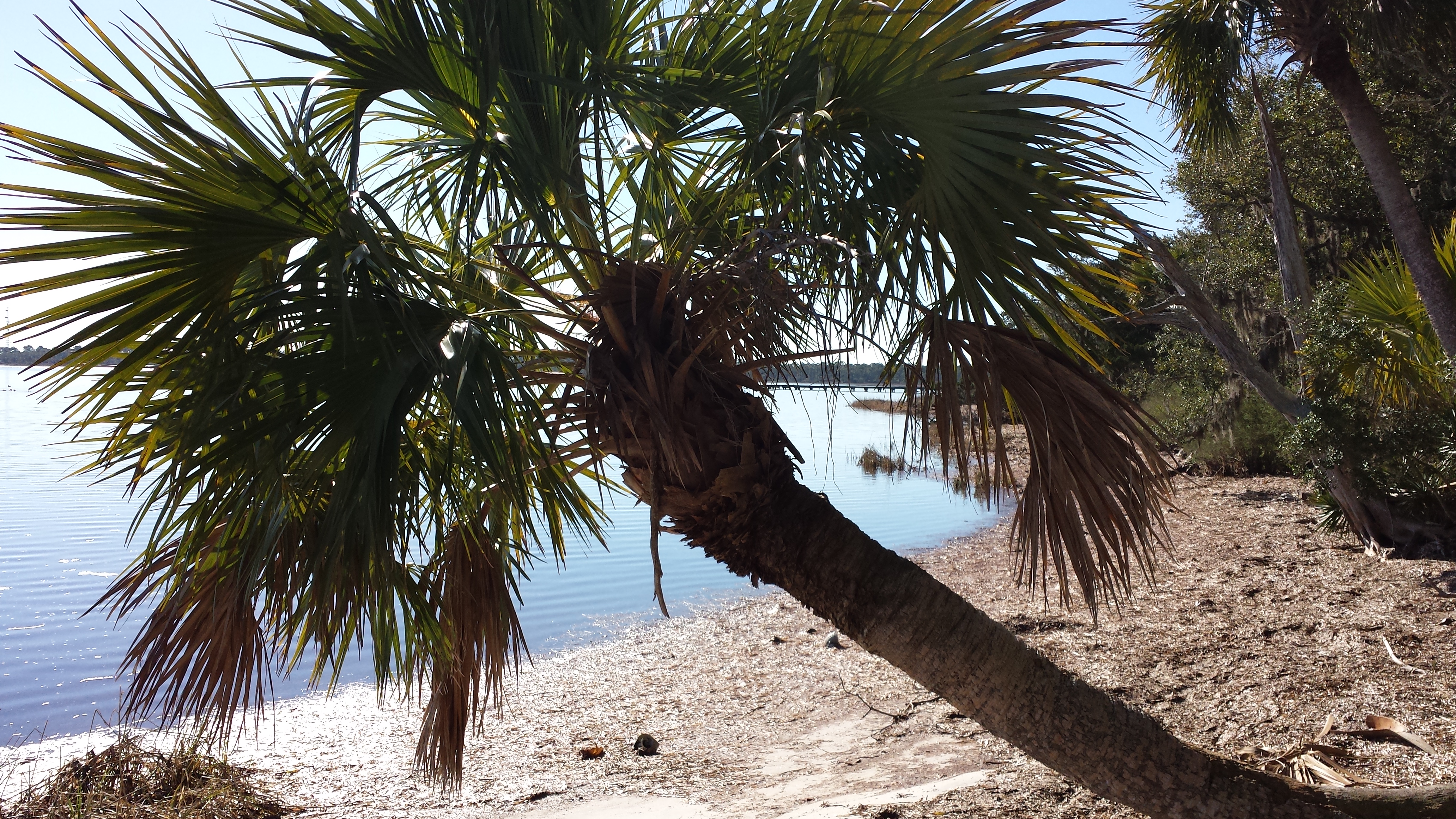
20140217_100305The Forgotten Coast of Florida near Port St. Joe, on the St. Joseph’s Bay, is one of the remaining intact ecosystems in the state and well worth a visit. This photo is near an Indian midden where you can view layer upon layer of broken shells left behind by Indian communities that shelled and fished on the productive bay.

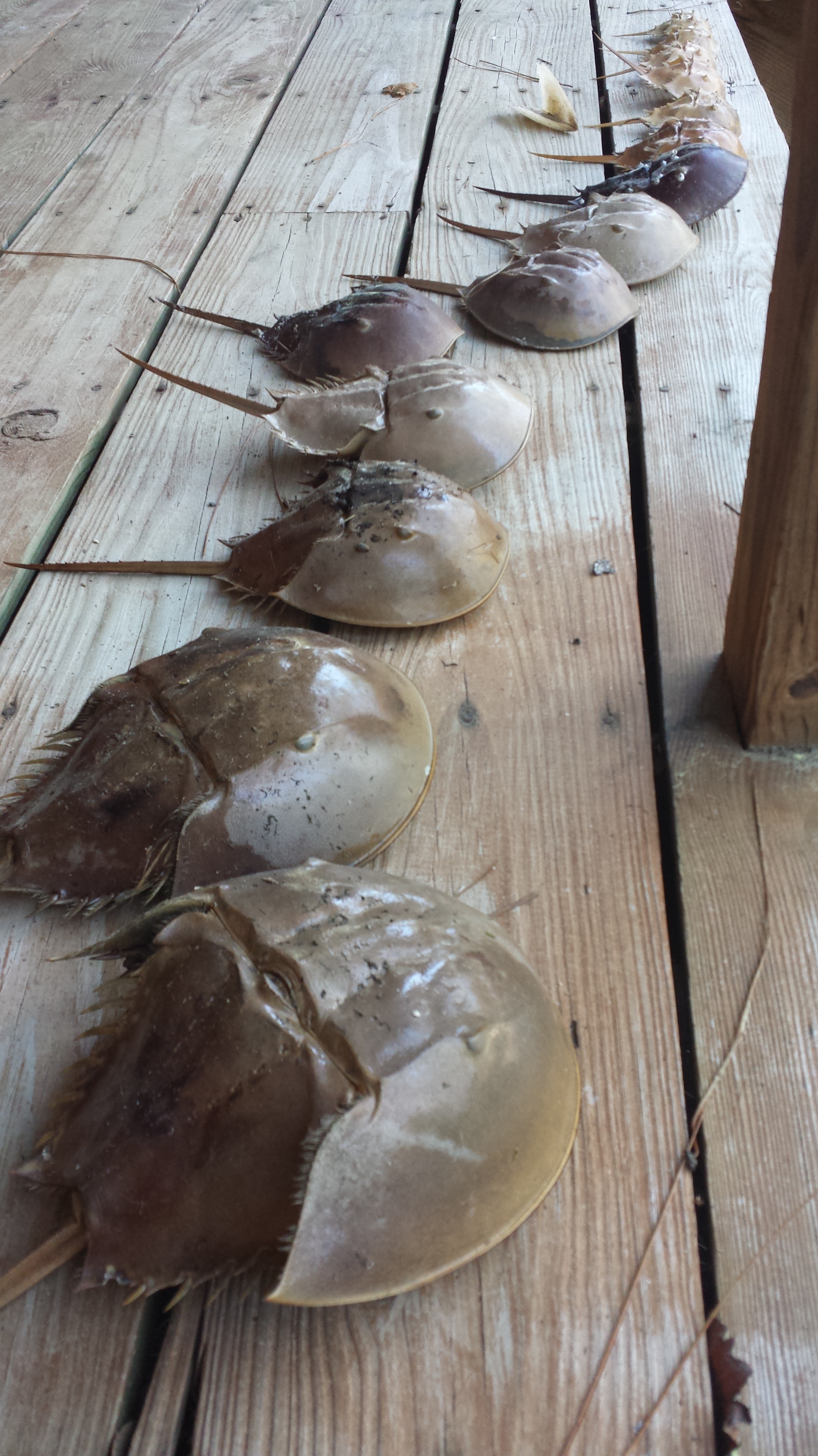
Near the Old Salt Works Cabins on highway 30E, the bay is accessible down long weathered boardwalks. Visitors walk out into the muddy recesses or shallow waters where they can see urchins, tunicates, fiddler crabs, and juvenile fish that use the area as a nursery. 20140216_095052_4_bestshotPeppered through the sea grass beds we found the casts of horseshoe crabs from molting seasons before. My friend, Barbara, is an ecologist who spent the four days of our trip collecting casts and abandoned urchin shells. She described the sea grass beds along the bay as a treasure of Florida’s natural environments because they function as a nursery for numerous species of crustaceans and fish that are important economic species for the Gulf region and primary filters of pollutants that keep the water quality high.

We met a young family from the Atlanta area who were putting together a small catamaran to sail around an enclosed area of the bay on the St. Joe’s Peninsula that arcs like a curved arm protecting the shoreline from storms. Their young sons were busy seining for fish and other sea life. My friend joined them to teach a little ecology in the best environment in the world where children can see the ecosystem at work.

IMG_7142Earlier we had visited the Gulf Specimen Marine Laboratory and Education Center founded by Jack and Anne Rudloe, two of Florida’s important writers and educators about Florida’s marine wildlife. Priceless Florida, The Living Dock, In Search of the Great Turtle Mother, and Shrimp are just several of their many books. The lab and education center are filled with touch tanks and aquarium where families can learn about many species not easily seen from shore such as loggerhead turtles, and octopuses.

20140217_115901Later we visited the St. Andrews Marina which is a working marina where you can observe a variety of fishing vessels. The one pictured here has turtle-excluder devices (TEDs) that allow fast escape of turtles when they are caught up in the netting. Before this apparatus was invented, sea turtle deaths were much more numerous.

St. Joseph’s Peninsula State Park is a wonderful place to snorkel, kayak, fish, camp, and bike. Carl, Barbara’s partner in life and biking enthusiast, enjoyed the 27-mile round trip on a newly completed bike path from the Old Salt Works Cabins to the entrance of the wildlife refuge. The refuge on the last seven miles of the peninsula is a terrific walk where you can observe thirty foot dunes – how much of Florida’s coastline once looked before massive storms and human activities have diminished their size and capacity to shelter the coastline.

Autobiography of Values: Charles Lindbergh

charles-lindbergh-t12762This Christmas my son, Tom, gave me Winston Groom’s terrific new book, The Aviators. Groom paints a detailed portrait of Eddie Rickenbacker, Jimmy Doolittle, and Charles Lindbergh.

Each was an extraordinary person. Besides their enormous personal courage , they displayed a generosity of spirit in their willingness to improve aviation, make better airplanes and instruments, test pilot experimental designs, and play key roles in aviation and space after the war – all for love of country.

Groom writes with the easy rhythm of a old storyteller about the historical events of the 20th century’s technological transformation, and studies the influences in the development of boy to man, and the personal struggles and triumphs of each  of these iconic American heroes.

In exploring the inner lives of his subjects the author exhibits a good dose of fairness. This was never more true than how he handled the complex life of Charles Lindbergh.

Lindbergh, like Rickenbaker and Doolittle, began with the belief that aviation would change the world for the better. But as Lindberg’s life unfolded he experienced a series of blows that caused him to change his values nearly 180 degrees from where he started.

The first blow came not from his young son’s kidnapping and death (though personally traumatic), but from the American public’s relentless thirst for tabloid sensationalism. Haunted day and night, even suspected of murdering his own son, Charles and his wife Anne Morrow Lindbergh, fled America to Europe for personal peace.

Groom then follows a complex series of invitations to the Lindberghs by heads of state – including Nazi leaders like Goering who asked him to fly various new planes Germany was turning out by the thousands.

Due to a series of events including a medal from Hitler in honor of his courage and accomplishments, Americans and especially FDR accused him of being a traitor to his own country – which only served to drive the Lindberghs into further isolation from the press.

Lindbergh opposed America’s participation in WWII because he observed first hand the superior technological capabilities of Germany in aviation. He believed America would suffer great losses. This opposition led to Lindbergh plummeting from national hero to villain in the minds of many Americans.

But Lindbergh joined in helping America after Pearl Harbor, even though the President would not let him reenlist (Lindbergh gave up his commission when he fled to Europe). Lindbergh worked for aircraft companies in the states and engineered improvements in aircraft that saved thousands of aviators’ lives and increased the capabilities of the US military.

After the war he was invited to reenlist, and during a top secret mission for the U.S. military, Lindbergh observed the terrible destruction of Europe. of the land, and was among the first eye witnesses to Nazi death camps. These experiences shook him to his core.

While reading Grooms’ magnificent book, I learned that Lindbergh asked the publisher William Jovanovich (a friend and publisher at Harcourt, Brace, and Janvanovich) to edit and publish essays and journal notes from across his life in a book after his death. Lindbergh had just learned he was dying from lymphoma.

The book chronicles the evolution of his ideas about technology and the environment. Lindbergh had become an advocate for wild lands and wildlife. The book that was published is Autobiography of Values. Lindbergh had spent years traveling the world learning cultural values from indigenous tribes.

He noted that in each culture the relationship with the land and with wildlife was very different than in the so-called civilized nations. He concluded that man’s pursuit of science must be guided by other, deeper values – values that relate to our responsibility to the land, wildlife, and each other. He described his journey as one of finding true values. (Read a perceptive book review in the New York Times from 1978.)

Visit the Lindbergh Foundation to see how Reeve Lindbergh – Charles and Anne’s youngest daughter – with notables like Neil Armstrong – has carried the traditions of her parents into the 21st century by establishing awards and collaborations supporting, among many exciting initiatives, development of an electric plane. The intent is to fly a plane from NY to Paris but with no gas! Explore the website to learn about many visionaries carrying the flame of innovation but with a new, informed set of values.

Thanks, Tommy. This gift given to honor your grandfather (a WWII bomber pilot) will always hold an important place in my heart. Its also a great read that I know I will return to again and again.
Winters

Winter Trees_Heather Williams Hufton Artist

Artist, Heather Williams Hufton, “Winter Trees”

I have not been in a winter environment in over 25 years. Vail, Colorado ski trip at Christmas with my family. Tom 14, Heather 13. It was crowded on the lifts, long lines; the latest equipment complex, the clothing expensive and elegant, the crowd rich. Slope fees were about $50 per day per person. I wonder what they are today.

The mountains were overtaken with human activity by then.

Twenty-five years prior I whizzed down the nearly vacant slopes of White Face Mountain, Adirondack chain near the Canadian border. A 13-year old girl myself, dressed in jeans, heavy sweater, and corduroy coat that flapped in the wind…on Monarch skis—polished oak with spring bindings similar to what we use for cross-country skiing today…

At the lift only a handful of skiers stood in line. Riding the gondola the white mountains soared in panoramic splendor, the air freshened by millions of conifers resplendent in winter garb. Up there, suspended, no planes cutting the sky and few buildings in site below (the Olympics had yet to be held there and change the village into a metropolis) I shared the mountain’s life. And, standing at the crest of a slope, listening to the wind playing on the needles of each tree, I breathed with that mountain and felt one with it. Silent except an occasional swish of a lone skier plunging by or a joyful shout of one exalting in the force of the mountain on his body…hugged, enveloped by the mountain spirit.

The days when a storm brought steady snowfall that muffled even those few sounds, I felt alone in a universe of wonder and power of such indescribable grandeur I thought I would burst wide open. And at the storm’s end the sun sparkled on icicles and frosted panes and everyone’s cheeks grew rosy and eyes clear as gemstones, and every warm-blooded mammal blew clouds of smoke from its nostrils like a herd of wild horses in winter…

                        High on the Canadian ridge that sweeps along the Champlain Valley, I stand alone at the top of a long, snow-covered slope.  The tall blue pines lining this skier’s trail are whispering long tales.  Into my nostrils floats a heavy wet scent – harbinger of a storm.  The trees are still. I hear the drawing in and letting out of paper breath, the squeak of wax on snow as I shift my weight, peering over the forest fringe to cloud encircled peaks.   If I were not thirteen I would linger here.  But alas, I jump into the whipping wind as it reaches my temple of silence, plunge headlong into the mountain’s challenge – a marauding horde of snowflakes in pursuit. – from Canned Peaches and White Flour©, A Memoir by Susan Lee Feathers

The Green Fire We Must Ignite

Aldo Leopold has long been a guide to me. He is one of the great conservationists of our time. Below is a new film about him and about the Land Ethic he developed over his career as a forester in the U.S. Forest Service. Leopold beautiful essays and scientific papers are nearly 60-80 years old yet many of them still resonate with present day citizens and scientists. He captured in words the wisdom that we need today to respond to climate change—to create a new vision and set of principles to guide our decisions as individuals, communities and nations. Here is the trailer:

Walking Our Talk?

David Suzuki Foundation Legislative Action – Might Give US Citizen’s an Approach to Working with Congress. I like their “Let’s put some green in the next federal budget.”

Hogan Lovells Government Relations Report on Energy and the Environment: The courts and Executive Branch are likely to continue to drive the direction of energy policy in 2013. Key Administration priorities for 2013 include: reducing GHG emissions, and other pollutants; cleaning and restoring water resources; addressing climate change and energy production on public lands; reducing imports of crude oil; and, mitigating potential environmental impacts of domestic production. The Senate Energy and Natural Resources Committee is expected to conduct an inquiry into whether the export of liquefied natural gas (LNG) is in the public interest. Hydraulic fracturing will continue to receive attention on the Hill. The Energy and Natural Resources Committee will also consider the development of a clean energy standard and can be expected to increase the number of oversight investigations of the departments and agencies under its jurisdiction. Senator Ron Wyden (D-OR) is Chair of the Energy and Natural Resources Committee with Senator Lisa Murkowski (R-AK) remaining as Ranking Member. Barbara Boxer (D-CA) will continue as Chairwoman of the Environment and Public Works Committee and Senator David Vitter (R-LA) is the new Ranking Member. In the House, Fred Upton (R-MI) remains as Chairman of the Energy and Commerce Committee with Henry Waxman (D-CA) as Ranking Member. Representative Doc Hastings (R-WA) will continue to serve as Chairman of the Natural Resources Committee with Ed Markey (D-MA) as Ranking Member (although a Senate bid may take the Congressman’s attention away from Committee work in early 2013).

Write these Congressional Leaders directly to let them know your thoughts on Tar Sands Oil Mining and the Keystone pipeline, as well as other energy and environmental issues.

View this video from the National Resource Defense Council to educate yourself on the environmental impact of mining tar sands all in the name of national security.  The pipeline will cross the U.S. and move oil from Canada to the Gulf. The Nebraska governor just changed his mind to support the pipeline in Nevada. He had previously opposed it and now believes it is a safe technology. What changed? Not the technology. Pressure for revenue and jobs once again cave resolve against harmful technologies that cause long term impacts on ecosystem and human health – all for short term gains. An old story in America and the cause of environmental regulation. Greed is a powerful force.

Read this report below by the Sierra Club: Tar Sands Pipelines Safety Report

2011-02-safety

On President’s Day Weekend, Sierra Club and 350.org will stand in solidarity to press President Obama to reject the Keystone XL Tar Sands Pipeline and to live up to his promise to take a leadership role to reduce the U.S. contribution to climate change and develop a national agenda for alternative clean fuel development. Those are the kinds of jobs we need.