Risky Business: Oil and Water

A pall hovers over our vibrant city

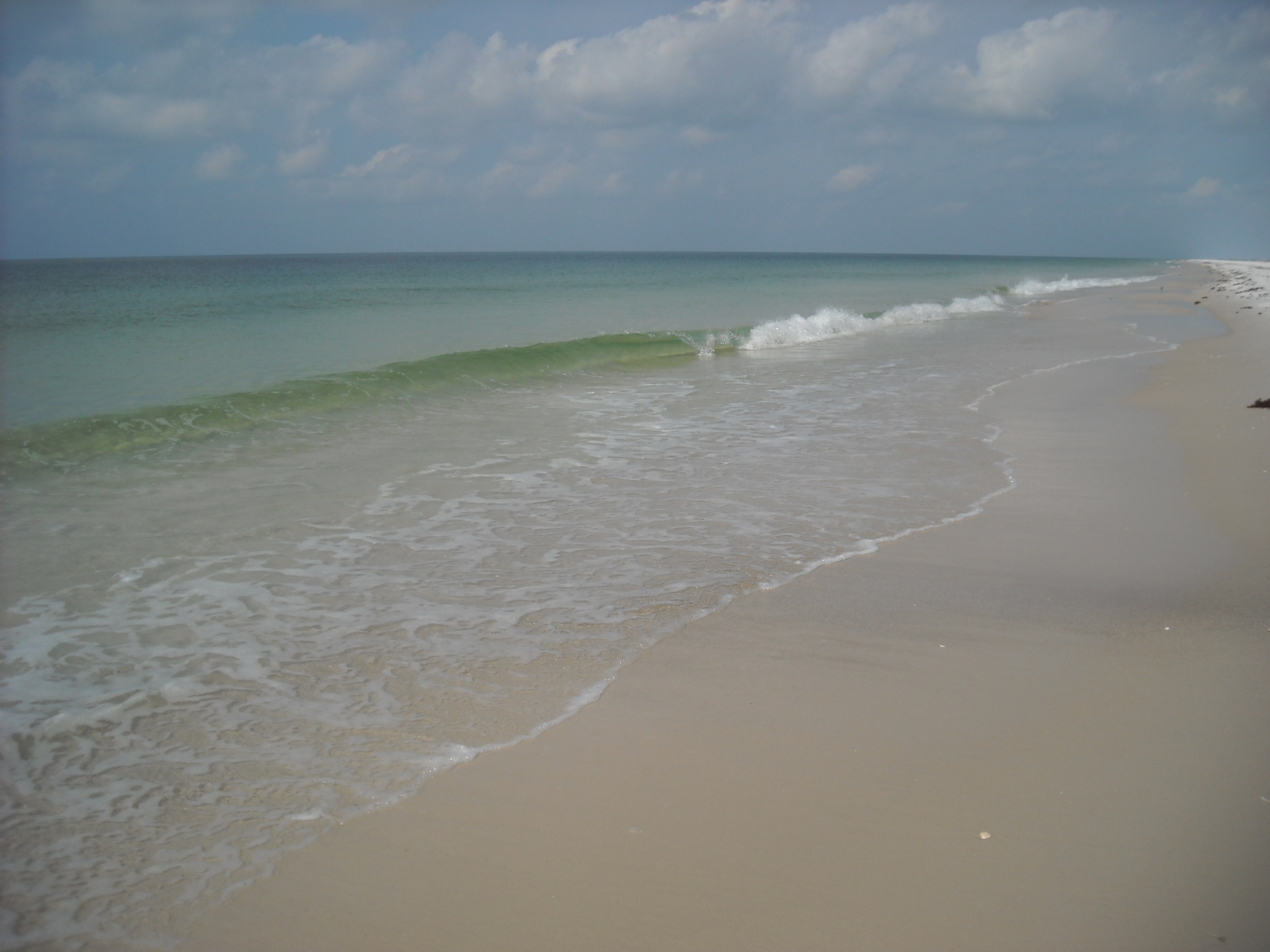
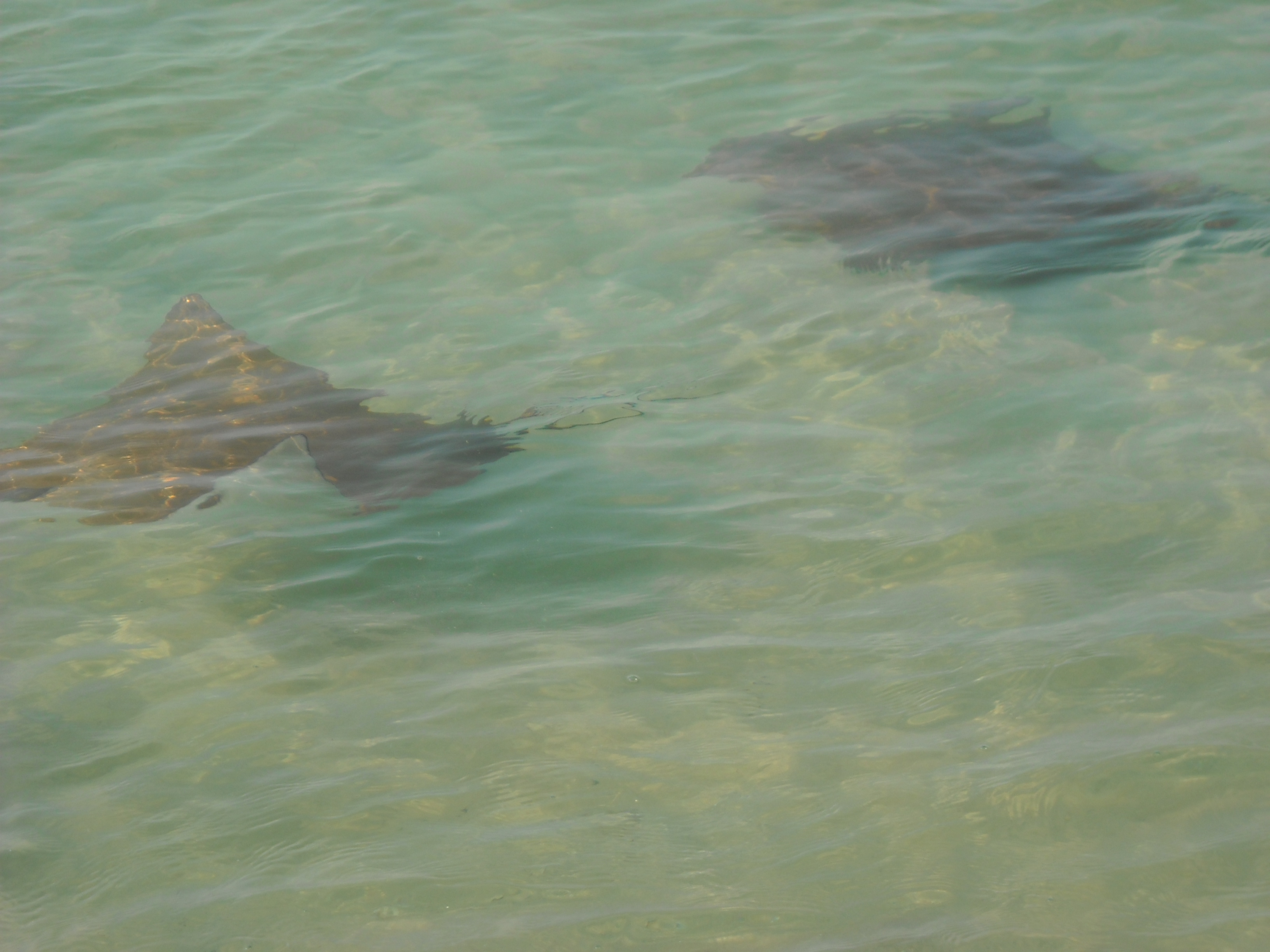
I’d stayed away from Santa Rosa Island, Pensacola Beach because I couldn’t take it…seeing the destruction of a rare, beautiful place and all that inhabit it. Finally, curiosity got to me and I went out on the western end of the island to the Gulf Islands National Seashore, Fort Pickens. At its entrance I began walking with trepidation. It was about 8:45 and there were not many people out. As I walked along the glass green waves all I saw on the shoreline was a lot of kelp blown up by southerlies and the usual beach denizens: ghost crabs on the prowl, sanderling scurrying to snatch a welk from the draining sand and retreating waves; black skimmers trawling a long organge jaw to scoop minnows. A fleet of pelicans above and a squadron of spotted eagle rays below glided over their hunting grounds. A couple of small sharks had ventured into shore after fish and out on the horizon dolphins were feeding. I saw a dozen speicies of shorebirds including a dozen willets and one or two gulls. Least terns were solitary and dove straight down into the calm water then winged sharply upward.  I think I might have seen a large loggerhead pop its big head out of the water.

Talked to two rangers patrolling the beach with bags full of tarballs and other trash left by humans – flipflops, bottles, condoms, and food containers. We chatted. Apparently just a quarter mile away the tar balls were entering Pensacola Pass and washing up on the Escambia Bay shoreline. The beach I walked this morning would be next unless by some miracle the winds and currents keep the advancing oil beds and sheen offshore. But given the size of the oncoming black tide (two miles wide by 30 miles long) there probably isn’t much chance of that.

A pall hovers over our vibrant city, newly recovered from Hurricane Ivan. This city that so many corporations have left lethal legacies and then moved on…this city has seen enough of that.

See below some reminders that all is not well and a couple of last images of ocean system denizens in the path of destruction.

This slideshow requires JavaScript.

Oil Globs on Santa Rosa Island: It’s Here

The People of the Forward Stampede

Late this afternoon I drove to Santa Rosa Island, to the entrance of a seven-mile stretch of undeveloped barrier island, protected by the Gulf Islands National Sea Shore, one of our priceless U.S. National Parks. While there was a long stretch of beautiful beach, as I walked west toward the end of the island, I began to see oil – firsts dime-sized, then bottle-cap, then hand-sized: thick crude oil, pooled and hardened among shells and sea grasses on the high tide line. Adjacent to this pollution, black skimmers sailed by with their long lower jaw skimming in the shallow edge of the surf and Least Terns dive-bombed for small fish not far off shore. Surely they must be tasting and smelling this invasion of foreign substances. We can only guess what is happening to fish, corals, jellies, dolphins, plankton…I am so profoundly sad about this awful time when we are facing our ourselves –  our ways and wants. It is NOT a pretty picture.

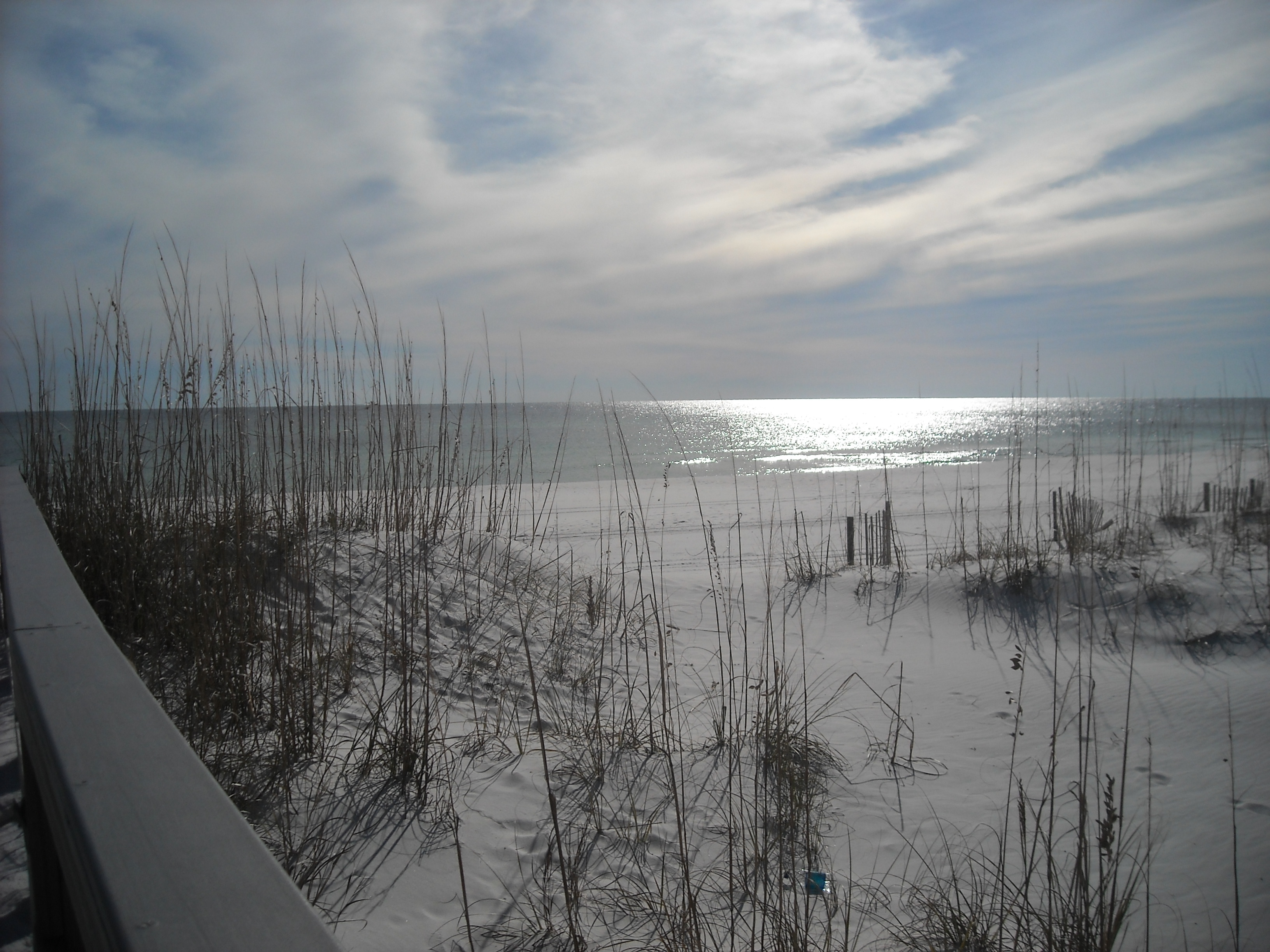
Only a few days ago this was the image of this treasured coast at sunrise:

And to think we are risking this and our families health for a culture addicted to speed and consumption and which cannot function without an enormous and uninterrupted supply of oil. Will it be worth it when all this plays out? And, it will continue to playout over months and years and there will be other catastrophes like it where we have taken enormous risks as the People of the Forward Stampede.

They will all be impacted by the oil catastrophe and eventually it will reach to our children and us through our air, food, and spirit.

Santa Rosa Island, Pensacola Oil Spill Update

Interesting proposal to permanently follow oil rigs with satellite surveillance…

Our local NPR station is covering our local conditions. Go to this link for WUWF.org for trajectory maps and fishing limitations. Also go to Skytruth for an interesting proposal to conduct ongoing satellite surveillance of all our oil rigs from now into the future.

After hiking on Santa Rosa Island on Saturday and Sunday I developed a migraine which I have never had in my life. I wonder…that is a symptom of air pollution where oil has evaporated and benzene, toluene, methylbenzene, and xylene compounds are in the air. Pensacola as terrible water and air quality due to an eddying effect, similar to those seen in the Gulf offshore our barrier islands.

Oil Plumes Measured at 1140M Depth

Trust your senses.

This morning I checked into Skytruth.org to learn the extent of the oil plumes. A blog contributor took me to the Gulf Oil Blog of the U.S. Marine Sciences. There you can find results of sampling in suspected deepwater plumes of oil. The measure is called a CDOM (colored dissolved organic matter). Scientists measured above and below the plume then sampled from the middle of the plume. Above and below they found no organic matter but within the plume they got a strong reading and could see an oily residue left over on the filters. Skytruth is tracking the movement of oil plumes from the Maconda well and it appears to be moving in the loop current and toward the Florida straits.

Skytruth cautions that there are natural processes that can also create oil sheen on the surface. But when you go to the U.S. Marine Sciences site you learn to “trust your senses”. This spill, if as White House energy and environment adviser Carol Browner warned, goes on through August when relief wells will be in place to receive the oil, we could see lasting and extensive impact on marine ecosystems along the whole of the Gulf, Florida and perhaps even the Atlantic shorelines where the loop current turns north and runs up the eastern coast.

Take action to prevent this happening again.

A jewel of nature: in the path of the Oil Spill?

For today I thank God for the Gulf – a nursery and a home to creatures big and small and innocent to our machinations.

Pensacola, Florida. Santa Rosa Island. Gulf Shores National Seashore. Observed wildlife: dozens of spotted eagle rays skimming along the shoreline; dolphins pursuing schools of silver mullet offshore; two small loggerhead turtles bobbing along (looking for a place to come ashore tonight under the moonlight – to lay her eggs?). Least terns dive-bombing over white sands under translucent green seas, a small fish for breakfast; 14 brown pelicans, gulls, and two black skimmers with long jaws dropped to scoop up the least terns meal; and one handsome man from Scotland who showed me how to find small, whole sand dollars.

I cannot tolerate the idea that a black tide is on the way here. I pray that it does not so that our shores can provide accommodation for wildlife on the move from the tragedy happening in Louisiana. But I am probably too optimistic. For today I thank God for the Gulf – a nursery and a home to creatures big and small and innocent to our machinations. See links on this site for updates on the spill in our region: Oil Spill Academic Task Force, Skytruth.org.

For now this jewel of nature’s creation persists….

Oil Spill Perspectives

…what if we did something revolutionary and base our decisions on a set of conditions that assures we don’t harm the Earth and thus ourselves since we are one community, interlinked?

Most of us have copious information about the oil spill (I think we can agree that GOBS MORE oil is spilling into the Gulf waters than we have been told by BP and by the EPA. Go to links on this blog for more accurate estimates).

The impacts are starting to show up in Louisiana and threatening Alabama and Florida. Things are not static this time of year with the tropical storm season and strong south easterly winds and thus currents. We can only guess what is happening to plankton and all the vulnerable life underneath the surface, out of site. It has to be devastating.

What has been growing in my mind is much greater than the stats on this spill, though important. What I am thinking about is how we make (or don’t get a chance to make) decisions about our technologies, even at the origin when inventors are “out there” thinking up stuff. Right now the values that underpin most of our biggest industries are based on providing a natural resource or product from it that has been evaluated to make a lot of money for its creators and sellers. Our principle is: if it can be made and make money, make it! Figure out later if it is harmful in which case the American citizen or the natural systems that support us will take the blows, and while down, have to wage a near impossible battle to bring the barons to court. Even then there is no certainty justice will be done.

What if there was much more thought on the front end of the process where we carefully consider the impacts on the health and well being of our people and all the wildlife and natural systems that produce health and wealth? And what if we did something revolutionary and base our decisions on a set of conditions that assures we don’t harm the Earth and thus ourselves since we are one community, interlinked?

Consider what Wendell Berry suggests are bad solutions to problems versus a good solution:

“A bad solution is bad because it acts destructively upon the larger patterns in which it is contained. It acts destructively upon those patterns most likely, because it is formed in ignorance or disregard of them.” ~ p. 137 The Gift of Good Land

“A good solution is good, on the contrary, “because it is in harmony with those larger patterns.”

Good solutions:

  1. Accept given limits
  2. Accept the limits of discipline (i.e. agricultural problems are solved by agriculture not technology, etc.
  3. Improve the balances, symmetries, or harmonies within a pattern
  4. Solve more than one problem
  5. Will satisfy a whole range of criteria
  6. Embody a clear distinction between the biological and the mechanical
  7. Have wide margins
  8. Answer the question, “how much is enough?”
  9. Should be cheap and should not enrich one person by the distress or impoverishment of another
  10. Exist in proof
  11. Imitate the structure of natural systems
  12. Are good for all parts of a system
  13. Preserve the integrity and pattern that contains it
  14. Are in harmony with good character, cultural value, and moral law~ pp 141-145 Ibid

In 1970 during the oil crisis of that day, President Carter was laughed at for his efforts to develop energy independence by switching to alternatives such as wind, solar, and geothermal sources. What stopped all that effort, removed the electric car from the road?

Simply, greed. Could that be why we have an incredible 3500 oil rigs in the Gulf of Mexico and 1500 miles of pipeline criss crossing the ocean floor in a hurricane prone zone. Follow the money and you will discover the reasons why we do most of what we do in America. Our bottom line is STILL profit. Preoccupation with the market and belief in it, which is a metaphysical movement unnamed as such, is driving us to the edge of environmental degradation after which no one can really predict outcomes – exactly where we are with this oil spill.

See the Lindbergh Foundation website. They support innovative research that establishes a healthy balance between technological development and preservation of the Earth’s ecosystems. Click on each of the funded scientists and educators whose work they are supporting to understand the concept that Wendall Berry was getting at. We need a lot more of this kind of thinking!

Read Barry Lopez to understand what it means to live connected to everything around us, our own nature knit tightly into the fabric of all the creation.

For a very thoughtful article by Joshua Reichert of PEW Environmental Group published in the Miami Herald, “The Future of Oil and Water.”

Failure Is Not An Option

Apollo is the Greek god of reason, morality, and maintenance of society. Perhaps in our cultures these have not always been united.


The Apollo Moon Program took Neil Armstrong and Buzz Aldrin to the moon’s surface in 1969. During the third mission to land men on the moon (1970) an explosion left the Apollo crew in grave danger.

The story of Apollo 13 offers an important message for humankind as we face up to climate change: “Failure is not an option.”

These words were uttered by Gene Kranz, NASA Flight Director, when he addressed the engineers and scientists responsible for returning the three crewmen to Earth under what appeared to be impossible circumstances and limitations.

As we learn more about the daunting task of reducing carbon emissions well below 1990 levels even while the world’s population grows exponentially, the challenge feels every bit as awesome as that faced by Krantz on that fateful mission.

Kranz advised his team to not be emotional but to “work the problem.” It seems to me that is good advice. We have to cut through the arguments and individual beliefs that each of us holds to create a sustainable human enterprise on Earth.

And like Apollo 13, the clock is ticking for us, too. Beyond a certain point we will not be able to reverse the physical adjustments of Earth’s atmosphere and oceans and of living communities most vulnerable to them.

So just how did these scientists and engineers “work the problem?” Well, to begin with they erased the previous flight plans and went back to the drawing board. Then, they looked at what was on hand that could be used in new ways to meet the needs of the moment: “We’ve got to take this square battery pack and make it fit into this round receptacle,” the engineer explained to his team.

And what were they attempting to solve? Chillingly for us, the crew was experiencing a lethal build-up of carbon dioxide on board their small craft, and the engineers were attempting to build a carbon scrubber with the stuff on board the spacecraft.

Cutting through all preconceptions, the team put their heads together and managed to build a new scrubber with a square end that fit into a round hole.

Without being simplistic, much of what we have to do to come together as communities, nations, and international bodies seems just like that: a square peg in a round hole. So far nothing fits very tight.

But here is a simple example of how a great accomplishment was achieved:

  • Work the problem, skip the rhetoric;
  • Gather what is on hand and if necessary use it in new ways that can get us the solutions we seek;
  • Failure is not an option – we do not have the luxury to try this another time, therefore our leaders, social institutions, and citizens must all come to the table with sobriety and willingness to think anew.

Apollo is the Greek god of reason, morality, and maintenance of society. Perhaps in our cultures these have not always been united. Just as the Apollo crew was buoyed by the worldwide prayers and hopes of people and nations, we could look at the human community, and all the living communities that keep us alive and happy, as a crew on an endangered spacecraft that we have got to bring home safely.

Let’s work that problem.

Duma, Ghost Cat, Part III

The big cat’s ghostly form moved through the forests of broccoli, then across the road under a cool moon and into the tall corn tribe growing profusely by the canal.

Border Cat

This story takes place in Yuma, Arizona where the Colorado River meanders south to the Sea of Cortez. In truth, most of the water never gets to the Delta area as it once did. The jaguar in this story followed the river trace toward Yuma’s agricultural canals and farm fields where he inadvertently became tangled up in border problems. He represents species whose ranges traditionally span the arbitrary boundaries of the human species.

Duma bounded from row to row, sure footed in the cover of night. The big cat’s ghostly form moved through the forests of broccoli, then across the road under a cool moon and into the tall corn tribe growing profusely by the canal. His activity was confined solely to night, now that the ranchers and homeowners were on the lookout for the phantom jaguar. This put Duma at a disadvantage. His white coat stood out starkly against the night sky and dark shadows. His large tracks left a trail of fear for the farm hands who worked in the same fields come morning. Duma plodded over the fields in search of prey. It had been many days without meat and he felt weakness entering his heavily muscled body.

Duma’s quivering nostrils caught the scent of something unknown, stopping him in his tracks. It was not exactly like the smell of the two-leggeds. But what? Duma moved closer to the smell’s source in a low crouch now, soundlessly advancing. Another smell—of death—unmistakable…  His nose led him closer to the road than he liked, and at its edge he paused and stretched out his long, white neck to peer through the corn stalks. Every fiber of his being was on alert, his small ears drawn forward to catch the slightest sound, Duma’s glassy eyes opened wide to catch the slightest movement. He held himself completely still, taking in every possible clue as to what this prey might be and calculating what it would take to bring it down.

Finally, the animal came into view. It was small and sitting on its tail in the middle of the road. It smelled strange. Duma’s full-grown jaguar body demanded more and more of the hunter’s skill to satiate the incessant need for flesh and blood, and now he felt the gnawing ache of hunger in his empty belly. So he continued to investigate.  As he looked on in perfect silence, the strange animal stood up and started to walk toward something ahead of it in the road. Duma understood with his nose that whatever it was, it was dead. The smaller animal swayed over it.

Duma sniffed the air again, breathing in the chemical language.  An acrid scent of urine and scat pierced his nostril. This was no self-respecting beast, he decided.  He took a chance and crept slowly out onto the road toward the prey, sensing no eminent danger.  As he skulked closer, the small creature turned. Duma let a low growl roll out onto the warm night’s air from his powerful throat. The animal seemed unafraid! Perhaps it was more of a threat than he realized. Duma paused, bringing himself more upright. He cocked his small, intelligent head as he tried to understand what he had encountered. Remembering other times he had misjudged a threat, Duma was not going to let his ego fool him again.

Duma crouched, waiting to see what this strange beast would do. It started coming toward him, walking in a strange manner, falling down, and then righting itself. Duma thought it must be injured. He stood up, walking forward with more curiosity, yet ready to pounce.

When the moonlight lit up the white panther, the child saw it.

Colectacolecta…. ”

What a strange sound, Duma thought…high pitched like a rabbit. The creature was holding its paws out toward him, and he reflexively swiped them away, knocking the child down. It began to wail.  Its smell was foul.

Duma was deciding just how hungry he was when suddenly a noise grew out of the sky and sunlight shot down the road! The great white panther bounded out of sight. Behind him he heard his prey shrieking.  Duma looked back. It was the sky beast he’d seen many times.  He was filled with terror.

Now it dropped from the sky with wings swirling and fire breathing from its mouth.  Duma had never seen anything like this animal, many times his size.  He soared into the air and leapt over the tall corn, golden tassels brushing against his belly, white flanks streaming through the dark field toward the trees.

Duma stopped for a moment and looked back to see the beast take its prey. But instead of devouring the strange little animal, it turned toward him! Now the deafening roar and giant flapping wings came rushing at a greater speed than the jaguar could maintain, and his great paws lost traction in the muddy soil. Reluctantly, the powerful cat decided to come into the open to gain traction on the solid dirt path between corn rows. That’s when the creature threw light onto him. Duma felt the ripping heat tear through his flank. He crumbled to the ground, pushing up a great cloud of dust as his two-hundred-pound body came to rest in a heap of white hair, muscle, fang, and claw.

The last fading sight in the cat’s blue eyes was that of the great monster coming in for the kill.

Synchronicities

The resort was on the grounds of a previous Essene community established in the 1920s.

On my first break from the teaching, I drove to San Diego to stay with friends from my work days at Scripps Clinic and Research Foundation.  At that time, the clinic gave health and wellness classes at Rancho la Puerto, a spa and retreat center near Tecaté, Baja California.  My friends arranged for three days of rest and contemplation. I was exhausted, and confused about whether to continue my education in Yuma.

The resort was on the grounds of a previous Essene community established in the 1920s. The library still shelved many of the community’s books. I wandered in there one evening, not knowing the background of the ranch, and found a history of how the community was founded by Edmond Bordeau Szekely, an internationally known translator and student of world religions. The American Essene Community flourished for over fifty years, and gradually evolved into the present-day spa as more and more people wanted to experience the Essene quietude, exercise, vegetarian food, and spiritual practice.

Szekely is the scholar who translated the Essene Gospel of Peace from the original Aramaic, the native language of Jesus. He was given permission to translate the texts that were kept under lock and key in the Vatican. Szekely later discovered he followed on the path of St. Benedict and the monks of the Monte Cassino Monastery who protected these documents through the ages.

The texts had been originally translated by St. Jerome in the fourth century. He found fragments of the original texts in many small communities in the desert.  Many of the residents who harbored the document fragments were descendents of the original Essenes.

These ancient documents precede the Dead Sea Scrolls of Qumran, and represent ancient teachings as old as eight thousand years B.C.E. (all the way back to Zarathrustra). They describe The Law. It is the same Law to which Moses referred. When St. Jerome was made the Secretary to Pope Damascus, who established a Papal Library, he was allowed to translate the ancient writings of the Essenes.

However, the translations caused a storm of criticism.  The basic principles of the teaching emanated from natural law, not the laws of man. This body of knowledge made it impossible to follow while promoting the ownership of land and the suppression of women and children to the rule of men (i.e. patriarchal government). The Essene Gospel was the original ecological literature of the west, binding human beings to the Earth and her natural rhythms in a cosmology connecting Mother Earth and Father Sky, the feminine and masculine principles.

When Pope Damascus died, his successor St. Augustine made sure these documents were suppressed. Jerome fled for his life to the desert. There he continued to search for more fragments of the ancient knowledge. After his death, Jerome’s manuscripts were scattered, but eventually many found their way into the Secret Archives of the Vatican, where they remained under lock and key.

The Essenes were a peace-loving sect that believed in the sacredness of all life, practiced vegetarianism, and held that there are spiritual manifestations for all physical phenomena. In this, they were the first quantum physicists: all matter exists in two forms, particle and wave – flesh and spirit.

They understood all of life in the universe as the Ocean of Life, and all thought in the universe as constituting the Ocean of Consciousness. It was their experience that angels connected these two realities. The Essenes believed that Moses understood this through the vision of his ancestor, Jacob, who saw angels ascending and descending a ladder connecting Heaven and Earth.

Essenes practiced self-improvement, which they deemed a life-long process. Achievement of harmony required a balance between earthly and cosmic forces. The heavenly father (cosmic) and the earthly mother (earth) are balanced: eternal life with earth; creative work with life; peace with joy; power with sun; love with water; wisdom with air. These correlations remind us that whenever we contact earthly forces, we are in contact with heavenly forces.

I eagerly read these teachings, and I was encouraged to learn that the principles and cosmology taught to me in Yuma were the same described in the Essene teachings. Here was an Earth-based spirituality making the connection between the material world and the world of thought at a universal consciousness level.

The Teacher of Righteousness in the Essene texts is believed by some to be Jesus, when he was between eighteen and thirty years of age. During this time, his whereabouts are not mentioned in the Biblical texts we have today.  Jesus and his family were Essenes, the ancient Jewish sect, existing from 250 B.C. to 60 A.D in Palestine. The community lived and taught a way of life consistent with Native American spirituality in which all things are imbued with the spirit of the Creator – rocks, water, air, plants, animals, and people. The philosophy of non-violence extended to animals, invoking a deep reverence for the living creatures of our planet. The last and most famous Essene-in-spirit was St. Francis. He lived and believed exactly as the Essenes, and his own writings are nearly identical to Essene texts.

So, I took this discovery of Szekely’s community, at the time I was questioning whether to stay with my Indian teachers, as an affirmation of the integrity of the work.  I returned to Yuma.

Midsummer Nights

A profound shift is happening in the West where growth is out of control and the Earth is showing strains of overuse and over-harvesting.

Mid-Summer Night’s Dream

Patterns of Life in an Urban Sea

At midnight the heat radiates from the cement driveway under my feet.  I stand in the white moonlight gazing up at twinkling stars.  The dark outline of tall trees and roof tops form a stage-drop where city glow breaks the blackness of night.

This is my summer ritual – star-gazing in my pajamas.  I wake out of some consciousness that tells my snoozing brain I can open the doors and go out to a cool 85ْ F!

It’s summertime in Phoenix, Arizona.  Temperatures soar over 100. Yesterday was a crisp 116ْ.   After June, the heat island effect kicks into gear.  Buildings and streets – especially asphalt surfaces – absorb the day’s solar energy, then release it slowly through the night.  Even though the sun goes down, the built environment is still hot.  The hum of air conditioners is a constant auditory feature of summertime.

Here in Tempe there is humidity from the old irrigation system still in use.  Once a week residents open aqueduct valves in their yards to allow water to flow. Encircled by raised earth berms, the water is held so it slowly soaks deep into the ground.  This is an old way of life to support large trees and grass lawns from a time when Tempe was a tiny agricultural town in the early 1900’s.

People moved to Tempe to enjoy the dry, mild climate, and to escape allergy causing vegetation.   However, the Eastern trees and plants people brought with them (mulberry and olive, for example), and their love of grass, resulted in Phoenix becoming the asthma capital of the west.

Nearby Arizona State University is our land-grant university.  My little house sits behind a friend’s large art studio.  It is a plum of a house and only a short walk or bike to my workplace at the Center for Environmental Studies at A.S.U.  In the hot afternoons I swim in the Olympic-sized pool at the University along with bronze co-eds and swim team athletes.

My house is surrounded by large trees and a grass lawn maintained beautifully by grounds keepers.  Old Tempe is a remnant of an outdated way of life in the desert:  just add water and cultivate an oasis.  It was a way that made sense to residents and developers when water was plentiful, and when temperatures were cooler, and summers only four months long.

Over the last 50 years the average low temperature has increased by 10ْ F.  The city’s growth is exponential now.  The population since 1990 increased by 59%!  This is unsustainable with available water, even though theoretically there is much more desert to develop across the expansive valley floor.

City mothers and fathers are currently examining critical decisions Phoenix needs to make to sustain a live-able future.  How and what they decide to do to shape the city’s growth will be an important example for metropolitan communities across the West.

In 1998 Arizona State University was awarded a major grant from the National Science Foundation (NSF) for a Long Term Ecological Research Study (LTER) as one of two urban sites.  Phoenix and Baltimore were chosen as two urban cities to be studied.  We are a city growing by the process of sprawl, and Baltimore is an older city that has filled in its borders, and now grows inward and up.

NSF wants to know what is happening to the ecology of living communities in cities – since nearly 80% of the world’s population now lives in or near an urban area.  The study seeks to answer questions that indicate the health of ecosystem functions in urban areas. How are native animals and plants coping? How quickly is organic matter turned-over (decomposed to soil, elements in the air, and water again)?  What is happening to water and air quality?

The Central Arizona Phoenix Long Term Ecological Research Study (CAPTLER) began a twenty-year study of these factors along with human behavior patterns such as where we choose to live in the city or how we use water among many others.  The study recognizes that landscape affects human activity as much as humans impact landscape.  These forces work together to shape urban environments.

The Greater Phoenix 2100 study initiated by Arizona State University collects and disseminates data for possible scenarios of growth and quality of life to be used by policymakers. It looks at trends over time.  For example, three projections are made for population by 2050: at current annual growth rates (4.4%), the lowest annual growth rate in the last 50 years (3.4%), and the lowest annual growth rate in the last 100 years.  Projected population in 2050 based on these three rates could result in 28.2, 17.4, or 10 million people respectively.  Citizens and policy-makers looking at these numbers can make decisions now that will help them shape tomorrow.

The Long-Term Ecological Research Study is reporting loss of indigenous biodiversity on mountains in Phoenix surrounded by an urban sea of human activity. These habitats are essentially like islands.  Isolated species that can not relocate represent small populations with consequent small gene pools. Inbreeding weakens the biological fitness of species if prolonged.  Scientists believe this is happening to many species of plants and animals in the urban perimeters of Phoenix.

One of the most harmful assaults to native species diversity is the introduction of non-native plants and animals.  Successful non-natives have no natural predators in the new environment.  Thus they can out-compete native species for habitat and resources.  On species of tree – the Tamarisk – has reduced native trees along Arizona’s already vulnerable riparian green belts (areas where the water table is close to or above the ground).  Riparian habitat has been reduced by 90% in Arizona over the last century due to human activity.

For thousands of years these riparian habitats supported the greatest species diversity in our state.  Beavers and otters abound in rivers and streams, and mega fauna like deer found sustenance there.  Today one has to visit a museum or zoo to know what native species Arizona once supported.  Many residents in Arizona are unaware of what is a native versus a non-native due to the importing of exotic species.  In other words the cultural memory of the original landscape is being lost with each generation.

In many ways what Phoenix does over the next decade to slow and manage growth, and to clean up and use water more responsibly will be rich learning opportunities for cities across the Southwest facing similar issues.  A profound shift is happening in the West where growth is out of control and the Earth is showing strains of overuse and over-harvesting.

Tucson, Arizona where I now reside is 100 miles south of Phoenix and higher in elevation.  We are called the Upland Desert.  Tucson currently follows the Sonoran Desert Conservation Plan, a multi-agency and community-based initiative, to shape its growth.  Although Tucson has its own sprawl (it has reached nearly one million people in the metro area), it is still known for its open space and residential landscaping with native desert corridors.  Native Tucsonans are desperately trying to hold onto this legacy.  But many new residents who do not understand desert ecosystems, or appreciate the way of life necessary to protect water reserves, build huge homes with lawns and pools.  They represent a threat to a way of life that has existed here for tens of thousands of years.

Since I moved here from Phoenix six years ago, I can still enjoy a cool summer night at the decent hour of 7 pm when desert soils release the heat of the day.  This is the natural desert rhythm that Phoenix has lost by asphalting over much of the valley floor.

On morning walks in central Tucson, I enjoy a covey of Gamble’s quail running wildly through the native vegetation in alleyways and yards.  Many people pride themselves on landscaping with desert trees like the graceful desert willow with its lavender throated blossoms and uniquely shaped cacti placed as you would sculpture.   They tend gardens where heirloom vegetables conserved from the Americas grow with little water.   The Tohono O’Odham still dry farm using only annual monsoon rains to grow corn, beans, melons, and greens of all kinds.

Striking the balance between natural communities and human communities makes sense.  We are in a new period of understanding the intimate and wholly necessary relationships with nature that maintain us physically and economically, emotionally and spiritually.

It is an exciting time for Arizona, one filled with great potential to rework our plan for human habitation.  How do we balance quality of life with quality of environment?  How do we develop a way of life that is in sync with the natural communities that make this land such a fabulous place to live and work?

Gazing at the twinkling night sky above me at midnight, I wonder if Hohokam people also lay outside in the cool of moonlight thousands of years ago.    A soft breeze moves across the yard as I doze off in my chaise lounge, in another desert town, in my pajamas on a summer’s night under the heavens.