Through the lens of E.O. Wison

E. O. Wilson (Image: http://natureandculture.org/
E. O. Wilson

E.O. Wilson reigns in my mind as our most important scientist-author of our time. He is University Research Professor Emeritus at Harvard. Wilson has two Putlizer’s under his belt, for On Human Nature (1979) and The Ants with Bert Holldobler (1991).

The adjacent photo is from Nature and Culture International: Board of Directors, one of many organizations E.O. Wilson serves with his visionary gifts.

He has penned dozens more books that have stayed on the New York Times Bestseller lists over decades of his career. He writes for the public as well as scientific community. If you have never read anything by Wilson, I recommend The Diversity of Life as a starting point. While published first in 1992, it is still relevant to understand the diversity of life across the planet, and – most important – the conservation areas that Wilson recommends must be preserved for the healthy functioning of the biosphere.

But, my reason for this post is to review his recent book, The Meaning of Human Existence (2014). Why is it important to read? He is most likely the most erudite scientist writing for the public today. His understanding of who we are as a species and society is informed by his comprehensive grasp of our genetic inheritance, the dynamics of sociobiology – how we function as a group – and the challenges to our existence in the near and distant future. Yes, it IS that significant.

The book calls for the reunification of the humanities with science. Wilson argues that the current separation of these two great ways of knowing our human nature, is at the crux of our possible self-destruction by lack of understanding our roots in nature. He explains the most basic evolutionary path leading to our essential human nature: our dualistic nature, usually ascribed to the humanities to explain.

Wilson shows us how our “selfish” genes and “altruistic” genes evolved, and how they work in a multilevel natural selection. This is relevant in understanding why we do what we do, predicting the kinds of decisions we will probably make, and – once understanding this – how we could use this knowledge to make critical decisions about new technologies that may doom human existence or secure our continued success into the future.

The Threat of Gene Engineering of Human Beings

He is writing about the new potential to design our own genetic endowment – design humans like we want them. This can also be applied to new threats from artificial intelligence (AI), a topic he does not address in this book, but which occurred to me as I read the book during a time when the nation is discussing the challenges inherent in AI development.

If we do not understand, who we are, and know how to understand our behavior, how can we possibly make these new, complex ethical decisions? Wilson writes that religion, which introduces a supernatural being who is in control of humans and the universe, is an outdated way of knowing that currently blocks human society’s ability to understand how the world works and based on that, to make the collective decisions we need to determine to secure that human life on earth will go forward as we know it.

What do you think about that? Does religion prevent us from knowing who we are biologically? How can we bridge the gap between these two powerful ways of knowing our story on Earth? Please comment so that we can discuss this online.

Ways of Knowing

Seven is, for me, an internal search, the desire to refresh my thinking, my work, and my relationships. The mystery is figuring out what that means in the latest warp of my universe.

SUNSETI’ve lived in the coastal South since July 2008. That is exactly 7 years to the month—the periodicity that apparently rules over my whereabouts.

Seven is a number associated with the personal journey, the desire to refresh perspective, endeavor, and relationships. The mystery is figuring out what that means in the latest warp of one’s universe.

Over my lifetime, I have devoted time to reset my internal compass, appreciating that life is a fleeting experience and one to be taken seriously but also with alacrity.

Between 1985-89, living in Southern California, I studied shield-making with a Native American teacher. She was patient and methodical in helping me understand this ancient spiritual practice. I continued to make personal shields through 1999. I saved only two of many. Each time I find them, stored in my belongings, they usher back the time and emotions when I created them as a way of knowing.

Basic Idea: A circular shield contains four quadrants which are directional, representing distinct aspects of an individual’s or a group’s spiritual journey. Each quadrant is given a specific color. North: white for wisdom and peace; white buffalo. South: red or green for innocence and receptivity; mouse. West: black for sunset, introspection and exit at death; bear.  East: yellow for sunrise, inspiration and the divine; eagle.

The circular shield itself is symbolic of the Earth, the Universe, the tribe, the family, or the whole individual. The first shield I made used an embroidery hoop as the frame. I stretched canvas over it and painted the shield. But that was just to start learning the meaning of the elements.

A willow branch is traditional for making the hoop. But that varies by region. In true shield making the artist collects the materials from nature with prayers given and tobacco offered as the willow branch, animal skin, and objects are collected. My first teacher allowed me to intuitively choose objects which she provided: feathers, shells, ribbons, etc.

If you wish to study shields, a good place to start is the collection at the National Museum of the American Indian, in Washington, D.C. If you have not been there, you should plan to go. It is a magnificent place. Online travelers will also find great educational articles and webcasts. You can explore the collections online as well. The current exhibit on the Inka Civilization is an amazing opportunity to understand the great wisdom of indigenous people and how their knowledge and experience can inform modern society.

Links to Explore:

Live Web Casts from the Naitonal Museum of the American Indian

Shield Making Materials

Seven Arrows by Hyemeyohsts Storm

Small Victories: Sea Turtles Released

GSML_Kemp's Ridleys Release 025People arrive haphazardly in twos and threes and ones. By the gazebo, under its shade with six folding chairs lined up empty, and a standing mike on the other side, people gather. The sea grasses along the wet sand beach move with a gentle current, soft breeze, and welcome cool.

“Today you get to see an endangered animal, a sea turtle, that is one of the rarest in the world, Jimmy,” his mother whispered near me. Jimmy appears to be about four years old. His eyes are wide dark orbs taking in the great round world.

We wade into the water up to the yellow tape that creates a watery avenue the turtles will navigate to open bay. The Gulf Specimen Marine Lab releases sea turtles after they are rehabilitated from injuries, most at human hands. Today six Kemp’s Ridley sea turtles will be released into Dickerson Bay at Shell Point Beach, Florida.

At Shell Point Beach, FL

A short, tan man with a shock of white thick hair wades out into the water in clogs, and a light blue suit, white shirt, and tie. He is the charismatic founder of the Gulf Specimen Marine Lab, Jack Rudloe. This blue suit is the signal that another turtle release is about to happen.

Charlotte comes first, held by a university biology student, her flaxen pony tail swinging with energy. I can tell she is as thrilled as each of us watching. After telling the audience about the turtle’s rescue and recovery, she places Charlotte in the water to navigate the red carpet to the Gulf.

The turtles released today were helped by the Pier Initiative managed by the Loggerhead Marine Center in Jupiter Beach. GSML is a partner. Signs with information for fishermen and boaters, and a special net, help turtle recovery without further injury.

Five more Kemp’s Ridley’s turtles make their farewell, one after the other. People applaud. Six biological treasures go their way, hopefully to multiply and enjoy life on Earth. Everyone chats, feeling good about a wrong righted.

The sun is soft behind the clouds over the Gulf of Mexico. We depart in twos, threes, and ones. The work goes on.

The Heart of Our Democracy

With the advent of the Internet, increasingly finer discernment is required of students in complex learning environments.

FreedomEducation is the focus of my professional life. My ideas about education – what it is and what is should be – have evolved.  Formal education, as in public schools, colleges, and graduate schools, is under constant revision in our democracy. Ideas change as the society-wide discussion continues.

Our country knows that an education is at the heart of a democracy.  Without informed citizens, a democracy cannot out last tyrannical and opportunistic forces. Education develops our best nature while ignorance breeds the opposite.

In its simplest form, education is a framework for learning. Children learn to attend. From the self-directed learning of childhood, the classroom and teacher focus their attention to particular facts and phenomena.  Children are taught to use tools for discovery, primarily mathematics and reading.

In the early days of education we were satisfied that kids would grow into adults who could read well enough to understand voting instructions and could sign their name in cursive. Later, we became more ambitious. Courses of study made it possible for average citizens to attain higher levels of performance for career tracks that moved them from blue collar to white collar work, or to scholarly levels of study.

Education became a means of social and economic equality in America.

Education in our public schools today is still very goal oriented but may have lost track of the original idea: that educated adults help preserve a democratic society. With the advent of the Internet, increasingly finer discernment is required of students in complex learning environments, and a complex, interconnected global community.

Social media offers students sophisticated tools for communication – perhaps beyond their intellectual and emotional development. Technology is driving society—proven to be an upside down relationship.

The role of the teacher has returned to guide and the classroom to a framework for learning. Students explore their own interests using online tools that transform learning. Teachers and curriculum need transforming, too, to meet students in the new learning reality. How will technology aid or hamper our democracy?

What do you think?

Resources for Exploring This Topic

Alive Enough? Reflecting on Our Technology – an interview with Dr. Sherry Turkle, Professor of Social Science of Science and Technology at M.I.T.

How Technology Is Changing the Way Children Think and Focus – Psychology Today Online, article by Dr. Jim Taylor, December, 2012.

The Science of Attention – interview with Dr. Adele Diamond, Professor of Developmental Cognitive Neuroscience at the University of British Columbia.

NEA Policy Statement on Digital Learningdiscusses the recognition of the new learning environment and changing role of teachers but cautions that education leaders need direct the uses of the technology as opposed to private owners of new technologies.

Silence: Near Extinction?

Gordon Hempton tracks silence. Far from a vacuum of sound, Gordon explains that silence is the “absence of noise.”

Last Day in the Woods 049Gordon Hempton tracks silence. Far from a vacuum of sound, Gordon explains that silence is the “absence of noise.” During a 2012 recorded interview by Krista Tibbett, Hempton said that silence is on the verge of extinction, and that silence is now measured by intervals where there is no noise. There are only 12 places in the U.S. where there is silence for 15 minute intervals (without the interruption of noise). None of them are protected according to Hempton.

Click here for the 2012 interview with Tibbett on OnBeing.org. Very thoughtful exploration of the role of natural sound in our quality of life, ability to be present, and about human impact on the earth.

Click here for Gordon Hempton’s Website with a video of his 30-year tracking of silence around the world, and tracks of the sounds of silence.

Autobiography of Values: Charles Lindbergh

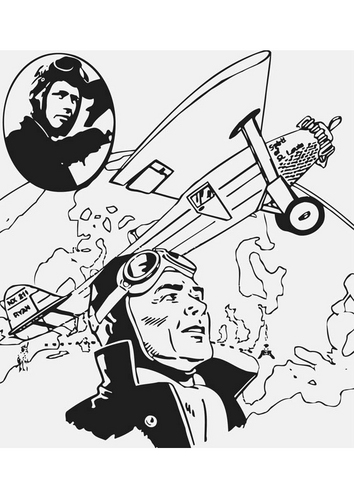
charles-lindbergh-t12762This Christmas my son, Tom, gave me Winston Groom’s terrific new book, The Aviators. Groom paints a detailed portrait of Eddie Rickenbacker, Jimmy Doolittle, and Charles Lindbergh.

Each was an extraordinary person. Besides their enormous personal courage , they displayed a generosity of spirit in their willingness to improve aviation, make better airplanes and instruments, test pilot experimental designs, and play key roles in aviation and space after the war – all for love of country.

Groom writes with the easy rhythm of a old storyteller about the historical events of the 20th century’s technological transformation, and studies the influences in the development of boy to man, and the personal struggles and triumphs of each  of these iconic American heroes.

In exploring the inner lives of his subjects the author exhibits a good dose of fairness. This was never more true than how he handled the complex life of Charles Lindbergh.

Lindbergh, like Rickenbaker and Doolittle, began with the belief that aviation would change the world for the better. But as Lindberg’s life unfolded he experienced a series of blows that caused him to change his values nearly 180 degrees from where he started.

The first blow came not from his young son’s kidnapping and death (though personally traumatic), but from the American public’s relentless thirst for tabloid sensationalism. Haunted day and night, even suspected of murdering his own son, Charles and his wife Anne Morrow Lindbergh, fled America to Europe for personal peace.

Groom then follows a complex series of invitations to the Lindberghs by heads of state – including Nazi leaders like Goering who asked him to fly various new planes Germany was turning out by the thousands.

Due to a series of events including a medal from Hitler in honor of his courage and accomplishments, Americans and especially FDR accused him of being a traitor to his own country – which only served to drive the Lindberghs into further isolation from the press.

Lindbergh opposed America’s participation in WWII because he observed first hand the superior technological capabilities of Germany in aviation. He believed America would suffer great losses. This opposition led to Lindbergh plummeting from national hero to villain in the minds of many Americans.

But Lindbergh joined in helping America after Pearl Harbor, even though the President would not let him reenlist (Lindbergh gave up his commission when he fled to Europe). Lindbergh worked for aircraft companies in the states and engineered improvements in aircraft that saved thousands of aviators’ lives and increased the capabilities of the US military.

After the war he was invited to reenlist, and during a top secret mission for the U.S. military, Lindbergh observed the terrible destruction of Europe. of the land, and was among the first eye witnesses to Nazi death camps. These experiences shook him to his core.

While reading Grooms’ magnificent book, I learned that Lindbergh asked the publisher William Jovanovich (a friend and publisher at Harcourt, Brace, and Janvanovich) to edit and publish essays and journal notes from across his life in a book after his death. Lindbergh had just learned he was dying from lymphoma.

The book chronicles the evolution of his ideas about technology and the environment. Lindbergh had become an advocate for wild lands and wildlife. The book that was published is Autobiography of Values. Lindbergh had spent years traveling the world learning cultural values from indigenous tribes.

He noted that in each culture the relationship with the land and with wildlife was very different than in the so-called civilized nations. He concluded that man’s pursuit of science must be guided by other, deeper values – values that relate to our responsibility to the land, wildlife, and each other. He described his journey as one of finding true values. (Read a perceptive book review in the New York Times from 1978.)

Visit the Lindbergh Foundation to see how Reeve Lindbergh – Charles and Anne’s youngest daughter – with notables like Neil Armstrong – has carried the traditions of her parents into the 21st century by establishing awards and collaborations supporting, among many exciting initiatives, development of an electric plane. The intent is to fly a plane from NY to Paris but with no gas! Explore the website to learn about many visionaries carrying the flame of innovation but with a new, informed set of values.

Thanks, Tommy. This gift given to honor your grandfather (a WWII bomber pilot) will always hold an important place in my heart. Its also a great read that I know I will return to again and again.

The Soul of Nature

Rachel Carson wrote that without the beauty and peace from nature some part of our humanness is retarded. As we destroy natural areas or replace them with human-made versions we will further diminish our soul.

The very soil on which we walk is the source of energy we utilize to walk, run, work, love, laugh, and create. Because modernity has intervened, covering up the planting, harvesting, delivering and even preparation of food, modern people take it as something packaged and sold. This is a profound tragedy and may spell our own end.

What got lost is the connection, the appreciation of the special role of each creature and the action of rain, sunlight, wind—a whole community’s symphonic creation of the firm red apple, golden corn, or juicy watermelon we buy off the shelf of Publix or Kroger’s.

It is said that the First Americans caressed the Earth with their feet when they walked. That reverent act arises from such knowledge of the whole of creation and of the human’s complete dependence on all its fellow creatures.

What kind of advancement, civilization, or intelligence loses the knowledge of its origins and sources of its continued survival? It is a mind that believes it can replace or improve on what took the universe billions of years to produce. This must be distinguished from the natural curiosity of a human being and participation in the processes he or she observes in nature and then emulates or even strengthens. What is the ballast that balances each of these minds? For the latter it is sure knowledge of the interconnectedness of living communities (ecosystems) and a resultant respect for life. The former arises from values of utilization of nature and its resources for the good of one species only and the resultant oppression or subjugation of life for material purposes.

Both of these minds exist on this American Continent and their values mix in some citizens’ approach to living and doing business of Earth.

Now is a time for each of us to reexamine our personal relationship with nature, with all the life around us. Do we truly value it; do we really understand the profound relationship there?

We are all overdue on unplanned time in a place of beauty and quiet, that is, if we can find one. If you know that place or places, go there but go lightly, and quietly. Create no waste, no sign of your having been there, be silent and just receive its healing qualities. Breathe deeply and wonder. Find your soul by reconnecting with the soul of nature.