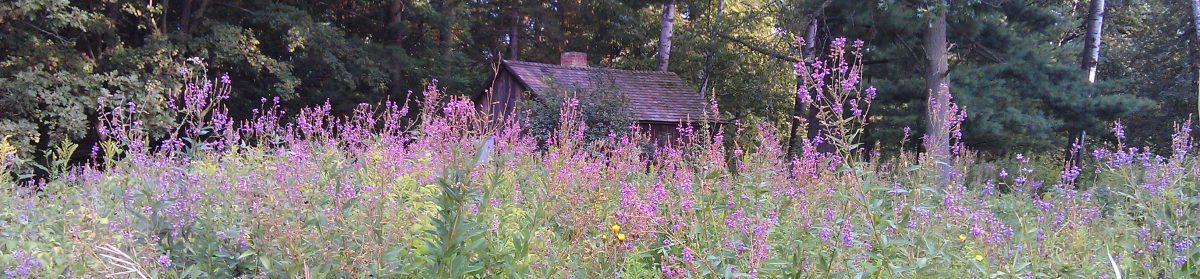
To Govern Ourselves

Fundamentally grounded in values, ethics are a moral sense of right and wrong. Ethics are demonstrated through one’s actions in everyday life; when a person cares about someone or something, their conduct conveys that care and respect, inviting the same in return. Ethics direct all members of a community to treat one another with respect for the common good. ~ The Land Ethic essay by Aldo Leopold.

As I learn more about the writing of our Constitution, it is clear to me that at least a few Founders, if not all, adhered to moral and political philosophies from classic literature to John Locke. To read from these foundational documents, is a window into the quality of education and personal pursuit of truth and morality that defined these men. Our Founders dared to establish a nation based on the belief that all people are have equal rights to life, liberty and the pursuit of happiness. They also believed that societies are capable of governing themselves without the need for a King or despot to control them.

However, to live in such a manner, communities function best when there are ethics and processes by which individuals can strive to become their best self.

In the Declaration of Independence, these words encompass centuries of human understanding about an ethical basis for living your life. John Adams in particular understood Happiness to mean the freedom to pursue a life of learning to understand and practice our moral obligations to each other.

Aldo Leopold, centuries later, would broaden the Declaration to include the ecology of the Earth in his essay, “The Land Ethic.”

A Land Ethic®. expands the definition of “community” to include not only humans, but all of the other parts of the Earth, as well: soils, waters, plants, and animals – “the land”. In a Land Ethic®, the relationships between people and land are intertwined; care for people cannot be separated from care for the land. Thus, a Land Ethic® is a moral code of conduct that stems from these interconnected caring relationship. Aldo Leopold

Today’s post bringing the Declaration of Independence together with The Land Ethic is my way of pausing to reflect on the turmoil created by persons in power who follow no true ethic in governing America in 2025. There is no moral code or ethical basis in hurting citizens or the community of living beings that make our lives possible in the first place.

What is our moral and ethical basis for living in contemporary America?

[Next post will consider how Albert Schweitzer discovered the ethical basis for living.]
Hacking at the Heartwood of America

Leopold recognized that his dream of a widely accepted and implemented set of values based on caring – for people, for land, and for all the connections between them – would have to “evolve… in the minds of a thinking community.” Aldo Leopold Foundation

Sowing Seeds of Liberty

I am life that wills to live in the midst of life that wills to live. ~ Albert Schweitzer in Out of My Life and Thought

In Albert Schweitzer’s conclusion about an ethical basis of life. he concludes that all of us are part of a vast interrelated life – each individual striving for liberty. A tree, a fawn, a human …

The infantile actions of a man causing destruction at home and abroad, is not liberty but a prison of human passions run amuck. There is no ethical basis for what is happening to our nation, our home, our livelihood – our future.

This morning I decided that no matter what the MAGA movement dreams, it will end in ashes and fury. The seeds of democracy are aligned with natural forces and therefore cannot be tamped down but rather will rise anew among us. Already the Destroyer has refreshed the fields of America with the seeds of Liberty.

I will return to the people who have inspired my personal growth and share them with readers and seed my field with freedom and confidence that all this horror will end with the new bloom of a nation conceived under God with freedom and liberty for all.

Restored farm and the shack of the Aldo Leopold family.

When I Discovered the Living Web

“Conservation is getting nowhere because it is incompatible with our Abrahamic concept of land. We abuse land because we regard it as a commodity belonging to us. When we see land as a community to which we belong, we may begin to use it with love and respect.” ~ Aldo Leopold

When I was 13, my family moved to Plattsburg, New York. We rented a model home built at the edge of the forest surrounding St. Bellarmine College and Noviate. It was housed in what had been the 2nd Hotel Champlain and surrounding grounds with trails winding down to Lake Champlain.

When I left our home, I walked on the monastery trails toward the lake with our family beagle who loved exploring the grounds with nose and long velvet ears with which he breathed in the fragrances of the woods and touched the rocks and trails sensing creatures who had passed by.

I was pensive on this day. Military families, as we were, suffer trauma through moving which separates children and youth from new found friends and causes stress in parents through absense of the father or mother, and often living in less than ideal housing and circumstances. I longed to belong somewhere.

It was fall in the Adirondacks and the woods were aflame in nature’s palette of red, gold, purple, orange and yellow. I stopped in a spot ablaze with autumn leaves which appeared as a mosaic. As I stared into its palette, I became aware that I was becoming a part of the wholeness of it. At that moment “I” no longer existed. I was lifted out of body.

This realization of the oneness of life in varying forms, colors and beingness profoundly changed me. At 13 I realized there is no separation between the “natural world” and me nor any other life form. We are part of a living mosaic moving through space on a spinning planet.

After that seminal day, I have felt that I belonged, wherever I may be; I draw no distinction between myself and the mosaic of life around me. And now, wherever I live, I belong. This has brought me great peace and satisfaction. Desert, mountains, grasslands, tropical zones – I’ve lived in each one loving it and learning from the people and the land, waters, and all the life there.

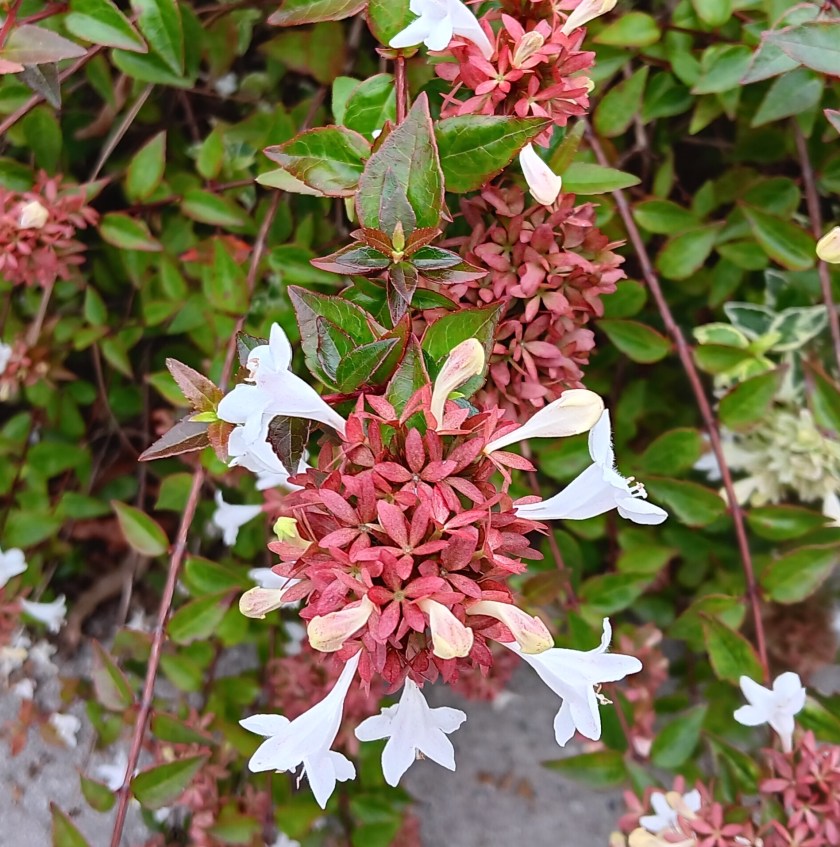
Rising Sun Redbud in VA Beach at Tidewater Community College

Explore Further:

The Land Ethic by Aldo Leopold

The Gaia Hypothesis

Who Owns the Water, Air, and the Land?

As the people gather in solidarity with the Standing Rock Sioux Nation, and the voices of Native American and justice activists are heard, I want to consider the issue at hand as fundamentally a land ethic issue.

Energy Transfer Partners and Dakota Access LLC are in the process of hooking up an extended pipeline that will connect existing crude oil pipeline to a tunnel pipeline to shunt crude oil to Illinois. The tunnel pipeline is planned to go underneath the Missouri River, and Lake Oahe–near the point where the Standing Rock Sioux Nation’s reservation uses the water for drinking water and irrigation. They are a poor nation whose water infrastructure is aging and constructed in such a manner that if a leak were to occur, it would essentially shut down the water supply for the people at Standing Rock Sioux reservation. Read More: dakota-pipeline-article from Inside Climate News.

The truth is that water, land, wildlife and people can not be owned. Each has the inalienable right to exist free by virtue of our common creation. What we can do is equitably share and protect resources to ensure that all people and wildlife have basic needs fulfilled within the limits of the land to provide them. In other words, human needs have to work within the ecological ability of the land and waters to provide them. This requires an ecological awareness.

Aldo Leopold advanced a land ethic in his writing, as he grew in his understanding of what a community really is:

Leopold understood that ethics direct individuals to cooperate with each other for the mutual benefit of all. One of his philosophical achievements was the idea that this ‘community’ should be enlarged to include non-human elements such as soils, waters, plants, and animals, “or collectively: the land.”  Aldo Leopold Foundation

Should the Energy Transfer Partners and the Dakota Access Pipeline operation have the right to build a pipeline underneath Lake Oahe and near the Missouri River that flows past the land  of the Standing Rock Sioux Nation? And will flow through four states and other communities?

The 1134-mile pipeline will carry 500,000 gallons of crude oil each day to Illinois. Seventeen banks stand to profit and are advancing money to make it happen.

Three U.S. agencies warned against it, but the U.S. Army Corps of Engineers used a corporate report from Dakota Access Pipeline to rule in favor of the construction. After a federal judged ruled in favor of the pipeline going forward, the U.S. Department of Justice and the Interior, and the Army together enacted a stay on that decision so that the EPA can reassess the original assessment of its safety.

As climate change impacts the world, should our society support continued drilling and transportation of crude oil to be burned and thereby increase warming of the planet and acidification of oceans? Of course not.

In the Southwest, where access to precious water will bring municipalities, tribal nations, corporate interests, and the U.S. government into negotiations over water rights, what values and ethics will we use to determine who gets what?

It is a question we must answer now.

Read about the proposed Dakota Access Pipeline