Hosted by the Center for Environmental Policy at American University, The Environmental and Energy Management Institute at George Washington, and the Security and Sustainability Forum
Mary Oliver is one of America’s recent poets whose works are memorized by youth and adults alike. See below a YouTube interview with Mary on OnBeing.org with Krista Tippett.
Mary Oliver was one of our greatest and most beloved poets. She is often quoted by people across ages and backgrounds — and it’s fitting, since she described poetry as a sacred community ritual. “When you write a poem, you write it for anybody and everybody,” she said. Mary died on January 17, 2019, at the age of 83. She was a prolific and decorated poet whose honors included the Pulitzer Prize and the National Book Award. In this 2015 conversation — one of the rare interviews she granted during her lifetime — she discussed the wisdom of the world, the salvation of poetry, and the life behind her writing. (Original Air Date: February 5, 2015)
Krista Tippett
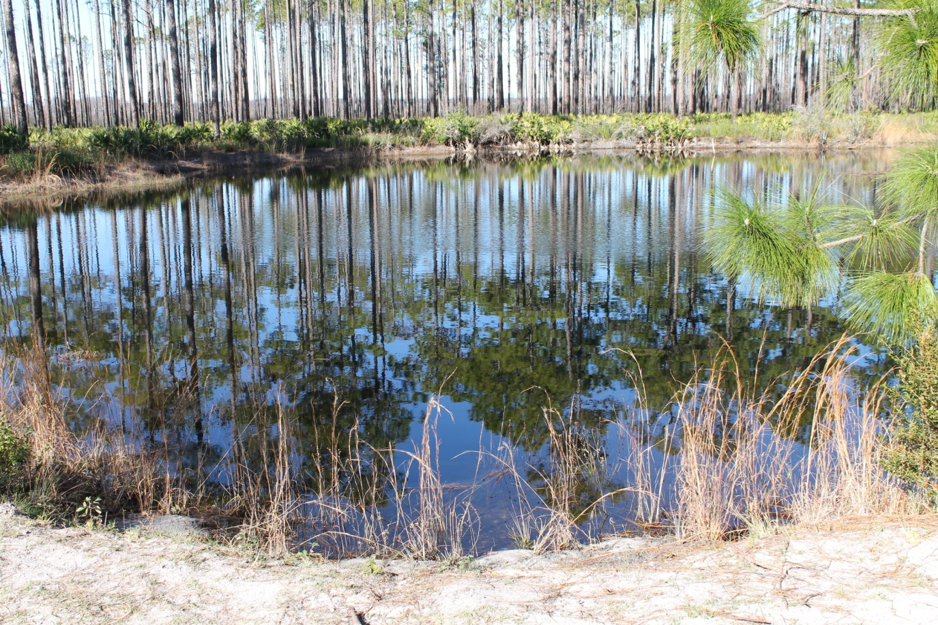
Okefenokee Wildlife Refuge – Photo by Susan Feathers
“When I look back, I am so impressed again with the life-giving power of literature. If I were a young person today, trying to gain a sense of myself in the world, I would do that again by reading, just as I did when I was young.” —Maya Angelou
Still in my mind after six months: Ministry of the Future by Kim Stanley Robinson. A prescient book, a wide sweeping story of our near future. I read this when it was first published and am rereading it. Many people across the world believe Robinson’s account is a likely forecast of where the world is heading as we grapple with Climate Change. P.S. Its not a dystopia. There is hope.
Antelope Woman by Louise Erdrich, (I recommend the audio version read by the author), is the most recent version of Antelope Woman originally published in 2016. Louise is the author with whom I most strongly relate as a writer. Her stories arise from a particular place. The Sentence and The Night Watchman are two others I’ve read in the last few years both twice. Check out her books at her bookstore in Minneapolis, Birchbark Books. Below is an interview with Louise on her novel, The Sentence. I recommend any of Erdrich’s books.
The Children’s Fire by Mat Mcartney. Inspiring memoir and challenge to all of us to ask whether we are keepers of the children’s fire in this world changing time on Planet Earth.
Horse by Geraldine Brooks who is another of my favorite writers. Geraldine began writing as a journalist, which I observe is the genesis for many of our best fiction writers. Horse demonstrates the power of a trained researcher who can weave a story around historical facts and mysteries. Year of Wonders, a novel about the Great Plague is a powerful example of how Brooks builds narrative around historical events. I have read all of Brook’s fiction and nonfiction. Each is a gem, a solid work of research and careful thought. Caleb’s Crossing is one that resonated powerfully with me.
The Haunting of Hajji Hotak by Jamil Jan Kochai, a finalist for the National Book Award in 2022, a book of interrelated short stories from which I am learning how to write. Jamil’s works illustrate how important we hear from writers whose direct experience reflect to us how our national policies impact people in other nations. Jamil Jan Kochai was born in a refugee camp in Pakistan, to Afghani parents, who later immigrated to America when he was a young boy. I had the rare privilege to participate in a writers’ group with Jamil during the Tucson Festival of Books Masters Review. His refrain for reviewing each of our works – Where’s the fire? – still rings in my mind. There is plenty of fire in this book. And, wonderful humor.
Finally, I am listening to Barbara Kingsolver’s Demon Copperhead. A reimagined version of Dicken’s David Copperfield, this is an ambitious novel. I was born in the foothills of the Appalachians and I can testify that Barbara’s main character is so authentic that I both laugh and cry (with memories loosed in my mind of my grandparents and aunts and uncles and the people in and around Watauga and Johnson City, Tennessee.) I recall the mash up of local culture and mystical realism and poverty. It is the beginning of the Opioid Pandemic. Barbara, whose book plots are usually complex and nuanced, is a powerful writer whose books are some of the most powerful works of American literature in my lifetime.
Caretta caretta…no, it’s not a song. It’s a symphony.
It’s a fair-weather day.
A battalion of brown pelicans coast overhead on dark arched wings. Children build sand castles and bob in the surf, and shorebirds rest in warm dunes—a feast of beauty and abundance.
Santa Rosa Island was named in homage to Isabel Flores de Oliva – the “Rose of Lima.” She was canonized by the Catholic Church in 1671 as Saint Rose.
Pensacola is rich in stories.
Take the story of Caretta carettafor example. She doesn’t even know we’ve tagged her with a dichotomous name to set her species apart from others. Her only inclination is to find a darkened shoreline and lay her burden down.
Buoyed by thick ocean waves she paddles with strong legs through the currents.
Through heavy lid, she looks toward shore and vaguely remembers its smell and warm, gritty touch. The moonlit shore is quiet as she takes purchase on the shifting sand below her.
She looks from just under the water along the beach head where bright lights in hotels and restaurants, homes and gas stations could make her decide to turn away. She looks for a darkened beach, lit only by the silver moonlight. It’s instinctual.
Every May through September along the Gulf shores, female loggerhead turtles (Caretta caretta) return to lay leathery eggs in the dunes of their birth.
Caretta caretta has spent her youth in the Sargasso Sea, a body of water created from currents in the North Atlantic and where Sargassum seaweed covers over its surface. It is believed the loggerhead turtle feeds and grows in this protective cover.
When she comes of age, dozens of eggs grow within her as she heads back to the same beach where as a hatchling she was just the size of a quarter and prize catch of shorebirds, crabs, and other beachside predators. She is one of the few lucky infant turtles that managed to survive to adulthood.
Now she returns to lay down the next generation. And, should she come ashore, will she struggle to navigate beach chairs, plastic inner tubes, or sandcastles?
What will happen to her offspring? Baby sea turtles are attracted to bright lights, an instinct that should turn them toward a moonlit sea. Will they head toward the hotel lights instead? Rangers report scores of tiny turtles destroyed by cars or desiccated in the hot sun among buildings.
In today’s world, with the human built environment, it takes countless volunteers to tend turtle nests, redirecting the young toward the ocean. Because of this, can we say that these species are self-sustaining?
There are seven species of sea turtles in the world today. Four of them lay their eggs on Santa Rosa Island, Gulf Shores National Seashore. That constitutes a biological treasure for this region, a remaining strand of a once diverse web of life just off these shores.
What if Caretta caretta disappears due to human interference in this annual ritual that replenishes her kind? Should we really care?
Reach back 100 years in Pensacola history to an ocean teeming with life. Fish would be larger and more plentiful and you could scoop up shrimp in Escambia Bay with your hands. There would be hundreds more dunes with waving sea oats, both habitat and nursery to many species.
The loggerhead turtle is part of an ocean web that supports our fishing industry. The biodiversity of our beautiful islands is the basis of tourism, a principal industry. Somehow we have to learn to maintain this natural treasure while going about our business.
We are working that out now. There has got to be a way. Pensacoleans have never been short on ingenuity.
For Caretta caretta we can turn down the lights, sit out on our decks and listen to the oncoming waves. We’ll save money by reducing energy consumption and get a better view of the heavens. Let’s face it: life would be dismal without the beauty of nature.
When we see a dolphin breach the waves, white terns dive and soar, or listen to ocean breezes, we are renewed and encouraged that all is right on this exquisite planet we are so fortunate to share as kin.
Caretta caretta…no, it’s not a song. It’s a symphony.
Joe Biden is the leader we need at this critical period of Defending Democracy Everywhere.
Heather Cox Richardson, American Historian, wrote in A Letter to Americans about Biden’s Announcement, reminding us of how Biden came to the decision to run and to lead the country, and what he has accomplished with the most diverse cabinet in American history, bipartisan major investments in infrastructure and climate adaptation. Another significant achievement is the Justice 40 policy that 40% of investments in the Inflation Reduction Act be in communities which have been left out of the planning and implementation and whose understanding is not in our toolbox but should be. In order to have the strongest strategy for deploying a whole new basis for how we live and what we do with our energy, everyone should be “in on” design and implementation. He has also led the nation to join with other nations in the 30 X 30 initiative to conserve 30% of our land and water by 2030.
Volts Podcast for April 26th. This relates to our present time of transition to the New Grid and all its renewable inputs. The Inflation Reduction Act is front and center. Highly recommended to readers, Volts is moderated by David Roberts who deftly interviews leaders and doers about The Great Energy Transition.
Project Drawdown is a leader in climate action with breakouts by sector, action steps in each, and the potential carbon drawdown from the atmosphere. Now the organization has developed a new resource for people to find their own way forward in preparing for climate resilence.
Most of us wake up daily to a “firehose” of information about climate change –enough to make us dive under the covers. But Project Drawdown has prepared a special feature, Discover, which helps you learn more, organize people, find a career, and a number of actions within your community’s life.
“Retrofitting buildings with insulation is a cost-effective way to reduce energy required for heating and cooling. If annually, 1.6–2 percent of existing residential and commercial buildings in temperate and tropical countries install insulation with low-carbon materials, we could avoid 15.38–18.54 gigatons of emissions at an implementation cost of US$710.37–791.29 billion. Over the lifetime of the building, heating and cooling savings could be US$19.57–22.92 trillion.”
An article published in the journal Nature delivers a sober but clear message about the myth of carbon dioxide removal as a current strategy to meet net zero carbon emissions that will stabilize warming at 1.5 to 2 degrees warming.
As the industrialized world continues with fossil fuel development claiming they will reach net zero emissions on time through carbon removal, the article by David T. Ho, oceanographer at the University of Hawai’i soberly outlines why that strategy will lead to catastrophic warming.
As we inch toward the 2024 Presidential election, each of us voting age Americans must challenge candidates who are not soberly addressing the issue of climate warming. We have only about 15-20 years to get this right. That is an eye blink.
In America, we have mostly made decisions by our economic bottom line. This has led to the crisis we are experiencing now. That economic practice requires continued growth. We need to develop circular systems of human enterprise that are steady state systems, looping back to conserve and reuse everything as we observe in nature.
This is a time for sober action and innovation — we have to innovate the sh– out of everything we do. I believe this can be a great age of learning and collective action in which we declare what we hold as too precious to destroy.






 Susan Feathers