Wangari Maathai grew up in her homeland in Kenya, living close to the earth and learning traditional Kikuyu values and practices. Her memoir, Unbound, describes her daily activities as a child, her mother’s teachings, and how her people regarded the streams and forests in a land where the balance of nature is delicate, not to be abused without serious consequences for its inhabitants.
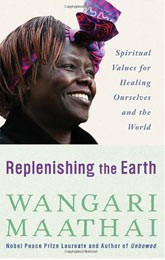
In Replenishing the Earth: Spiritual Values for Healing Ourselves and the World, Maathai’s wisdom is distilled onto each page, every sentence the next drop in the flow. Wangari describes herself as working practically to solve problems she learned about in discussions with communities and among women’s groups. Their need for clean water, and for access to earn a living, were her daily concerns. Eventually, Wangari and the women she served established the Greenbelt Movement that planted over 30 million trees in Kenya.
In Replenishing, Wangari’s concerns about the destruction of the environment in Kenya are examined in light of the world’s sacred traditions. Always a practical perspective, her observations and reflections give readers much to consider often through humor. For example she writes that God in his wisdom created Adam on Friday. If he’d created him on Monday he’d have perished for lack of food!
Wangari Maathai’s clarity of thought is invaluable in this age where massive destruction of oceans, rivers, wildlands, and forests have imperiled life the world over. She and the women of Kenya remind us of the earth-shaking power of people to replenish the earth, if we choose to do so.
The previous post provided a downloadable copy of the latest IPCC report on climate change science and forecast for policymakers. It is condensed for quick reading. If nothing else, skim to the highlighted summaries.
All Bets Are Off
We are on track for massive warming. And because the Earth’s systems are complex with many hidden tipping points, we are unlikely to predict much of what might happen except that life as we know it will be greatly destabilized. What might happen then will become harder to predict.
The imperative is to halt burning fossil fuels as fast as possible. Most people don’t believe it is possible. But, the IPCC report tells us that is exactly what we must do NOW. Take heart: a plan already exists and is working we just need to do it faster. See Project Drawdown.
We are required to reinvent the way we live. Much of what we Americans refer to as modern life is fraught with stress and uncertainty. Except for the few wealthy among us, we experience everyday that we are working harder and enjoying life less. We are less healthy. We witness the beauty of the world fading before our eyes. Our democratic institutions are under attack from a vocal minority but at least in that area of our common life I think most of us are reasonable and see a way forward together. The last election proved that.
Many forces try to divide us on issues that are polarizing. We love our children and families and believe in the Golden Rule. So, we can come together. See here a short video of John Hume, the great Irish leader who made peace when no one thought it possible.
So to this majority of citizens I appeal. Gather your families and neighbors and have a good chat about how you can help move our nation to a more sustaining way of life and avert a certain catastrophe for our children. What are the elements of life that you recall you love the most? How can we simplify but also enjoy greater abundance together?
Listen to this insightful discussion about smart design based on nature on OnBeing.org with Janine Benyus who wrote about biomimicry.
Attend your local city council meeting to express your concerns. Just go. Contact your senators and express your views and ask what you can do to help. A phone call, an email, a letter to the editor. We can ALL do these simple things.
We must look for and cultivate leaders who are of this mind set. President Biden has initiated legislation in the right direction but much more needs to be done and certainly approving drilling rights in the Alaskan waters with its great biodiversity and intact ecosystem is NOT that direction.
We have to be more vocal together. We must look together at candidates that believe in the democratic principles set forth in our Constitution. Who are they? What have they done? Elect them no matter their political party. Stay off the major news channels. Read. Discuss. Think for yourself.
Until the people of Who-ville (the “silent majority”) come together to confront the GRINCH (our way of life), we will not survive, or we will live very degraded lives in the near future. Many across the world — people who have contributed the least to climate change– are already suffering. But, it is coming home for all of us soon. We must rise to it, be responsible, and act together. And, whatever you do, support our children and youth who are fighting for a future and looking to us to help make that possible.
The Treeline by Ben Rawlence is a roving discovery and discussion of the trees that ring the northern hemisphere in the Boreal Forest. The Boreal system contains one third of all the trees on Earth; controlling rain patterns more than the tropical forests, these trees modulate world climate.
This is a very detailed and fascinating travel and scientific discussion of the trees that are our last hope for sustaining the world weather and climate and modulating the concentration of carbon dioxide.
Rawlence considers the ethical issues. What do we regard as sacred? What does it mean to be human are questions at the basis of the ecological crises that his travel journal and book are illuminating
Ben Rawlence has founded the Black Mountains College which is focused on education about the ecological crises and to adapt and find new ways of working and living. The courses are free. A Bachelor’s degree is offered, Arts, Ecology and Systems Change.
Rawlence interviews the peoples, scientists, and activists who are witnessing the changing forests and the bell ringers (birch and larch) of massive change. His travel journal, meeting people who live in and around the Boreal zone, and their lives demonstrate how people live in concert with the natural cycles of this biological zone. Varying world views depend on the country where they live, an insight into the immensity of our world and the massive changes we are seeing among these forests. For example, in some taiga areas of the Boreal in Russia, people doubt there is climate change because they do not see the same changes that other peoples are seeing in their geographic area. However, due to temperature and geographic variations, changes in the Russian taiga are less visible, happening in underlying ice.
I am listening on Audible which I suggest because the information is dense. Also, as I have done, you can do concurrent research online into areas that are explored while listening to Rawlence’s discussion and insights.
This is a great interview with Rawlence about the book and his experiences.
You may have heard of a zeitgeist. Others mention confluence. I recall that E.O. Wilson, famed biologist and conservationist, titled his book Consilience.
I am seeing this type of interspecies convergence of ideas in the morass of news and art and economics and everyday human social and political enterprise: we are coming together. Yes we are also coming apart but, we are coming together more and in more ways. I ask you to just pay attention.
One day you read or hear about awe as a critical part of sustaining ourselves through troubled times. Next thing you know it is in books, discussions, podcasts, etc. It has been bubbling up before it was seen then it comes at us from myriad sectors and myriad media.
We feel it as a species finally. The changing Earth, the related uncertainties. But also, the renascence and creativity rising to the challenge.
Will it be in time to preserve the Earth’s ecosystems that have been supportive of life for so long (to us) but briefly in stellar time? Maybe.
Kentucky is a land of dozens of tribal nations. Once densely populated with virgin forests, the people cleared some of these wooded areas to create meadowlands. Game inhabited these areas to graze on the wild grasses. Good hunting. The people kept the meadows productive with a light firing each season, creating the meadows seen today, a gentle impression on the land. See Native Americans of Clay County and Kentucky pdf below.
When I walk around the countryside in Southcentral Kentucky, I am aware of trees and farms and rivers and lakes and sandstone or limestone outcrops–a porous land on and through which waters flow. Karst landscape it is called. Carved by water, there are caverns, caves and blue holes where springs surface like eyes peering up at us terrestrial beings.
I am writing a new novel based in Kentucky in Bowling Green. The frame of the novel is the land. Its presence permeates the story about a young girl whose family has deep roots in the land, five generations of farming on what was indigenous land. She is a new generation with dreams in her eyes about regenerating her family’s land, back to what it might have been when reciprocity between human and soil was natural and both thrived.
She wonders, “What would reparations look like? What could I do to make it right?” See the PDF below about how many tribal nations originally inhabited the land on which the hunted and lived for thousands of years.
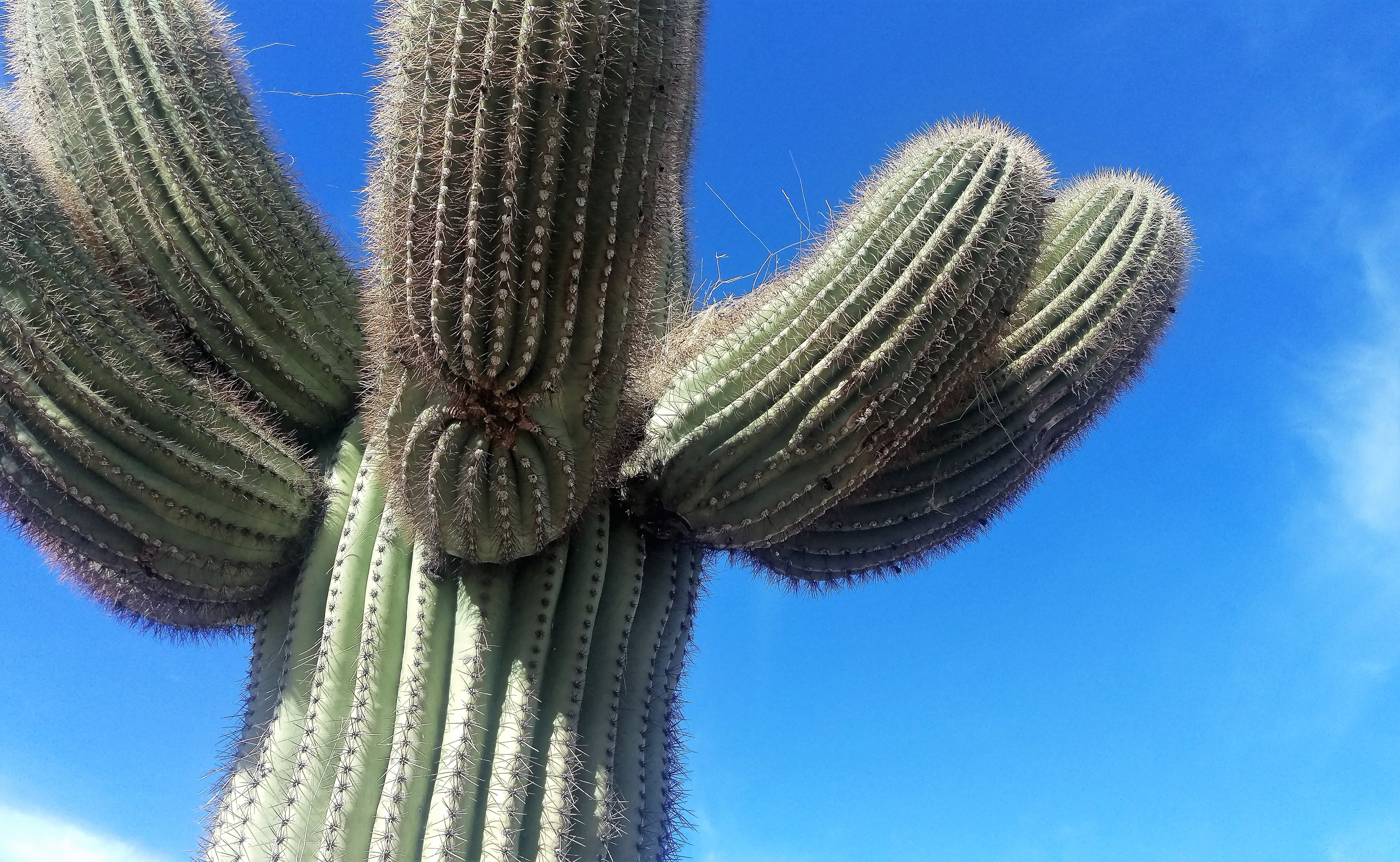
To tell a story set in the Sonoran Desert, which occurs in only one region of the world, we must include the iconic species of plants and animals who are its defining features. Their presence maintains the balance of life and contributes to the great beauty of this desert landscape. The saguaro cactus is its signature plant life, who some believe evolved from a tree in the tropical rainforest that dried to a savannah and then to a desert over thousands of years.
Saguaro in Tucson Arizona after a rainstorm. Its long shallow roots absorb water efficiently after a heavy monsoon rain.
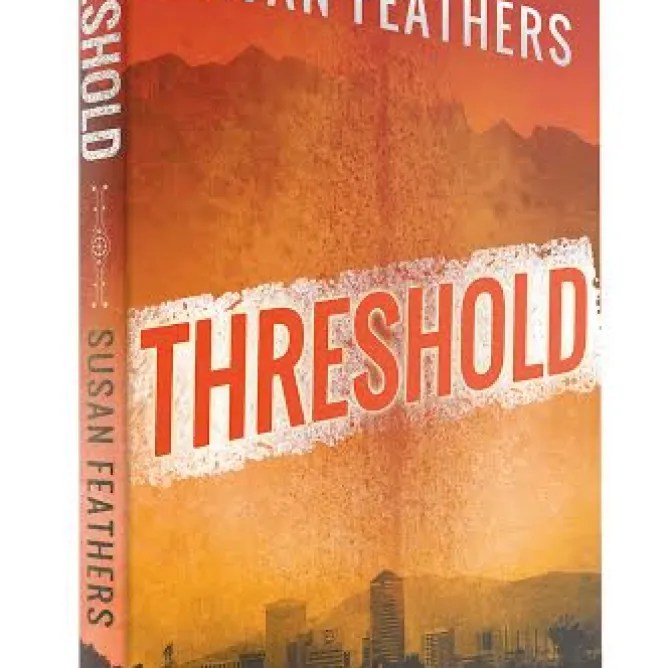
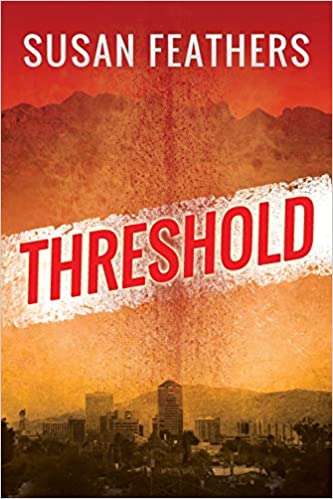
Threshold tells the stories of many desert plants, trees, insects, invertebrates, and mammals. One strategy for conserving water is to be active at dusk and dawn. These animals are said to be crepuscular (as contrasted with nocturnal). The jaguar is thus, and also nocturnal. Panthera onca is the third largest of the cat family with a bite more powerful than the tiger or lion.
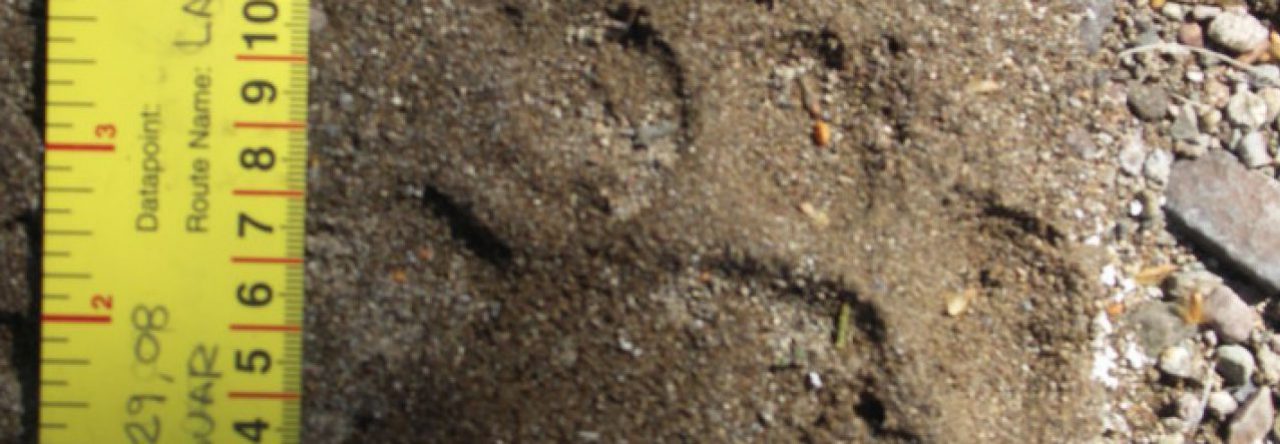
I named the jaguar character in Threshold. Duma. With the risk of personifying a wild animal by human standards, I tried to stay strictly to the known biology, behavior, and observed lifeways of jaguars in the Sonoran Desert. In my story Duma obtains his name from first graders in Phoenix. You’ll have to read the book to learn how that came about. Below you see another feature of this remarkable character: he is an albino, a White Cat, causing local observers to refer to him as the “ghost cat” as he moves about the fields and pastures of farms and ranches, terrifying livestock and infuriating their caretakers.
Duma is my writer’s device to represent wild nature and the impact of a changing climate and human activity on his lifeways. His story also allowed me to describe the labyrinth of environmental and conservation laws on both sides of the border and how Duma becomes, literally, emmeshed in them. He crosses the U.S. -Mexico border while roaming his natural range which stretches from Sonora in Mexico north to Phoenix in Arizona. Duma is caught up in the social and political turmoil.
It is important to me to consider the lives of other species who share our habitats in what is a human centric world.
Threshold was published in 2016. Seven years later the characters and the action are recognizable as the Southwest has continued to heat up.
Drought and worries about growing food, sustaining adequate water supply, a dying Colorado River from overuse, and threat of losing hydropower all are present day challenges.
Threshold is written with youth in mind. Three teenage characters in different circumstances, and their families, navigate climate change differently, but all are thrown into finding sustaining ways to live and work.
Teachers, Middle School to High School young adults, parents, youth leaders, book clubs, and environmental conservation organizations will find Threshold interesting and useful. Stop by my table on March 2, Sunday in the Young Adult tables in the Indie Author Pavilion at the Tucson Festival of Books.
For teachers, see the page titled Threshold the Novel on this blog to download a standards articulation for Threshold.
Church groups and book clubs will find this a thought provoking novel to discuss.
More conversation with Amitav Ghosh, author of The Nutmeg’s Curse on Emergence Magazine brings up similar themes incorporated into Threshold, a novel about climate change in the Southwest. In it, I layered the rich cultural endowment of the Tucson area, with ancient Indigenous and current day Native Nations wisdom, and Mexican American land and agricultural practices that have and continue to shape the local zeitgeist. But, like most communities in the Southwest, capitalistic systems drive commerce rendering the living Earth mute. All these ways of living mix together yet one has dominated the political and economic forces, imperiling Tucsonans to climate emergencies.
Listen to a chapter from Threshold as a major character of Mexican descent, Delores Olivarez, takes a hike up “A” mountain observing the changes in the Tucson valley that trace all these cultural ways of knowing. Thanks to Terrain.org for publishing this chapter of Threshold.




 Susan Feathers