The Path We Choose

Paths We Trek
Paths We Trek
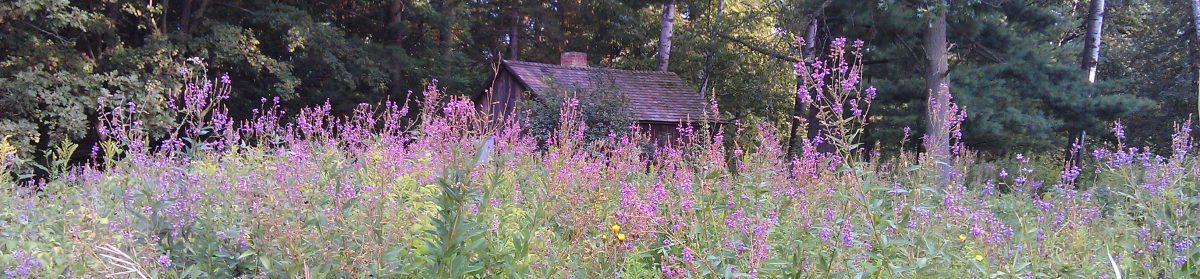
Two roads diverged in a yellow wood,
And sorry I could not travel both
And be one traveler, long I stood
And looked down one as far as I could
To where it bent in the undergrowth;
Then took the other, as just as fair,
And having perhaps the better claim,
Because it was grassy and wanted wear;
Though as for that the passing there
Had worn them really about the same,
And both that morning equally lay
In leaves no step had trodden black.
Oh, I kept the first for another day!
Yet knowing how way leads on to way,
I doubted if I should ever come back.
I shall be telling this with a sigh
Somewhere ages and ages hence:
Two roads diverged in a wood, and I—
I took the one less traveled by,
And that has made all the difference.

Civil Conversation

Susan Feathers  Photography
Susan Feathers Photography

Many Americans are searching for a civil conversation. After the vitriol of the election, and the general turmoil of our digital lives, we seek a quiet space to make sense of where we are and what is happening.

The Civil Conversations Project provides a wonderful resource of great performers, artist, and thinkers in video, audio, and written form that inspire and provoke deeper thought, and give clarity to the great movements of our time.

Simone Campbell, Nuns on the Bus, explores how we reach out to each other to create a society that supports each person with a fair wage.

Terry Tempest Williams reflects on the vitality of the struggle to protect our public landscape, in a personal testimony to her family’s long history in Utah.

In Threshold, neighbors gather together to make their families safer, to grow food together, and to mentor youth into a sustaining society.


The New Leaders in Our Midst

Visionaries of the future
Leaders of the future
Future leaders and parents

They are all around us, spinning in front of you as their parents wait in line at the department store, or running around the school yard, and they are the sweet babes in bundles on their mother or father’s back or in their arms. The cherubs coming into the world that all of us adults have made for them. They are the new leaders of tomorrow.

How can we support them, groom them for taking over the stewardship of our societies?

There are two ways that come to my mind. First, we tell them stories, lots of stories, about their family and where they come from, the relatives whose lives give us lessons to learn from. We tell them about the places where they live: what land it is, how the wildlife and soils, and vegetation all blend and work together, and what the needs are of the land on which we live. This lesson is often missed in our modern day societies where people walk above the land like ghosts because no one has instructed them about where they are and how to live there in concert with the natural world –the world to which they belong.

Arabic Muslim mother with baby
We teach our children

Second, we teach our children values and ways of being that promote compassion, vision, and daring to be all they can be for the sake of not just themselves but for everyone. Children need to know how important they are, in a balanced way, not bravado, but as one who is responsible in the world. This second task of us older folks requires the most important ingredient in the universe, sorely missing most of the time: ENCOURAGEMENT. Yes, we must encourage, not discourage, our children. Even the most sparse comment given freely and genuinely to little ones around us, can spark development in the right directions. We adults are responsible to be agents of encouragement, like Johnny Appleseeds planting the earth.

sacred-stone-defense-fund
Children at Sacred Stone Camp

In a time of great disparities, hunger, violence, and disarray among our leaders and governments of the world, this task is our most important one. Our children must have clear vision and bedrock values that will see them through these turbulent times to create a compassionate society that is not only possible, but in the making right now.

POST SCRIPT: OUR CHILDREN’S TRUST


Standing for Standing Rock: Veterans Protect Protectors

More than 2,000 veterans and police officers have pledged to protect the water protectors gathered on the Standing Rock Sioux reservation to oppose the Dakota Access Pipeline construction that will drill and transport crude oil at two confluences with the Missouri River, one of them near sacred land of the Sioux Nation.

Far from the latest news about the shenanigans in Washington, D.C., Americans are being punished for protecting their right to water–a commons that has been denied to American citizens in Flint, Michigan and other locations in the U.S.  PAY ATTENTION! Right now, the president elect is appointing people to high office who are going to further erode our basic rights to clean air, clean water, and clean food!

The events occurring in our democracy are similar to those in countries that Americans have opposed due to poor treatment of its citizens. ALERT: we are one of those countries!

If you have not written your representatives or called them, now is the time. We cannot let the military/industrial complex mistreat the people gathered at the Sacred Stone Camp, nor can we allow the completion of a pipeline that will threaten the water supply of millions of Americans. ACT NOW.

What about food supply?

“Changing climate equals changing water” is the phrase that many water and climate experts in the southwest are using today. As the temperature increases, and less rain falls, soils are depleted of moisture in a cycle that turns healthy soil into barren landscapes.

The seeds that we use, the means of careful water use to grow them, and the quality of the fruit and legumes produced are now in a precarious time when climate is less certain. Seeds that are specifically adapted to a region with long genetic history may become more important due to their unique resiliency to heat and drought.

Our commercial, industrialized food system is highly dependent on predictable conditions not only in the agricultural fields but also in the transportation systems that now intersect with a global market system. If too hot, planes may not be able to fly; if sea level rise or large storms destroy ports, cargo ships are not able to pick up or drop off cargo. When food is not shipped in a timely manner, it can rot as it sits in place as with fresh fruit and vegetables.

In Threshold, Ed Flanagan, food bank operations director and climate change denier, has to confront his beliefs as his normal food supply sources are in turmoil.

The dependable food supply we are accustomed to in developed countries is at a threshold with current and predicted climate change realities.  Protecting our food supply personally, nationally, and internationally should be part of the work we all can do to build resilience to changes in our climate.


What is GRACE?

In my new novel, Threshold, Dr. Carla Conner is a climate scientist who is part of the GRACE team.

GRACE consists of two identical spacecraft that fly about 220 kilometers (137 miles) apart in a polar orbit 500 kilometers (310 miles) above Earth. GRACE maps Earth’s gravity field by making accurate measurements of the distance between the two satellites, using GPS and a microwave ranging system. It is providing scientists from all over the world with an efficient and cost-effective way to map Earth’s gravity field with unprecedented accuracy. The results from this mission are yielding crucial information about the distribution and flow of mass within Earth and its surroundings.

The gravity variations studied by GRACE include: changes due to surface and deep currents in the ocean; runoff and ground water storage on land masses; exchanges between ice sheets or glaciers and the ocean; and variations of mass within Earth.

Dr. Connor is also a member of the Colorado River Research Group.

In these two capacities she is aware of the shrinking reservoirs for Colorado River water which supplies 40% of Tucson’s water supply. She is very concerned that the “powers that be” react sufficiently to avoid a water crisis.

Book Sales and Readings in Tucson

Tomorrow I will be a Bookman’s on Wilmot and Speedway from Noon to 2 pm for their Authors’ Fair. Hope you can drop by and chat and take a look at Threshold.

If you have a church group or book club that might wish to read a story about Tucson, with familiar settings and characters, give me a call at: 520-400-4117 or email me at susanleefeathers@gmail.com

Threshold makes an enormous contribution to contemporary literature by teaching readers—in engaging and utterly consumable terms—about the physics of “the planet’s human induced fever.” Susan Feathers stages the need to know as part of the narrative dynamic. Key characters —academics, school teachers, museum biologists—understand only too well the processes by which the earth is growing hotter, while others don’t. The latter are in some cases too young or inexperienced to know; in other cases they’re complacent or too far in denial to face them. Those who know teach those who don’t. Through lively dialogues concerning, for example, how sunlight gets converted to electricity; or how oceans absorb solar energy; or how neighborhoods can set up electrical generating systems, we learn along with the characters. We’re invited to go through the same processes of recognition and assimilation that the various students in the story experience. READ A REVIEW     ~ Mary Lawlor, Muhlenberg College


Stories of Climate Change

The Guardian brings readers stories of climate change around the world. The average increase in temperature globally is now 1.3 C. [ A 5 degree increase in Celsius temperature corresponds to a 9 degree increase in Fahrenheit.] When you think of the immensity of our planet, this is a huge heat input to raise the average high that much across its surface. The oceans absorb much of that heat. Fifty-percent of the Great Barrier Reef’s corals are now dead, in part from increased warming, and in part from the increase in CO2 concentration in the atmosphere which turns the ocean slightly more acid.

2016 is likely to be the hottest year on record adding to three previous years’ record heat. Most people are feeling it but some are all readying suffering extreme impacts.

In Threshold, people living in Tucson experience the heat in an event that shocks the city and the whole of the Southwest. Characters much find ways to adapt to the new normal. Read here.

Climate change deniers ignore the physics and chemistry of the earth – selectively. We accept these principles in everything we do from weather reporting, to heating our coffee, to warming or cooling our homes. But climate change caused by us is the contentious issue. What’s the evidence that the current rapid increase is human caused?

See NASA’s Vital Signs of the Planet to explore the evidence upon which the majority of scientists now agree.

Threshold Launch Today!

Threshold - a Novel about Climate Change in the Southwest
Novel about Climate Change in Tucson and the Southwest

Threshold is available today on Amazon, Barnes and Noble, and e-book sellers.

This story is timely and written from a place of love and concern for country I love, people I cherish, and a planet that has enriched my life.

I hope you will enjoy this story and let me know how you like it, or what it might have caused you to think about climate change in your own “neck of the woods.”

Thanks to Fireship Press and to all of you who helped me over the years to make this book a reality.

Supporting Youth in Climate Change

My novel, Threshold, was written over a ten-year period due to a period of care-giving for my father. I decided to revise the original story from one in the distant future to a more immediate story. Climate science improved over that period, and I realized that what we do now was the focus I needed.

In the new draft, two teenagers emerged that were not in the earlier draft. I believe my concerns for young people and years of teaching middle school and high school students in the Southwest resulted in three characters I love: Daniel  – Junior Docent at the Desert Museum; Luna – emerging youth leader of the Tohono O’odham Nation, and Enrique – a troubled youth with a brave heart.

The story lines follow my conviction that we all play a part in the development of young people in our lives. We may even play a key role by just doing simple things like showing up with a platter of burritos (Mrs Carillo, Enrique’s neighbor), or offering a  kind word at a particularly potent time (Harold Liebowitz with Daniel). Often, it is helping your child by letting them struggle (Luna’s mother). Youth need encouragement in ways that fit them.

They also need adults to clear the path by breaking down social and economic barriers that keep real talents from blooming or dying on the vine from poverty and hopelessness (Congressman Ramirez with his community). And some youths who have lost a parent or suffered an equally dramatic blow, just need us to be around dependably until they can get back on their feet (Ed and Carla for Daniel).

With the uncertainty of climate change, what can each of us do to empower and support the kids in our lives? What skills do they need, what can we change or strengthen while we are here that will enable them as they meet their future?

If it means changing a way of life, using different forms of transportation, giving up some of our sacred cows, will we be willing to do so for them, and all the children who follow? Read Threshold to learn what the adults in Daniel, Luna, and Enrique’s lives do to help them make a bright future.

Youth who are empowered and making change:

Changemakers High School

Our Children’s Trust