Tag: Writing
The Tree in My Windows
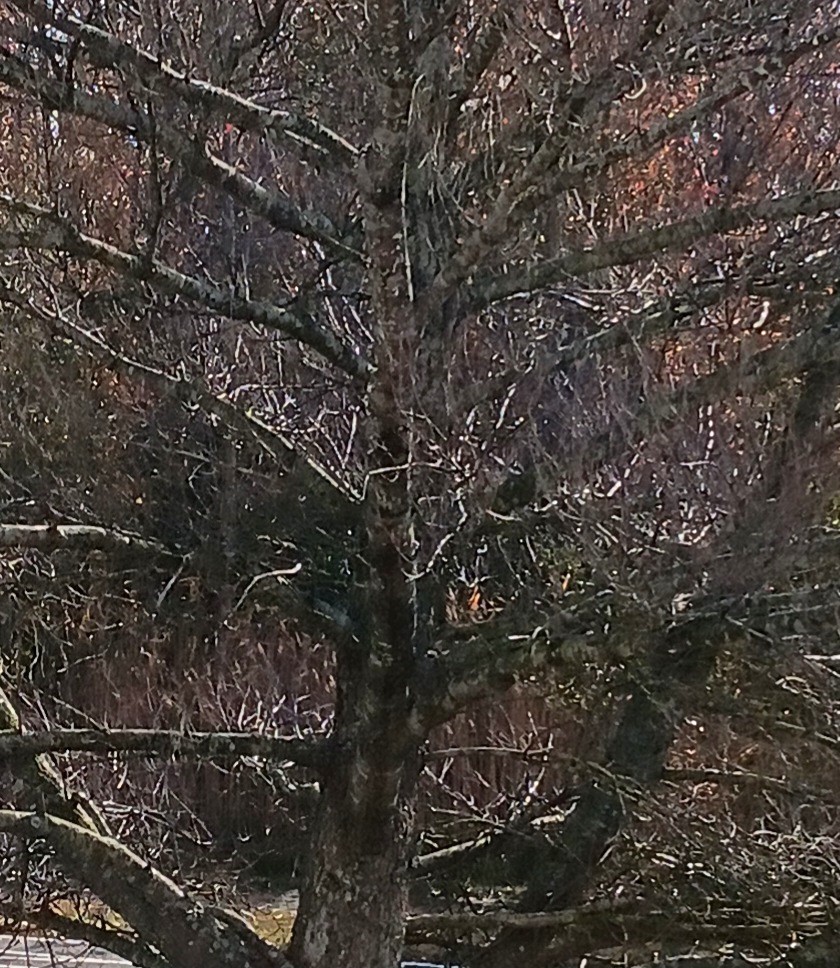
She died last Spring. Had probably been dying for some time. Her mantle of green needles slowly turned to orange, then brown.
The landscape company – a hack and mow down outfit – has left her there for some reason. Slowly a blanket of pale blue lichens is engulfing her skin and bones. The tree’s brain of underground mycelia may yet be conscious.
I do not know, but I feel her presence. Her gray limbs fill my living room windows. We’ve been together for 3.5 years. I am grateful to her enduring presence. Oh, dear Virginia Pine!
How lovely you remain in your shroud of blue lichens like flowers on a gravestone. I will sorely miss you when at last you depart. Even when they come to remove your dead limbs and trunk, you will continue to bring me refreshment and grace.
Goodbye is a long process when I do not wish to let you go.
My Virginia Pine.
Dreaming a New World
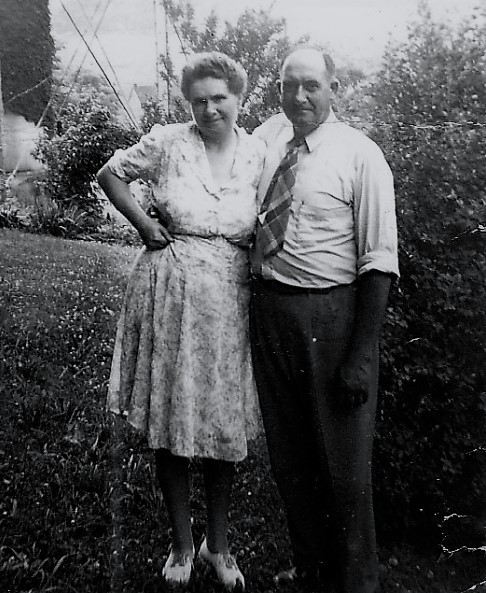
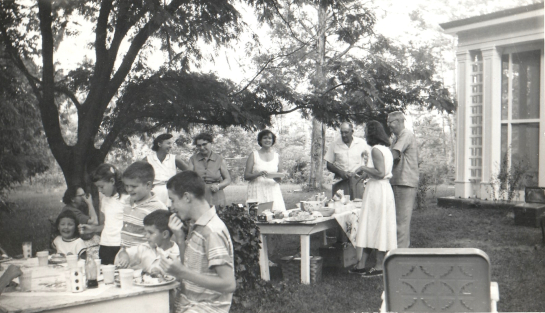
Below is the dedication of my first novel, Threshold, in which I give credit to my grandparents for sparking the idea to write a novel of hope and possibilities.
Steinbeck and Erdrich
For man, unlike any other thing organic or inorganic in the universe, grows beyond his work, walks up the stairs of his concepts, emerges ahead of his accomplishments. ~ The Grapes of Wrath by John Steinbeck. Goodreads.
John Steinbeck’s conviction that latent capacities lie in wait of the challenges we may face is the power of his stories. Steinbeck was a man with his boots set firmly in his homeland: the San Joaquin Valley. He wrote about migrant labor, loss of natural landscapes to industrial scale farming, and poverty created by the concentration of wealth by a few. He sought to understand ecology when he sailed with his biologist friend, Ed Ricketts, to study the Sea of Cortez (Gulf of California). In The Log of the Sea of Cortez, he and Ricketts articulate how life works in linked communities which predated more contemporary scientific understanding of ecology by decades. I highly recommend this book to Steinbeck readers to understand his curiosity and breadth of knowledge.
In recalling The Log’s philosophy, I am struck with how Louise Erdrich not only comprehends the interrelatedness of all life, but she also found her understanding in the places she grew up: the Red River Valley where the Red River flows north toward Winnipeg from Fargo, North Dakota. Today it is a highly engineered river to meet human and industry needs, but once it ran free, annually flooding its banks in the spring runoff to nourish the valley’s soil into rich black loam yards deep. The story that Louise tells in her recent acclaimed novel, The Mighty Red, is centered in this valley among families beginning in 2008 when an economic collapse stressed working families many of whom lost property and/or became homeless overnight.. Some work in the industrial beet operations, others are rich landowners who have bought out small family farms. Another family is working to improve their land in the old way, come what way may. They preserve native “weeds” and regenerate soil.
Something Louise Erdrich has mastered is THE WEAVE – my concept for threading people’s stories in the geography of place. Louise’s mother is an Ojibwe elder in the Turtle Mountain Band of the Chippewa Tribe. Her grandfather, Patrick Gourneau, saved their reservation from the U.S. government’s veiled attempt to take land designated to their tribe by treaties to allow wholesale taking of forests and minerals (Termination under the guise of Emancipation). She told this story in her novel The Night Watchman which won the Pulitzer Prize in 2020. Storytelling is in her blood as this was a primary method of recording history and imparting values, and cultural and spiritual practices among her people.
Louise Erdrich inhabits a pantheon of great writers who possess piercing insight into contemporary American culture and politics. For Louise, her ready access to indigenous ways of knowing lends the power of truth unadorned but artful. It’s a combination that has drawn a worldwide readership.
Like Steinbeck, she builds stories from decades of lived experience in a particular geography – what Gary Nabhan termed the geography of childhood.
Erdrich is imbued with a wicked humor, gift of elders in her tribe voiced through her unforgettable characters with names like Happy Freshette and Father Flirty. But don’t be fooled that her writing is entertaining in the normal way we might think of a western cowboy genre. Erdrich’s gift is alchemy. The impact is more than its elements. At the end of every book I am better than I began. She has gently led me to reconsider the human condition through her characters, to see it in fine definition, beautiful and tragic, heroic and funny.
I’ve laughed and cried my way through the lives of her characters and come to love the places where their destinies unfold. In The Mighty Red, Crystal and Kismet, Hugo and Gary, are caught up in a teenage love triangle and a mother’s quest to protect her daughter. The geography of place includes the beet farms producing sugar (a poison) while “weeds” are eradicated by an unrelenting war on native plants some of which are highly nutritious, she shows readers the profound irony of modern culture’s misunderstanding of the land under its feet. She brilliantly shows readers the interconnectedness of life, artfully described as the “joinery of nature.”
As she approaches 70, Erdrich is more powerful a writer than a decade ago. Winner of the Pulitzer, the National Book Award (twice) and hundreds of other awards and nominations, she has left America and the world a treasure of stories that speak the truth while encouraging us all about our frailty in the face of uncontrollable forces. Yet, even then, like her grandfather, we ‘grow beyond our work, walk up the stairs of our concepts, and come out ahead of our accomplishments.’
I await her nomination for the Nobel Prize for Literature.
Voices for Mother Earth
“Even a wounded world is feeding us. Even a wounded world holds us, giving us moments of wonder and joy. I choose joy over despair. Not because I have my head in the sand, but because joy is what the earth gives me daily and I must return the gift.”
― Robin Wall Kimmerer, Braiding Sweetgrass: Indigenous Wisdom, Scientific Knowledge, and the Teachings of Plants (from goodreads)

“Our challenge is to create a new language, even a new sense of what it is to be human. It is to transcend not only national limitations, but even our species isolation, to enter into the larger community of living species. This brings about a completely new sense of reality and value.” (Thomas Berry, “The Ecological Age,” in The Dream of the Earth, 42). https://thomasberry.org/quotes/
M. Scott Momaday, reading his poetry, A Man Made of Words.
Scott’s understanding of language arises from his deep conversation with the land of the Kiowa. He received the Pulitzer Prize with his first novel, The House Made of Dawn.
To read or listen to powerful voices of people who have devoted their lives to celebrating the Earth is to heal and to find our way home. Each offers us solace and a direction for our lives as we anticipate times of destruction in America and around the world. Earth teaches us to live in community, to know each other and to be in reciprocal relationship with each other and all of life around us. I highly recommend these great teachers, each of whom has helped me understand a way forward in uncertain times. They offer hope and a longer point of view than ephemeral politics. They are an antidote to avarice. We need this deep resonance now to stabalize our spirits and our collective wish for unity, equality and peace.
Listening
Here is a brilliant conversation between Robin Wall Kimmerer and Emanuel Vaughn Lee of Emergence Magazine. Robin describes the wonderful serviceberry tree and what she has learned from its generosity. I also recommend Emergence Magazine for its films from artists and thought leaders across our great planet. I go there frequently to keep the balance.
The Serviceberry: Abundance and Reciprocity in the Natural World by Robin Wall Kimerer. I am awaiting my copy!
Creating a Character: It’s a Wild Ride
A friend recently asked me how I created the characters for Threshold, my first novel. As all new writers do, I took classes, read books about character development, and read great character writers. Yet, nothing prepared me for what happened as I began to write the story.

In Threshold, Dr. Carla Connor took over. She did not follow the path I had planned for her. She emerged as a person who changes considerably over the course of the story, finding new parts of herself not even in her own plan for her life. She impacted other characters so that I had to reshape them as well. Yet Carla was perfect for my intent.
Nobody tells you about this phenomena. Just Google “How to Develop Character” and see what comes up. There is nothing about the character coming alive and driving the narrative.
Louise Erdrich, whose characters pop from the page, explained this phenomenon recently with the release of her National Book Award novel, The Round House. Listen to this interview. If you do not want to listen to all of it, advance to 4 minutes where she explains how a 13-yr old boy took over her story, how she lived his experience, and even how she misses him now that the book is “out there”
So go be kidnapped by characters; let them show you the way to the end. Just a warning: the process also comes with mile-high drafts, buckets of sweat and tears, emotional ups and downs, and slings and arrows.
Wonder who I will meet in my next book?
 Susan Feathers
