The Book I’ve Been Waiting For

8-5-21 Update: Just watched this YouTube interview of the author by the Post Carbon Institute program, What Could Possibly Go Right?

Kim Stanley Robinson’s new speculative fiction novel, The Ministry for the Future, is revelatory. The breadth of imagination, depth of scholarship on climate change science, and international movements to organize nations to respond to it–plus a complex plot and range of characters–I finish reading each chapter with renewed awe. That includes the one-page, sometimes one paragraph, chapters with a voice for the market, history, and even a carbon atom. With each of these unique stopping points, the author offers us an invitation to rethink our place in the whole huge planetary system, or how we make history, or the long, long arm of time in which we are but a flash.

Robinson has written at least 26 other books. Yes prolific. And successful. He has won numerous awards and been on the New York Times bestseller list for most of his books.

The Ministry for the Future is an agency created at The United Nations Conference of the Parties in 2024 to operate independently to protect the futures of unborn generations and all the living plants and animals without a voice to advocate for the future. [For reference the upcoming Conference of the Parties (COP) is scheduled for Glasgow in November. It is COP26. I am currently reading the book during COP48 (2043).]

The novel is contemporary and that makes it relevant. Robinson is charting the possible course of humanity over the next couple decades. That makes it a page-turner. The author delves into the monetary system, global movements in Africa, Europe, and smaller island nations. Shit happens as the saying goes. Each time there is breakdown of a system or a climate catastrophe, or millions of people who refuse to repay their student loans, possibilities open up or, there is at least a potentiation for something good. Sometimes several things, like a market crash coupled with political movements in Africa, and climate imperatives result in a shift in the global mind so that people opposed to certain ideas now consider them. It moves like a train without a conductor but its path seems sure. And we are all passengers (human and nonhuman) and collectively our presence, thoughts and actions are steering it.

The first line in the book. “It was getting hotter.”

It’s probably unwise to review a book while still reading it, but folks, I think it is so important that I needed to stop reading to alert you, and to beg you to read it. Then we should talk!

Scroll to the bottom of this page for the YouTube video review of The Ministry by the Bioneers. Or link here. Also I have posted a more recent interview with A Skeptics Path to the Enlightenment. Here.

If I Were Elizabeth Warren

I wonder what Elizabeth Warren is doing right now? My hope for the leader I have backed with my money and political support is that she is in her pajamas taking it easy. If I were there, I’d serve her a good strong coffee and cook her an omelette and potatoes. Then I’d order her a bodywork specialist, and arrange for a manicure and pedicure, and lavish all manner of care upon her travel weary person. For Elizabeth is fighting The Good Fight in the American Political Arena.

Why did I support her? Elizabeth Warren has seen the truth about capitalism from very early in her career of public service: it works for the top few percent and less so as you go down the economic/social agency scale. The reason: there is a concurrent scale of opportunity shrouded by American society’s propensity to worship rich people and turn away from the poor – or rather, people perceived as poor.

Warren worked tirelessly in government to rectify that inequity. This is the Great Work. What did she accomplish? If you have credit cards, loans, bank accounts then you are benefiting today from the Consumer Financial Protection Bureau which she fought for over the years of her public service. She worked to create and sustain a Middle Class while making it possible for families with lesser means to educate their children for economic mobility. Warren was ever on that path to ameliorate free market economics to make it fair to all Americans. She kept kids in mind. Maternity and family leave, sick leave and medical care, a good education — these are fundamental rights of all Americans she believes.

Well, Elizabeth I bet is resting, but her mind is spinning on how to keep the Good Fight going. She has always been and always will be an American leader. As a voter and citizen I will do my part to see that she has a place in the new Administration if she wants it, a Vice Presidency or key cabinet position.

One key thing: she is persistent. Women have that. Endurance. And, our networks are ever stronger and larger. One day a woman will lead this country and we’ll be better for it. So rest, Elizabeth. And thank you from my heart.


Places 3

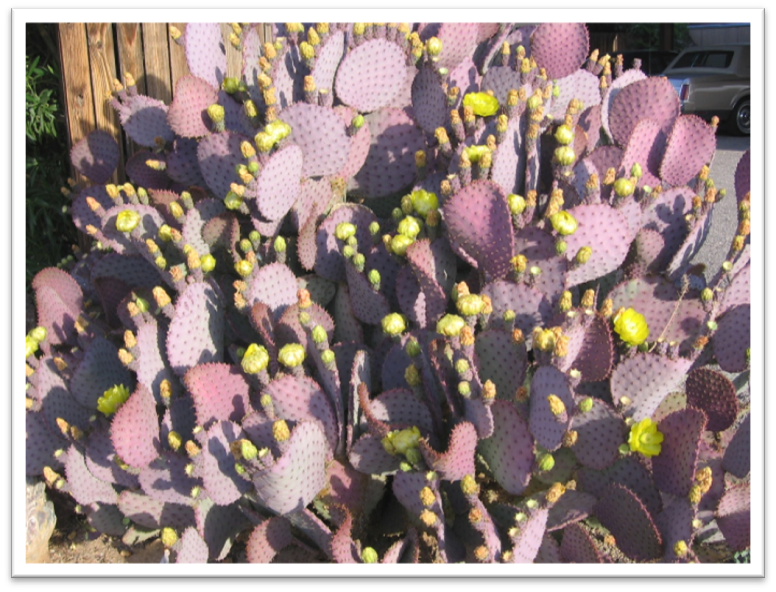
Prickly Pear Sonoran Desert

Moving to the Colorado River Valley in 1990 began a great period of personal growth and learning. Teaching children of migrant farm workers (who harvested lettuce in view of the classroom windows) and children of Colorado River Indian Tribes who lived on near-by reservations, I quickly learned the harsh realities of the cultural landscape as well as the natural landscape on which our life science lessons focused.

The following blog posts are three memories from living in the desert (1990-2008).  The first is my initiation to the land’s elemental beauty and its stark realities. The second and third memories illustrate lifestyles in two desert cities with very different perspectives on how to live there – Phoenix and Tucson.

Because I was introduced very early in my time in Arizona to indigenous perspectives, I was able to more acutely measure the gap between native and contemporary points of view about the human relationship to nature, the meaning of community, and the underlying values that are at the roots of how cultures develop.

By getting to know Cocopah families – families whose nation was separated by the U.S. Mexico border and whose way of life on the Colorado River was fractured by the damming of the river – I witnessed the social, financial, emotional and spiritual devastation wrought by being unable to live by the values one holds dear and by which one knows oneself.

Another important stream of influence on my thinking was the environmental movement in which I was actively engaged through education, a daily endeavor that caused me to read the history of these great cities and to get involved in local citizens movements to create more sustainable ways of living there.

While we are going about our daily lives, critical problems such as over-drafting groundwater continue. Indigenous values that have been pushed to the background are emerging into the foreground. Are we paying attention? What can we learn about place and the art of living from the first people of a place?

I understand, now, why spiritual seekers often go to desert lands. There is quietude and mystery. Stories are hidden from casual view, unspoken but exerting their presence. The quest then is discernment.


Civil Disobedience for Climate Action

Democracy Now has been following the Fire Drill Fridays sparked by Greta Thunberg’s clear voice — a youth crying in the wilderness of world and national houses of legislation which remain deaf to the urgency of acting to protect the planet and life everywhere. Jane Fonda is busy stirring a national day of civil disobedience EVERY Friday on the steps of Capitol Hill. Listen in:

https://www.democracynow.org/embed/story/2020/1/13/jane_fonda_fire_drill_fridays_washington

The Remarkable Diana Gabaldon

When I was at work at Arizona State University, little did I know that I was crossing paths with a person who would soon become an internationally known author with a fan phenomenon that continues to grow. Diana Gabaldon is author of the Outlander book series.

The first book which set off the chain reaction, Outlander, was published in 1991. Probably I felt the Earth tremble but didn’t know what it was. I was crossing a river of my own, thinking about writing a book, but didn’t get around to it until 2003. Literally, I crossed the Colorado and would eventually find my way to Phoenix and Arizona State University still clueless of the Gabaldon earthquake. Her eight books have sold over 35 million copies in 26 countries and are printed in 23 languages.

Outlander was a phenomenal success; 7 sequels rolled-on-out into eager fans hands all emanating from an incredible mind — with the 9th in the series due in 2020. See Diana’s website for updates. http://www.dianagabaldon.com/

Diana is a generous writer, sharing more information with her readers than any other author I’ve ever read, and actively engaging them on her website, in literary groups, her blog, and more, answering questions and engaging readers the world over. She has also published tomes called Outlander Companions that give readers a lot of background information on history, medicine, time-travel, etc. (Well, she was professionally a science historian and well trained to record and report with deep attention to detail, and also the weird little anomalies in human affairs.)

I’d heard about the TV adaptation from my daughter in law but didn’t get around to watching it until the 4th season, which in turn sent me on a wild adventure watching all the previous episodes and season, then buying and reading the entire series of books. I’ve started to reread book 5 and 6 in anticipation of the 5th TV season on Starz.

What prompted me to watch the Outlander TV series was a novel I was drafting about a young doctor whose mother’s family emigrated to the U.S. from Wales. [This is partially my own heritage along with Scottish and Irish ancestors who emigrated, and traveled down into the Appalachians where they settled.] My character  is an intuitive who wishes to learn more about natural remedies and practices of her mother’s home country especially after she has just finished a long residency and is deciding on her path in the practice of medicine.

In the fall of 2018 I was taking a course in Arthurian Legends, and reading about Welsh and Scottish history when I happened to stream Outlander to see what it was that had millions binging on Starz.

Diana’s mind is vast. That is the best way I can explain it. Matched with master storytelling which from all I’ve read is a natural gift, I could not stop reading, and when one book was finished I felt like my oxygen mask had been yanked from my face. I literally crawled into the closest book store gasping for the sequel! Later I ordered ahead so that there would not be days of blue lipped waiting. This was behavior never observed in myself before. I’ve become a fan of both Diana and now the Outlander cast members and writers of the adaptations.

What is it that has seized my mind and heart with such power, joy, and keen interest? I cannot express it yet but its something like this: characters that lift my spirit reminding me that we can be better than we think we can, and we can end up doing good even when we just stumble into it. It’s about intent. It’s also the story of a great love that stands the test of time and tragedy and never seems to be shredded or dulled by it. It’s the story of my family’s emigration, it’s the story of our nation’s early history, it’s about science (which I love and have worked in for my career) and it’s about a woman whose mind and skills are challenged to help others.

Finally, Diana has created a woman, Claire, who is a sort of hero for me and many women in even this modern day, maybe more so in our time. She says what she thinks, she never goes back on her word, she is imperfect and vulnerable, and she wants to be loved through and through by her man. Diana has created that man for her in Jamie Fraser who matches Claire’s strengths and provides a protective and totally absorbing love affair whose flame is inexhaustible.

And there is lots of humor! Thank you Diana for making fun of us along the way. If we can’t laugh then it IS a tragic affair, this life we all strive to live and make some meaning out of. She possesses a great sense of humor and puts her characters in numerous embarrassing situations.

I find the books healing in a way, like a balm for my tattered soul — tattered by the banal world I’m living in, the broken hearts, the disappointed people, the loss of a framework in which to live in this fractured time. The story is stabilizing. The people care about and love each other and even when the way is not clear, the characters choose a safe way forward. And to think, Diana is still rolling-out their lives,  showing us a way forward. The fact that Claire and other characters time-travel adds a mystery to it all and opens up unique possibilites for the author to explore and compare historical times and mores, and ask interesting questions such as, “Can history be changed?”

What can I tell you. I am a goner. Diana Gabaldon has captured my imagination and my heart for the time being. And I am grateful.


Honor, Duty, and Patriotism: What does it mean?

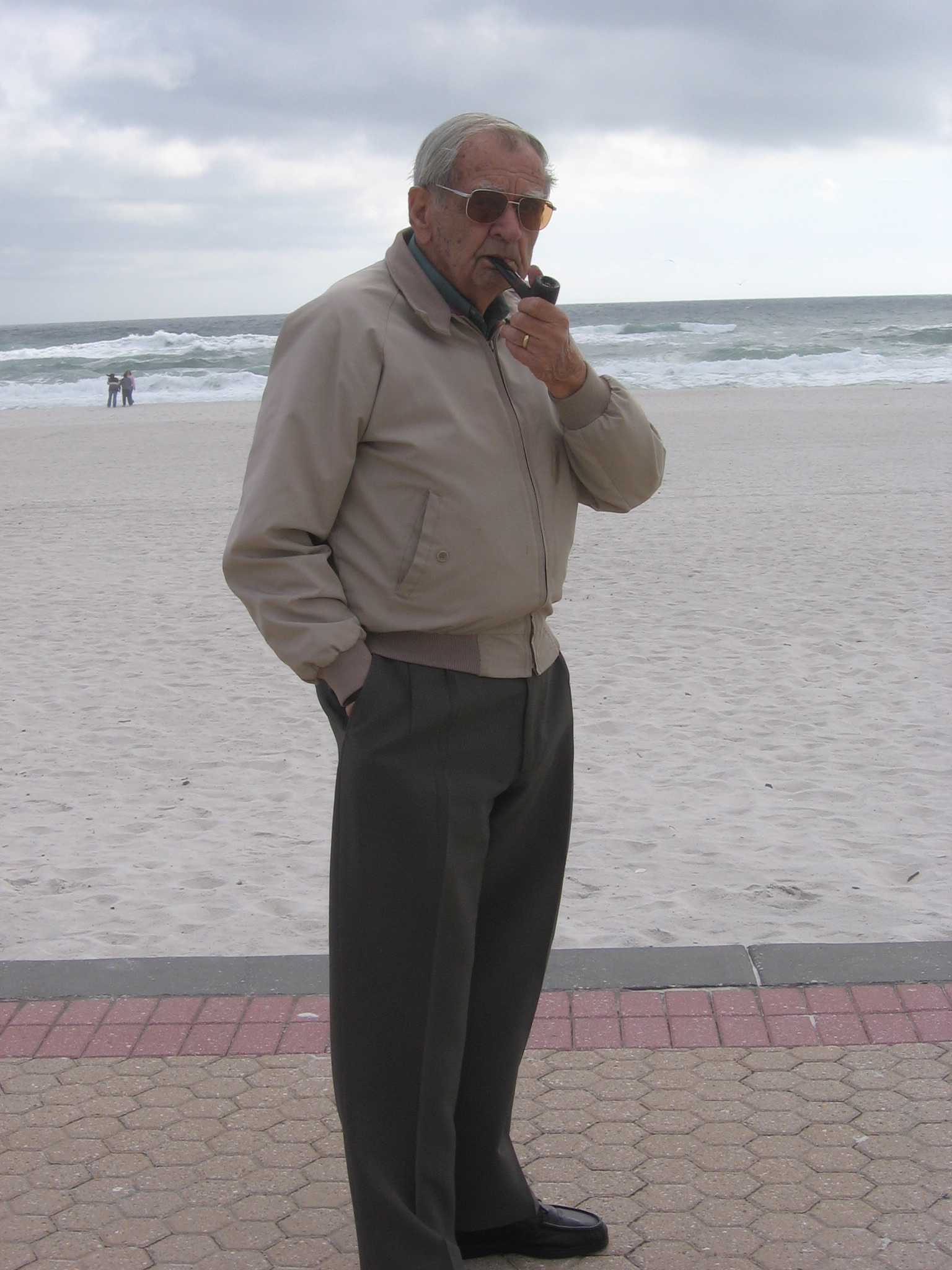
WWII Veteran, my father, Edward B. Feathers

As I listen to America’s celebration of Veterans Day in Arlington National Cemetery — flags flying, trumpets playing taps, Philip Sousa marches drawing deep feelings of pride and love in, and of, our country — I am once again set to wonder what does it mean?

I am the daughter of a Veteran, the granddaughter of a Veteran, great grand-daughter of Veterans, and the former wife of a Veteran — and I am a very concerned about whether their sacrifices mean something today. A “military brat”, I tend toward blind love of country. In fact, from age 16 to age 40, I spent considerable time and effort to evaluate that blind love and to discern what a democracy is made of. After Viet Nam, I had to consider the terrible violence we did to that country, and then others. We’ve been, and still do, consider ourselves a “good” country, doing battle with evil across the world. Yet it’s hard for many of us to face the fact that we’ve often been the evil doer.

My Grandfather Jones

Being honorable, dutiful, and patriotic requires we look without favor to see clearly how this democracy works, both in our country and in other countries, across the world. Today it means being disruptive when we see our leaders going the wrong way. It means being engaged in ways that we each can be to prevent and to undo the anti-democratic forces at work in our nation and in the world.

We have moved into a dark time and much is imperiled. We Americans must remember we are babies among nations that have existed for thousands of years. Will historians in the future tell the tale of us that we flamed and then flickered out when we became disinterested and distracted by comfort and disbelief?

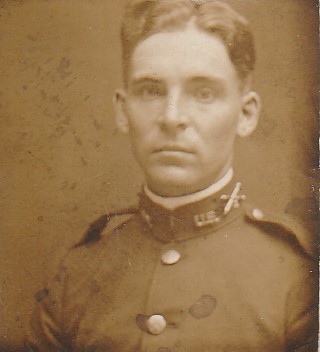
Captain Thomas E. Williams

Today’s Americans live in an era when words have been corrupted to mean their opposite. Can you discern that in the news, in the political ocean of conflict? Can you step back, ask, and discern how the actions of every leader truly show their words are true? To me, this is our duty, our honor, and our patriotism.

And to every Veteran, now and to come, I will do my best to make sure that your sacrifices mean something on this long, difficult road to achieve democracy.

A short video with Doris Kearns Goodwin, historian and writer, on CBS. She asks: Are we living in the worst of times?

See this Bill Moyers Interview with Wendell Berry to listen to an American of great stature who does discern the problems of the time:

Leadership by Doris Kearns Goodwin

A book for our times

The great historian and writer, Doris Kearns Goodwin, has gifted students of American history with a rare treasure. Leadership In Turbulent Times, is a masterwork by one of America’s preeminent presidential historians. Abraham Lincoln, Theodore Roosevelt, Franklin Roosevelt, and Lyndon Johnson are examined through three lenses: 1) Ambition and Recognition of Leadership; 2) Adversity and Growth; 3) The Leader and the Times: How they Led

Goodwin has written biographies of each President, and she worked in Lyndon B. Johnson’s Administration as a student fellow and later helped him organize his presidential library and archives which are extensive.

I highly recommend this book for its relevance to present turbulent times. How can we recognize a great leader? What do they share in common? How do their leadership qualities emerge over a lifetime, and how do they use their particular talents to lead the largest democracy on Earth?

Goodwin is a great storyteller. The intimate portraits she paints for us are gritty, truthful, and surprising. In the last section on Visionary Leadership Goodwin becomes a classroom professor subheading points she wants to make clear such as 1) Make a dramatic start; 2) Lead with your strengths; 3) Simplify the agenda — and so on. One critic felt this was too elementary. But I like to think that Goodwin, out of her concern for the state of leadership in Washington was giving us a primer on how to identify a true leader. And for younger men and women who are coming up in the political ranks in their counties and states, she may also be showing them how the greats managed to bring our country together in times of very dangerous challenges such as the Civil War, the Depression, WWII, Civil Rights and Vietnam.

Call it a primer on Leadership. Here is an interview with Doris Kearns Goodwin about the book.


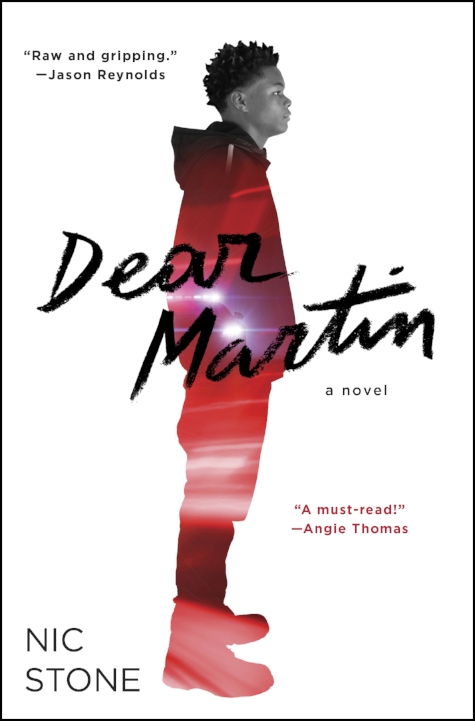
Dear Martin by Nic Stone

Dear Martin by Nic Stone is a YA novel for our time.

It deals with injustice and racial profiling but in the most personal manner. Stone used newspaper articles, and stories from real teens who have faced similar injustices to develop her story. Stone writes a nuanced plot and characters as real as the people around you. Everyone is welcome in Justyce’s story because diverse perspectives are represented in the characters, their thoughts and responses to events in the story.

This is a national bestseller. Free copies were distributed by the Warren County, KY library in my home town of Bowling Green, KY. Nic Stone will be here in October and I cannot wait to meet her.

The novel is a short book (less than 200 pages) but it moves powerfully along to an ending that made me weep with joy, sorrow, and HOPE!

It is my wish for this coming year that Americans will read it because it shows a way forward in addressing injustice in our law enforcement as well as in society in general–what we must finally deal with to complete the Long Road to Freedom.

Some books are necessary. This is one of them. A brilliant achievement.

Jodi Picoult Explores Racial Injustice In “Small Great Things”

Published in 2016

Kudos to Jodi Picoult for taking on America’s most entrenched injustice. and helping readers discover in themselves how he or she may perpetuate racial injustice. Small Great Things is sheer bravery by a white American writer.

This novel bravely goes where few white writers would venture without the risk of their white privilege bleeding through the narrative, or of committing cultural appropriation. Jodi tells us readers that is exactly why the original idea and partially written manuscript were put aside for more than a decade.

Before Picoult decides to take up the gauntlet, she joins a white privilege workshop to delve into her own prejudices, she gathers to herself men and women from the black community who speak the hard truth to her and help her understand her role in perpetuating injustice. She interviews reformed white supremacists. Picoult dives deep to show how racial injustice is sustained by a thousand small cuts a day, carried out by whites who are often clueless to their own complicity.

Small Great Things explores how racial privilege, even more than outright discrimination, pervades white consciousness.  A person may think “I’m color blind,” or “race makes no difference to me”. However, Picoult’s book reminds us it is easy to think that when you are a beneficiary of the culture’s every advantage.

Yet, Picoult also shows how “minorities” can play into perpetuating the injustice by remaining silent to hold on to tenuous advantages they may have and that are working to help them accomplish goals like owning a home and sending their child to college. The main character, Ruth Jefferson, demonstrates how that works.

Picoult shows in the character of Kennedy, Ruth’s public defender when Ruth, a respected labor and delivery nurse, is accused of killing the baby of a white supremacist couple. Prior to their son’s death, they demanded that Ruth, an African-American, be forbidden to touch their child (Davis). Ruth is removed from the family’s service after Davis is born. She is mystified. As one of the most capable nurses, she can’t imagine why they do not want her to help care for their son. Then she observes the tattoos on the father’s arm and head, and she realizes he is a white supremacist. As the story advances, Baby Davis is discovered to have an inherited disorder that contributes to his death.

By following the developing relationship between Ruth and Kennedy, Picoult takes  readers with her on the discovery of white privilege, peeling it back layer by layer until finally Kennedy is seeing it in herself. We also follow Ruth’s discovery that she has blinded herself to racial assumptions that arise regularly in her peers. Ruth’s determination to discuss the role of racial hatred in her case — a strategy strongly opposed by Kennedy — is a result of finally understanding her complicity in the persistence of racial discrimination by remaining silent.

The story of Turk Bauer and his wife Brittany, both white supremacists, brings to light the complexity of racial hatred. We learn the circumstances that led to Turk’s induction into the Aryan Nation. We  go to events where racial hatred is cultivated, taught to youngsters, and how it is organized across the nation. Inside Turk’s head, we see how he is influenced by fear and anger in his particular life circumstances. We witness Turk’s the awful suffering from the loss of his child. We see his humanity even when his beliefs and actions are despicable to us. Jodi is showing that racial relationships in America are complex and nuanced.

Critics have reviewed the novel’s sometimes cardboard stereotypes and slow action, but really, Picoult took on a monumental task as she worked through her own racial biases and white privilege, inviting her fans to do the same within themselves. This is how hard it is. Picoult is a skilled writer. We can give her a little slack if at times the characters may lack realism or the plot slows here and there. She took on America’s deepest wound, most entrenched injustice, and one that is still festering in the hearts of us all.  We must get at it in ourselves until we can live a free nation. Picoult offers us her experience as one way we might get there.

MORE RESOURCES FOR READERS:

Michael Eric Dyson: Tears We Cannot Stop: A Sermon to White America

Watch Frontline: Documenting Hate which aired on August 10. It is a documentary of the white supremacists at Charlottesville, VA uprising over confederate monuments. It was so much more, of course. This ProPublica investigation helps us learn about how a permissive environment ushered  hate groups into the American mainstream.

Read Jon Meacham’s book “The Soul of America, the Battle for Our Better Angels”.  In the Introduction, Meacham compares Strom Thurman’s Dixiecrats to Trump’s nationalist movement.

Extremism, racism, nativism, and isolationism, driven by fear of the unknown, tend to spike in periods of economic and social stress — a period like our own. Meacham, p. 4 of Introduction.

POD SAVE THE PEOPLE