Presidential Candidates’ Education: Hillary Clinton and Marco Rubio

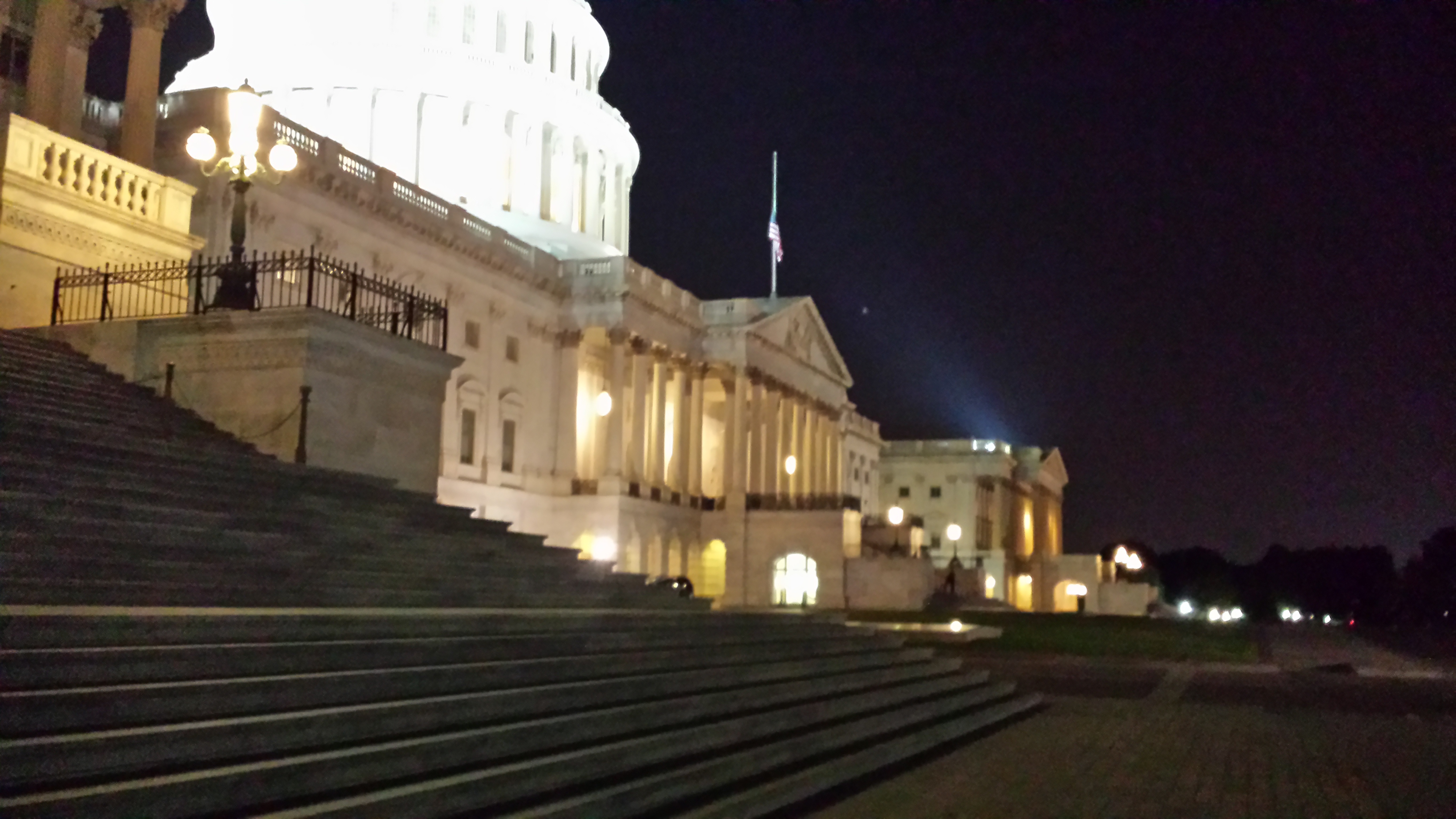
Capitol NightimeThis post continues the examination of the education and early influences that formed the character of Presidential Candidates. Below are a few ways to get started with your own independent research. Please reply back with additional links or information to enrich this online discussion.

HILLARY CLINTON

See the link to Hillary Clinton, The Pros and the Cons by Donald Michaels which gives an objective background on Mrs. Clinton’s upbringing and education.

The eldest daughter of Hugh and Dorothy Rodham’s three children, Hillary Diane Rodham was born in Chicago on October 26, 1947. Her father, owner of a small drapery fabric business, was a staunch Republican from Pennsylvania. Her mother, a closet Democrat who left her own dysfunctional home at 14 to work as a nanny, was affectionate and levelheaded. From her parents, Hillary learned thrift, hard work, self-reliance, service to others, and a love of God and country. Her mother inculcated a deep respect for learning and coached her young daughter to fight back against bullies: “You have to stand up for yourself,” she told Hillary. “There’s no room in this house for cowards” (Hillary Rodham Clinton, Living History, Simon & Schuster, 2003,12).

http://www.pbs.org/wgbh/americanexperience/features/biography/clinton-hillary/

Hillary graduated from Wellesley College and then went to Yale Law School, where she was one of just 27 women in her graduating class… After law school, Hillary chose not to go to a big New York or Washington law firm. Instead, she went to work for the Children’s Defense Fund, going door to door in New Bedford, Massachusetts, gathering stories about the lack of schooling for children with disabilities, which contributed to the passage of historic legislation to require their education. https://www.hillaryclinton.com/about/bio/

According to a biography by McGill University professor of history Gil Troy, Rodham’s early political development was shaped most by her high school history teacher (like her father, a fervent anticommunist), who introduced her to Goldwater’s The Conscience of a Conservative,[17] and by herMethodist youth minister (like her mother, concerned with issues of social justice), with whom she saw and met civil rights leader Martin Luther King, Jr. in Chicago in 1962.[18] – https://en.wikipedia.org/wiki/Hillary_Clinton#Early_life_and_education

Books: It Takes a VillageHillary Rodham Clinton: A Polarizing First Lady

Other Links: Hard Choices (some audio to listen to), Wikipedia – Early Life and Education, NY Times Article, On the Issues

MARCO RUBIO

I have not located an objective source for Marco Rubio but as soon as I do I will add the link. Check back for updates.

Born in Miami, Florida in 1971, Marco Rubio is the son of Cuban immigrants. After earning a bachelor’s degree from the University of Florida in 1993, he went to the University of Miami for his law degree. Rubio’s political career began with his election to the West Miami City Commission in 1998. He was elected in the Florida House of Representatives the following year. In 2009, Rubio won his campaign for the U.S. Senate… Born in Miami, Rubio spent part of his childhood in Las Vegas, Nevada. The family, however, returned to Florida in the 1980s. A stellar athlete, Rubio was a top football player at South Miami High School. He graduated in 1989 and earned a football scholarship to Tarkio College in Missouri. Rubio left the school after a year and eventually enrolled at the University of Florida. After completing his bachelor’s degree there in 1993, he earned a law degree from the University of Miami in 1996. http://www.biography.com/people/marco-rubio-20840041#synopsis

#####

The Rubio family, which was Catholic, moved from Florida to Nevada in the late 1970s and joined the Church of Jesus Christ of Latter-day Saints…The Florida senator was baptized into the Mormon faith when he was approximately 8 years old, and family members recalled that he was deeply invested in the religion having met with missionaries and attended LDS youth events… But once the Rubios left Nevada and returned to Miami, they rejoined the Catholic Church….

Books: An American Son – A Memoir Listen to Audio by Mr. Rubio

Other Links: The Rise of Marco Rubio, Wikipedia – Early Life and Education
Will This Year’s Advent Season Be an Advent of Change?

cropped-veterans-day-2013-067.jpgToday the final draft of the Paris Climate Agreement (COP 21) was released. While the breakthrough for undeveloped (i.e. more at risk) nations was a 1.5 degree Centigrade limit on global temperature, the current plan would result in a 2.7 degree Centigrade increase by 2050. That would devastate many low lying areas of the world due to sea level rise.

This means that the participating countries will all have to increase their commitments to reduce green house gases over the intervening years until the next summit in 202o. And the differential goals require countries who are or have been the biggest polluters (China and U.S. respectively) to make the biggest commitments.

Right now major negotiations are taking place. These negotiations will spell out the future of humanity on earth, the fates of our children, and all life on earth in its present state. Just writing that sentence is profound.

While no one can guess the future, I at least hold some hope that such a convention as the Paris talks has moved the world closer to accepting climate change as a real threat. Yet, in my own country I despair that is not true. At least one political party is in denial while the other wrangles to get anything substantive accomplished to mitigate changes.

In my own state of Florida it is much more bleak: Governor Scott banned his environmental protection agencies from using the words climate change or global warming. Like a child, he foolishly believes if you can’t say it, it will not be true.

History will show the absolute insanity of many of our current political leaders. And, sadly, there are many more in the wings

Here is the evidence.  Locally, Pensacola has moved from 8b to 9a in Plant Hardiness Zones over the last decade (an average low temperature increase of 10 degrees F). On today, December 12, 2015 it will be 75 degrees Fahrenheit with lows still in the 60s. Of course, we all love it … until you reflect on what it portends.


Pensacola Says Yes to a Climate Change Task Force

cropped-244.jpgLast night the City Council passed a resolution to establish a Climate Change Mitigation and Adaptation Task Force.

This has been over a year in the making. Introduced by Councilwoman Sherri Myers, and spearheaded by 350 Pensacola, the resolution was unanimously adopted as council members observe the impacts of a changing climate on our land and waters.

This is a huge victory for Pensacola. Experts agree that cities are the centers of climate change mitigation, having the most control over how their city handles its emissions, energy efficiency, and citizen participation in reducing its emissions footprint while innovating to improve quality of life. These strategies include green building, slowing traffic, improving public transportation, walking and biking lanes, and supporting local business. Making sure we protect water quality, build environments that reduce heat, embellish the natural environment, and enable all citizens to participate will be the concerns of this task force.

All these initiatives create jobs, save money, and set up the city to receive funding from foundations, state and federal agencies that are pouring more money into climate mitigation programs.

Challenges are: 1) the Mayor has not shown interest in the Task Force; 2) the State of Florida lacks leadership from the Governor and legislature to enact the policies and support to truly help cities make the energy and infrastructure changes that are necessary to become truly climate adapted. Citizen participation is crucial to bring leaders and experts to the task.  Check the City Council site to get to meetings and to contact council members to express your ideas. Write Mayor Aston Hayward to express your desire that he become an active participant with the Task Force.


How Quickly We Forget

FreedomThe cries for boots on the ground in Syria, for retribution, and a growing “fear of other” are not new. In fact it is a predictable response to perceived threats to Americans.

I remember so well the face of George W. Bush as he declared “Mission Accomplished” after the first few rounds of that administration’s “Shock and Awe” campaigns. Did it make Iraq safe, did it stamp out terrorism? Is Al Quaeda wiped out?

No, in fact the opposite is true, and many analysts now target the Iraq War as the beginning of the rise of ISIS.

Another pernicious behavior among Americans is the “fear of the other” – of anyone perceived to not look like “us”…us being white, Anglo-Saxon, Christian immigrants. Americans are and never were of that description though the people in power for so long could be described that way. Of course, over nearly 3 centuries of grieving their rights, Americans begrudgingly are accepting that the “face” of the United States is multi-ethnic, and religiously diverse.

Let us not forget these ugly facts that are a part of our history: genocide of Native Americans; enslavement and persecution of African Americans; internment of Japanese Americans during WWII, and so on.

Now the cry is to keep out Syrian refugees who might harbor terrorists. The fear is understandable in light of the bombing of a Russian jet, killing all aboard; the Paris shootings and slaughter, and the Beirut attacks on civilians — all claimed by ISIS as retribution for our way of life. This is a threat no doubt. But let it not push away our better angels to respond in an equal force, BECAUSE WE HAVE RECENTLY BEEN REMINDED THAT THE STRATEGY DOES NOT WORK, IN FACT IT CREATES WHAT IT PURPORTS TO STAMP OUT.

This is a time for calm, for prudent decision making and for our humanity to be strengthened. The Syrian refugees are fleeing the forces that have destroyed their homeland. Just as the Irish fled to America under the brutal oppression of the English in the nineteenth century. Our relatives were refugees fleeing from brutal forces, poverty, and oppression. Let us not forget who we are and extend a helping hand to people who are without country, without the basic resources to live.

We can keep our humanity and also keep our country safe.

STOP – THINK – CONSIDER!


E.F. Schumacher – Why We Need Him Now

E. F. Schmacher, British Economist best known to the U.S. public in the 1970’s with publication of Small is Beautiful and Small is Possible, developed economic models based on scale. His basic idea: past a particular size, true profit declines and true costs rise – thus the title “Small is Beautiful.”

He also clarified that shared ownership of the means of production is key to equitable distribution of wealth and development of healthy communities.

The New Economic Institute (previously the E.F. Schumacher Society) includes several excellent videos and articles by new economics thinkers and teachers. Go to the link and take time to listen or read. These visionaries describe likely scenarios about where our cultures and global community are moving with economic collapse around the world and with climate changes continuing to play havoc with community resiliency.

Profitability as the sole goal of corporate behavior is addressed by Neva Goodwin, Tufts University.  She discusses Walmart’s discovery that being ecologically responsible is profitable. However, her discussion is realistic about the kind of deep change that is necessary and how the likelihood of many people being harmed again by corporate excesses is predictable.  She offers a way to use corporate charters to shape corporate behavior. Community Environmental Legal Defense Fund (CELDF) is a group she cites that is using a new community led strategy that creates municipal ordinances.  These ban corporate control of land, water, and other natural resources that are critical to life and health.  How can we make money and profits flow to the most responsible companies that protect human and ecological well being? Many examples of new economic structures are described using real companies that ARE making a profit while doing good in society.

Religion’s Role in Caring for the Earth

Religious groups are exploring their role in curbing climate change. One of the Land Ethic Books Clubs that I am facilitating in my community, the Lathram Chapel United Methodist Church in Barrineau Park, FL, is looking deeply into the scriptural directions for caring for the earth.

The Guardian the British news publication and winner of the 2014 Pulitzer Prize for public service is focusing on climate change. The Greatest Story in the World, a podcast on climate change is part of the current efforts to start deeper discussions about institutional and individual roles in solving climate change. This is Episode 9, Religion. Here is the link. 

Faith groups have huge followings and have adopted climate change as a cause for decades. What can the Guardian learn from religion? Can the paper use the language of sacrifice when it doesn’t have the same offer of salvation?

We strongly recommend that you listen to the series from the beginning.

Related resources
Neil Thorns – How will the world react to the Pope’s encyclical on climate change

Suzanne Goldenberg – Climate change denial is immoral says the head of the episcopal church

Damian Carrington – Church of England wields its influence in fight against climate change

~ Guardian Podcast, Episode 9

Through the lens of E.O. Wison

E. O. Wilson (Image: http://natureandculture.org/
E. O. Wilson

E.O. Wilson reigns in my mind as our most important scientist-author of our time. He is University Research Professor Emeritus at Harvard. Wilson has two Putlizer’s under his belt, for On Human Nature (1979) and The Ants with Bert Holldobler (1991).

The adjacent photo is from Nature and Culture International: Board of Directors, one of many organizations E.O. Wilson serves with his visionary gifts.

He has penned dozens more books that have stayed on the New York Times Bestseller lists over decades of his career. He writes for the public as well as scientific community. If you have never read anything by Wilson, I recommend The Diversity of Life as a starting point. While published first in 1992, it is still relevant to understand the diversity of life across the planet, and – most important – the conservation areas that Wilson recommends must be preserved for the healthy functioning of the biosphere.

But, my reason for this post is to review his recent book, The Meaning of Human Existence (2014). Why is it important to read? He is most likely the most erudite scientist writing for the public today. His understanding of who we are as a species and society is informed by his comprehensive grasp of our genetic inheritance, the dynamics of sociobiology – how we function as a group – and the challenges to our existence in the near and distant future. Yes, it IS that significant.

The book calls for the reunification of the humanities with science. Wilson argues that the current separation of these two great ways of knowing our human nature, is at the crux of our possible self-destruction by lack of understanding our roots in nature. He explains the most basic evolutionary path leading to our essential human nature: our dualistic nature, usually ascribed to the humanities to explain.

Wilson shows us how our “selfish” genes and “altruistic” genes evolved, and how they work in a multilevel natural selection. This is relevant in understanding why we do what we do, predicting the kinds of decisions we will probably make, and – once understanding this – how we could use this knowledge to make critical decisions about new technologies that may doom human existence or secure our continued success into the future.

The Threat of Gene Engineering of Human Beings

He is writing about the new potential to design our own genetic endowment – design humans like we want them. This can also be applied to new threats from artificial intelligence (AI), a topic he does not address in this book, but which occurred to me as I read the book during a time when the nation is discussing the challenges inherent in AI development.

If we do not understand, who we are, and know how to understand our behavior, how can we possibly make these new, complex ethical decisions? Wilson writes that religion, which introduces a supernatural being who is in control of humans and the universe, is an outdated way of knowing that currently blocks human society’s ability to understand how the world works and based on that, to make the collective decisions we need to determine to secure that human life on earth will go forward as we know it.

What do you think about that? Does religion prevent us from knowing who we are biologically? How can we bridge the gap between these two powerful ways of knowing our story on Earth? Please comment so that we can discuss this online.

Book Clubs Rock!

book club 2 If someone told me I’d be facilitating book club discussions this year, I would have thought they had the wrong person. But it’s true. I now facilitate three books clubs with a fourth possible. The book club discussions are part of my work as a Land Ethic Leader for the Aldo Leopold Foundation in Wisconsin. Leaders create ways to spark discussions about Leopold’s Land Ethic which addresses how communities can come together to protect and conserve human and natural resources. Leopold’s writing, published in A Sand County Almanac (Oxford University Press, 1949) is considered a classic on land and wildlife conservation. I carried a thumb worn copy through 25 years as an environmental educator.

book club meeting with Jean Sparks and Susan FeathesBut why book clubs? New cognitive research shows storytelling and fiction as the most powerful agents for engaging the imagination. I realized novels might be a fun and effective way to engage people in land ethic discussions. However, I did not anticipate how readily people embraced the idea! Two book clubs in the Pensacola area are reading more than one novel. The discussions are vital and personal.

The Interesting Women book club in Melbourne, Florida read Caleb’s Crossing (Geraldine Brooks, 2011) about early American history. One book club member’s husband is an 11th generation descendent of a Wampanoag woman and Puritan settler (married in 1635). The book focuses on these two cultural groups and how they evolved a land ethic. A special meal was served including Mock Whale—chuckeye steak, beef liver, and fish sauce! All the food served related to a scene in the novel.

Update: One of the members of the book club in Melbourne sent this note: “This appears to me to validate your idea of changing attitudes by encouraging reading about it in fiction/stories.  Sounds as though you’re on the right track.

http://www.npr.org/2015/05/01/403474870/does-reading-harry-potter-have-an-effect-on-your-behavior

One of my professors long ago was of the opinion that Mao Tse-tung overthrew Chiang Kai-Chek’s regime in China in the 1930s and 1940s by using folk songs to sway the opinions of the largely illiterate peasants, folk songs being another form of story…”    It’s an interesting world.”

The Aldo Leopold Foundation will feature these activities in their blog about Land Ethic Discussions. Serendipitously, I stopped by the Marjorie Kinning Rawlings State Park on the way home. In my tour group I met eight women from Sarasota. We ate lunch at the Yearling Restaurant. When I asked how they happened to be traveling together, you might guess the answer. Yes, they’re a book club!

Rising Son

While reviewing authors who will be presenting at the Southern Festival of Books in Nashville this coming weekend, I came across Charles Scott new book, Rising Son: A Father and Son’s Bike Adventure Across Japan. 

Charles Scott puts his corporate job on the line to ride connected bicycles 2,500 miles across Japan with his eight-year-old son, Sho, raising money for a global tree-planting campaign.

The Green Fire We Must Ignite

Aldo Leopold has long been a guide to me. He is one of the great conservationists of our time. Below is a new film about him and about the Land Ethic he developed over his career as a forester in the U.S. Forest Service. Leopold beautiful essays and scientific papers are nearly 60-80 years old yet many of them still resonate with present day citizens and scientists. He captured in words the wisdom that we need today to respond to climate change—to create a new vision and set of principles to guide our decisions as individuals, communities and nations. Here is the trailer: