The Tucson Ghost of Times Past

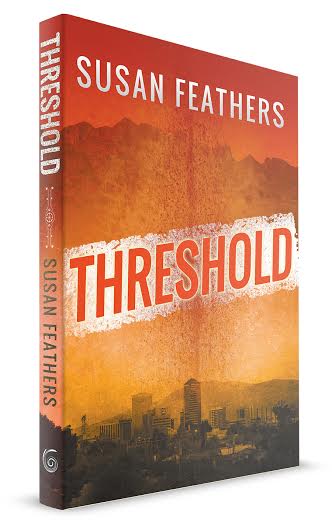
Readers know that I’ve been blogging about an uncanny web of contacts and events that keep me ever tied to Tucson. Last week I wrote about how I became friends with a fellow ex-Tucsonan through our mutual membership in the West Florida Literary Federation. We both settled in Pensacola never knowing each other while in Tucson.  Threshold book coverVictoria became an important part of the writers who helped me while I completed Threshold which will be released in November by Fireship Press in Tucson.
ANOTHER UNCANNY TUCSON CONNECTION

While assisting the West Florida Literary Federation to bring two major New York City poets to Pensacola, I learned that one of them – Barbara Henning – lived in Tucson (while I was there) and was on the faculty at the University of Arizona Poetry Center. This link to the Poetry Center features a series of upcoming readings by poets with the focus on climate change which is the subject of my novel. I plan to attend Joy Harjo’s reading and then stay on in Tucson to promote the release of Threshold which means I will miss Barbara Henning’s performances and workshops in Pensacola during the Foo Foo Festival — our local celebration of arts and culture.

What is it that draws people to Tucson? To Pensacola? Check back soon to read “A Tale of Two Cities” and my migratory route between them over a 20 year period.


The Tucson Connection

My romance with Tucson seems predestined.  This long relationship began in my childhood with Dad’s assignment to Davis Monthan AFB.

Fifty years later, I moved back to Tucson to accept a position as Director of Education at the Arizona Sonora Desert Museum. Little did I know that a future friend and writing fellow was finding her way to Tucson from her home in the Republic of Columbia, in northwest South America. We never met while we lived in Tucson but we would later share our love of the desert in a more tropical habitat.

That is because both of us left Tucson and ended up in Pensacola, Florida. Vicki is a member of the Portfolio Writers’ Group, one of many writing groups in the West Florida Literary Federation. She is a poet and talented painter who not only continues to inspire my writing, but who, by virtue of membership, became an early editor of drafts of  the Threshold manuscript.

For me it was wonderful having a talented writer/friend who knew Tucson and is bilingual. She was able to spot problems and to provide correction to Spanish terms and translations. (Vicki is a Spanish instructor at the University of West Florida and provided instruction for students at the University of Arizona while in Tucson.)

It seems that wherever I go, Tucson follows along. I am so glad because it is a community that won my heart. I even bled for it (see previous blog). That initiation got buried in my unconscious. Good thing. I might never have returned!

My Tucson "Connection"
My Tucson “Connection”

See Victoria’s new book of poetry including her gorgeous painting.

Right of Passage in a Monsoon Storm

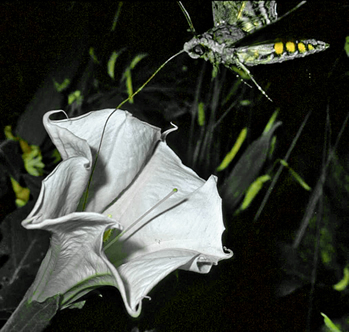
moth-daturacroppedWhen I fist moved to Tucson, Arizona, I was new to the high desert. Biologists refer to its flora and fauna as “lush”–a term that up until then I would not have chosen for a desert.

Through colleagues at the Arizona-Sonora Desert Museum, I learned about a poetry reading at University of Arizona by Dr. Ofelia Zepeda, 

Dr. Zepeda is a member of the Tohono O’odham Nation, a lifelong desert dweller, a linguist, and cultural preservationist. In 1999 she was awarded the MacArthur Fellowship for her work creating a Tohono O’odham book of grammar. However, Dr. Zepeda’s poetry is what I wish to focus on and how the chance encounter with her performance in the first week of my residency in Tucson led to my deep feeling for a place and community as culturally rich as any I’ve known.

The poetry reading took place in the circular auditorium (kiva) in the American Indian Studies Department at U.A. In the large room with rows pitched down toward the lectern in its center, a soft voice rose and fell. Dr. Zepeda’s was reading from her book, Ocean Power She spoke in O’odham and English, alternating between each as she read.  I closed my eyes to listen to the language of desert communities at Tucson’s origin.

She explained the relationship of her family and community to rain in the desert, its precious nature, and how, after the long hot, dry foresummer, the first monsoon clouds gather, and people point and wait for the first cold dollops of rain.

After her lecture, I walked to my hot, dusty car to drive home. Not long after I was on the road, a massive monsoon cloud, as black as coal, threw lightening strikes like explosions on the ground, and rain burst from the sky, falling n buckets, cleansing the car and blinding my sight. I had to pull over. Flood waters gushed around drains, cars stalled as the water rose, but all the people smiled behind their windshields or stood outside their vehicles with open arms, letting the storm soak them to the bone. It was a celebration, first delivered through Dr. Zepeda’s poetry and, then, by the monsoon itself.  I believe to this day that hearing about rain on the desert in O’odham made the impact of the storm much deeper for me. It was a true rite of passage. Listen to a short video about Dr. Zepeda.


Beverly and Jennifer Acierno Special Education Scholarship

Please help us build this fund. The first scholarship was awarded to Brittany Piper who is studying for an MA in Exceptional Student Education with an emphasis in Applied Behavior Therapy.

Susan Feathers's avatarSusan Feathers

Veterans' Day 2013 062In 2010 my sister Beverly Acierno passed away unexpectedly. She had recently retired from the Escambia County Public School District where she served as a Learning Disabilities teacher (the county’s first) and later helped develop and manage the program. For so many years we heard about her students, about her advocacy for students and their families in court, and the trips and presentations she made on behalf of the ECPSD. My family and I met many colleagues at her funeral and listened as they remembered Beverly’s passion for kids. One said, “It’s an end of an era; they just don’t make them that way anymore.”

My Niece, Jennifer Acierno Theisen, spent many of her schools days in the same school building as her mother. They were a pair. Jenny was an excellent student, eventually graduating from Washington High School. She earned a scholarship to Florida State University to study performance art, and later transferred…

View original post 232 more words

Ways of Knowing

Seven is, for me, an internal search, the desire to refresh my thinking, my work, and my relationships. The mystery is figuring out what that means in the latest warp of my universe.

SUNSETI’ve lived in the coastal South since July 2008. That is exactly 7 years to the month—the periodicity that apparently rules over my whereabouts.

Seven is a number associated with the personal journey, the desire to refresh perspective, endeavor, and relationships. The mystery is figuring out what that means in the latest warp of one’s universe.

Over my lifetime, I have devoted time to reset my internal compass, appreciating that life is a fleeting experience and one to be taken seriously but also with alacrity.

Between 1985-89, living in Southern California, I studied shield-making with a Native American teacher. She was patient and methodical in helping me understand this ancient spiritual practice. I continued to make personal shields through 1999. I saved only two of many. Each time I find them, stored in my belongings, they usher back the time and emotions when I created them as a way of knowing.

Basic Idea: A circular shield contains four quadrants which are directional, representing distinct aspects of an individual’s or a group’s spiritual journey. Each quadrant is given a specific color. North: white for wisdom and peace; white buffalo. South: red or green for innocence and receptivity; mouse. West: black for sunset, introspection and exit at death; bear.  East: yellow for sunrise, inspiration and the divine; eagle.

The circular shield itself is symbolic of the Earth, the Universe, the tribe, the family, or the whole individual. The first shield I made used an embroidery hoop as the frame. I stretched canvas over it and painted the shield. But that was just to start learning the meaning of the elements.

A willow branch is traditional for making the hoop. But that varies by region. In true shield making the artist collects the materials from nature with prayers given and tobacco offered as the willow branch, animal skin, and objects are collected. My first teacher allowed me to intuitively choose objects which she provided: feathers, shells, ribbons, etc.

If you wish to study shields, a good place to start is the collection at the National Museum of the American Indian, in Washington, D.C. If you have not been there, you should plan to go. It is a magnificent place. Online travelers will also find great educational articles and webcasts. You can explore the collections online as well. The current exhibit on the Inka Civilization is an amazing opportunity to understand the great wisdom of indigenous people and how their knowledge and experience can inform modern society.

Links to Explore:

Live Web Casts from the Naitonal Museum of the American Indian

Shield Making Materials

Seven Arrows by Hyemeyohsts Storm

Book Clubs Rock!

book club 2 If someone told me I’d be facilitating book club discussions this year, I would have thought they had the wrong person. But it’s true. I now facilitate three books clubs with a fourth possible. The book club discussions are part of my work as a Land Ethic Leader for the Aldo Leopold Foundation in Wisconsin. Leaders create ways to spark discussions about Leopold’s Land Ethic which addresses how communities can come together to protect and conserve human and natural resources. Leopold’s writing, published in A Sand County Almanac (Oxford University Press, 1949) is considered a classic on land and wildlife conservation. I carried a thumb worn copy through 25 years as an environmental educator.

book club meeting with Jean Sparks and Susan FeathesBut why book clubs? New cognitive research shows storytelling and fiction as the most powerful agents for engaging the imagination. I realized novels might be a fun and effective way to engage people in land ethic discussions. However, I did not anticipate how readily people embraced the idea! Two book clubs in the Pensacola area are reading more than one novel. The discussions are vital and personal.

The Interesting Women book club in Melbourne, Florida read Caleb’s Crossing (Geraldine Brooks, 2011) about early American history. One book club member’s husband is an 11th generation descendent of a Wampanoag woman and Puritan settler (married in 1635). The book focuses on these two cultural groups and how they evolved a land ethic. A special meal was served including Mock Whale—chuckeye steak, beef liver, and fish sauce! All the food served related to a scene in the novel.

Update: One of the members of the book club in Melbourne sent this note: “This appears to me to validate your idea of changing attitudes by encouraging reading about it in fiction/stories.  Sounds as though you’re on the right track.

http://www.npr.org/2015/05/01/403474870/does-reading-harry-potter-have-an-effect-on-your-behavior

One of my professors long ago was of the opinion that Mao Tse-tung overthrew Chiang Kai-Chek’s regime in China in the 1930s and 1940s by using folk songs to sway the opinions of the largely illiterate peasants, folk songs being another form of story…”    It’s an interesting world.”

The Aldo Leopold Foundation will feature these activities in their blog about Land Ethic Discussions. Serendipitously, I stopped by the Marjorie Kinning Rawlings State Park on the way home. In my tour group I met eight women from Sarasota. We ate lunch at the Yearling Restaurant. When I asked how they happened to be traveling together, you might guess the answer. Yes, they’re a book club!

Sweet Leilani – Our Mother

Sweet Lailani, Our Mother Performing Hula She Learned at the Bishop School in O’ahu in 1949Mom Performing Hula in Michigan[Also see links on blog about Hawaiian history and culture.]

Our mother was known as Mickey Jones when she was a teenager and “20-something”. Born in a small town in Tennessee she longed for places far and away. She loved beautiful things and wanted adventure in her life. Mom loved to sing and to dance. She was an excellent cook. As a military wife of a career Air Force pilot, Mom set up homes all across the U.S. and in Hawai’i.  I have very lovely remembrances of Mom and Dad in Hawai’i. They were very much in love. These are kid memories so fuzzy and sensory. A sweet scent of plumeria wafted from my Mother. She was happy in Hawai’i. Dad was a pilot on Hickam Air Force Base established in 1941 to protect Pearl Harbor and near by Honolulu.

Hawai’i was still recovering from the Japanese attack on Pearl Harbor. Yet the natural beauty of the islands was already transforming the tragedy to the pervasive love and ease natural to the island kingdom. Mom hummed Hawaiian songs, Dad played a lot of slack key guitar music on a phonograph. He wore colorful silk shirts; Mom wore sarongs filled with flowers. She wove flowers in our hair and we often wore leis. I remember making leis from aromatic blossoms at a picnic table under a towering banana tree with leaves like green rafts hovering above.

Mom learned traditional hula from a teacher who told stories about her ancestors who came from Polynesia. Later Mom performed more modern forms of hula for military families at bases where we were stationed around the U.S. The photo above is in Michigan at Selfridge AFB. Through our mother we carried the heart and soul of Hawai’i in our hearts. This day the stories told through the dance and chanting of traditional Hawaiian music remain with me as some vestige of a true connection with the Earth Mother. See link to the Merrie Monarch Festival and the Prince Lot Hula Festival.

[I recently found this new story and art animation about the original Hawaiians, and authentic experience in the form of old time storytelling: Voyagers – The First Hawaiians. **Highly recommended.] “The discovery of Hawaii told through the art of Herb Kawainui Kane in stunning 2.5 animation.”

I often think about my mom. She would have many struggles later in her life but in her youth and early days of rearing kids and being a wife she was a joyful person, filled with hope and love of nature. She was high-spirited. This is the mother I remember, honor and love with all my heart. She brought elegance to simple spaces, traditions to an otherwise mobile lifestyle, and always a sense of wonder about the world at large. On this Mother’s Day I honor her for what she gave me and my sisters and all who come after us….

American Pubic Media “On Being”

I know that my discovery of “On Being” at 6 am on my local public radio station, WUWF.org, reveals just how out of it a person can be in a world with a cornucopia of media sources. Apparently the program has been broadcasting since 2008! However, humbly, I submit this link to this interview with Terry Tempest Williams.

The recorded podcasts on their main page are a treasure trove of some of our greatest spiritual voices and cultural innovators. This might be a very good way to “reset” your moral compass after a day or week out on Main Street.

Krista Tippett is the moderator. The link above to the unedited discussion with Terry includes many personal statements by both Terry and Krista that give additional insights into their focus and personalities.

I’ve been reading Terry’s books, blogs, and following her activities for the last 15 years. I am convinced that she is on the forward edge of an emerging sensibility that seeks to bring together divergent perspectives in American culture  for open dialogue and understanding. She gives numerous examples of how she personally is able to sit with people who hold opposite points of view and learn from them and stay in the dialogue….

If you read one book by Williams, read Refuge. You will understand then how Terry weaves the deeply personal, landscape, religion, spirituality, politics and the art of dialogue. This perspective might be similar to present and previous Earth – focused cultures  (e.g.  native cultures worldwide; ancient earth-based cultures.) However, what is evident in this interview and many others on the site, is an emergent blend of our best past and present thought. There is a heightened awareness of something much greater than ourselves, the issues at hand, and what we can perceive.

Listen and learn from a person who has learned to stay in the crucible of conflict and transform it into something of beauty….

Oil Globs on Santa Rosa Island: It’s Here

The People of the Forward Stampede

Late this afternoon I drove to Santa Rosa Island, to the entrance of a seven-mile stretch of undeveloped barrier island, protected by the Gulf Islands National Sea Shore, one of our priceless U.S. National Parks. While there was a long stretch of beautiful beach, as I walked west toward the end of the island, I began to see oil – firsts dime-sized, then bottle-cap, then hand-sized: thick crude oil, pooled and hardened among shells and sea grasses on the high tide line. Adjacent to this pollution, black skimmers sailed by with their long lower jaw skimming in the shallow edge of the surf and Least Terns dive-bombed for small fish not far off shore. Surely they must be tasting and smelling this invasion of foreign substances. We can only guess what is happening to fish, corals, jellies, dolphins, plankton…I am so profoundly sad about this awful time when we are facing our ourselves –  our ways and wants. It is NOT a pretty picture.

Only a few days ago this was the image of this treasured coast at sunrise:

And to think we are risking this and our families health for a culture addicted to speed and consumption and which cannot function without an enormous and uninterrupted supply of oil. Will it be worth it when all this plays out? And, it will continue to playout over months and years and there will be other catastrophes like it where we have taken enormous risks as the People of the Forward Stampede.

They will all be impacted by the oil catastrophe and eventually it will reach to our children and us through our air, food, and spirit.

Oil Spill Perspectives

…what if we did something revolutionary and base our decisions on a set of conditions that assures we don’t harm the Earth and thus ourselves since we are one community, interlinked?

Most of us have copious information about the oil spill (I think we can agree that GOBS MORE oil is spilling into the Gulf waters than we have been told by BP and by the EPA. Go to links on this blog for more accurate estimates).

The impacts are starting to show up in Louisiana and threatening Alabama and Florida. Things are not static this time of year with the tropical storm season and strong south easterly winds and thus currents. We can only guess what is happening to plankton and all the vulnerable life underneath the surface, out of site. It has to be devastating.

What has been growing in my mind is much greater than the stats on this spill, though important. What I am thinking about is how we make (or don’t get a chance to make) decisions about our technologies, even at the origin when inventors are “out there” thinking up stuff. Right now the values that underpin most of our biggest industries are based on providing a natural resource or product from it that has been evaluated to make a lot of money for its creators and sellers. Our principle is: if it can be made and make money, make it! Figure out later if it is harmful in which case the American citizen or the natural systems that support us will take the blows, and while down, have to wage a near impossible battle to bring the barons to court. Even then there is no certainty justice will be done.

What if there was much more thought on the front end of the process where we carefully consider the impacts on the health and well being of our people and all the wildlife and natural systems that produce health and wealth? And what if we did something revolutionary and base our decisions on a set of conditions that assures we don’t harm the Earth and thus ourselves since we are one community, interlinked?

Consider what Wendell Berry suggests are bad solutions to problems versus a good solution:

“A bad solution is bad because it acts destructively upon the larger patterns in which it is contained. It acts destructively upon those patterns most likely, because it is formed in ignorance or disregard of them.” ~ p. 137 The Gift of Good Land

“A good solution is good, on the contrary, “because it is in harmony with those larger patterns.”

Good solutions:

  1. Accept given limits
  2. Accept the limits of discipline (i.e. agricultural problems are solved by agriculture not technology, etc.
  3. Improve the balances, symmetries, or harmonies within a pattern
  4. Solve more than one problem
  5. Will satisfy a whole range of criteria
  6. Embody a clear distinction between the biological and the mechanical
  7. Have wide margins
  8. Answer the question, “how much is enough?”
  9. Should be cheap and should not enrich one person by the distress or impoverishment of another
  10. Exist in proof
  11. Imitate the structure of natural systems
  12. Are good for all parts of a system
  13. Preserve the integrity and pattern that contains it
  14. Are in harmony with good character, cultural value, and moral law~ pp 141-145 Ibid

In 1970 during the oil crisis of that day, President Carter was laughed at for his efforts to develop energy independence by switching to alternatives such as wind, solar, and geothermal sources. What stopped all that effort, removed the electric car from the road?

Simply, greed. Could that be why we have an incredible 3500 oil rigs in the Gulf of Mexico and 1500 miles of pipeline criss crossing the ocean floor in a hurricane prone zone. Follow the money and you will discover the reasons why we do most of what we do in America. Our bottom line is STILL profit. Preoccupation with the market and belief in it, which is a metaphysical movement unnamed as such, is driving us to the edge of environmental degradation after which no one can really predict outcomes – exactly where we are with this oil spill.

See the Lindbergh Foundation website. They support innovative research that establishes a healthy balance between technological development and preservation of the Earth’s ecosystems. Click on each of the funded scientists and educators whose work they are supporting to understand the concept that Wendall Berry was getting at. We need a lot more of this kind of thinking!

Read Barry Lopez to understand what it means to live connected to everything around us, our own nature knit tightly into the fabric of all the creation.

For a very thoughtful article by Joshua Reichert of PEW Environmental Group published in the Miami Herald, “The Future of Oil and Water.”