Places –

Sonoran Desert

Phoenix, Low Desert – 1999

At midnight the heat radiates from the cement driveway under my feet. I stand in the white moonlight gazing up at twinkling stars. The dark outline of tall trees and roof tops form a stage-drop where city glow breaks the blackness of night.

This is my summer ritual: star-gazing in my pajamas. I wake out of some consciousness that tells my snoozing brain I can open the doors and go out to a cool 90 degrees. I lay in a chaise lounge in the middle of the driveway under a sparkling dome of heaven. The air is gentle, warm, caressing. Like other desert creatures, I have become nocturnal. The moon is my muse.

It’s summertime in Phoenix, Arizona. Temperatures soar over 110 ̊. After June, the buildings and streets absorb the day’s solar energy and then slowly release it through the night. Even though the sun goes down, the built environment radiates like an oven.  The hum of air conditioners is a constant auditory feature of modern desert life.

In the old parts of town residents open aqueducts in their yards. Encircled by an earthen berm, the lawns hold the precious ground water releasing it slowly to soak deeply into the sandy soil and keep their urban lawns green. In the 1900’s people moved to the desert for its dry climate and to escape allergy-causing vegetation. However, the mulberry and olive trees they imported with them resulted in Phoenix becoming the asthma capital of the west by 2000. The average low temperature has increased by 10 ̊ in just 40 years—the result of miles and miles of asphalt and concrete which act like a heat sponge.

Native trees have been reduced by introduction of non-natives (exotics) like the Tamarisk tree in areas where the water table once ran close to the ground. For thousands of years these habitats supported the greatest species diversity in the state.  Beavers and otters abound in rivers and streams, and fauna like deer and Coati mundi inhabited native forests. Memories of Arizona’s extensive green belts have faded with each new generation. Who will remember what has been lost?

Gazing at the twinkling night sky above me, I imagine the ancient Hohokam people—who laid down the original grid of canals still in use today— how they, too, must have lain outside in the cool of moonlight thousands of years before me. Did they work and cavort at night like the desert’s creatures, and sleep in the cool of their adobe huts, or under a shady ramada of reeds, during the blistering heat of daytime? What happened to their great city and 200,000 inhabitants? Why did they leave this valley and its two rivers, the Salt and the Gila, leaving only their canals behind?  Am I part of a Great Reenactment?

I watch the dark outline of a big, brown bat drinking nectar from a tall saguaro’s bloom in my neighbor’s yard. Afar I hear coyotes yipping from a hilltop in a suburban sea. In the wee hours of the warm, dry night, I drift into a deep sleep under a canopy of stars.
Places – Imperial Valley

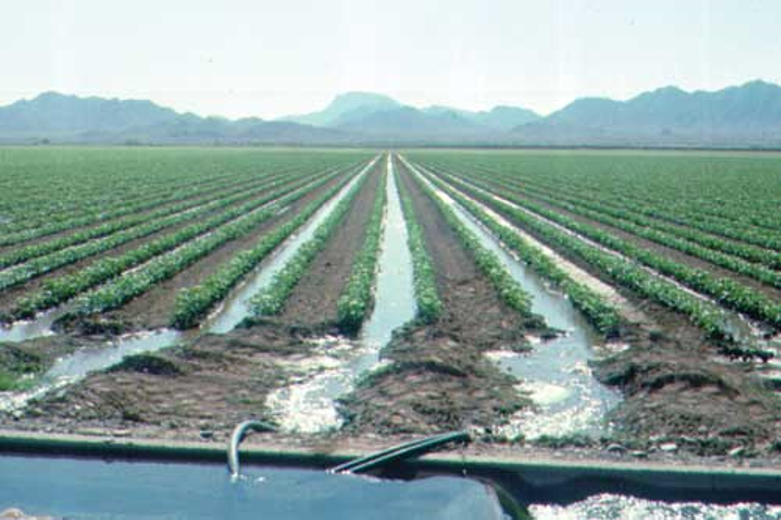
Yuma, Arizona Farm Fields

Imperial Valley, Below Sea Level, 1990

The Colorado River was a wild, red fury in its natural state. It flooded its banks in southern Arizona and Northern Mexico on its way from the Rockies to the delta on the Sea of Cortez, Gulf of California. This was true for thousands of years. Early people learned its rhythms and developed cultures in sync with the river’s seasonal flows. They are called The Colorado River Indian Tribes—distinct communities that still exist along the river’s course. Their history encompasses the dramatic changes wrought by damming the great river to create one of the most extensive desert gardens known to humankind.

When I crossed the Continental Divide atop the Laguna Mountains, under a brilliant star-studded black sky, I was entering a dimension so subtle it would take me years to define it. Something more than gravity pulled me down the steep, winding road as it descended into the Imperial Valley. The sun was just breaking above a distant horizon as my vehicle finally leveled out onto the valley floor. Immediately an aroma of soil, mist, and something close to boiled peanuts filled my nostrils. It is a scent that I have only experienced in this part of the U.S. – distinct and overtaking. It is not unpleasant but haunting in a way. You know it is not natural for the valley but something created by a great deal of struggle, sweat, and industry.

In the far distance a range of ruddy red mountains formed the eastern border of the valley with Picacho Peak soaring into unbroken blue. I recall my daughter’s reminiscence after moving to Washington, D.C. from Arizona: “Mom, I miss that big dome of sky that made me feel protected under its blue canopy.”

Openness, expansion, mystery and fear were the emotions that churned in me that day.

The Imperial Valley stretches over 100 miles from the foothills of the Laguna Mountains in southern California to Yuma, Arizona at the juncture of California, Arizona and Mexico. It is a vast alluvial plain, rich in minerals and, before the irrigation of the valley, a low desert dotted by barrel cactus and rolling tumbleweed. Once the dams and extensive canals were built (a colorful history of drastic measures, tragic mishaps, and powerful men with big dreams and money to back them) the desert floor flowered into one of America’s most productive bread baskets. In 1990 the lettuce crop alone harvested $16M for growers.

As the sun rose higher, row upon row of lettuce and blue canals appeared and disappeared from view like an old-time flickering movie. Egrets and gulls flew above or walked among the rows! Did they migrate from the oceans of southern California or up from the delta on the Sea of Cortez?The whole experience was surreal. Then I began to notice the heat…oh, dear. My un-air-conditioned beach mobile! I was unprepared for this region of the world. I was sweating profusely now and had brought only a small bottle of water with me. Suddenly I felt threatened. Where was the nearest town?  Where were the people? I saw nothing but huge sprinklers like warriors from Star Wars on thin metal legs rolling across fields throwing streams of precious Colorado River water onto American grown vegetables and cotton. On and on I drove, past a feedlot that stank for miles, past an ostrich farm and more green flushed with blue sparkling water. Was there any water left in the Rio Colorado? I wondered.

The heat grew ever more oppressive. At below sea level, the Imperial Valley is a heat sponge. I nearly fainted before finding a small town and limped into Wendy’s where I remained for three hours slumped over a table. The waitresses were empathetic. Many California beach combers succumbed to the valley’s record temperatures. It reached 119 degrees that day in May.

Cadillac Desert Video

Imperial Valley, CA

Places 3

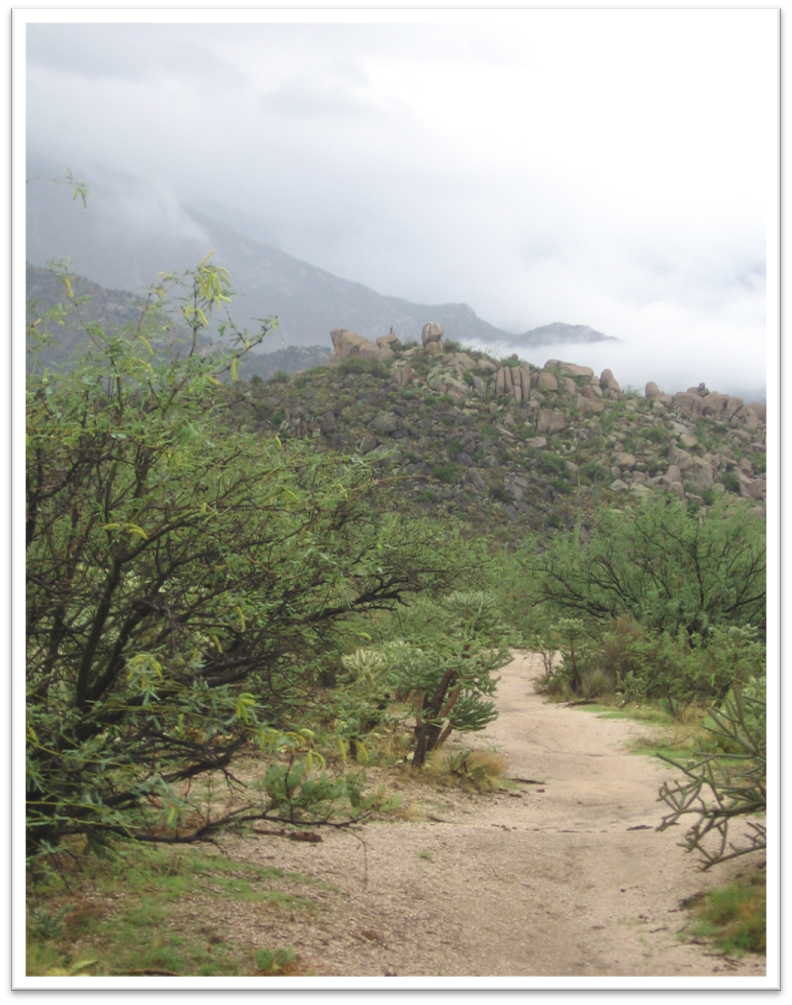
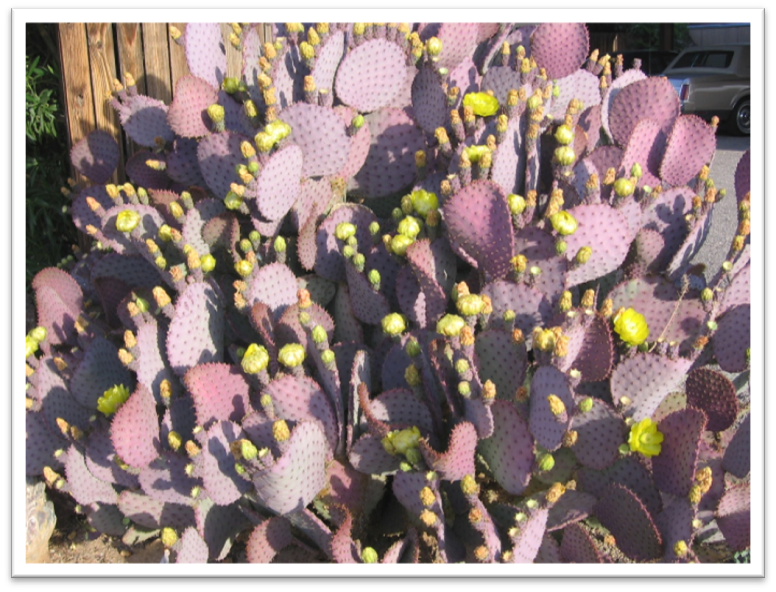
Prickly Pear Sonoran Desert

Moving to the Colorado River Valley in 1990 began a great period of personal growth and learning. Teaching children of migrant farm workers (who harvested lettuce in view of the classroom windows) and children of Colorado River Indian Tribes who lived on near-by reservations, I quickly learned the harsh realities of the cultural landscape as well as the natural landscape on which our life science lessons focused.

The following blog posts are three memories from living in the desert (1990-2008).  The first is my initiation to the land’s elemental beauty and its stark realities. The second and third memories illustrate lifestyles in two desert cities with very different perspectives on how to live there – Phoenix and Tucson.

Because I was introduced very early in my time in Arizona to indigenous perspectives, I was able to more acutely measure the gap between native and contemporary points of view about the human relationship to nature, the meaning of community, and the underlying values that are at the roots of how cultures develop.

By getting to know Cocopah families – families whose nation was separated by the U.S. Mexico border and whose way of life on the Colorado River was fractured by the damming of the river – I witnessed the social, financial, emotional and spiritual devastation wrought by being unable to live by the values one holds dear and by which one knows oneself.

Another important stream of influence on my thinking was the environmental movement in which I was actively engaged through education, a daily endeavor that caused me to read the history of these great cities and to get involved in local citizens movements to create more sustainable ways of living there.

While we are going about our daily lives, critical problems such as over-drafting groundwater continue. Indigenous values that have been pushed to the background are emerging into the foreground. Are we paying attention? What can we learn about place and the art of living from the first people of a place?

I understand, now, why spiritual seekers often go to desert lands. There is quietude and mystery. Stories are hidden from casual view, unspoken but exerting their presence. The quest then is discernment.


Places 2


My Grandparents’ Hill Top Home

I will make the case that to explore and affiliate with life is a deep and complicated process in mental development.  To an extent undervalued in philosophy and religion, our existence depends on this propensity, our spirit is woven from it, hope rises on its currents. ~ E.O. Wilson from Biophilia (Harvard University Press, 1984) 

The first memories of the natural world I recall in any specificity are from the family visits to my grandparents’ farm on the Watauga River in east Tennessee. The Feathers descended from John Feathers who immigrated to America from Ireland in 1850. Small farmers all, my relatives were subsistence farmers probably carrying on the tradition of people whose lands were always subject to seizure by foreign or religious powers.  They were independent, making their own food, clothing and furniture, raising children by the Good Book and taking simple pleasures in seasonal celebrations, dancing and singing, and harvesting and preparing the fruits of the Earth.

I did not know my father’s family until well after the Depression years that hit hard. Dad remembers being hungry, after all the animals had been slaughtered, when the beans and corn that had been put away in the cellar in blue-tinted jars had been emptied…when his mother made gravy from bacon fat and baked fresh biscuits to hold their hunger at bay.  But they made it through with hard work, sacrifice and luck.  When I showed up on Earth, their little farm was still there to welcome my sisters and me each summer or Christmas of our lives tromping from military base to military base.  Over these many years of annual migrations to my grandparents’ farm my character began to form and I learned where I came from, and something up ahead of me began to take shape.

A distinct memory is the feel and sound of our car wheels rolling up the gravel driveway late at night and getting my first glimpse of the lit windows in the large two-story house under the big maples. Deep shadows cast by a summer moon onto the white clapboard shingles or running across the lawn after a December snowfall primed the excitement in my heart as I anticipated my grandparents waiting on the front porch with its yellow light above the door.  Before the car came to a full stop, the doors flung open to release a tumble of jubilant children. The admonitions of our parents and greetings of our grandparents as they nestled us in their arms melded into the ever present rush of the river below the hill sweeping us into its flow and reverie once again.

I always considered the hilltop farm and its contours my home, which I explored like a small insect in my very own world.

Places make a quilt of memories woven of faces, feelings, and senses.  Any one of these can evoke an entire memory or set of memories from long past – so powerful are they laid down in our very core. I can recall vividly the sound of ripe watermelon ripping open after my grandfather had slashed a big gash down its middle and his sausage-sized fingers pulling it apart to expose the glistening red fruit. The aroma of its warm flesh, plucked fresh from the garden on a hot summer’s afternoon, laid bare for our refreshment under the cool shade of a towering tree, remains with me to this day, a half century later. Every time that I cut open a watermelon I am drawn into the good, wholesome feelings of those cherished days with my grandfather, sisters and cousins, spitting watermelon seeds across the lawn and watching my parents relaxed on a porch swing up the hill in the sheltering embrace of the old homestead.

These are my first memories of place. They are a tapestry of nature, nurture, and the flow of time. Yet I see now that they have a timeless quality and remain as fresh with me as the moment they happened.


PLACES

Okefenokee Wildlife Refuge

Places define much of what we become and in myriad ways determine the things we do.  Far from a “backdrop” to the drama of our lives, the places we inhabit, grow to love, and defend fiercely as we would our children, are intimately a part of us.  We breathe their air, drink their waters…eat from the table of their mantles until they form our flesh and blood and point of view. In turn our breath is taken up in tree trunks and leaves and our excrement is filtered into the earth. Our voices can be heard moving over the land where they mingle with the buzzing hordes and songs of feathered choruses. We are not apart from a place but knit tightly into it in mutual exchanges. We are relations.

My family history begins in the Smoky Mountains where many Irish, Welsh, and Scottish immigrants settled. Although I was born there, at the end of WWII my father returned to the States and whisked up my family into a 16-year journey of military life. We moved from coast to coast in the U.S. with one gentle, magical time in Honolulu on Oahu. It would not be a State of the U.S.A. until 1959, years after we left.

Changing places frequently lends to a sense of loss and confusion precisely for the reasons that place is not a location but the source of our biological and psychological lives. I am only now beginning to appreciate this fact, now looking back. As hard as it was to be continuously uprooted and thrown upon new soil, I learned to grasp hold quickly and savor the rich, diverse places on my “dance card” in life.

Civil Disobedience for Climate Action

Democracy Now has been following the Fire Drill Fridays sparked by Greta Thunberg’s clear voice — a youth crying in the wilderness of world and national houses of legislation which remain deaf to the urgency of acting to protect the planet and life everywhere. Jane Fonda is busy stirring a national day of civil disobedience EVERY Friday on the steps of Capitol Hill. Listen in:

https://www.democracynow.org/embed/story/2020/1/13/jane_fonda_fire_drill_fridays_washington

World Waking Up to Climate Change

Photo by Susan Feathers

In the past few days we have learned that major investors and businesses are getting in step with climate action. BlackRock investing firm announced they would no longer invest in businesses that are not meeting climate change objectives.

“Awareness is rapidly changing, and I believe we are on the edge of a fundamental reshaping of finance,” Mr. Fink wrote in the letter, which was obtained by The New York Times. “The evidence on climate risk is compelling investors to reassess core assumptions about modern finance.” ~ New York Times 1-14-20

Microsoft announced a Net Negative carbon footprint plan to reduce its emissions and to eliminate its carbon footprint completely by 2030.

The scientific consensus is clear. The world confronts an urgent carbon problem. The carbon in our atmosphere has created a blanket of gas that traps heat and is changing the world’s climate. Already, the planet’s temperature has risen by 1 degree centigrade. If we don’t curb emissions, and temperatures continue to climb, science tells us that the results will be catastrophic. ~ Microsoft Commitment to Sustainability

Why “Outlander” Appeals to Millions

The Outlander book series by Diana Gabaldon, and the Starz television series (now in its 5th season) have garnered millions of followers. In my previous post I shared my own personal journey through the world created in Gabaldon’s books. I conjectured why it won my heart like nothing I’ve experienced as a reader. I wonder, why is it such a phenomenon now, 27 years later? [Diana’s first novel, Outlander, was released in 1991.]

Critics might chalk it up to escapism in a world gone mad. I believe it’s something else.

Key elements infused throughout the stories are 1) the possibility of creating a new order of things; 2) the kind of personal freedom Americans believe they have but which in fact has been eroded since sometime around the industrialization of America. Our freedoms are regulated or qualified to the point of handcuffing almost any endeavor unless you are rich in which case you can evade regulation.

In Gabaldon’s world of Outlander, we experience lawless times in the nascent Republic, and times of terrible oppression in Scotland. The author does not sugarcoat any of the times, but rather plunges readers into the horrors of slavery, violence against women, and brutal policies imposed on the poor and oppressed. Diana’s novels are not for the faint at heart nor are they romantic novels in the strict definition of that genre. Diana’s wave is so huge in the book world that it has created its own genre.

Diana Gabaldon possesses a sense of humor; she includes chapter titles such as “Meanwhile, back at the ranch , , ,” to keep readers engaged in her complex plots. Yet, like a deep current in the troubled waters of time – from book 1 to book 8 – there is an abiding theme and what I would describe as a ‘force’.  The theme, in my opinion, is “we are all in this together” and the force emanates from this idea: true love lasts through the slings and arrows of human history, and it is the only real thing that defines the human pageant across time.

The Theme: We are all in this together.

The books are about family. We see it first in the Highlander clans at a time when survival depended upon that unit of cohesion among people. Then we see it in frontier times in American history with pioneers, and among colonies. The major characters of Jamie Fraser and Claire Fraser form the warp while secondary characters, children, and animals form the weft or woof. The hues and texture are provided by historical events and circumstances.

The Force of Gabaldon’s Story: Demonstration of love that is immutable.

Over and over we experience the love of Jamie and Claire, of parents and children, of brothers and sisters, of comrades in arms, of communities and of nations. Gabaldon shows us which ones last and which ones don’t; we are left to consider why and why not in ever changing scenarios. Passionate love, filial love, maternal love, brotherly love, and patriotism are all in there in their fullness: strong, vulnerable, imperfect and humanity’s signature trait. Diana sharpens our understanding of immutable love by contrasting it in darkness: jealousy, resentment, pure hate, unhinged violence, or the worst perhaps — negligence.

The answer to my question [why does Outlander appeal to millions today?] seems obvious only now that I have read the entire series twice and listened to interviews with the author. This long developing narrative and its unforgettable characters provide a way forward in the complex, otherwise discouraging world humanity has created for itself. Think about that: 1) We are all in this together (connoting we are responsible to each other); 2) Love, the greatest force in the world, is immutable (it can’t be changed or touched by any force no matter how diabolical or egregious).

The stories show the impact of our actions, or lack there of, and the fact that history is made together. It is counter intuitive if you think about it. Is true freedom being alone to do what you please? Or is true freedom something achieved only together (as families, as groups, as nations, as a world community)?

Finally, I think we experience Diana Gabaldon’s own journey to answer that question. We time travel with her characters jumping from historical periods and back. She probes to understand those times and ours even as it is unfolding today, at this very moment. Will we, her contemporaries, choose love over hate, and work in a family or community to provide a home, a town, a nation that is worth fighting for?

I would love your comments on what you think makes Outlander such a compelling body of work.


The Remarkable Diana Gabaldon

When I was at work at Arizona State University, little did I know that I was crossing paths with a person who would soon become an internationally known author with a fan phenomenon that continues to grow. Diana Gabaldon is author of the Outlander book series.

The first book which set off the chain reaction, Outlander, was published in 1991. Probably I felt the Earth tremble but didn’t know what it was. I was crossing a river of my own, thinking about writing a book, but didn’t get around to it until 2003. Literally, I crossed the Colorado and would eventually find my way to Phoenix and Arizona State University still clueless of the Gabaldon earthquake. Her eight books have sold over 35 million copies in 26 countries and are printed in 23 languages.

Outlander was a phenomenal success; 7 sequels rolled-on-out into eager fans hands all emanating from an incredible mind — with the 9th in the series due in 2020. See Diana’s website for updates. http://www.dianagabaldon.com/

Diana is a generous writer, sharing more information with her readers than any other author I’ve ever read, and actively engaging them on her website, in literary groups, her blog, and more, answering questions and engaging readers the world over. She has also published tomes called Outlander Companions that give readers a lot of background information on history, medicine, time-travel, etc. (Well, she was professionally a science historian and well trained to record and report with deep attention to detail, and also the weird little anomalies in human affairs.)

I’d heard about the TV adaptation from my daughter in law but didn’t get around to watching it until the 4th season, which in turn sent me on a wild adventure watching all the previous episodes and season, then buying and reading the entire series of books. I’ve started to reread book 5 and 6 in anticipation of the 5th TV season on Starz.

What prompted me to watch the Outlander TV series was a novel I was drafting about a young doctor whose mother’s family emigrated to the U.S. from Wales. [This is partially my own heritage along with Scottish and Irish ancestors who emigrated, and traveled down into the Appalachians where they settled.] My character  is an intuitive who wishes to learn more about natural remedies and practices of her mother’s home country especially after she has just finished a long residency and is deciding on her path in the practice of medicine.

In the fall of 2018 I was taking a course in Arthurian Legends, and reading about Welsh and Scottish history when I happened to stream Outlander to see what it was that had millions binging on Starz.

Diana’s mind is vast. That is the best way I can explain it. Matched with master storytelling which from all I’ve read is a natural gift, I could not stop reading, and when one book was finished I felt like my oxygen mask had been yanked from my face. I literally crawled into the closest book store gasping for the sequel! Later I ordered ahead so that there would not be days of blue lipped waiting. This was behavior never observed in myself before. I’ve become a fan of both Diana and now the Outlander cast members and writers of the adaptations.

What is it that has seized my mind and heart with such power, joy, and keen interest? I cannot express it yet but its something like this: characters that lift my spirit reminding me that we can be better than we think we can, and we can end up doing good even when we just stumble into it. It’s about intent. It’s also the story of a great love that stands the test of time and tragedy and never seems to be shredded or dulled by it. It’s the story of my family’s emigration, it’s the story of our nation’s early history, it’s about science (which I love and have worked in for my career) and it’s about a woman whose mind and skills are challenged to help others.

Finally, Diana has created a woman, Claire, who is a sort of hero for me and many women in even this modern day, maybe more so in our time. She says what she thinks, she never goes back on her word, she is imperfect and vulnerable, and she wants to be loved through and through by her man. Diana has created that man for her in Jamie Fraser who matches Claire’s strengths and provides a protective and totally absorbing love affair whose flame is inexhaustible.

And there is lots of humor! Thank you Diana for making fun of us along the way. If we can’t laugh then it IS a tragic affair, this life we all strive to live and make some meaning out of. She possesses a great sense of humor and puts her characters in numerous embarrassing situations.

I find the books healing in a way, like a balm for my tattered soul — tattered by the banal world I’m living in, the broken hearts, the disappointed people, the loss of a framework in which to live in this fractured time. The story is stabilizing. The people care about and love each other and even when the way is not clear, the characters choose a safe way forward. And to think, Diana is still rolling-out their lives,  showing us a way forward. The fact that Claire and other characters time-travel adds a mystery to it all and opens up unique possibilites for the author to explore and compare historical times and mores, and ask interesting questions such as, “Can history be changed?”

What can I tell you. I am a goner. Diana Gabaldon has captured my imagination and my heart for the time being. And I am grateful.


COP 25 Comes to an Ignoble End: Not Surprising

The most recent Climate Change Summit (COP 25) came to an ignoble end with few agreements among the member countries on coordinated decrease in carbon dioxide and methane pollution. This in the midst of reports flooding media about new or more advanced warming impacts on ecosystems pole to pole, ocean to ocean.

Yet this sad result is not surprising, is it? With one of the largest, and longest contributors of CO2 to the atmosphere bailing out of the Paris Agreement (US), it has complicated and weakened the coordination and commitments of countries to less than 2 degrees Celsius warming by 2050.

What’s more ,the most vulnerable places, already experiencing life threatening changes in the earth, sky, and waters, can’t pay for the kind of adaptation necessary to assure some form of well-being, forcing migrations and/or conflicts. All results that are predictable due to a lack of responsibility for each other.

Regionalism and nationalism are dangerous in light of global problems that we can only solve or mitigate together. Why should Americans care that our President, White House, and half the voting public have chosen to turn their backs on the world of which we are an integral part? Because it is just ignorant not to recognize that the well-being of countries worldwide benefits us in terms of security, wealth, and health. Any grade school child can conjure that.

All political affiliations of voters must urge their representatives to get off the barge heading for annihilation and start building in the safe guards for what is already wide spread destruction. We are right now teetering on massive problems caused by ever greater warming.

Its great we have a strong economy, wonderful. We’ll need it. Let us not bury our heads in the sand. If Climate Change goes against your religion, I suggest you sit down for a long chat with God. I am sure our Creator does not want his progeny to kill life everywhere so that we can have more money in the bank.

A great country must be a wise one. A great  citizenry must strive to use logic and prudence when playing with the very requirements for life. We cannot play God by tweaking the stock market. But, that is what we are doing. Chasing the Almighty Dollar, eyes shut, bellies full, and souls in tatters.

NPR Report on COP 25