What the Eyes Don’t See: Everyone Should Read!

Chemical Symbol for Lead

What the Eyes Don’t See is a book written by Dr. Mona Hanna-Attisha about the Flint, Michigan water crisis. As a pediatrician and Community Health Residency Director at Hurley Center in Flint. Dr. Mona (as her tiny patients refer to her) learned from a high school friend, an environmental scientist, that she should be concerned about lead in the water in Flint. She was surprised. The Flint authorities told everyone the water was fine to drink. Like most of us, she expected the people “in charge” to protect the public. Isn’t that what government is for? But, Dr. Mona’s friend said no — it is not safe. That began an 8-month odyssey that grew from a conversation between two friends to a consortium of doctors, scientists, activists, and  parents who exposed the cover up and righted a huge wrong.  Dr. Mona knew all too well what lead exposure does to developing children.

I highly recommend this book for its depth, its fluid story development, and its educational value for every adult in the U.S. and for the sake of every child. I read it over two days, hardly able to put it down. See Dr. Mona on the web.

Exposure to high lead levels as infants and children can cause irreversible damage to their brains and other organs. Gray matter in the brain is eroded so that the child has problems with attention and impulse control; it affects white matter in nerves that carry signals in the brain; it is suspected of having epigenetic effects – changing a child’s DNA which means it can be passed to future generations. People exposed to lead as children show higher rates of crime and addiction as teens and adults. Lead in the body can erode eyesight and affect other organs.

Dr. Mona encapsulates the story in 1) the political policy — austerity; 2) the socioeconomic history of the city and those most affected by the lead poisoning — an environmental injustice; 3) the U.S. practice of requiring the victim to prove harm first rather than using the Precautionary Principle: when danger is suspected, move with caution, using science to understand the risk.

In 2014, due to Flint’s bankruptcy, the state assigned an emergency manager who alone made the decision to switch the city’s water supply from the more expensive fresh water of the Great Lakes to river water.  The Great Lakes water was treated with a corrosion control to prevent leaching of chemicals like lead into the drinking water. The new manager decided to not use corrosion-control treatment of the river water as a way to save money–his primary mandate.

Dr. Mona points out that the city lost democracy with the assignment of an emergency manager appointed by the state.  The city was in free-fall economically not by the fault of any of the families and small businesses that were struggling economically in Flint. The wealthy either moved out, or changed the housing and voting districts to wall themselves off from the poorer workers and neighborhoods. The people were essentially punished for being poor. Extreme austerity was what they got, a short-sighted, unjust policy.

When Dr. Mona and her team began to contact authorities to alert them and request data, they were met by silence or by bureaucratic barriers. They had to “prove” the harm done to children before the authorities would agree there was a problem. To protect industry, the U.S. requires harm to be proved first unlike all other nations in the world. Instead, Dr. Mona points to the Precautionary Principle.

Everyone in America knows that lead is dangerous, and officials in government know that corrosion-control in municipal water quality prevents leaching of lead. So why should she need to prove anything. Shouldn’t the authorities move with caution first to protect the possible harming of children? Again, in policy, money came before the kids.

Dr. Mona worked with data experts, scientists, policy makers, and many others to pull data, analyze it with rigorous methods to be sure the increase in lead that they were seeing was true. It was far worse than they expected. Thousands of children in the prime months and years of their development were impacted. But, just as you can’t see lead in the water, you won’t see the changes in the children for months or even years. So, one has to be cautious, right?

This book is something more. It is the story of an immigrant family who fled a brutal dictator (Saddam Hussein) to live in the U.S. Mona and her brother were natural born Americans but her parents brought the traditions of their country and lives to their home in America. I was fascinated to learn more about the history of Iraq. Instead of the war-torn, fearful images I have only seen through U.S. media during the Iraq war, I learned about the Iraq Republic before the revolution that installed Saddam. Women had similar freedoms to American women today. It’s hard to imagine that such a complete transformation of the country has happened in such a short period of time and a warning to our country to watch for destabilizing influences on our democracy. Mona describes her parents and grandparents, the food, language, and story traditions from Iraq that are lovely and that I related to my own familial traditions. Her family members, each in their own way, emulated qualities of citizenship and justice that Mona clearly inherited.

Dr. Mona opened the world a little more to me. This perspective of the immigrant is vital to understanding other nations and our role in the world. I kept thinking as I was reading, “Thank God we let her family immigrate to America. Look what she and her family have contributed to the welfare of our country!”

Landing in the America that made it possible for Dr. Mona to be a doctor, she began to see that there were “two Americas” – the one that worked for her and her brother, and the one that doesn’t work for most of the residents of Flint. The families most affected by the poisoned water were the same ones who could not pay for bottled or filtered water. Children impacted by the poisoned water were already dealing with major stressors such as malnutrition, neglect or abuse–all the impacts of poverty.  Dr. Mona explains what we know about the impacts of Adverse Childhood Experiences, of A.C.E’s which cause such ailments as chronic asthma. Dr. Mona teaches the reader about Community Medicine that looks not just at physical health but also zip code–the socio-economic correlates of health. The book is annotated and provides references for professionals and parents in the back of the book. It contains an excellent summary of Flint’s history from the heyday of GM’s dominance to the disenfranchised neighborhoods of today. This gives readers a setting in which to understand how and why the story unfolded as it did.

Dr. Mona works in a public hospital so she sees and cares for the poorest residents. Her amazing story is about the indignation of one doctor who would not stop until she exposed the lead levels of kids she saw at Hurley. She tells the story of the coalition of friends, fellow professionals, legislators, and parents who managed in only 8-months to expose the truth. Ultimately, the governor mandated the switch back to fresh, Great Lakes, corrosion-treated water. It was a victory but it is also powerful implication of America’s environmental injustices. And it is an ongoing effort to stay with all the kids affected to make their futures as bright as possible.

Direction for Communities Across the Country: As Dr. Mona travels around the country to introduce the book, she is teaching all of us about community resilience and how coming together we can provide buffers to poverty and neglect that will help stabilize children, and how we can all work together to provide kids in low-income neighborhoods with books, with mentors., with education, and a social fabric that helps each child and parent be more resilient to stressors.

Dr. Mona Hanna-Attisha is just one child of immigrant parents who has become an amazing advocate for American children who is also showing our nation where we must re-examine our policies at least as they affect the very young.

Dr. Mona is exposing much more than lead in the water. She is showing us a direction to live up to our creed that all people are equal and deserving of equal rights and protections under the law. Her book is a call for government to live up to its mandates and for citizens to make sure they do. Ultimately, Dr. Mona explains that she is a believer in the role of good government as opposed to extreme policies of austerity which are often short-sighted and basically unfair. I agree.
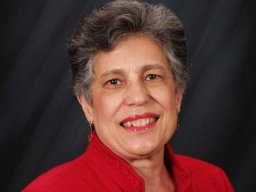
See Dr. Mona on the web.

UPDATE: Frontline Article July 25, 2018 about death toll from Flint Water Crisis, specifically from Legionnaire’s Disease.


Hidden in Plain Sight: The Tragedy of Children’s Rights

Hidden in Plain Sight: The Tragedy of Children’s Rights from Ben Franklin to Lionel Tate

Hidden in Plain Sight (2008 Princeton University Press) written by Barbara Bennett Woodhouse examines past and evolving perspectives on the human rights of children. Written for both students of law and the general American public, this book offers a solid methodology for how to think about the rights of children through the science of human development. It frames the rights of children by grounding them in basic human rights values of privacy, agency, equality, individual dignity, and protections.

Barbara Bennett Woodhouse is the L.Q.C. Lamar Professor of Law, and director of the Child Rights Project at Emory University. She is also the Donald H. Levin Chair Emeritus in Family Law at the University of Florida.

Woodhouse presents the stories of historical figures familiar to Americans (Louisa May Alcott, Willa Cather, Frederick Douglas, and Ben Franklin) as well as children she has known in her work as a legal representative, a law professor, and a witnessing advocate for children and families.

As the reader follows these lives, learning new insights about familiar Americans, the author describes her own journey to understanding of the problems and solutions society faces in adjudicating the rights of children in numerous situations such as living in child intolerant times, slavery, abandonment, violence, and juvenile justice institutions.

As I read each chapter, Woodhouse gave me ways to think about each child or teenager, how she thought about it and has since changed her mind or confirmed her understanding. The basic premise is that children’s rights in the U.S. are tragically wanting for just policies and deeper understanding of the ecology of child development as we understand it today. Woodhouse compares America’s policies and legal record on children’s rights to the United Nations Convention on the Rights of the Child (CRC).  It is the most rapidly ratified human rights convention in the history of United Nations, yet the U.S. has not joined the international community for fear that the rights of children might infringe on parents’ individual rights and undermine adult authority and control.

Woodhouse argues that the contemporary cult of individualism often contributes to harsh sentencing of children who have committed crimes and are held responsible for their actions by courts of law without due consideration of children’s developmental ability to understand the ramifications of their actions.

Hidden in Plain Sight asks readers to consider our American values in the light of the human rights of children. She evokes the language of the U.N. Special Session for Children:

A world made fit for children is a world fit for everyone.

With little personal foundation in legal study, this book read well for me as an unfolding argument by an experienced legal expert, a mother, and a legal guardian of children. I highly recommend this book to everyone who is concerned with the protection of children, and citizens who worry about the future we adults are creating for the children in our lives and around the world.

RELATED ISSUE: Juliana vs. U.S. – Children’s Constitutional Lawsuit.

Their complaint asserts that, through the government’s affirmative actions that cause climate change, it has violated the youngest generation’s constitutional rights to life, liberty, and property, as well as failed to protect essential public trust resources.


Healers of the Land

One of the best activities of my mature life has been an association with the Aldo Leopold Foundation and the Land Ethic Leaders. In 2012 I traveled to Baraboo, Wisconsin to attend a training to become a Land Ethic Leader in my community.

Leopold’s now famous essay on The Land Ethic is excellent guidance for our time.

The Land Ethic_A Sand County Almanac

I’ve continued to learn from leaders and staff at the Foundation but mostly from my fellow Land Ethic Leaders. John Matel is one who is blogging about the restoration of the Long Leaf Pine Ecosystem on his land. He is doing the careful, long term work of bringing fire back to the land to awaken long dormant seeds for the sedges and grasses on the land, grooming the understory and the pines themselves.

Read his latest blog and explore others to appreciate that there is a man, and many others like him, who are working on the long term solutions to our environmental crises. For example, read about the Panhandle Watershed Alliance and the Bream Fisherman’s Association led by an intrepid water ecologist and friend, Barbara Albrecht in Pensacola, Florida.

So, take heart that there are these menders and planters, stewards of land and the human spirit OUT THERE working against the tide of destruction.

Future Home of the Living God: A Masterpiece

Louise Erdrich’s Future Home of the Living God is a masterpiece of contemporary  American literature. After 16 novels, books of poetry, and memoir, and nominations for the Pulitzer, and winner of the National Book Award, this novel is a culmination of her storytelling, use of language, and imagination.

I’ve read and studied Erdrich’s works for at least 15 years, eagerly awaiting each new novel. Some have exceeded my expectations, others have not but are still excellent reads. But this one, THIS is an achievement — not just for her as a writer and artist — but for our times.

The writing is beautiful and flows with such ease, concise yet vivid description, that reading is seamless. The plot moves with tremendous pace and at times I was so full of suspense that I had to put my hand over the next sentence to keep myself from jumping ahead. As a woman with a daughter and sisters, and nieces, I was drawn to the main character, Cedar, who writes a diary for her unborn child — a record of a time when all that people assumed would never change was upended overnight.

If you are a woman of child-bearing age or a woman concerned about protection of women’s rights, if you are a a man who values women, a person of faith, or a citizen who wishes to understand this age, this time on earth, then you need to read this book. The earth is changing, we are changing.

In the dystopian tale, so prescient for today, she manages to still uplift the reader. She is a weaver of legend, personal destinies, and her own cultural perspective. Louise Erdrich manages to show us there is still hope, still good to be cherished and brought forward in all of us. Yet, Erdrich bravely portrays a potential future that threatens all we hold as good and right in human behavior, and the fate of the earth.

Hildegard of Bingen, Pierre Teilhard de Chardin, Saint Kateri Tekakwitha, scripture from the Bible, and Ojibwe elders all find voice in this story.

Find it at Birchbark Books, Erdrich’s independent book store; Indie Bound, or other online book vendors. Read the New York Times book review.

National Parks: Citizen Library

Carlotta Walls LaNier

In the previous post I described my joy in visiting the Central High School National Historic Site which preserves and tells the story of desegregation in Little Rock, AK. There I bought two memoirs, one by Daisy Bates (The Long Shadow of Little Rock), the other by Carlotta Walls LaNier with Lisa Frazier Page (A Mighty Long Way). [*This link includes an interview with Mrs. LaNier and an excerpt from the first chapter, and links to purchase a copy of the memoir.]

Both memoirs brought me renewed appreciation for the personal struggles of individual Americans striving for their civil rights, and the importance of parents being involved in their children’s education. Reading both books rendered a deeper understanding of historical events through the lived experiences of my fellow Americans. The NPS Interpreter was also a powerful communicator who brought history to life–another important function of our National Parks.

On my current sojourn in Kentucky, I drove to Mammoth Park –another National Park site–preserving and interpreting one of the world’s great natural wonders. In 2016 it celebrated its 200th anniversary!

Stephen Bishop Portrait

In their gift store, I headed for the books section. There I found a historical novel by Roger Brucker, about Stephen Bishop, a famous and early explorer/guide at Mammoth Park (Grand, Gloomy, and Peculiar). Stephen was a slave at the time his owners assigned him the duty to serve as a guide at the privately owned wonder.  It was already a favorite travel destination for wealthy and local people. The associated hotel inn for guests owned slaves who cooked and cleaned for guests. Charlotte Brown was a slave working at the inn. It was there that she fell in love with Stephen Bishop. They would eventually marry.

The novel’s story is told through the voice of Charlotte Bishop. The narration is based in part on Charlotte’s real story. Historical documents and testimonies from people who met and knew Stephen and Charlotte guided the author in writing this delightful book. (I am about half way through.)

My point is this: if we do not know history, how can we navigate the future? Each of these National Parks sites, and the books I found there, provide citizens with living history. Our National Parks are repositories for learning and recalling great moments and individuals in history.

Thank God for Daisy Bates

Daisy Gatson Bates

Thursday morning I was blessed to join a tour group from Baltimore’s Civil Rights Movement at Central High School in Little Rock, Arkansas. They are teachers, leaders, and powerful women traveling the civil right trail — next stop Memphis at the National Civil Right Museum at the Lorraine Hotel.

Great women have made significant contributions to democratic societies. Daisy Bates is one of these women. As our talented NPS Interpreter stated today, “If it hadn’t been for Daisy, there would not have been a Little Rock Nine or desegregation as it unfolded in Little Rock.”

Central High School, Little Rock, AR

Daisy Bates was the President of the Arkansas NAACP at the time of the Supreme Court ruling in Brown vs the Board of Education which desegregated public schools in the U.S. Nine children were identified by the Little Rock School Board to integrate Central High School. At the time, Governor Orval Faubus was not supporting the federal mandate and called in the National Guard to keep out the black students. Daisy realized that the nine teenagers would need protection and help and she organized meetings and support to help them on the first and subsequent days of their trials and tribulations. This story, and the life of Daisy Bates, is chronicled in her memoir, The Long Shadow of Little Rock, which I am currently reading. The individual stories of the nine students are each dramatic and many are told in their memoirs. What white students did inside the school to the nine black students, following integration, and the teachers who turned their backs, is horrendous and rarely told. I highly recommend that you visit this national historic site to reset your compass on American history and the long struggle of all American people for fulfillment of basic rights. As we see today, that struggle if still in progress. But, looking back to such pillars of courage and decency as Daisy Bates gives me renewed hope for a future all of us can make happen together.

This video of an interview with Rebecca Solnit, columnist with Harper’s Magazine, prolific author on climate change, environmental issues, and other culturally relevant issues, is a clear point for those of us who feel disoriented by the sweeping changes being made in D.C.

https://hot.dvlabs.com/democracynow/360/dn2017-0328.mp4?start=2758.0

From this interview on Democracy Now on March 28, 2017, this excerpt is most important for those of us who are engaged in resisting the dismantling of hard won environmental protections and action on climate change. I recommend listening to the whole interview at the link above. Solnit has a comprehensive perspective on “where we are” and what is the work now.

What concerns me, after 30 years of activism, is that a lot of people will think, “Well, we did something today, and we didn’t see results tomorrow.” So one of the things I’ve been writing about for The Guardian and elsewhere is just trying to remind people that this is a long process, that we may be in, you know, the early stages of really redefining what democracy is going to mean in this nation, reforming the systems that were already moribund and stagnant before—you know, Trump is a consequence of a dysfunctional system, not a cause of it. So we have enormous transformative work to do. And people are actually doing it. If we keep at it, if we’re smart, if we’re skillful, if we’re more passionate about solidarity than the kind of perfectionism of nitpicking small differences, I think that extraordinary things could happen, not that they’re guaranteed. It depends on what we do. But it’s an exciting and even exhilarating moment, as well as a heart-rending and terrifying one. And those things can coexist.

Into the vacuum: China

NX_whitehouseClimate change is real, advancing, and draining the world’s resources country by country–and causing tragic migrations of families across the earth in search of places where people will take them in. This is just the beginning of woes should the world’s leaders not act decisively to stem carbon dioxide emissions.

The spectacle of our times is awesome and terrifying. Anticipating the ascension of a world leader who denigrates science and promises to focus America’s interests inward, world leaders at the latest global summit to implement the Paris Climate Change Accord have already moved on without us. China quickly stepped in to realize the benefits of leading other countries toward a fossil free world community.

P.S. America: the green economy is leading in economic sectors as our new leadership prepares to dig more coal and suck more oil out of the ground.

Have we entered into a new paradigm of Selective Science? We believe in science when it comes to curing disease, or making weapons, or making us money. But, selectively we denigrate the agencies charged with studying and protecting the earth–the planet from which our lifeblood flows. Does that make sense, I ask you?

How would Americans feel if the world’s leading countries imposed trade restrictions on us for our irresponsible behavior? Tables turned? How would it feel to be the cause of suffering across the planet due to our lack of participation in reducing emissions? I hear a refrain, from another misled politician: Burn Baby, Burn. That will come back to haunt the source and us if we do not realize our responsibility to greater humanity and to our children and generations to come.

Americans must be vigilant like in no other time before in our history. We must oppose any policies that destroy the democracy and tear asunder our fragile international relations. We must recognize our responsibility to continue to be an integral member of the international community–especially now.

VITAL SIGNS OF THE PLANET


The Path We Choose

Paths We Trek
Paths We Trek

Two roads diverged in a yellow wood,
And sorry I could not travel both
And be one traveler, long I stood
And looked down one as far as I could
To where it bent in the undergrowth;
Then took the other, as just as fair,
And having perhaps the better claim,
Because it was grassy and wanted wear;
Though as for that the passing there
Had worn them really about the same,
And both that morning equally lay
In leaves no step had trodden black.
Oh, I kept the first for another day!
Yet knowing how way leads on to way,
I doubted if I should ever come back.
I shall be telling this with a sigh
Somewhere ages and ages hence:
Two roads diverged in a wood, and I—
I took the one less traveled by,
And that has made all the difference.

Who Owns the Water, Air, and the Land?

As the people gather in solidarity with the Standing Rock Sioux Nation, and the voices of Native American and justice activists are heard, I want to consider the issue at hand as fundamentally a land ethic issue.

Energy Transfer Partners and Dakota Access LLC are in the process of hooking up an extended pipeline that will connect existing crude oil pipeline to a tunnel pipeline to shunt crude oil to Illinois. The tunnel pipeline is planned to go underneath the Missouri River, and Lake Oahe–near the point where the Standing Rock Sioux Nation’s reservation uses the water for drinking water and irrigation. They are a poor nation whose water infrastructure is aging and constructed in such a manner that if a leak were to occur, it would essentially shut down the water supply for the people at Standing Rock Sioux reservation. Read More: dakota-pipeline-article from Inside Climate News.

The truth is that water, land, wildlife and people can not be owned. Each has the inalienable right to exist free by virtue of our common creation. What we can do is equitably share and protect resources to ensure that all people and wildlife have basic needs fulfilled within the limits of the land to provide them. In other words, human needs have to work within the ecological ability of the land and waters to provide them. This requires an ecological awareness.

Aldo Leopold advanced a land ethic in his writing, as he grew in his understanding of what a community really is:

Leopold understood that ethics direct individuals to cooperate with each other for the mutual benefit of all. One of his philosophical achievements was the idea that this ‘community’ should be enlarged to include non-human elements such as soils, waters, plants, and animals, “or collectively: the land.”  Aldo Leopold Foundation

Should the Energy Transfer Partners and the Dakota Access Pipeline operation have the right to build a pipeline underneath Lake Oahe and near the Missouri River that flows past the land  of the Standing Rock Sioux Nation? And will flow through four states and other communities?

The 1134-mile pipeline will carry 500,000 gallons of crude oil each day to Illinois. Seventeen banks stand to profit and are advancing money to make it happen.

Three U.S. agencies warned against it, but the U.S. Army Corps of Engineers used a corporate report from Dakota Access Pipeline to rule in favor of the construction. After a federal judged ruled in favor of the pipeline going forward, the U.S. Department of Justice and the Interior, and the Army together enacted a stay on that decision so that the EPA can reassess the original assessment of its safety.

As climate change impacts the world, should our society support continued drilling and transportation of crude oil to be burned and thereby increase warming of the planet and acidification of oceans? Of course not.

In the Southwest, where access to precious water will bring municipalities, tribal nations, corporate interests, and the U.S. government into negotiations over water rights, what values and ethics will we use to determine who gets what?

It is a question we must answer now.

Read about the proposed Dakota Access Pipeline