The River People – Chapter 9

Ancient Songs

I learned more about David Tejano on this trip. We met again at The Crossing restaurant. David brought his wife, Sharon, and their three children who were 8, 10 and 14. I learned that David worked a 14-hour day as one of three social workers. I observed some friction between David and his wife in their exchanges about his busy life. Sharon explained that David was a spiritual leader as well, a Bird Singer, and he participated on several committees.

The kids were quiet but lively. I told Sharon about my job at the university as an environmental educator, and how I hoped that we could organize an interesting project for youth. The older boys made suggestions, mostly about sports, and the youngest, a girl, wanted to do an art project. I was glad to see that at least children thought it was a good idea.

We ordered. David went for the fried foods again for which Sharon admonished him and patted his round stomach. Later he slathered butter on his corn tortillas as Sharon looked on and he laughed.

“So, I managed to get a small grant for whatever project the River People may wish to do,” I said, changing the subject.

David nodded approval and said that would be good for the meeting with the elders, to show we had some skin in the game. I marveled at his use of language and how he seamlessly managed the two worlds he navigated with apparent ease.

“Do you know what the elders have in mind?” I asked.

“Not a clue. They don’t share much with me either.”

I laughed. “That makes me feel better.” Sharon smiled in recognition of my position. David had filled her in on the Tribal Chairperson’s welcome.

“That was brave,” she said.

“Self-defense, I believe!” I said.

“You were honest. That goes a long way among our people.”

David filled me in on where to meet him as we parted ways. I took a carton of flan back to the hotel. That had to be the best dessert in the world. A caramel custard to rival my mother’s egg custard. I was feeling more comfortable in Yuma and with the idea that I might be able to establish a lasting relationship with this amazing nation of people. They were still present, and they were reviving their cultural traditions. But much had been lost.

~~~

I met David at his office. It was the first time I noticed how many people, mostly men, were in wheelchairs . . . amputees from advanced diabetes. They stared right through me or did not look anywhere at all. I felt very uncomfortable there in the waiting room of his building. The weight of what has happened here is manifest in these people, sick and depressed about their conditions.

David greeted me about ten minutes late and apologized. By my demeanor, it must have registered how difficult that time had been for me. I could not shake a profound sense of guilt.

“Don’t go down taking the sins of the fathers upon you,” he said as we walked down a long hallway into the sunlight at the back entrance.

“I can’t help it. Our policies, our theft . . . I am struggling with it.”

“Well, then do something about it. It’s not like it’s over,” he bluntly stated. I looked up at him and saw that he was smiling.

“I guess that’s why I am here, though I am not sure how a little environmental education program can make a difference.”

“You might be surprised. Some things get done by just continuing to show up.” David was wise beyond his years.

~~~

I was pleasantly surprised to join the museum director and elders at the new cultural center. It was small but beautiful, featuring the art of the River People and their history and material culture: clothing, fishing and hunting implements, war clubs, and many other everyday objects from times past. The director was a tall stately woman dressed impeccably in a long flowing skirt and jacket top, with dramatic makeup and jewelry. Her long dark hair was pulled back on both sides with beaded hairpins. She looked almost Asian, with very pale skin and watery grey eyes. Her assistants, though younger, presented themselves as grandly as their director. A breakfast buffet with coffee and juice had been prepared. Compared to my last meeting with the elders, this felt closer to how I greet guests at our offices in Tempe. However, later I was told by the director that the cultural center and museum always prepare a lavish spread for the elders. That was a reality check. This was for them, not me.

David left me there to mingle in the all-women gathering. He said he would return at noon. I would miss his supporting presence. I gulped and joined the group. I felt too casually dressed compared with the museum crew. My culture’s ways of relating were varied, and my workplace had gone casual. For a moment, I wondered if I should upgrade how we do things in the almost all male Southwest Center. As a daughter of a military officer, my mother had taught her girls how to dress to show respect, but then the women’s liberation movement shattered that tradition. The culture of casual dress at the University sealed the deal. I made a mental note to clean up my act on the next visit.

Marion, the director, introduced me to her assistants and then invited the elders to the table, suggesting her assistant could also bring them a plate if they preferred. I waited with her as the elders were served; then she indicated I should go next. After we all had our plates and beverages and returned to our seats, which were arranged in a circle, we simply ate in silence with an occasional comment from someone about the food, or an observation about the beautiful morning, and so on. It was an old fashioned social meeting among women. I had not been in on a scene like that since sorority days in college with tiny sandwiches, frosted demi-cakes, and punch.

After everyone finished and the plates were collected, we began a formal meeting with the elders. Marion led the way.

“The elders have discussed the idea of a project for youth. They think it might work well if the children learn something about gardening in the old way and then learn the names of the traditional plants and farming practices. It could also be a way to add to the language recovery efforts.” She paused and looked among the elders to make sure she was communicating what they intended. “Do any of our elders wish to comment?” she asked.

A woman named Georgina spoke up. She had wavy, graying hair, shoulder length, fleshy cheeks with many wrinkles, and dark merry eyes. She was rotund and wore a flowing rose-patterned dress over her large bosom and belly. She was wearing support hose and heavy black orthopedic shoes. Her ears were adorned with long shimmering pink and white beaded earrings.

“Back when I was a little girl, we still farmed in the mud of the river after the flood was finished. The seeds we planted are the old ones, the ones that grow well here.” She pointed toward the landscape visible through the large glass windows in the meeting space. “Most of our kids today have neither seen nor tasted the native melons, beans, and greens that were all we had to eat back then. I think that kids could grow some of these old ones in a garden near the museum.” She looked over at Marion.

Marion was quiet for a while. Another elder spoke up. “It will be a challenge to interest the teens; they are too far into the modern culture to care. But the little guys might want to do it.”

We sat in silence while thinking about this idea, to start with much younger members of the nation.

Another elder spoke. “Teens are lost, you know. Many are already showing negative attitudes.” She was a little younger than the other elders, slim by comparison, with beautiful hands, Vicky noticed. “I am thinking we should ask them to help the little guys. Give them a leadership role. They will learn along with the kids. Saves face.”

That made the women giggle.

“Miss Greenway, do you think the university would support such a project?” Marion asked.

“Yes. I think it fits very well with the intent of the center,” I said. “Learning the native plants is directly connected to land and water and will be a wonderful, fun . . . a delicious way for children to learn at the same time.” Then I decided to announce that the center had agreed to invest $5,000 in this project. “That should be enough to buy whatever you may need and have some money left over to support the ideas the kids may come up with.”

There were murmured comments among the elders. Marion cautioned it would only be successful if kids wanted to do it. She suggested that the project be based in the museum programs and that the museum staff manage the money. The elders and Marion had already determined a place for a garden in their original blueprints for the museum.

That seemed to be a good way to implement it, so I agreed.

The River People – Chapter 4

Chapter 4

Child of the River Spirit

1500 – 1535

The water was refreshing though warm from the late summer’s heat. It was the Moon of the Early Harvest, and I was full of baby, ready to give birth any moment. This would be my third birth. I knew what to do. My mother and sisters would be by my side to help me. I was not as fearful as I had once been.

My friends were bobbing with me above the middle of the riverbed when the first sharp pain struck; I felt my whole body quicken and go into action. I shouted to my friends and we rushed to shore as fast as we could swim, but I felt the baby slipping from between my legs! I screamed, and we all frantically dived to find the little one below the green water.

Feeling a small form brush against my leg I dove under to see my baby turn toward the river’s flow and move his tiny arms and legs just like a frog! I snatched him up and he gasped as he rose into the air! He wailed loudly like a fish might if it could when pulled from its water world. We were all amazed as we swam slowly to shore with my friends surrounding me and my baby so he would never slip from us again! From that day forward, we understood he belonged to the river spirit. And today, look at him. He is our tribe’s Navigator.

~~~

            This is how my mother related my birth story, repeated from when I was young even until now, twenty summers later. I confess, I never tire of hearing it because it reminds me of my purpose. After I became old enough to accompany my brothers and father on river trips down to the Big Waters, I found that I understood the river better than anyone, but I do not know how or why. It is a gift from the creators I believe.

This is the red river of our origin. It can rage and then calm; it can be red, black, grey, green, or golden. In the Moon of the Melting Snow the river carries red swirling silt down into the valleys and low desert and outward to forested riverbanks, depositing it as water receded.

Below us the river meanders, twists and turns back on itself like a coiled snake. On it goes, breaking into many streams and bayous that spread out as far as we can see. Within its form are shallows and deeps, and places men disappear in soft mud. Near the big waters, the rice grows along the way. We dig up clams and abalone, net crabs and shrimp, and marvel again at the abundance of the world around us. We harvest with respect for the spirits who guard the land and water and fill all things with life. We net turtles from the Big Waters and roast their meat on the beaches. The multicolored sparks from driftwood gathered by children fill the sky above our fires, and we study the black sky and shimmering stars, long into the quiet night. We read the heavens and tell ancient stories from elders who passed them down from time immemorial. We sleep in deep restful bundles, our feet to the fire, until the morning sun awakens us, and the screech of the shorebirds picking through the remains of our evening meal makes us rise to chase them away.

We remain on the ocean and lower delta of the river for weeks, watching the river run itself out to sea. When we return upriver to our ancestral fields, our work begins to plant the seeds we have stored and to tend them to harvest.

I pole and probe the river bottom to determine the best routes for my people. Like a game, it changes with each season, challenging me to observe its moods in currents, speed, and colors. As we pole on rafts to the sea, I watch for deer people, the otter tribe, and clans of feathered ducks in every shape and color. I collect the feathers dropped in my path, and I give thanks for the swimmers, crawlers, and stalkers that are also my family. We watch for the mountain lion and jaguar that come into these wooded paths along the river to hunt the same game we seek. We are stalkers all.

My days are spent in this way, but when the cold season comes, and the river is resting, I find quiet rest inside our hut with the fire reaching toward the smoke-hole, and all of us making something with our hands and telling stories to entertain us.

Until my mother joined her family on the other side, I always heard the story of my birth. I am the Navigator of my tribe.

In a far distant time …

Albert Pope was already on the river in the cool of the morning having launched his small fishing boat in the gray dawn. He allowed the slow current to carry him south, past the RV park with its trailer city. The gauzy traces of last night’s moon lingered above the horizon. Albert had spent the night outside of his own trailer on the rez. He’d told stories to his family and neighbors about the old times until one by one they each disappeared to lay their heads upon a pillow and dream. Albert had stayed up all night, watching the golden moon’s light illuminate the sky while he listened to the desert’s nocturnal creatures flit and scurry about. Going fishing was a natural extension of night to day.

Albert sat in quiet contemplation watching where his fishing line cut into the green water. He focused on the wedge-shaped pattern on the surface where his line plunged down. A quiet man in his late sixties, Albert had outlived most of his peers. The average lifespan of tribal men was only forty-eight years. Diabetes, alcoholism, and heart problems took them before their time. Albert had quietly watched as generations of Yuman men gave in to depression and anger—turning to alcohol or drugs— to dampen the pain of living in two worlds.

Suddenly his concentration was broken by a strong tug on the line. He pulled back reflexively. The fish went wild beneath the boat. Leaning forward, he peered into the opaque water where he glimpsed a brief movement—a pinkish-gray flank illuminated by the soft light of the rising sun. He held the line taut, reeling it in slow and steady. Beads of sweat rolled down his forehead from where his broad Stetson hat met his dark skin. Finally, he lifted a large tilapia out of its watery world. It twisted and turned in protest, eyeing him as it flapped its tail hard on the boat’s aluminum shell. Albert removed the hook from the fish’s thick lower jaw. For a trash feeder, the tilapia was a beautiful creature, he thought. It briefly glimmered in rainbow colors before the air dimmed its radiance. He thanked the fish and tossed it into a five-gallon bucket to join its ill-fated cousins. Then, he prepared another line to set out.

Albert felt a great deal of satisfaction that he could still feed himself and his neighbors. Drifting downriver, he thought about the stories his elders had told about the river, how it once ran red and wild, chockful of six-foot salmon “so numerous you could walk across the river on their backs.” He had long imagined the wildlife, thick forests and gardens that once lined the riverbanks. He felt a pang of sadness that long ago hardened into a permanent knot in his center, a steely resistance to a lifetime of mourning the demise of his people and a once-great river. Yet both persisted, outcome uncertain.

Lower Colorado River as it meanders to the great delta and the Sea of Cortez.

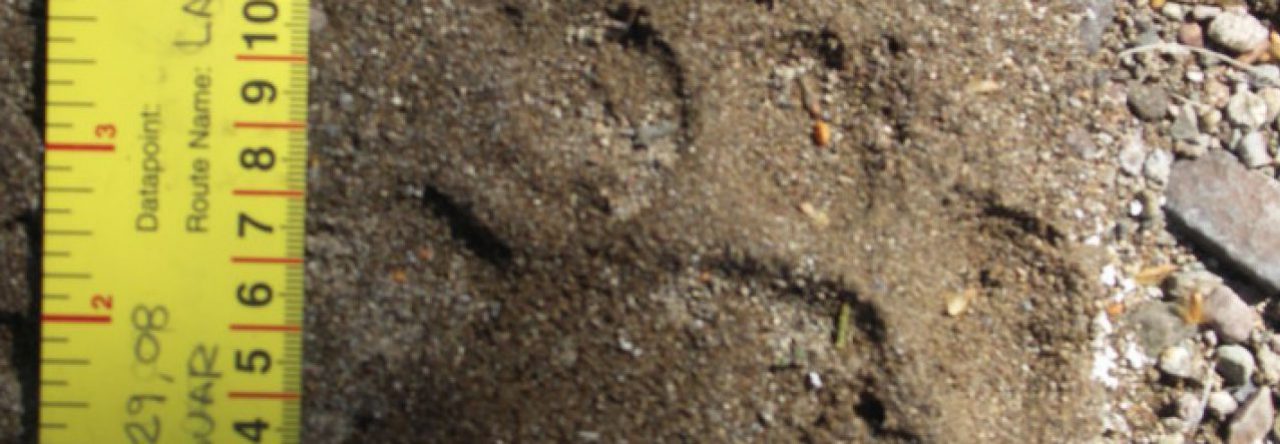
Why Is a Jaguar a Character in Threshold?

Jaguar Track

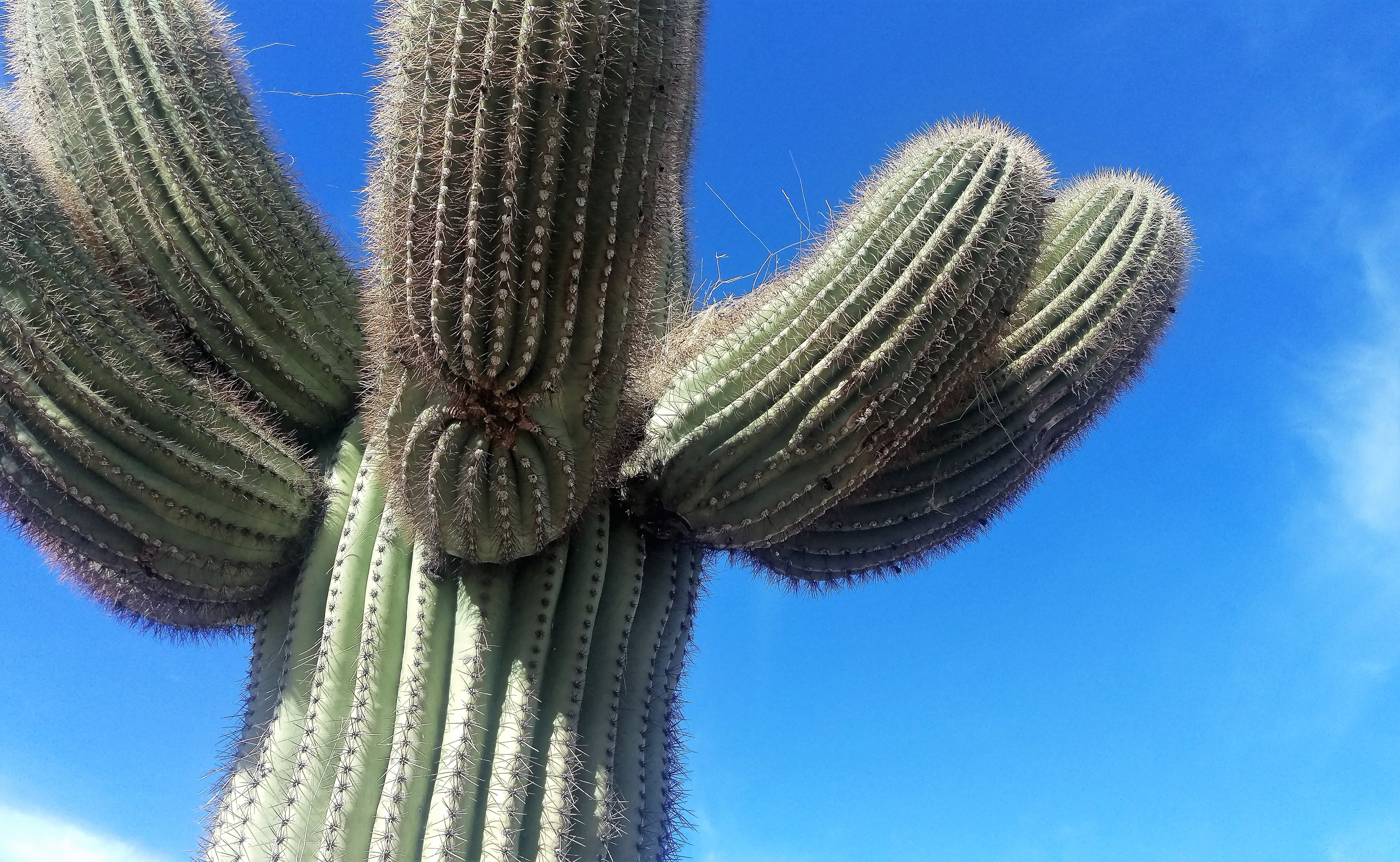
To tell a story set in the Sonoran Desert, which occurs in only one region of the world, we must include the iconic species of plants and animals who are its defining features. Their presence maintains the balance of life and contributes to the great beauty of this desert landscape. The saguaro cactus is its signature plant life, who some believe evolved from a tree in the tropical rainforest that dried to a savannah and then to a desert over thousands of years.

Saguaro in Tucson Arizona after a rainstorm. Its long shallow roots absorb water efficiently after a heavy monsoon rain.

Threshold tells the stories of many desert plants, trees, insects, invertebrates, and mammals. One strategy for conserving water is to be active at dusk and dawn. These animals are said to be crepuscular (as contrasted with nocturnal). The jaguar is thus, and also nocturnal. Panthera onca is the third largest of the cat family with a bite more powerful than the tiger or lion.

I named the jaguar character in Threshold. Duma. With the risk of personifying a wild animal by human standards, I tried to stay strictly to the known biology, behavior, and observed lifeways of jaguars in the Sonoran Desert. In my story Duma obtains his name from first graders in Phoenix. You’ll have to read the book to learn how that came about. Below you see another feature of this remarkable character: he is an albino, a White Cat, causing local observers to refer to him as the “ghost cat” as he moves about the fields and pastures of farms and ranches, terrifying livestock and infuriating their caretakers.

Duma is my writer’s device to represent wild nature and the impact of a changing climate and human activity on his lifeways. His story also allowed me to describe the labyrinth of environmental and conservation laws on both sides of the border and how Duma becomes, literally, emmeshed in them. He crosses the U.S. -Mexico border while roaming his natural range which stretches from Sonora in Mexico north to Phoenix in Arizona. Duma is caught up in the social and political turmoil.

It is important to me to consider the lives of other species who share our habitats in what is a human centric world.

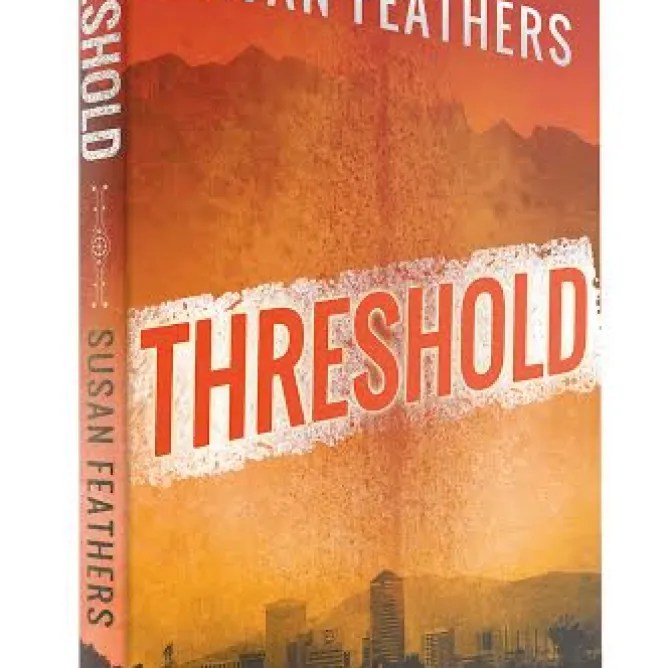
Go to Terrain.org to read or listen to more of Threshold

Remembering Origins

More conversation with Amitav Ghosh, author of The Nutmeg’s Curse on Emergence Magazine brings up similar themes incorporated into Threshold, a novel about climate change in the Southwest. In it, I layered the rich cultural endowment of the Tucson area, with ancient Indigenous and current day Native Nations wisdom, and Mexican American land and agricultural practices that have and continue to shape the local zeitgeist. But, like most communities in the Southwest, capitalistic systems drive commerce rendering the living Earth mute. All these ways of living mix together yet one has dominated the political and economic forces, imperiling Tucsonans to climate emergencies.

Listen to a chapter from Threshold as a major character of Mexican descent, Delores Olivarez, takes a hike up “A” mountain observing the changes in the Tucson valley that trace all these cultural ways of knowing. Thanks to Terrain.org for publishing this chapter of Threshold.

How does your river flow?

Of Time and A River

I know the Colorado River where it flows through canals across sweltering fields of lettuce, and where it runs under highways, past skyscrapers and homes. It spreads over shallows where it rises into a cerulean sky to join with clouds.

Yet, the ghost of another river abides here, too.

My first encounter with the Colorado River occurred as I travelled over the Laguna Mountains in California into the Imperial Valley of southern Arizona. My body understood before my brain that I had entered a place of tight margins.

It was early March. I thought the region would be cool. As I reached the desert floor—a descent of 6,000 feet—the temperature rose and the balmy sea air from which I had emerged, dried into hot metal fumes off the hood of my truck. Air streamed hot and unfriendly past the open windows. Yet I was surrounded by a surreal sight of sprinklers throwing arcs of water over row upon row of broccoli and lettuce. Discovering farms in a desert initiated my long meditation on the conundrum of how 40M people came to live in a place where water is the limiting factor, where life balances on a sharp edge.

At the time I did not know that I was meeting the river itself.

In Yuma, Arizona I instructed children descended from the River People who were among my middle school students. Through them I learned the long history of human settlement along the river. For them history reached back thousands of years. Their culture observed the river’s spring floods and tranquil summer flow by moving to the hills when it flooded, returning as it receded to plant crops in the flood plains. They were expert fishers. Legends of people walking across the river on the backs of abundant fish persist in memory. They hunted game in the mesquite forests and among the reedy banks of the river developing a sustainable technology and material culture.

When the first Europeans began to explore the area, one tribe alone had an estimated 20,000 people living above and below what is now the U.S. – Mexico border. Today, desert people abide in and around current day metropolises of the American West. The old cultures knew how to live well on the land under their feet—knowledge that persists to this day.

Read about the history of the Cocopah Nation in Yuma, Arizona.

Fast forward to the 20th century. The United States sent John Wesley Powell to answer a question: “Could the West be farmed like the eastern half of the United States?” Powell made three expeditions to determine the feasibility of farming and city-making in dry lands. A scientist, he studied the watersheds, which was logical. He consulted native people, farmers, and cattle owners. His answer to the lawmakers was not popular. He reported that any development in the west should be done according to the watershed and a set of rules. Annual rainfall for replenishment of ground water would provide the limitations for growth. For example, if a farmer buys land in dry country, he should pay to bring that water to his enterprise and observe the natural recharge limits.

Powell mapped the available water sources. He had lost an arm in the Civil War making his accomplishments even more astounding, including navigation through the Grand Canyon by raft and boat when the Colorado was still running free and fierce.

Congress and colluding business tycoons paid no heed to Powell’s report (1879), lusting over the profits. They asserted that the country could prevail over nature, somehow, someway, with massive dams, canals, and all manner of concrete and steel. The river became the locked and labored one that I came to know. Now, a record drought, dwindling ground water, and water wars over a jerry-rig of litigation known as the Law of the River, exhibits their folly. Forty million people face a doubtful future.

Powell was right.

What gives me hope is the knowledge that the Colorado River Indian Tribes exist today. Could they lead us out of this crisis? Help us reset to a new relationship with the river?

Over my years of meditating on “the water issue,” I have imagined that not too far in the future children bicycling through abandoned roadways, past forlorn and silent high rises, might ask their parents, “What place is this? What happened here?”

Preposterous, you say. What could be more so than what we created in a land where life exists in narrow margins? A river has a body and a spirit that is interrelated with ours and all living creatures that imbibe its life-giving waters. That is not fiction but science and lived experience. These principles can never be violated without consequences. Eventually the river dies and all life dependent upon it. Desert peoples observed, experimented and then fit their lifeways to the river’s way. That is what we must learn to do, using our advanced technologies to mimic nature’s circular systems that regenerate energy and recycle materials.

Monsoons over Sonoran Desert – Photo by Susan Feathers

When I moved to Tucson, the first night there I attended a poetry reading by a Tohono O’Odham elder who described her childhood living in a one-room adobe far from the nearest river. Ofelia Zepeda’s nation captured water from rainfall during the summer monsoon. The people practiced “dry” farming in which no irrigation was available, only rainfall and gratitude. She told us how the old women pulled the rainclouds from the sky with their harvesting sticks. I was moved by her beautiful poems and stories.

Upon walking to my car, thunder rolled above and a deafening crack of lightening played in a vast display across the heavens. Dark monsoon clouds released buckets of rain that filled streets, making gullies in the soil, and immediately chilling the air. It was July and the monsoon rains. For me it was a baptism, an initiation and welcome to the real and living desert.

Places 3

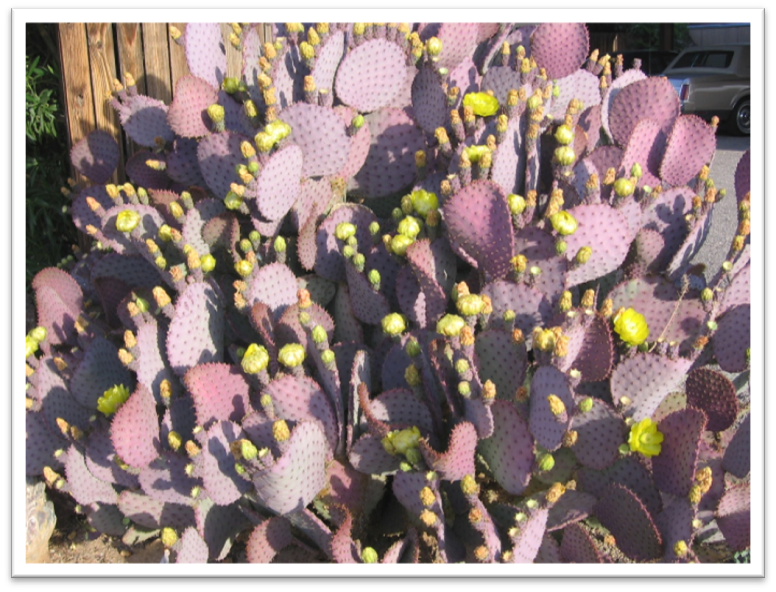
Prickly Pear Sonoran Desert

Moving to the Colorado River Valley in 1990 began a great period of personal growth and learning. Teaching children of migrant farm workers (who harvested lettuce in view of the classroom windows) and children of Colorado River Indian Tribes who lived on near-by reservations, I quickly learned the harsh realities of the cultural landscape as well as the natural landscape on which our life science lessons focused.

The following blog posts are three memories from living in the desert (1990-2008).  The first is my initiation to the land’s elemental beauty and its stark realities. The second and third memories illustrate lifestyles in two desert cities with very different perspectives on how to live there – Phoenix and Tucson.

Because I was introduced very early in my time in Arizona to indigenous perspectives, I was able to more acutely measure the gap between native and contemporary points of view about the human relationship to nature, the meaning of community, and the underlying values that are at the roots of how cultures develop.

By getting to know Cocopah families – families whose nation was separated by the U.S. Mexico border and whose way of life on the Colorado River was fractured by the damming of the river – I witnessed the social, financial, emotional and spiritual devastation wrought by being unable to live by the values one holds dear and by which one knows oneself.

Another important stream of influence on my thinking was the environmental movement in which I was actively engaged through education, a daily endeavor that caused me to read the history of these great cities and to get involved in local citizens movements to create more sustainable ways of living there.

While we are going about our daily lives, critical problems such as over-drafting groundwater continue. Indigenous values that have been pushed to the background are emerging into the foreground. Are we paying attention? What can we learn about place and the art of living from the first people of a place?

I understand, now, why spiritual seekers often go to desert lands. There is quietude and mystery. Stories are hidden from casual view, unspoken but exerting their presence. The quest then is discernment.


The Tucson Connection

My romance with Tucson seems predestined.  This long relationship began in my childhood with Dad’s assignment to Davis Monthan AFB.

Fifty years later, I moved back to Tucson to accept a position as Director of Education at the Arizona Sonora Desert Museum. Little did I know that a future friend and writing fellow was finding her way to Tucson from her home in the Republic of Columbia, in northwest South America. We never met while we lived in Tucson but we would later share our love of the desert in a more tropical habitat.

That is because both of us left Tucson and ended up in Pensacola, Florida. Vicki is a member of the Portfolio Writers’ Group, one of many writing groups in the West Florida Literary Federation. She is a poet and talented painter who not only continues to inspire my writing, but who, by virtue of membership, became an early editor of drafts of  the Threshold manuscript.

For me it was wonderful having a talented writer/friend who knew Tucson and is bilingual. She was able to spot problems and to provide correction to Spanish terms and translations. (Vicki is a Spanish instructor at the University of West Florida and provided instruction for students at the University of Arizona while in Tucson.)

It seems that wherever I go, Tucson follows along. I am so glad because it is a community that won my heart. I even bled for it (see previous blog). That initiation got buried in my unconscious. Good thing. I might never have returned!

My Tucson "Connection"
My Tucson “Connection”

See Victoria’s new book of poetry including her gorgeous painting.

Right of Passage in a Monsoon Storm

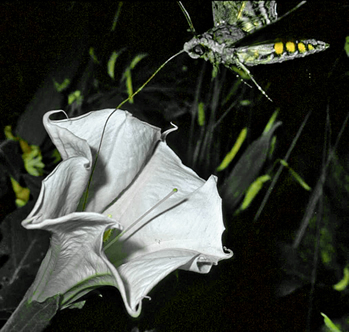
moth-daturacroppedWhen I fist moved to Tucson, Arizona, I was new to the high desert. Biologists refer to its flora and fauna as “lush”–a term that up until then I would not have chosen for a desert.

Through colleagues at the Arizona-Sonora Desert Museum, I learned about a poetry reading at University of Arizona by Dr. Ofelia Zepeda, 

Dr. Zepeda is a member of the Tohono O’odham Nation, a lifelong desert dweller, a linguist, and cultural preservationist. In 1999 she was awarded the MacArthur Fellowship for her work creating a Tohono O’odham book of grammar. However, Dr. Zepeda’s poetry is what I wish to focus on and how the chance encounter with her performance in the first week of my residency in Tucson led to my deep feeling for a place and community as culturally rich as any I’ve known.

The poetry reading took place in the circular auditorium (kiva) in the American Indian Studies Department at U.A. In the large room with rows pitched down toward the lectern in its center, a soft voice rose and fell. Dr. Zepeda’s was reading from her book, Ocean Power She spoke in O’odham and English, alternating between each as she read.  I closed my eyes to listen to the language of desert communities at Tucson’s origin.

She explained the relationship of her family and community to rain in the desert, its precious nature, and how, after the long hot, dry foresummer, the first monsoon clouds gather, and people point and wait for the first cold dollops of rain.

After her lecture, I walked to my hot, dusty car to drive home. Not long after I was on the road, a massive monsoon cloud, as black as coal, threw lightening strikes like explosions on the ground, and rain burst from the sky, falling n buckets, cleansing the car and blinding my sight. I had to pull over. Flood waters gushed around drains, cars stalled as the water rose, but all the people smiled behind their windshields or stood outside their vehicles with open arms, letting the storm soak them to the bone. It was a celebration, first delivered through Dr. Zepeda’s poetry and, then, by the monsoon itself.  I believe to this day that hearing about rain on the desert in O’odham made the impact of the storm much deeper for me. It was a true rite of passage. Listen to a short video about Dr. Zepeda.