Can a city make its own energy?

The novel Threshold explores possible outcomes in Tucson, Arizona as climate change continues to dry out and heat up the Southwest.

The National Climate Assessment targets heat, drought, and insect outbreaks among other impacts for the Southwest. Surface water supply is expected to decrease as snowpack and stream flow decrease.

Projected regional temperature increases, combined with the way cities amplify heat, will pose increased threats and costs to public health in southwestern cities, which are home to more than 90% of the region’s population. Disruptions to urban electricity and water supplies will exacerbate these health problems.

Threshold tells a story about characters caught in a spiraling heat emergency and black out that stuns the city. South Tucson, a city within the Tucson city limits, rises to become more self-reliant through a solar field and solar gardens.

Yesterday, Reuters published an interesting review about changes in solar industries, showing how big solar (large scale solar fields for example) are becoming cheaper and more efficient than roof-top solar.

Many trace the tipping point for utility-scale solar to a 2014 announcement by Austin Energy that it would buy power from a new 150 megawatt solar plant – enough to light and cool 30,000 homes – for 5 cents a kilowatt hour. At the time, it was a record low price for solar power. Since then, projects have brought the price below 4 cents a kWh.

In Tucson, the  Bright Solar program offers residents an opportunity to buy blocks of solar power from a solar field. When the grid goes down however, how can residents continue to generate power if they do not have their own home or neighborhood solar panels and battery storage?

It is important to think carefully about these new technologies and the opportunities they offer people for more democratic ownership of common resources. See the concept of Solar Commons.

As solar power becomes cheaper to generate, will everyone benefit? How can a city and utility work to make solar power available to everyone? As the solar industry develops, how can communities make sure their residents have access to new training and skills necessary for employment in the solar power industry?

In Threshold, South Tucson answers those questions and solves another challenge: the high rate of unemployed youth in their community.

 

Tucson – My Military Life

Tucson became my home from 1999 to 2008, but I had been a resident in the Old Pueblo when I was just a babe. Dad (Major E. B. Feathers at the time) was stationed at Davis Monthan Air Force Base in Tucson. I was 2 years old when we moved there. I remember photos of my mother, sister and me in sundresses and sandals in front of a house with a large shaded porch, cacti and sand.

Little did I know that I would one day return to Tucson as an adult. When I was just getting started in life, I had an early encounter with the desert by falling into an Opuntia (prickly pear). Mom recalled she was pulling needles out of my arms and legs for a month.

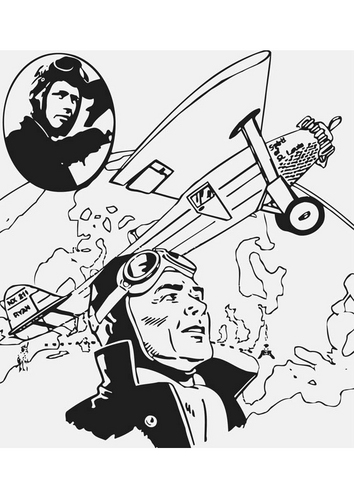
Charles Lindbergh dedicates Davis Monthan Field: September 23, 1927

In 1925, Tucson’s City Council purchased 1,280 acres of land southeast of town to relocate the city’s municipal airport. Unknown at that time this new site would become the nucleus of Davis-Monthan Air Force Base. Six years earlier Tucson had the proud distinction of opening the first municipal-owned airport in the nation. Located four miles south of the city on Nogales Highway, the present day location of the Rodeo Grounds, the 82.64 acres was designated Tucson Municipal Flying Field after several name changes. Following years of stalled negotiations with the War Department, city planners elected to purchase the larger site and transfer airport operations in hopes that the military would reconsider establishing an aviation branch in Tucson.

Construction at the new site was completed in late 1927, and on September 23 of the same year, Charles Lindbergh, who months earlier crossed the Atlantic in the “Spirit of St. Louis”, formally dedicated the site in honor of Lieutenants Samuel H. Davis and Oscar Monthan, two Tucson aviators whom died in separate plane crashes after World War I. The city shared another proud moment with the opening; Davis-Monthan Field immediately became the largest municipal-owned airport in the nation.

Military presence at the new Davis-Monthan Field began October 6, 1927 when Staff Sergeant Dewey Simpson transferred the military aircraft refueling and service operations from the old municipal airport. He also brought something very unique with him, a log book that was signed by the field’s patrons. Early aviation greats such as Foulois, Arnold, Spaatz, Vandenberg, Earhart, and Doolittle took the liberty of signing the registry as a record of service. (Currently the Registry is on display at DM’s Base Operations). With only two military personnel assigned to the field, negotiations between the War Department and Tucson would remain at a stand-still until 1940.

My Dad was stationed at Davis Monthan AFB in 1947. He had just rejoined the USAF after it formed from the Army Air Corps after WWII ended. Dad flew B-29s in the Air Force. Davis Monthan AFB began its revival after the war as a location for the successful Super Fortress (B-29 Bomber). The very dry air provided an ideal location to store the Superfortress,  and other air craft accumulated during the 2nd World War in the desert.

In another amazing connection with Tucson, the daughter of Dad’s co-pilot was instrumental in locating the Z-49–the B-29 my father and her father had flown 35 missions over Tokyo from their base in Saipan. It was found in an aircraft graveyard in the desert. The Z-49 was restored and is now on exhibition at March AFB in California:

Z-49 March Air Museum, CA

The B-29 was dubbed the Three Feathers, originally complete with three nudes on clouds following the pilots’ tradition of painting sexy women on the nose of their aircraft. The Three Feathers had a prestigious life. Read its history here.

Dad talked about flying in the desert. The pilots rose very early to beat the heat, and then cruised above the desert with a view that stretched for hundreds of miles. He recalled the heat and the electricity on the metal and how it gave them all a huge bolt of energy whenever they touched metal on a very hot, crackling dry day.

We soon left for Los Angeles where Dad studied meteorology, a fateful study which later sent him to Fletcher’s Ice Island T-3, a floating iceberg in the Baltic Sea. He was part of a global study, for his team it specifically encompassed ice flows in the arctic.  I was 14 when Dad was featured in Time Magazine after being attacked by a polar bear on T-3. Now in 2016, my first book (Threshold) includes a polar bear–in Carla Conners’ nightmare. I think all this qualifies as the circularity of a life’s path.


Scalia: The Christian Science Monitor Review of Life and Work

In the Capitol Building

Since the death of Justice Scalia, I have searched for a good review of Antonin Scalia’s life and legacy in interpreting the law of the land. While I do not personally share his political beliefs about Constitutional “originalism”, I respect a life lived with devotion to the law and to one’s personal beliefs. The reason I am posting this is to provide the perspective of at least some of the Republican Presidential candidates about Constitutional interpretation.

So, before we all rush off to join the conflagration considering Scalia’s replacement, here is an article by Mark Sherman from Saturday’s Christian Science Monitor that explore’s the man’s life and work. This gives citizens an idea of the impact of one judge’s beliefs and legal interpretations and the challenge to President Obama in replacing a Supreme Court Justice.

“Antonin Scalia remembered as tireless advocate of Constitutional originalism.” ~ by Mark Sherman, The Christian Science Monitor, Saturday, February 13, 2016

Read another interpretation of Justice Scalia’s legacy from The Nation – Scalia v. the World: On Antonin Scalia.

Xenophobia: America’s Challenge

Eleanor Roosevelt
Eleanor Roosevelt

The Nation Magazine published an article this week that reminds readers of Eleanor Roosevelt’s message to a fear-racked American public following the bombing of Pearl Harbor.

Perhaps, on us today lies the obligation to prove that such a vision may be a practical possibility. If we cannot meet the challenge of fairness to our citizens of every nationality, of really believing in the Bill of Rights and making it a reality for all loyal American citizens, regardless of race, creed or color; if we cannot keep in check anti-Semitism, anti-racial feelings as well as anti-religious feelings, then we shall have removed from the world, the one real hope for the future on which all humanity must now rely. ~ Eleanor Roosevelt quoted in The Nation, “What can we learn from Eleanor Roosevelt in a time of Xenophobia?”, February 5, 2016.

Any Presidential Candidate who voices hatred for another religious belief or race leads us away from the great mandate of our national creed. David Woolner’s article follows The First Lady’s visit to a Detention Center, to President Roosevelt’s error in giving into the demands for internment  by a fearful public. The article is extremely useful in the malaise  of fear that pervades the American psyche today.

How Quickly We Forget

FreedomThe cries for boots on the ground in Syria, for retribution, and a growing “fear of other” are not new. In fact it is a predictable response to perceived threats to Americans.

I remember so well the face of George W. Bush as he declared “Mission Accomplished” after the first few rounds of that administration’s “Shock and Awe” campaigns. Did it make Iraq safe, did it stamp out terrorism? Is Al Quaeda wiped out?

No, in fact the opposite is true, and many analysts now target the Iraq War as the beginning of the rise of ISIS.

Another pernicious behavior among Americans is the “fear of the other” – of anyone perceived to not look like “us”…us being white, Anglo-Saxon, Christian immigrants. Americans are and never were of that description though the people in power for so long could be described that way. Of course, over nearly 3 centuries of grieving their rights, Americans begrudgingly are accepting that the “face” of the United States is multi-ethnic, and religiously diverse.

Let us not forget these ugly facts that are a part of our history: genocide of Native Americans; enslavement and persecution of African Americans; internment of Japanese Americans during WWII, and so on.

Now the cry is to keep out Syrian refugees who might harbor terrorists. The fear is understandable in light of the bombing of a Russian jet, killing all aboard; the Paris shootings and slaughter, and the Beirut attacks on civilians — all claimed by ISIS as retribution for our way of life. This is a threat no doubt. But let it not push away our better angels to respond in an equal force, BECAUSE WE HAVE RECENTLY BEEN REMINDED THAT THE STRATEGY DOES NOT WORK, IN FACT IT CREATES WHAT IT PURPORTS TO STAMP OUT.

This is a time for calm, for prudent decision making and for our humanity to be strengthened. The Syrian refugees are fleeing the forces that have destroyed their homeland. Just as the Irish fled to America under the brutal oppression of the English in the nineteenth century. Our relatives were refugees fleeing from brutal forces, poverty, and oppression. Let us not forget who we are and extend a helping hand to people who are without country, without the basic resources to live.

We can keep our humanity and also keep our country safe.

STOP – THINK – CONSIDER!


Capitol Polemic

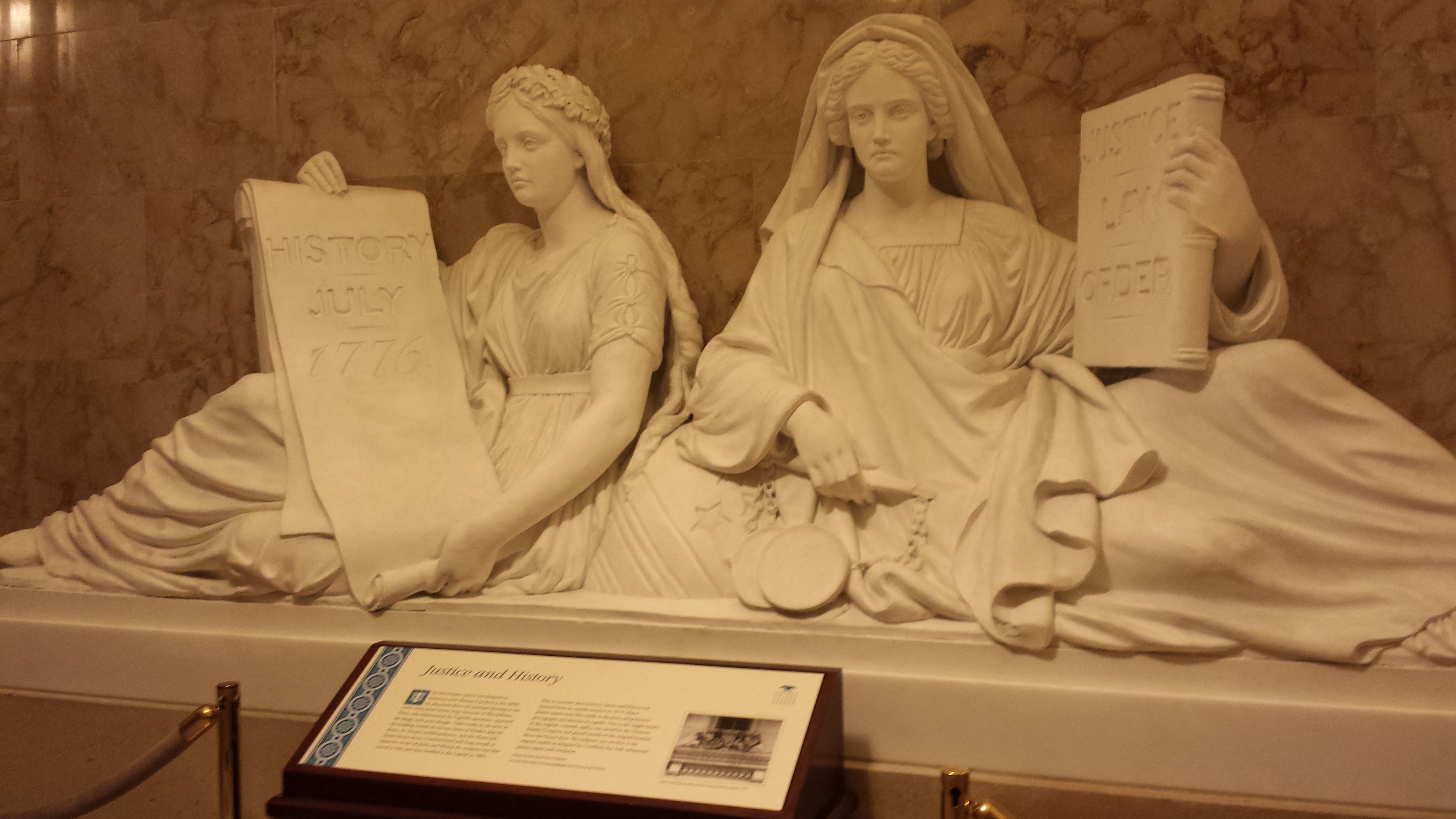
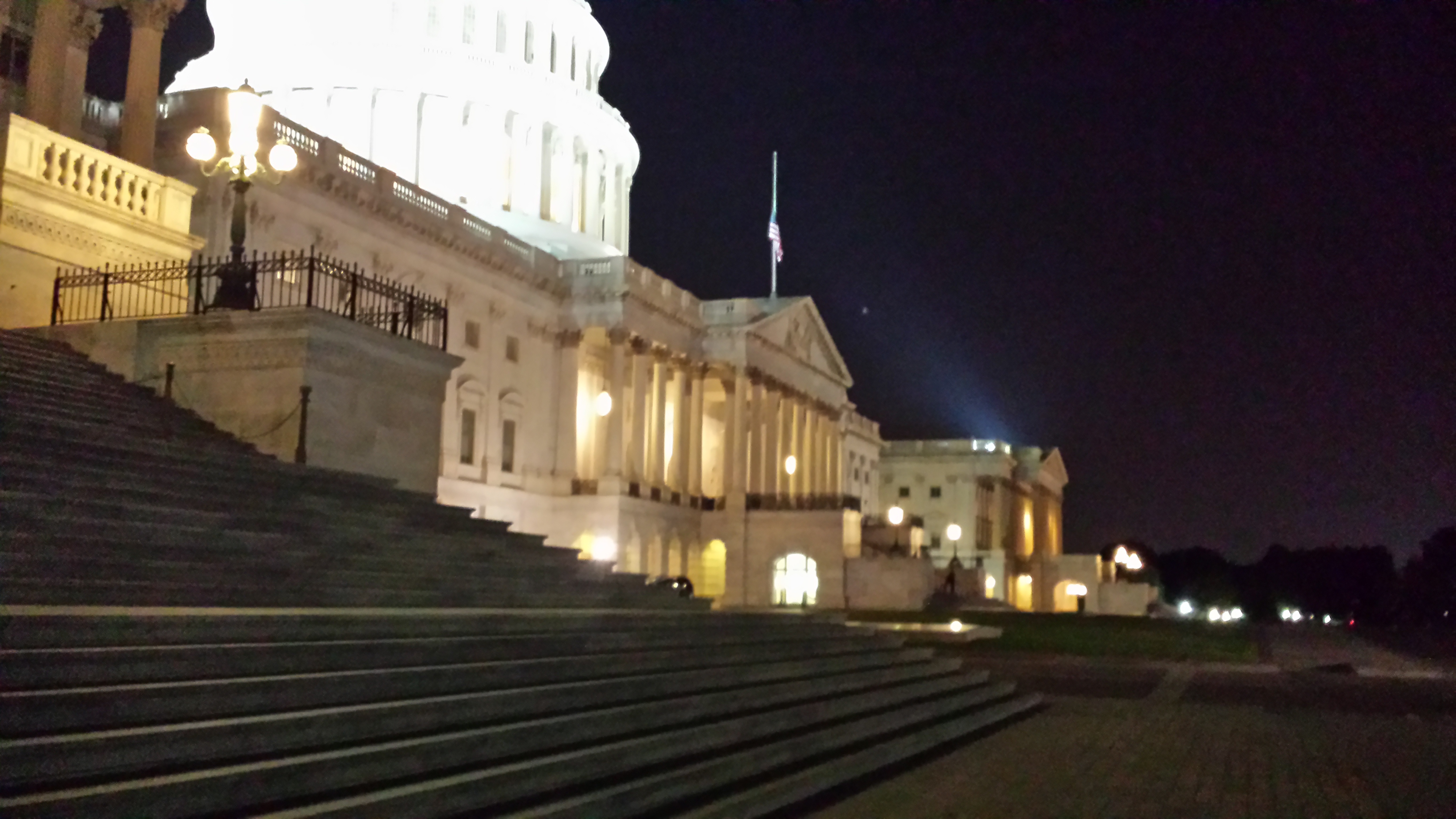
Staircase Detail Up to DomeHistory and JusticeFreedomCapitol Bldg RotundaHouse Chambers Hall to House of RepsCapital Bldg Daytime19th Century Handpainted Ceiling_House at CapitalDuring a trip to Washington D.C. Congressman John Mica offered to take our group on a special evening tour of the Capitol Building. He is a real history buff and with 21 years serving in the House of Representatives he has a few good stories…

These photos taken with my smartphone speak for themselves. The quality of workmanship and art in the architecture, paintings and sculpture makes my proud of my government. Washington D. C. has long been my personal inspiration.

The workshop I attended was a special session of Florida State Public Universities. We met with representatives from Department of Defense and major uniform services, and then with staffers from Democratic and Republican representatives with the Florida delegation.

Given the acrimony and loss of the traditions of discussion and respect for disparate viewpoints, many Junior Conservative representatives have never experienced what staffers described as the Regular Order of legislation. They all expressed dismay with ongoing sequestration, little hope of a bipartisan spending bill, and the general loss of appreciation for the 200-year-old process of compromise to pass bills that work for the America Public.

Capitol Nightime

E.F. Schumacher – Why We Need Him Now

E. F. Schmacher, British Economist best known to the U.S. public in the 1970’s with publication of Small is Beautiful and Small is Possible, developed economic models based on scale. His basic idea: past a particular size, true profit declines and true costs rise – thus the title “Small is Beautiful.”

He also clarified that shared ownership of the means of production is key to equitable distribution of wealth and development of healthy communities.

The New Economic Institute (previously the E.F. Schumacher Society) includes several excellent videos and articles by new economics thinkers and teachers. Go to the link and take time to listen or read. These visionaries describe likely scenarios about where our cultures and global community are moving with economic collapse around the world and with climate changes continuing to play havoc with community resiliency.

Profitability as the sole goal of corporate behavior is addressed by Neva Goodwin, Tufts University.  She discusses Walmart’s discovery that being ecologically responsible is profitable. However, her discussion is realistic about the kind of deep change that is necessary and how the likelihood of many people being harmed again by corporate excesses is predictable.  She offers a way to use corporate charters to shape corporate behavior. Community Environmental Legal Defense Fund (CELDF) is a group she cites that is using a new community led strategy that creates municipal ordinances.  These ban corporate control of land, water, and other natural resources that are critical to life and health.  How can we make money and profits flow to the most responsible companies that protect human and ecological well being? Many examples of new economic structures are described using real companies that ARE making a profit while doing good in society.

The Heart of Our Democracy

With the advent of the Internet, increasingly finer discernment is required of students in complex learning environments.

FreedomEducation is the focus of my professional life. My ideas about education – what it is and what is should be – have evolved.  Formal education, as in public schools, colleges, and graduate schools, is under constant revision in our democracy. Ideas change as the society-wide discussion continues.

Our country knows that an education is at the heart of a democracy.  Without informed citizens, a democracy cannot out last tyrannical and opportunistic forces. Education develops our best nature while ignorance breeds the opposite.

In its simplest form, education is a framework for learning. Children learn to attend. From the self-directed learning of childhood, the classroom and teacher focus their attention to particular facts and phenomena.  Children are taught to use tools for discovery, primarily mathematics and reading.

In the early days of education we were satisfied that kids would grow into adults who could read well enough to understand voting instructions and could sign their name in cursive. Later, we became more ambitious. Courses of study made it possible for average citizens to attain higher levels of performance for career tracks that moved them from blue collar to white collar work, or to scholarly levels of study.

Education became a means of social and economic equality in America.

Education in our public schools today is still very goal oriented but may have lost track of the original idea: that educated adults help preserve a democratic society. With the advent of the Internet, increasingly finer discernment is required of students in complex learning environments, and a complex, interconnected global community.

Social media offers students sophisticated tools for communication – perhaps beyond their intellectual and emotional development. Technology is driving society—proven to be an upside down relationship.

The role of the teacher has returned to guide and the classroom to a framework for learning. Students explore their own interests using online tools that transform learning. Teachers and curriculum need transforming, too, to meet students in the new learning reality. How will technology aid or hamper our democracy?

What do you think?

Resources for Exploring This Topic

Alive Enough? Reflecting on Our Technology – an interview with Dr. Sherry Turkle, Professor of Social Science of Science and Technology at M.I.T.

How Technology Is Changing the Way Children Think and Focus – Psychology Today Online, article by Dr. Jim Taylor, December, 2012.

The Science of Attention – interview with Dr. Adele Diamond, Professor of Developmental Cognitive Neuroscience at the University of British Columbia.

NEA Policy Statement on Digital Learningdiscusses the recognition of the new learning environment and changing role of teachers but cautions that education leaders need direct the uses of the technology as opposed to private owners of new technologies.

Autobiography of Values: Charles Lindbergh

charles-lindbergh-t12762This Christmas my son, Tom, gave me Winston Groom’s terrific new book, The Aviators. Groom paints a detailed portrait of Eddie Rickenbacker, Jimmy Doolittle, and Charles Lindbergh.

Each was an extraordinary person. Besides their enormous personal courage , they displayed a generosity of spirit in their willingness to improve aviation, make better airplanes and instruments, test pilot experimental designs, and play key roles in aviation and space after the war – all for love of country.

Groom writes with the easy rhythm of a old storyteller about the historical events of the 20th century’s technological transformation, and studies the influences in the development of boy to man, and the personal struggles and triumphs of each  of these iconic American heroes.

In exploring the inner lives of his subjects the author exhibits a good dose of fairness. This was never more true than how he handled the complex life of Charles Lindbergh.

Lindbergh, like Rickenbaker and Doolittle, began with the belief that aviation would change the world for the better. But as Lindberg’s life unfolded he experienced a series of blows that caused him to change his values nearly 180 degrees from where he started.

The first blow came not from his young son’s kidnapping and death (though personally traumatic), but from the American public’s relentless thirst for tabloid sensationalism. Haunted day and night, even suspected of murdering his own son, Charles and his wife Anne Morrow Lindbergh, fled America to Europe for personal peace.

Groom then follows a complex series of invitations to the Lindberghs by heads of state – including Nazi leaders like Goering who asked him to fly various new planes Germany was turning out by the thousands.

Due to a series of events including a medal from Hitler in honor of his courage and accomplishments, Americans and especially FDR accused him of being a traitor to his own country – which only served to drive the Lindberghs into further isolation from the press.

Lindbergh opposed America’s participation in WWII because he observed first hand the superior technological capabilities of Germany in aviation. He believed America would suffer great losses. This opposition led to Lindbergh plummeting from national hero to villain in the minds of many Americans.

But Lindbergh joined in helping America after Pearl Harbor, even though the President would not let him reenlist (Lindbergh gave up his commission when he fled to Europe). Lindbergh worked for aircraft companies in the states and engineered improvements in aircraft that saved thousands of aviators’ lives and increased the capabilities of the US military.

After the war he was invited to reenlist, and during a top secret mission for the U.S. military, Lindbergh observed the terrible destruction of Europe. of the land, and was among the first eye witnesses to Nazi death camps. These experiences shook him to his core.

While reading Grooms’ magnificent book, I learned that Lindbergh asked the publisher William Jovanovich (a friend and publisher at Harcourt, Brace, and Janvanovich) to edit and publish essays and journal notes from across his life in a book after his death. Lindbergh had just learned he was dying from lymphoma.

The book chronicles the evolution of his ideas about technology and the environment. Lindbergh had become an advocate for wild lands and wildlife. The book that was published is Autobiography of Values. Lindbergh had spent years traveling the world learning cultural values from indigenous tribes.

He noted that in each culture the relationship with the land and with wildlife was very different than in the so-called civilized nations. He concluded that man’s pursuit of science must be guided by other, deeper values – values that relate to our responsibility to the land, wildlife, and each other. He described his journey as one of finding true values. (Read a perceptive book review in the New York Times from 1978.)

Visit the Lindbergh Foundation to see how Reeve Lindbergh – Charles and Anne’s youngest daughter – with notables like Neil Armstrong – has carried the traditions of her parents into the 21st century by establishing awards and collaborations supporting, among many exciting initiatives, development of an electric plane. The intent is to fly a plane from NY to Paris but with no gas! Explore the website to learn about many visionaries carrying the flame of innovation but with a new, informed set of values.

Thanks, Tommy. This gift given to honor your grandfather (a WWII bomber pilot) will always hold an important place in my heart. Its also a great read that I know I will return to again and again.

DC Reflections

During a recent business conference that concerned the impending Sequestration and its impact on university funding, my hope for a decent future found purchase in the basic human quality of resilience or even rightly applied pugnaciousness.  The meeting – American Association for State Colleges and Universities Grant Resource Center Funding Forecast – draws university grants professionals and faculty to an annual heads together on how to win funding to educate the nation’s youth. This year in particular could be termed “Reading the Tea Leaves.” As the Legislative Branch stampedes toward the fiscal cliff chased by a frantic Executive Branch, the rest of us are left to wonder whether we’ll have a job, schools can operate, students continue on in higher education, or the transportation and financial infrastructure upon which our nation has thrived will remain in tact. Many threatening scenarios are spiraling around communication networks AD NAUSEUM, so much so I predict record viewing of the Academy Awards for sheer relief from the worry. At least the year’s films are somewhat predictable! Funding for education will surely take a hit right when we are trying to graduate more students from college in technical fields, put Veterans to work, make sure preschool kids get a decent start, keep us safe from cyber threats, and figure out how to mitigate climate change.

My hope stems from meeting or reconnecting with friends and colleagues from across our county who are devoted to their institutions and communities. There is no loss of hope among us; in fact we are made more savvy by contemplating the loss of funding and termination of funding sources we’ve depended upon. There are many ways to peel a banana. So if a bunch of grants professionals respond so, why not the rest of the country? We are by long tradition the kind of people who “dig in” when times are tough. Maybe we can do a lot with little on a local basis – with the exception of  the federal programs that work at scales that address widespread problems beyond the community’s abilities.

Its clear to me that communities and institutions will be required to collaborate and coordinate projects in order to win funding.  That is not a bad thing. The fact that there is less money will have impacts that we should work to prevent: early preschool funding; Pell grants; community grants that target very low income and high health disparity neighborhoods; innovation grants that support entrepreneurs, creators, scientists and students to try novel ideas for solving common problems. This is what agencies are trying to puzzle through right now, to use what funding they will have to make as big an impact in the right direction as possible.

All of us can make a call, write, blog, show up or support advocacy groups for education, health and welfare, and new policies and technologies for a sustaining environment.  The colleagues I had the privilege of sharing ideas among inspire me. From every region of our country there are caring, intelligent individuals working to make the best out of the mud pie this Congress continues to deliver.