And just like that, a second novel

Mountains to the Sea

Well, that second novel has been “cooking” in my mind for many years, and builds on years of experiences that reach back to 1990. That year I moved to Yuma, Arizona to teach middle school students at Crane Junior High School. Yuma first introduced me to the Sonoran Desert, and naturally, I experienced the hottest part of it first. Yuma temps that first summer hit 122 degrees Fahrenheit. My friends and neighbors taught me how to stay safe while traveling, and how to get out early in the morning before the heat made it impossible.

All around the school and neighborhoods where I lived, agricultural fields stretched out in long even rows with canals as borders, while row upon row of blue water soaked into the ground, evaporating in the intense heat. Surrounded by a sea of broccoli, my school was embedded in the large-scale industrial farming operations in which many of my students’ parents labored. On these intensely hot days, I wondered at the ability of human beings to endure hard labor in those fields.

AZ Agriculture Photo

Then, the fact that the water came from the high Wyoming plateaus and Rocky Mountains was only vaguely in my awareness. Precious river water poured down through deep canyons into the dams that controlled the North American Nile, and by a complex system came to Yuma and the Imperial Valley to grow 90% of America’s leafy produce between November through March. Then, I was focused on my students’ daily struggle to learn and grow up under harsh conditions of poverty and discrimination. But, all around us was a BIG STORY about a river, its people, and how it came to be the most controlled and overused body of water in North America. Indeed, the Colorado River is so over-allocated that it no longer winds its way to the Gulf of California as it did for thousands of years.  The  magnificent delta region, one of the world’s largest and most productive wetlands, literally dried up and died.

This is the subject of my second novel, The American Nile: Voices of a River and Its People. I am working with a talented editor and should have a solid draft completed before I return home from Tucson in late April.

Supporting Youth in Climate Change

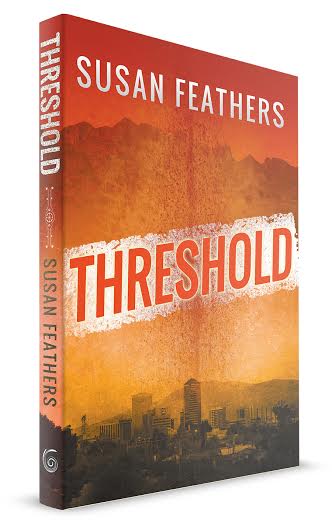
My novel, Threshold, was written over a ten-year period due to a period of care-giving for my father. I decided to revise the original story from one in the distant future to a more immediate story. Climate science improved over that period, and I realized that what we do now was the focus I needed.

In the new draft, two teenagers emerged that were not in the earlier draft. I believe my concerns for young people and years of teaching middle school and high school students in the Southwest resulted in three characters I love: Daniel  – Junior Docent at the Desert Museum; Luna – emerging youth leader of the Tohono O’odham Nation, and Enrique – a troubled youth with a brave heart.

The story lines follow my conviction that we all play a part in the development of young people in our lives. We may even play a key role by just doing simple things like showing up with a platter of burritos (Mrs Carillo, Enrique’s neighbor), or offering a  kind word at a particularly potent time (Harold Liebowitz with Daniel). Often, it is helping your child by letting them struggle (Luna’s mother). Youth need encouragement in ways that fit them.

They also need adults to clear the path by breaking down social and economic barriers that keep real talents from blooming or dying on the vine from poverty and hopelessness (Congressman Ramirez with his community). And some youths who have lost a parent or suffered an equally dramatic blow, just need us to be around dependably until they can get back on their feet (Ed and Carla for Daniel).

With the uncertainty of climate change, what can each of us do to empower and support the kids in our lives? What skills do they need, what can we change or strengthen while we are here that will enable them as they meet their future?

If it means changing a way of life, using different forms of transportation, giving up some of our sacred cows, will we be willing to do so for them, and all the children who follow? Read Threshold to learn what the adults in Daniel, Luna, and Enrique’s lives do to help them make a bright future.

Youth who are empowered and making change:

Changemakers High School

Our Children’s Trust


America’s Wildlife Refuges: the Last Stand

Crane fledgling_illustration_nwf

On my journey to Tucson I decided to visit some of the nation’s wildlife refuges, beginning with the Mississippi Sandhill Crane refuge, near Moss Point, MS. The refuge is comprised of private holdings, public lands, and joint agency wildlife management areas. It is beautiful. The cranes are a native species. There are 139 cranes in the whole refuge which spans thousands of acres. When I asked why so few, the docent asserted the current population was a huge success: the population had declined to a few dozen at the time the refuge was established.

Many specific efforts have been ongoing from restoring the habitat to its natural condition  to hand-rearing crane infants to adulthood, and releasing them into the refuge.  The Mississippi Sandhill Crane is considered an “umbrella species” by scientists; it is protected under the Endangered Species Act. The latter protects habitats through the keystone or umbrella species that are specifically shown to be threatened or endangered. This results in thousands of other species being protected under the umbrella.  Restoration of the watershed, forests, and marshlands benefits humans with beauty, hunting and fishing opportunities, research, clean watersheds, and flood control.

I spotted three Sandhill cranes under that shade of a large oak in a privately owned home adjacent to the refuge–along with a rooster and hen. Looked like a leisurely commiseration among species.

LEARN MORE ABOUT THE NATIONAL WILDLIFE REFUGES

I also visited the Atchafalaya NWR and the Lacassine NWR. They are both located in Louisiana and are wild places. I saw hunters and fishermen, boating, and wonderful old hunting camps and clubs at Atchafalaya, and flocks of egrets, cranes, geese, and ducks at Lacassine. The latter has a 16,000 acre fresh water pool that is mostly filled by rainwater. The marshes are wild places alive with birdsong and the croaks and bleeps of habitat teeming with life. This refuge is at the juncture of the Central and Eastern flyways and provide overwintering and stopovers for thousands of migrating birds. Louisiana is this kind of contrast: all around the refuges are oil refinery plants, and gas pipelines thread through the land and water resources along the I-10 corridor. So while the state may support a highly polluting energy source (one we all use without a thought), the state also highly values wildlife. It is a cognitive dissonance that lingers on my mind as I head out into the Texas plains. I plan to stop at the Prairie Chicken NWR today.

Why My Characters’ Zip Code Matters

Teenager_Boy_clip_art_mediumEnrique, a youth living in Tucson’s poorest neighborhood, begins his life with “the cards” stacked against realization of his dreams. Caught in a web of drug traffickers who recruit disadvantaged youth in his barrio, he navigates each day as one in a war zone with the goal to survive between sun up and sun down. Yet like each of us, he has innate potential that, under supporting circumstances, can change his life.

On the back stoop in the alleyway, he lit a cigarette, drawing deeply, breathing out a cloud, letting the afternoon sun warm his chest and arms. His thoughts turned to friends who had joined Bloods Southwest. He decided to talk to Pepe tomorrow at school. Then he went back inside to do his math homework. At least he could work numbers with no problem. He liked that math was governed by rules that never changed, and when he sought answers, he could always work them out.                                                ~ Threshold (2016), Fireship Press, Tucson, AZ

Research shows that a person’s zip code predicts how healthy they will be, how long they may live, what degree they may earn in school, and the size of their pay check. Your zip code can predict your chance of being obese, asthmatic, a drug addict or alcoholic, whether your baby is likely to be born prematurely or with a disability — and even how likely it is that you will live past age 5.

Where you live is a powerful determinant of your life outcomes. What’s more, your zip code may determine how resilient you can be as climate change advances.

How can we end this terrible injustice? Read Threshold to learn how characters find solutions.


The Fate of Jaguars: Juma and Duma

Jaguar SilhouetteThe  Olympic Games in Brazil may be remembered most for the list of woes it has accumulated as Rio 2016 approaches the August games. Now the death of a jaguar has cast a longer shadow over the event.

Images of a jaguar in a heavy metal collar and chains as the Olympic flame was passed from one runner to the next were quickly followed by news of the animal’s death. Juma, a 17-year old jaguar born into captivity at a zoo on a military base, was apparently brought out to provide a dramatic image at the Olympic ceremony. When he escaped and approached a soldier, he was shot and killed. As the public learned of Juma’s death. it caused worldwide outrage.

In my novel, Threshold, Duma is a jaguar born in the Sky Islands–mountain ranges that span the U.S. – Mexico border. He wanders into an area near Nogales, Arizona where surrounding cattle and sheep ranches lure him closer to human settlements. Duma is sighted and captured. Readers follow him from one facility to another while his fate is determined.

The role of zoos and aquariums is being reconsidered as the public is less comfortable with animals on exhibit. Is there a new role for zoos in the 21st century?

Research with dolphins, grey parrots, chimpanzees, and elephants, among others, show these fellow earthlings share similar life’s experiences as humans do. The movie Blackfish which revealed the stresses on killer whales in captivity, and the recent killing of Harambe, a gorilla at the Cincinnati Zoo, are just two recent examples that have furthered discussions about our responsibilities to the animals we love to see at zoos and enjoy knowing may still inhabit natural areas.

The Arizona-Sonora Desert Museum, an AZA accredited institution, is one of several settings in Threshold. As the story unfolds, readers learn that climate change is causing stress on animals and keepers alike. The Desert Museum is a leader in care and exhibition of animals for public education.                                     Explore ASDM’s website and publications to learn more.

TELL US WHAT YOU THINK ABOUT THE ROLE OF ZOOS AND AQUARIUMS. POST YOUR COMMENTS ON THIS POST.

Update: Here is the latest in a discussion at the Center for Humans and Nature:

Zoos as Gateways

Excessive Heat: Have We Passed a Threshold?

Threshold book coverAll across southern California and the Colorado River Lower Basin in Arizona as far south as northern Mexico, an excessive heat warning has been declared by the National Weather Service for the next 4-5 days.

Phoenix is expected to reach temps as high as 120 degrees — well above the norm for this time of year.

In my soon-to-be-released novel, Threshold, heat and evaporating water supply are two threatening conditions that impinge on characters. While the book is set in the “very near future”, the plot is contemporary and presupposes what might happen in a metropolitan city like Tucson, Arizona.

The impacts of climate change will be felt differently across a city or region depending on a person’s personal resources, both financial and social. I wrote the story in Threshold to explore what might happen, and allowed characters to tell me what they would do.

Enrique dabbed his grandmother’s face with cold water, but her breathing grew shallow. He ran to fill the tub with water. But when he turned on the faucet, no water came out. In a panic now, he returned to his grandmother. . . It took him a few seconds to comprehend what had happened.

WILL A “NEW NORMAL” SPUR INNOVATION?

The Citizen’s Guide for Resilience to Climate Extremes is a planning guide for neighborhoods to increase their resiliency and to institute climate solutions such as planting trees for shade and making walk-able, bike-able neighborhoods. It is a community-based model any city will find useful to mobilize citizen’s for climate change.

Check back to read Guest Bloggers from Tucson and the Southwestern region. 


Right of Passage in a Monsoon Storm

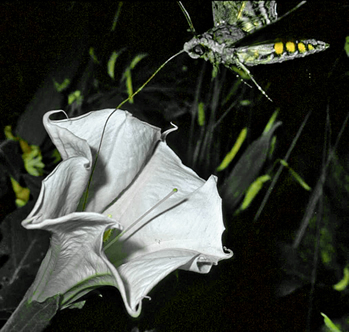
moth-daturacroppedWhen I fist moved to Tucson, Arizona, I was new to the high desert. Biologists refer to its flora and fauna as “lush”–a term that up until then I would not have chosen for a desert.

Through colleagues at the Arizona-Sonora Desert Museum, I learned about a poetry reading at University of Arizona by Dr. Ofelia Zepeda, 

Dr. Zepeda is a member of the Tohono O’odham Nation, a lifelong desert dweller, a linguist, and cultural preservationist. In 1999 she was awarded the MacArthur Fellowship for her work creating a Tohono O’odham book of grammar. However, Dr. Zepeda’s poetry is what I wish to focus on and how the chance encounter with her performance in the first week of my residency in Tucson led to my deep feeling for a place and community as culturally rich as any I’ve known.

The poetry reading took place in the circular auditorium (kiva) in the American Indian Studies Department at U.A. In the large room with rows pitched down toward the lectern in its center, a soft voice rose and fell. Dr. Zepeda’s was reading from her book, Ocean Power She spoke in O’odham and English, alternating between each as she read.  I closed my eyes to listen to the language of desert communities at Tucson’s origin.

She explained the relationship of her family and community to rain in the desert, its precious nature, and how, after the long hot, dry foresummer, the first monsoon clouds gather, and people point and wait for the first cold dollops of rain.

After her lecture, I walked to my hot, dusty car to drive home. Not long after I was on the road, a massive monsoon cloud, as black as coal, threw lightening strikes like explosions on the ground, and rain burst from the sky, falling n buckets, cleansing the car and blinding my sight. I had to pull over. Flood waters gushed around drains, cars stalled as the water rose, but all the people smiled behind their windshields or stood outside their vehicles with open arms, letting the storm soak them to the bone. It was a celebration, first delivered through Dr. Zepeda’s poetry and, then, by the monsoon itself.  I believe to this day that hearing about rain on the desert in O’odham made the impact of the storm much deeper for me. It was a true rite of passage. Listen to a short video about Dr. Zepeda.


Beverly and Jennifer Acierno Special Education Scholarship

Please help us build this fund. The first scholarship was awarded to Brittany Piper who is studying for an MA in Exceptional Student Education with an emphasis in Applied Behavior Therapy.

Susan Feathers's avatarSusan Feathers

Veterans' Day 2013 062In 2010 my sister Beverly Acierno passed away unexpectedly. She had recently retired from the Escambia County Public School District where she served as a Learning Disabilities teacher (the county’s first) and later helped develop and manage the program. For so many years we heard about her students, about her advocacy for students and their families in court, and the trips and presentations she made on behalf of the ECPSD. My family and I met many colleagues at her funeral and listened as they remembered Beverly’s passion for kids. One said, “It’s an end of an era; they just don’t make them that way anymore.”

My Niece, Jennifer Acierno Theisen, spent many of her schools days in the same school building as her mother. They were a pair. Jenny was an excellent student, eventually graduating from Washington High School. She earned a scholarship to Florida State University to study performance art, and later transferred…

View original post 232 more words

Have we traded for something of lesser value?

Little handsIs an education replete of nature literacy of lesser value than an education which incorporates values and skills that enable a person to live responsibly within nature?

Reflecting on meeting a woman who held a doctoral degree, but who admitted that she was unaware of the annual migration of cranes in her own state, Aldo Leopold questioned whether modern education has “traded for something of lesser value”. He said this in the context of being aware, of paying attention to the goings and comings of wildlife and seasons, and by that, knowing fundamentally where you live and how to live there without destroying it.

David Orr goes further by asking What is Education For?

This is not an argument for ignorance but rather a statement that the worth of education must now be measured against the standards of decency and human survival-the issues now looming so large before us in the twenty-first century. It is not education, but education of a certain kind, that will save us.

Orr points out in this essay that its educated people who are most destructive to the Earth and ecosystems. What went wrong?

What do you think? Should education ensure that all American students will graduate knowing their place within the natural world, and understanding the responsibilities therein? Would you consider that kind of education basic literacy? Higher education? Why or why not?

Other Interesting Reading Along These Lines:

Richard Louv: The Nature Principle

What 20th Century Nature Study Can Teach Us

Pinterest: Nature Journals

E.F. Schumacher – Why We Need Him Now

E. F. Schmacher, British Economist best known to the U.S. public in the 1970’s with publication of Small is Beautiful and Small is Possible, developed economic models based on scale. His basic idea: past a particular size, true profit declines and true costs rise – thus the title “Small is Beautiful.”

He also clarified that shared ownership of the means of production is key to equitable distribution of wealth and development of healthy communities.

The New Economic Institute (previously the E.F. Schumacher Society) includes several excellent videos and articles by new economics thinkers and teachers. Go to the link and take time to listen or read. These visionaries describe likely scenarios about where our cultures and global community are moving with economic collapse around the world and with climate changes continuing to play havoc with community resiliency.

Profitability as the sole goal of corporate behavior is addressed by Neva Goodwin, Tufts University.  She discusses Walmart’s discovery that being ecologically responsible is profitable. However, her discussion is realistic about the kind of deep change that is necessary and how the likelihood of many people being harmed again by corporate excesses is predictable.  She offers a way to use corporate charters to shape corporate behavior. Community Environmental Legal Defense Fund (CELDF) is a group she cites that is using a new community led strategy that creates municipal ordinances.  These ban corporate control of land, water, and other natural resources that are critical to life and health.  How can we make money and profits flow to the most responsible companies that protect human and ecological well being? Many examples of new economic structures are described using real companies that ARE making a profit while doing good in society.