Book Sales and Readings in Tucson

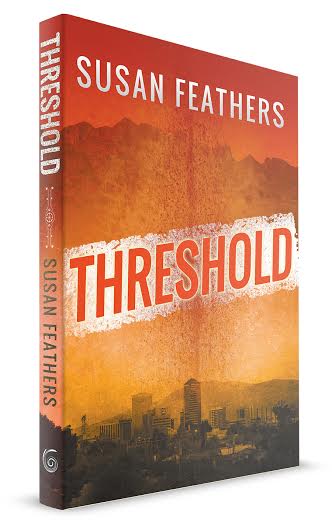
Tomorrow I will be a Bookman’s on Wilmot and Speedway from Noon to 2 pm for their Authors’ Fair. Hope you can drop by and chat and take a look at Threshold.

If you have a church group or book club that might wish to read a story about Tucson, with familiar settings and characters, give me a call at: 520-400-4117 or email me at susanleefeathers@gmail.com

Threshold makes an enormous contribution to contemporary literature by teaching readers—in engaging and utterly consumable terms—about the physics of “the planet’s human induced fever.” Susan Feathers stages the need to know as part of the narrative dynamic. Key characters —academics, school teachers, museum biologists—understand only too well the processes by which the earth is growing hotter, while others don’t. The latter are in some cases too young or inexperienced to know; in other cases they’re complacent or too far in denial to face them. Those who know teach those who don’t. Through lively dialogues concerning, for example, how sunlight gets converted to electricity; or how oceans absorb solar energy; or how neighborhoods can set up electrical generating systems, we learn along with the characters. We’re invited to go through the same processes of recognition and assimilation that the various students in the story experience. READ A REVIEW     ~ Mary Lawlor, Muhlenberg College


Supporting Youth in Climate Change

My novel, Threshold, was written over a ten-year period due to a period of care-giving for my father. I decided to revise the original story from one in the distant future to a more immediate story. Climate science improved over that period, and I realized that what we do now was the focus I needed.

In the new draft, two teenagers emerged that were not in the earlier draft. I believe my concerns for young people and years of teaching middle school and high school students in the Southwest resulted in three characters I love: Daniel  – Junior Docent at the Desert Museum; Luna – emerging youth leader of the Tohono O’odham Nation, and Enrique – a troubled youth with a brave heart.

The story lines follow my conviction that we all play a part in the development of young people in our lives. We may even play a key role by just doing simple things like showing up with a platter of burritos (Mrs Carillo, Enrique’s neighbor), or offering a  kind word at a particularly potent time (Harold Liebowitz with Daniel). Often, it is helping your child by letting them struggle (Luna’s mother). Youth need encouragement in ways that fit them.

They also need adults to clear the path by breaking down social and economic barriers that keep real talents from blooming or dying on the vine from poverty and hopelessness (Congressman Ramirez with his community). And some youths who have lost a parent or suffered an equally dramatic blow, just need us to be around dependably until they can get back on their feet (Ed and Carla for Daniel).

With the uncertainty of climate change, what can each of us do to empower and support the kids in our lives? What skills do they need, what can we change or strengthen while we are here that will enable them as they meet their future?

If it means changing a way of life, using different forms of transportation, giving up some of our sacred cows, will we be willing to do so for them, and all the children who follow? Read Threshold to learn what the adults in Daniel, Luna, and Enrique’s lives do to help them make a bright future.

Youth who are empowered and making change:

Changemakers High School

Our Children’s Trust


A Brand New Kind of West

In 1878, John Wesley Powell submitted A Report on Arid Lands to the U.S. Congress. In it he proposed that land grants to settlers in the arid lands of the country be determined by the geology and physiology of the land. That may seem perfectly logical to modern readers, but in that time, myths about the productivity of the land dominated over reality. Manifest Destiny was a locomotive roaring across the lands of the west.

Powell’s ideas were based on science, as Wallace Stegner, in his brilliant biography of Powell’s service to the U.S., Beyond the 100th Meridian, dramatically illustrates.

NPR’s 2003 Program on The Vision of John Wesley Powell

Powell proposed that tracks of land for raising cattle or sheep be 2, 250 square acres, and irrigable land for farming be only 80 acres with water rights. Both of these proposals were based on the aridity and productivity of landscapes in the west which, for grazing, required much more than the 160 acres provided in the Homestead Act to find enough water sources for animals to thrive. He also demonstrated that the productivity of desert soils with the addition of water required only 80 acres–all one farmer and his family could reasonably manage.

Had government agencies deeding land to settlers west of the 100th meridian used scientific reasoning, we would have a different west today. As we did not, most of the settlers who obtained 160 acre allotments soon failed. Their land was not returned to the U.S. lands in public trust but rather it went to the banks who financed farmers production. Powell points out that the Homestead Act resulted in millions of acres of public lands going to corporations. Again, using scientific research Powell busted another popular American myth.

Powell further proposed that the government require land owners planning to use a given water source, such as a river, be required to form an irrigation district made up of nine potential land owners, to demonstrate they could successfully share the water over a three year period before obtaining title and water rights.  He based his recommendation on successful models of the Mormons in Utah and Spanish land owners of New Mexico Territory with their ejidos resource commons.

Science was the basis of Powell’ prescience regarding the development of the western lands of the U.S.  Today, science must help major Southwestern cities and regions rethink how to manage water among themselves. We will not be able to return to zero, but we can try to develop policies today that fit the landscape.

For the entire history of water development in the west, science has not dominated decision making but rather economics. Millions of Americans now live in cities where a reliable source of water is threatened, and millions of acres of agricultural lands, supporting American households and the world are on the brink of collapse due to long term drought conditions projected to last hundreds of years.

What kind of thinking and planning will be required to move us in the direction of a sustaining system for water usage in the West? How will our economic models need to change to run concurrent with the physical realities of the land and resources we wish to use?

Who Owns the Water, Air, and the Land?

As the people gather in solidarity with the Standing Rock Sioux Nation, and the voices of Native American and justice activists are heard, I want to consider the issue at hand as fundamentally a land ethic issue.

Energy Transfer Partners and Dakota Access LLC are in the process of hooking up an extended pipeline that will connect existing crude oil pipeline to a tunnel pipeline to shunt crude oil to Illinois. The tunnel pipeline is planned to go underneath the Missouri River, and Lake Oahe–near the point where the Standing Rock Sioux Nation’s reservation uses the water for drinking water and irrigation. They are a poor nation whose water infrastructure is aging and constructed in such a manner that if a leak were to occur, it would essentially shut down the water supply for the people at Standing Rock Sioux reservation. Read More: dakota-pipeline-article from Inside Climate News.

The truth is that water, land, wildlife and people can not be owned. Each has the inalienable right to exist free by virtue of our common creation. What we can do is equitably share and protect resources to ensure that all people and wildlife have basic needs fulfilled within the limits of the land to provide them. In other words, human needs have to work within the ecological ability of the land and waters to provide them. This requires an ecological awareness.

Aldo Leopold advanced a land ethic in his writing, as he grew in his understanding of what a community really is:

Leopold understood that ethics direct individuals to cooperate with each other for the mutual benefit of all. One of his philosophical achievements was the idea that this ‘community’ should be enlarged to include non-human elements such as soils, waters, plants, and animals, “or collectively: the land.”  Aldo Leopold Foundation

Should the Energy Transfer Partners and the Dakota Access Pipeline operation have the right to build a pipeline underneath Lake Oahe and near the Missouri River that flows past the land  of the Standing Rock Sioux Nation? And will flow through four states and other communities?

The 1134-mile pipeline will carry 500,000 gallons of crude oil each day to Illinois. Seventeen banks stand to profit and are advancing money to make it happen.

Three U.S. agencies warned against it, but the U.S. Army Corps of Engineers used a corporate report from Dakota Access Pipeline to rule in favor of the construction. After a federal judged ruled in favor of the pipeline going forward, the U.S. Department of Justice and the Interior, and the Army together enacted a stay on that decision so that the EPA can reassess the original assessment of its safety.

As climate change impacts the world, should our society support continued drilling and transportation of crude oil to be burned and thereby increase warming of the planet and acidification of oceans? Of course not.

In the Southwest, where access to precious water will bring municipalities, tribal nations, corporate interests, and the U.S. government into negotiations over water rights, what values and ethics will we use to determine who gets what?

It is a question we must answer now.

Read about the proposed Dakota Access Pipeline
 

GRID FAILURE: Are We Ready?

Living on the Gulf Coast I am painfully aware of what its like when the grid goes down. Moist, hot coastal air enveloped residents in Pensacola after Hurricane Ivan. In some areas of the seaside city, residents were without power for two weeks. Life came to a halt: no business could be conducted, no schools could function, only emergency services were available; finding  potable water and food became residents’ daily preoccupation.

But, what if the power grid in the U.S.A. went down? Security would be nonexistent, vulnerable people would perish from lack of cool or heat depending on the season. Markets would be down and silent. No trade could take place. The lifeblood of capitalism would be cut off.

How vulnerable is our grid? An article in the Wall Street Journal, How America Could Go Dark, reviews how substations on the grid are wide open to sabotage:

The U.S. electric system is in danger of widespread blackouts lasting days, weeks or longer through the destruction of sensitive, hard-to-replace equipment. Yet records are so spotty that no government agency can offer an accurate tally of substation attacks, whether for vandalism, theft or more nefarious purposes.

In my novel Threshold, a plot to disable the grid where hydropower is generated along the Colorado River system is discovered. It is designed to deliver a double whammy: loss of power and water. In the Southwest, that could be devastating.

The point is this: life percolates along in the face of climate change and other long-term security problems as long as citizens can turn on their lights and get water from a faucet. We are distracted by what is immediately before us : terrorism and violence and a failed political process that obfuscates the truth. Meantime, we are not paying attention to the trumpets sounding for our action.

Solutions will come at all levels of society. For example, the millions of dollars we need to secure our grid will require governments and business collaborations to make it happen. On the community level, citizens can bring pressure on officials for these reforms, and they can plan on municipal and neighborhood levels to protect people in the event of a grid failure or compromised water supply. See what Tucson is doing to promote neighborhood organizing for the latter.

The Fate of Jaguars: Juma and Duma

Jaguar SilhouetteThe  Olympic Games in Brazil may be remembered most for the list of woes it has accumulated as Rio 2016 approaches the August games. Now the death of a jaguar has cast a longer shadow over the event.

Images of a jaguar in a heavy metal collar and chains as the Olympic flame was passed from one runner to the next were quickly followed by news of the animal’s death. Juma, a 17-year old jaguar born into captivity at a zoo on a military base, was apparently brought out to provide a dramatic image at the Olympic ceremony. When he escaped and approached a soldier, he was shot and killed. As the public learned of Juma’s death. it caused worldwide outrage.

In my novel, Threshold, Duma is a jaguar born in the Sky Islands–mountain ranges that span the U.S. – Mexico border. He wanders into an area near Nogales, Arizona where surrounding cattle and sheep ranches lure him closer to human settlements. Duma is sighted and captured. Readers follow him from one facility to another while his fate is determined.

The role of zoos and aquariums is being reconsidered as the public is less comfortable with animals on exhibit. Is there a new role for zoos in the 21st century?

Research with dolphins, grey parrots, chimpanzees, and elephants, among others, show these fellow earthlings share similar life’s experiences as humans do. The movie Blackfish which revealed the stresses on killer whales in captivity, and the recent killing of Harambe, a gorilla at the Cincinnati Zoo, are just two recent examples that have furthered discussions about our responsibilities to the animals we love to see at zoos and enjoy knowing may still inhabit natural areas.

The Arizona-Sonora Desert Museum, an AZA accredited institution, is one of several settings in Threshold. As the story unfolds, readers learn that climate change is causing stress on animals and keepers alike. The Desert Museum is a leader in care and exhibition of animals for public education.                                     Explore ASDM’s website and publications to learn more.

TELL US WHAT YOU THINK ABOUT THE ROLE OF ZOOS AND AQUARIUMS. POST YOUR COMMENTS ON THIS POST.

Update: Here is the latest in a discussion at the Center for Humans and Nature:

Zoos as Gateways

Excessive Heat: Have We Passed a Threshold?

Threshold book coverAll across southern California and the Colorado River Lower Basin in Arizona as far south as northern Mexico, an excessive heat warning has been declared by the National Weather Service for the next 4-5 days.

Phoenix is expected to reach temps as high as 120 degrees — well above the norm for this time of year.

In my soon-to-be-released novel, Threshold, heat and evaporating water supply are two threatening conditions that impinge on characters. While the book is set in the “very near future”, the plot is contemporary and presupposes what might happen in a metropolitan city like Tucson, Arizona.

The impacts of climate change will be felt differently across a city or region depending on a person’s personal resources, both financial and social. I wrote the story in Threshold to explore what might happen, and allowed characters to tell me what they would do.

Enrique dabbed his grandmother’s face with cold water, but her breathing grew shallow. He ran to fill the tub with water. But when he turned on the faucet, no water came out. In a panic now, he returned to his grandmother. . . It took him a few seconds to comprehend what had happened.

WILL A “NEW NORMAL” SPUR INNOVATION?

The Citizen’s Guide for Resilience to Climate Extremes is a planning guide for neighborhoods to increase their resiliency and to institute climate solutions such as planting trees for shade and making walk-able, bike-able neighborhoods. It is a community-based model any city will find useful to mobilize citizen’s for climate change.

Check back to read Guest Bloggers from Tucson and the Southwestern region. 


The Tucson Connection

My romance with Tucson seems predestined.  This long relationship began in my childhood with Dad’s assignment to Davis Monthan AFB.

Fifty years later, I moved back to Tucson to accept a position as Director of Education at the Arizona Sonora Desert Museum. Little did I know that a future friend and writing fellow was finding her way to Tucson from her home in the Republic of Columbia, in northwest South America. We never met while we lived in Tucson but we would later share our love of the desert in a more tropical habitat.

That is because both of us left Tucson and ended up in Pensacola, Florida. Vicki is a member of the Portfolio Writers’ Group, one of many writing groups in the West Florida Literary Federation. She is a poet and talented painter who not only continues to inspire my writing, but who, by virtue of membership, became an early editor of drafts of  the Threshold manuscript.

For me it was wonderful having a talented writer/friend who knew Tucson and is bilingual. She was able to spot problems and to provide correction to Spanish terms and translations. (Vicki is a Spanish instructor at the University of West Florida and provided instruction for students at the University of Arizona while in Tucson.)

It seems that wherever I go, Tucson follows along. I am so glad because it is a community that won my heart. I even bled for it (see previous blog). That initiation got buried in my unconscious. Good thing. I might never have returned!

My Tucson "Connection"
My Tucson “Connection”

See Victoria’s new book of poetry including her gorgeous painting.

Tucson – My Military Life

Tucson became my home from 1999 to 2008, but I had been a resident in the Old Pueblo when I was just a babe. Dad (Major E. B. Feathers at the time) was stationed at Davis Monthan Air Force Base in Tucson. I was 2 years old when we moved there. I remember photos of my mother, sister and me in sundresses and sandals in front of a house with a large shaded porch, cacti and sand.

Little did I know that I would one day return to Tucson as an adult. When I was just getting started in life, I had an early encounter with the desert by falling into an Opuntia (prickly pear). Mom recalled she was pulling needles out of my arms and legs for a month.

Charles Lindbergh dedicates Davis Monthan Field: September 23, 1927

In 1925, Tucson’s City Council purchased 1,280 acres of land southeast of town to relocate the city’s municipal airport. Unknown at that time this new site would become the nucleus of Davis-Monthan Air Force Base. Six years earlier Tucson had the proud distinction of opening the first municipal-owned airport in the nation. Located four miles south of the city on Nogales Highway, the present day location of the Rodeo Grounds, the 82.64 acres was designated Tucson Municipal Flying Field after several name changes. Following years of stalled negotiations with the War Department, city planners elected to purchase the larger site and transfer airport operations in hopes that the military would reconsider establishing an aviation branch in Tucson.

Construction at the new site was completed in late 1927, and on September 23 of the same year, Charles Lindbergh, who months earlier crossed the Atlantic in the “Spirit of St. Louis”, formally dedicated the site in honor of Lieutenants Samuel H. Davis and Oscar Monthan, two Tucson aviators whom died in separate plane crashes after World War I. The city shared another proud moment with the opening; Davis-Monthan Field immediately became the largest municipal-owned airport in the nation.

Military presence at the new Davis-Monthan Field began October 6, 1927 when Staff Sergeant Dewey Simpson transferred the military aircraft refueling and service operations from the old municipal airport. He also brought something very unique with him, a log book that was signed by the field’s patrons. Early aviation greats such as Foulois, Arnold, Spaatz, Vandenberg, Earhart, and Doolittle took the liberty of signing the registry as a record of service. (Currently the Registry is on display at DM’s Base Operations). With only two military personnel assigned to the field, negotiations between the War Department and Tucson would remain at a stand-still until 1940.

My Dad was stationed at Davis Monthan AFB in 1947. He had just rejoined the USAF after it formed from the Army Air Corps after WWII ended. Dad flew B-29s in the Air Force. Davis Monthan AFB began its revival after the war as a location for the successful Super Fortress (B-29 Bomber). The very dry air provided an ideal location to store the Superfortress,  and other air craft accumulated during the 2nd World War in the desert.

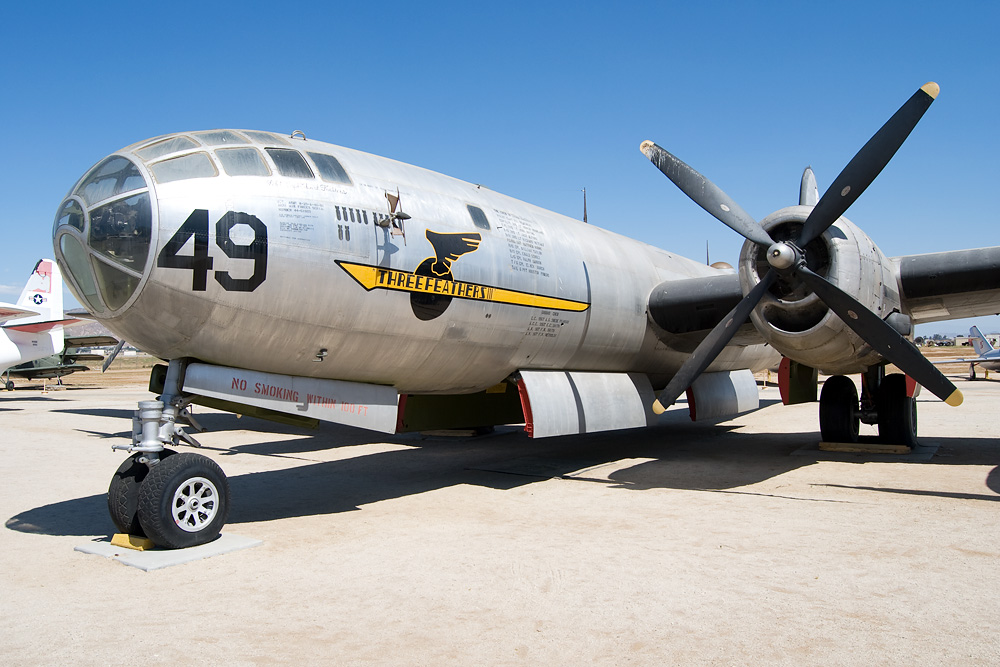
In another amazing connection with Tucson, the daughter of Dad’s co-pilot was instrumental in locating the Z-49–the B-29 my father and her father had flown 35 missions over Tokyo from their base in Saipan. It was found in an aircraft graveyard in the desert. The Z-49 was restored and is now on exhibition at March AFB in California:

Z-49 March Air Museum, CA

The B-29 was dubbed the Three Feathers, originally complete with three nudes on clouds following the pilots’ tradition of painting sexy women on the nose of their aircraft. The Three Feathers had a prestigious life. Read its history here.

Dad talked about flying in the desert. The pilots rose very early to beat the heat, and then cruised above the desert with a view that stretched for hundreds of miles. He recalled the heat and the electricity on the metal and how it gave them all a huge bolt of energy whenever they touched metal on a very hot, crackling dry day.

We soon left for Los Angeles where Dad studied meteorology, a fateful study which later sent him to Fletcher’s Ice Island T-3, a floating iceberg in the Baltic Sea. He was part of a global study, for his team it specifically encompassed ice flows in the arctic.  I was 14 when Dad was featured in Time Magazine after being attacked by a polar bear on T-3. Now in 2016, my first book (Threshold) includes a polar bear–in Carla Conners’ nightmare. I think all this qualifies as the circularity of a life’s path.


Right of Passage in a Monsoon Storm

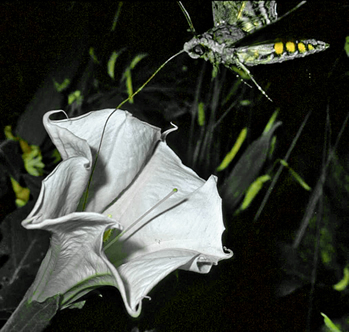
moth-daturacroppedWhen I fist moved to Tucson, Arizona, I was new to the high desert. Biologists refer to its flora and fauna as “lush”–a term that up until then I would not have chosen for a desert.

Through colleagues at the Arizona-Sonora Desert Museum, I learned about a poetry reading at University of Arizona by Dr. Ofelia Zepeda, 

Dr. Zepeda is a member of the Tohono O’odham Nation, a lifelong desert dweller, a linguist, and cultural preservationist. In 1999 she was awarded the MacArthur Fellowship for her work creating a Tohono O’odham book of grammar. However, Dr. Zepeda’s poetry is what I wish to focus on and how the chance encounter with her performance in the first week of my residency in Tucson led to my deep feeling for a place and community as culturally rich as any I’ve known.

The poetry reading took place in the circular auditorium (kiva) in the American Indian Studies Department at U.A. In the large room with rows pitched down toward the lectern in its center, a soft voice rose and fell. Dr. Zepeda’s was reading from her book, Ocean Power She spoke in O’odham and English, alternating between each as she read.  I closed my eyes to listen to the language of desert communities at Tucson’s origin.

She explained the relationship of her family and community to rain in the desert, its precious nature, and how, after the long hot, dry foresummer, the first monsoon clouds gather, and people point and wait for the first cold dollops of rain.

After her lecture, I walked to my hot, dusty car to drive home. Not long after I was on the road, a massive monsoon cloud, as black as coal, threw lightening strikes like explosions on the ground, and rain burst from the sky, falling n buckets, cleansing the car and blinding my sight. I had to pull over. Flood waters gushed around drains, cars stalled as the water rose, but all the people smiled behind their windshields or stood outside their vehicles with open arms, letting the storm soak them to the bone. It was a celebration, first delivered through Dr. Zepeda’s poetry and, then, by the monsoon itself.  I believe to this day that hearing about rain on the desert in O’odham made the impact of the storm much deeper for me. It was a true rite of passage. Listen to a short video about Dr. Zepeda.