America’s Wildlife Refuges: the Last Stand

Crane fledgling_illustration_nwf

On my journey to Tucson I decided to visit some of the nation’s wildlife refuges, beginning with the Mississippi Sandhill Crane refuge, near Moss Point, MS. The refuge is comprised of private holdings, public lands, and joint agency wildlife management areas. It is beautiful. The cranes are a native species. There are 139 cranes in the whole refuge which spans thousands of acres. When I asked why so few, the docent asserted the current population was a huge success: the population had declined to a few dozen at the time the refuge was established.

Many specific efforts have been ongoing from restoring the habitat to its natural condition  to hand-rearing crane infants to adulthood, and releasing them into the refuge.  The Mississippi Sandhill Crane is considered an “umbrella species” by scientists; it is protected under the Endangered Species Act. The latter protects habitats through the keystone or umbrella species that are specifically shown to be threatened or endangered. This results in thousands of other species being protected under the umbrella.  Restoration of the watershed, forests, and marshlands benefits humans with beauty, hunting and fishing opportunities, research, clean watersheds, and flood control.

I spotted three Sandhill cranes under that shade of a large oak in a privately owned home adjacent to the refuge–along with a rooster and hen. Looked like a leisurely commiseration among species.

LEARN MORE ABOUT THE NATIONAL WILDLIFE REFUGES

I also visited the Atchafalaya NWR and the Lacassine NWR. They are both located in Louisiana and are wild places. I saw hunters and fishermen, boating, and wonderful old hunting camps and clubs at Atchafalaya, and flocks of egrets, cranes, geese, and ducks at Lacassine. The latter has a 16,000 acre fresh water pool that is mostly filled by rainwater. The marshes are wild places alive with birdsong and the croaks and bleeps of habitat teeming with life. This refuge is at the juncture of the Central and Eastern flyways and provide overwintering and stopovers for thousands of migrating birds. Louisiana is this kind of contrast: all around the refuges are oil refinery plants, and gas pipelines thread through the land and water resources along the I-10 corridor. So while the state may support a highly polluting energy source (one we all use without a thought), the state also highly values wildlife. It is a cognitive dissonance that lingers on my mind as I head out into the Texas plains. I plan to stop at the Prairie Chicken NWR today.

Threshold – Readings Scheduled in Tucson

Starting in November, I will be reading from Threshold, my new novel published by Fireship Press. I hope to schedule many kinds of readings from bookstores, to organizations, to private book clubs in Tucson, Phoenix, and the region. I am also happy to talk with nonprofit groups working toward similar goals who may wish to fund raise with the boo–a portion of the book sales to go to your mission.

November 12 I will read and discuss the book at the Annual Membership Meeting of the Tucson Chapter of Physicians for Social Responsibility, PSA Chapter Arizona, to be held at the Amity Foundation.

PSR Arizona works toward a sustainable society, mitigating climate change through clean energy production, resiliency building among neighborhoods, and a nuclear weapon-free world.  PSR developed Climate Smart Southwest, a training program for neighborhood leaders and associations to begin to build relationships and knowledge in their residents for combat climate change and also to work toward more sustaining ways of living. Clean energy, local food production, and emergency procedures are all part of the training. The hope is that Tucson and the region will  respond to climate change with a blend of old and new technologies that will protect people’s health while building a sustainable future in the Southwest.

In Threshold characters are dealing with impending water shortage while managing frequent power failures in the Southwest during increasingly hot temperatures. Hyperthermia and heat stroke are common, and without specific knowledge and action on the part of citizens, an increase in fatalities shocks the community. As the story progresses characters make decisions, allowing readers to consider what they might do in similar conditions, or how their own community can plan to mitigate climate change in their own region.

Other Scheduled Readings:

November – Reading at Private Home with Neighbors and Book Club

November 12 – Annual Meeting of the Physicians for Social Responsibility, Tucson Chapter, at the Amity Foundation

November 19, 12- 2 pm, Bookman’s, Tucson at Speedway and Wilmot

November 26 – COAS Bookstore, Las Cruces, Book Signing

December 19 – National Writers Union, Tucson Chapter at Bookman’s

March – Date TBA – Mission Garden, Tucson’s Birthplace


A Brand New Kind of West

In 1878, John Wesley Powell submitted A Report on Arid Lands to the U.S. Congress. In it he proposed that land grants to settlers in the arid lands of the country be determined by the geology and physiology of the land. That may seem perfectly logical to modern readers, but in that time, myths about the productivity of the land dominated over reality. Manifest Destiny was a locomotive roaring across the lands of the west.

Powell’s ideas were based on science, as Wallace Stegner, in his brilliant biography of Powell’s service to the U.S., Beyond the 100th Meridian, dramatically illustrates.

NPR’s 2003 Program on The Vision of John Wesley Powell

Powell proposed that tracks of land for raising cattle or sheep be 2, 250 square acres, and irrigable land for farming be only 80 acres with water rights. Both of these proposals were based on the aridity and productivity of landscapes in the west which, for grazing, required much more than the 160 acres provided in the Homestead Act to find enough water sources for animals to thrive. He also demonstrated that the productivity of desert soils with the addition of water required only 80 acres–all one farmer and his family could reasonably manage.

Had government agencies deeding land to settlers west of the 100th meridian used scientific reasoning, we would have a different west today. As we did not, most of the settlers who obtained 160 acre allotments soon failed. Their land was not returned to the U.S. lands in public trust but rather it went to the banks who financed farmers production. Powell points out that the Homestead Act resulted in millions of acres of public lands going to corporations. Again, using scientific research Powell busted another popular American myth.

Powell further proposed that the government require land owners planning to use a given water source, such as a river, be required to form an irrigation district made up of nine potential land owners, to demonstrate they could successfully share the water over a three year period before obtaining title and water rights.  He based his recommendation on successful models of the Mormons in Utah and Spanish land owners of New Mexico Territory with their ejidos resource commons.

Science was the basis of Powell’ prescience regarding the development of the western lands of the U.S.  Today, science must help major Southwestern cities and regions rethink how to manage water among themselves. We will not be able to return to zero, but we can try to develop policies today that fit the landscape.

For the entire history of water development in the west, science has not dominated decision making but rather economics. Millions of Americans now live in cities where a reliable source of water is threatened, and millions of acres of agricultural lands, supporting American households and the world are on the brink of collapse due to long term drought conditions projected to last hundreds of years.

What kind of thinking and planning will be required to move us in the direction of a sustaining system for water usage in the West? How will our economic models need to change to run concurrent with the physical realities of the land and resources we wish to use?

Who Owns the Water, Air, and the Land?

As the people gather in solidarity with the Standing Rock Sioux Nation, and the voices of Native American and justice activists are heard, I want to consider the issue at hand as fundamentally a land ethic issue.

Energy Transfer Partners and Dakota Access LLC are in the process of hooking up an extended pipeline that will connect existing crude oil pipeline to a tunnel pipeline to shunt crude oil to Illinois. The tunnel pipeline is planned to go underneath the Missouri River, and Lake Oahe–near the point where the Standing Rock Sioux Nation’s reservation uses the water for drinking water and irrigation. They are a poor nation whose water infrastructure is aging and constructed in such a manner that if a leak were to occur, it would essentially shut down the water supply for the people at Standing Rock Sioux reservation. Read More: dakota-pipeline-article from Inside Climate News.

The truth is that water, land, wildlife and people can not be owned. Each has the inalienable right to exist free by virtue of our common creation. What we can do is equitably share and protect resources to ensure that all people and wildlife have basic needs fulfilled within the limits of the land to provide them. In other words, human needs have to work within the ecological ability of the land and waters to provide them. This requires an ecological awareness.

Aldo Leopold advanced a land ethic in his writing, as he grew in his understanding of what a community really is:

Leopold understood that ethics direct individuals to cooperate with each other for the mutual benefit of all. One of his philosophical achievements was the idea that this ‘community’ should be enlarged to include non-human elements such as soils, waters, plants, and animals, “or collectively: the land.”  Aldo Leopold Foundation

Should the Energy Transfer Partners and the Dakota Access Pipeline operation have the right to build a pipeline underneath Lake Oahe and near the Missouri River that flows past the land  of the Standing Rock Sioux Nation? And will flow through four states and other communities?

The 1134-mile pipeline will carry 500,000 gallons of crude oil each day to Illinois. Seventeen banks stand to profit and are advancing money to make it happen.

Three U.S. agencies warned against it, but the U.S. Army Corps of Engineers used a corporate report from Dakota Access Pipeline to rule in favor of the construction. After a federal judged ruled in favor of the pipeline going forward, the U.S. Department of Justice and the Interior, and the Army together enacted a stay on that decision so that the EPA can reassess the original assessment of its safety.

As climate change impacts the world, should our society support continued drilling and transportation of crude oil to be burned and thereby increase warming of the planet and acidification of oceans? Of course not.

In the Southwest, where access to precious water will bring municipalities, tribal nations, corporate interests, and the U.S. government into negotiations over water rights, what values and ethics will we use to determine who gets what?

It is a question we must answer now.

Read about the proposed Dakota Access Pipeline


Follow the Trees?

From Mt. Lemmon Homeowners Guide: http://mtlemmonhoa.org/plant-information.html

If we were really paying attention, we’d notice that trees are on their way up the mountains. With increasing drought and heat, soils evaporate more moisture. Trees are gradually found in greater abundance at higher elevations. Lower ranges where trees forested the landscape are turning to grass and woody shrubs.

In Tucson, where my novel, Threshold, takes place, a long term study dramatically revealed this “march up the mountains”.

Richard Brusca and a team of scientists found the lower ranges of mountain conifers and trees had advanced up the mountain over a 60-year period. During that time they also documented a decrease in average precipitation and a 10 degree increase in average temperatures on Mt. Lemon in the Santa Catalina Mountains near Tucson.

A study conducted in the ’60s established the baseline data for a companion study using the exact same transects and protocol to count the numbers of species in the study area. This allowed scientists to compare and document  changes over time.

The message? Forest communities are undergoing ecosystem change on a large scale and in a relatively short time.


Why My Characters’ Zip Code Matters

Teenager_Boy_clip_art_mediumEnrique, a youth living in Tucson’s poorest neighborhood, begins his life with “the cards” stacked against realization of his dreams. Caught in a web of drug traffickers who recruit disadvantaged youth in his barrio, he navigates each day as one in a war zone with the goal to survive between sun up and sun down. Yet like each of us, he has innate potential that, under supporting circumstances, can change his life.

On the back stoop in the alleyway, he lit a cigarette, drawing deeply, breathing out a cloud, letting the afternoon sun warm his chest and arms. His thoughts turned to friends who had joined Bloods Southwest. He decided to talk to Pepe tomorrow at school. Then he went back inside to do his math homework. At least he could work numbers with no problem. He liked that math was governed by rules that never changed, and when he sought answers, he could always work them out.                                                ~ Threshold (2016), Fireship Press, Tucson, AZ

Research shows that a person’s zip code predicts how healthy they will be, how long they may live, what degree they may earn in school, and the size of their pay check. Your zip code can predict your chance of being obese, asthmatic, a drug addict or alcoholic, whether your baby is likely to be born prematurely or with a disability — and even how likely it is that you will live past age 5.

Where you live is a powerful determinant of your life outcomes. What’s more, your zip code may determine how resilient you can be as climate change advances.

How can we end this terrible injustice? Read Threshold to learn how characters find solutions.


Excessive Heat: Have We Passed a Threshold?

Threshold book coverAll across southern California and the Colorado River Lower Basin in Arizona as far south as northern Mexico, an excessive heat warning has been declared by the National Weather Service for the next 4-5 days.

Phoenix is expected to reach temps as high as 120 degrees — well above the norm for this time of year.

In my soon-to-be-released novel, Threshold, heat and evaporating water supply are two threatening conditions that impinge on characters. While the book is set in the “very near future”, the plot is contemporary and presupposes what might happen in a metropolitan city like Tucson, Arizona.

The impacts of climate change will be felt differently across a city or region depending on a person’s personal resources, both financial and social. I wrote the story in Threshold to explore what might happen, and allowed characters to tell me what they would do.

Enrique dabbed his grandmother’s face with cold water, but her breathing grew shallow. He ran to fill the tub with water. But when he turned on the faucet, no water came out. In a panic now, he returned to his grandmother. . . It took him a few seconds to comprehend what had happened.

WILL A “NEW NORMAL” SPUR INNOVATION?

The Citizen’s Guide for Resilience to Climate Extremes is a planning guide for neighborhoods to increase their resiliency and to institute climate solutions such as planting trees for shade and making walk-able, bike-able neighborhoods. It is a community-based model any city will find useful to mobilize citizen’s for climate change.

Check back to read Guest Bloggers from Tucson and the Southwestern region. 


A Tale of Two Cities: Tucson & Pensacola

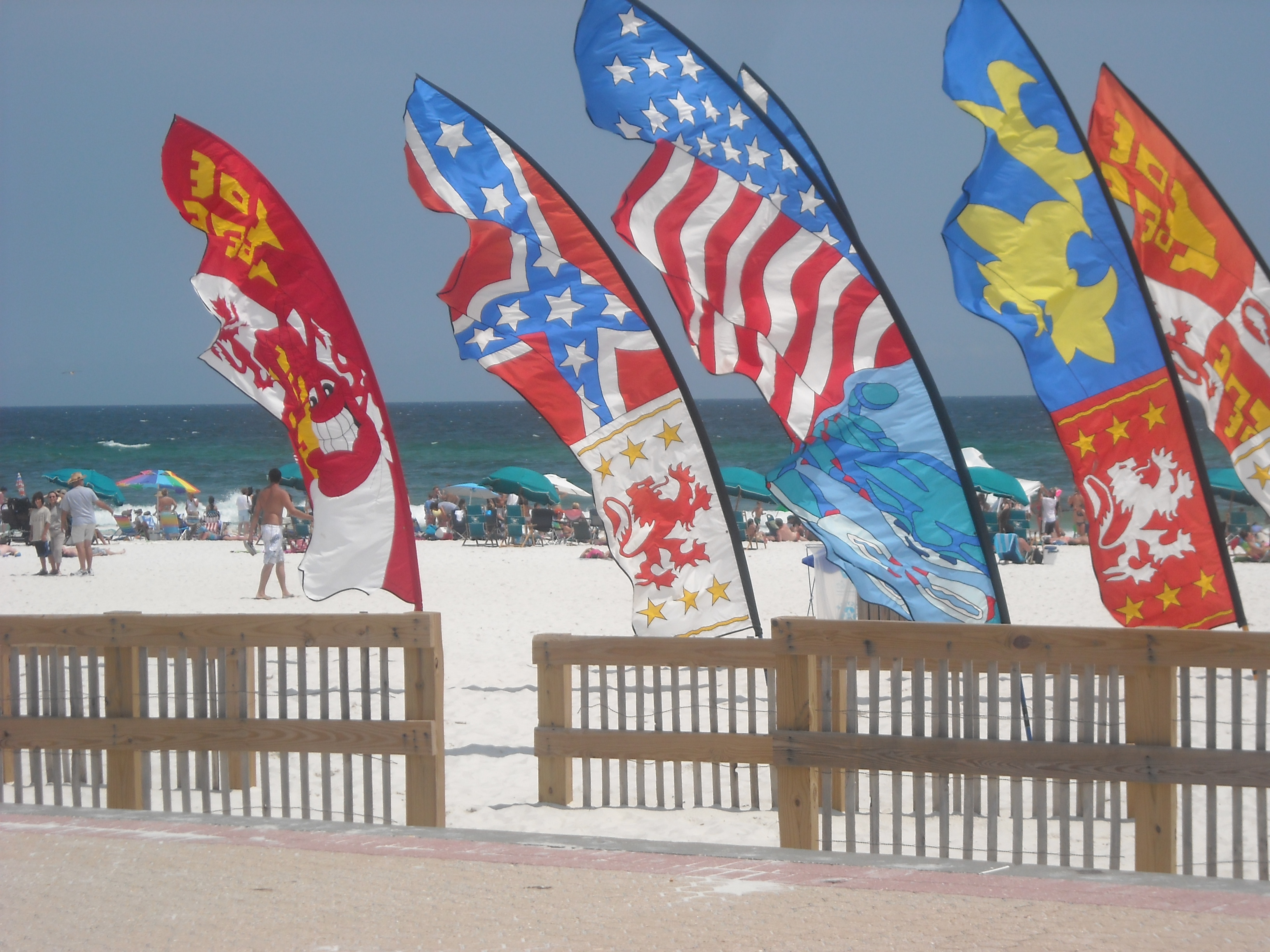
Pensacola BeachMy parents moved to Pensacola as retired military. Nearby Pensacola Naval Air Station gave them access to the commissary, officer’s club, and other amenities. They were smitten, as are so many visitors, with the incredible beauty of the Gulf coastal region and relaxed Southern lifestyle.

After moving to Tucson in 1999, I began annual treks to the beach and back, linking me to what at first glance appears to be environments at opposite ends of a moisture continuum: desert to marine systems. But I began to find uncanny parallels:

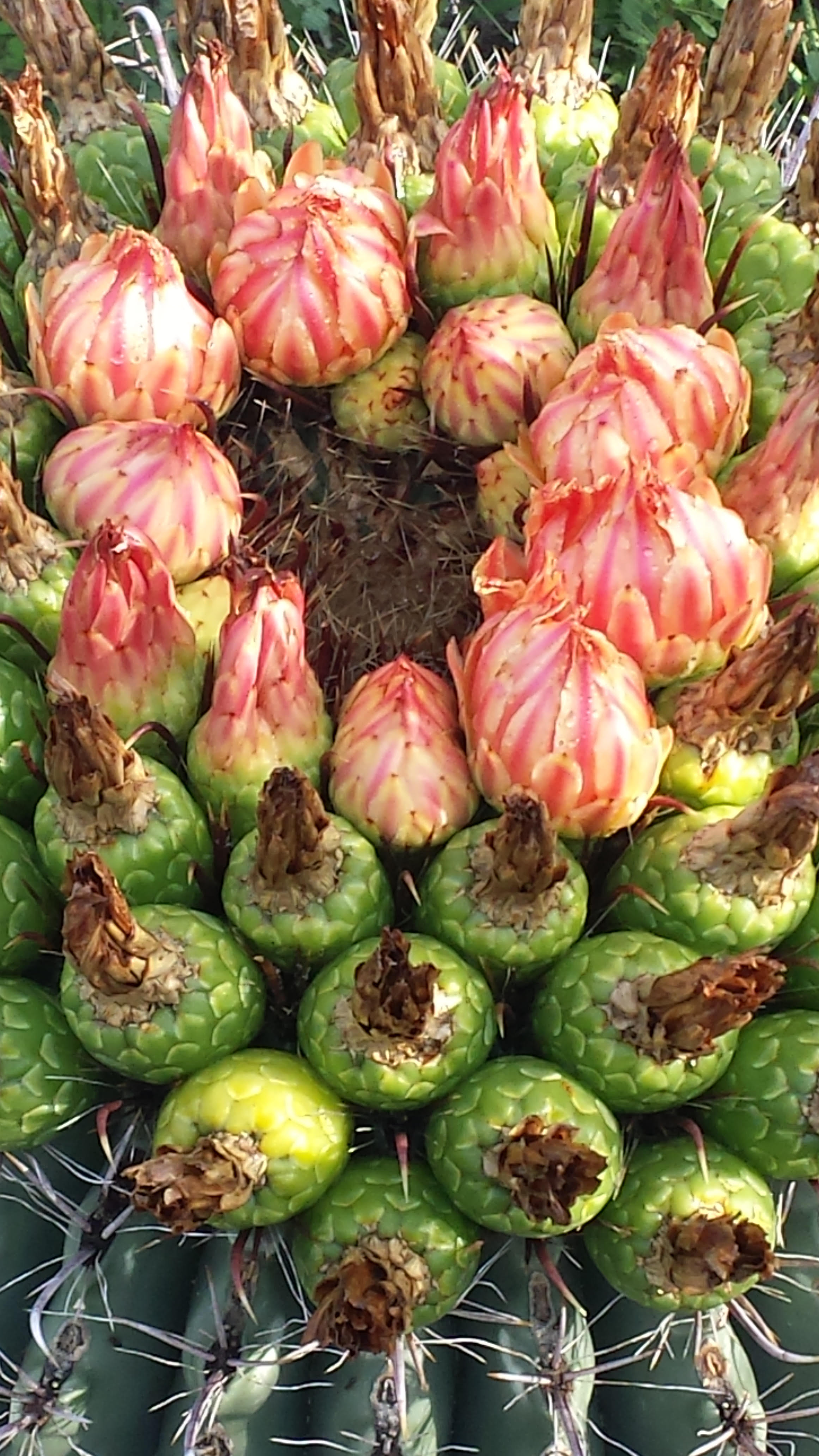
  • Barrel BlossomsThe spectacular high desert of Tucson with its tropical blooming cacti and tall saguaros, evolved from a subtropical environment as recently as 8,000 years ago – America once had a large inland sea in the Midwest;
  • The Gulf and coastal environs evolved from a dry savannah that supported lions, elephants, and other megafauna that thrive in dry, hot weather;
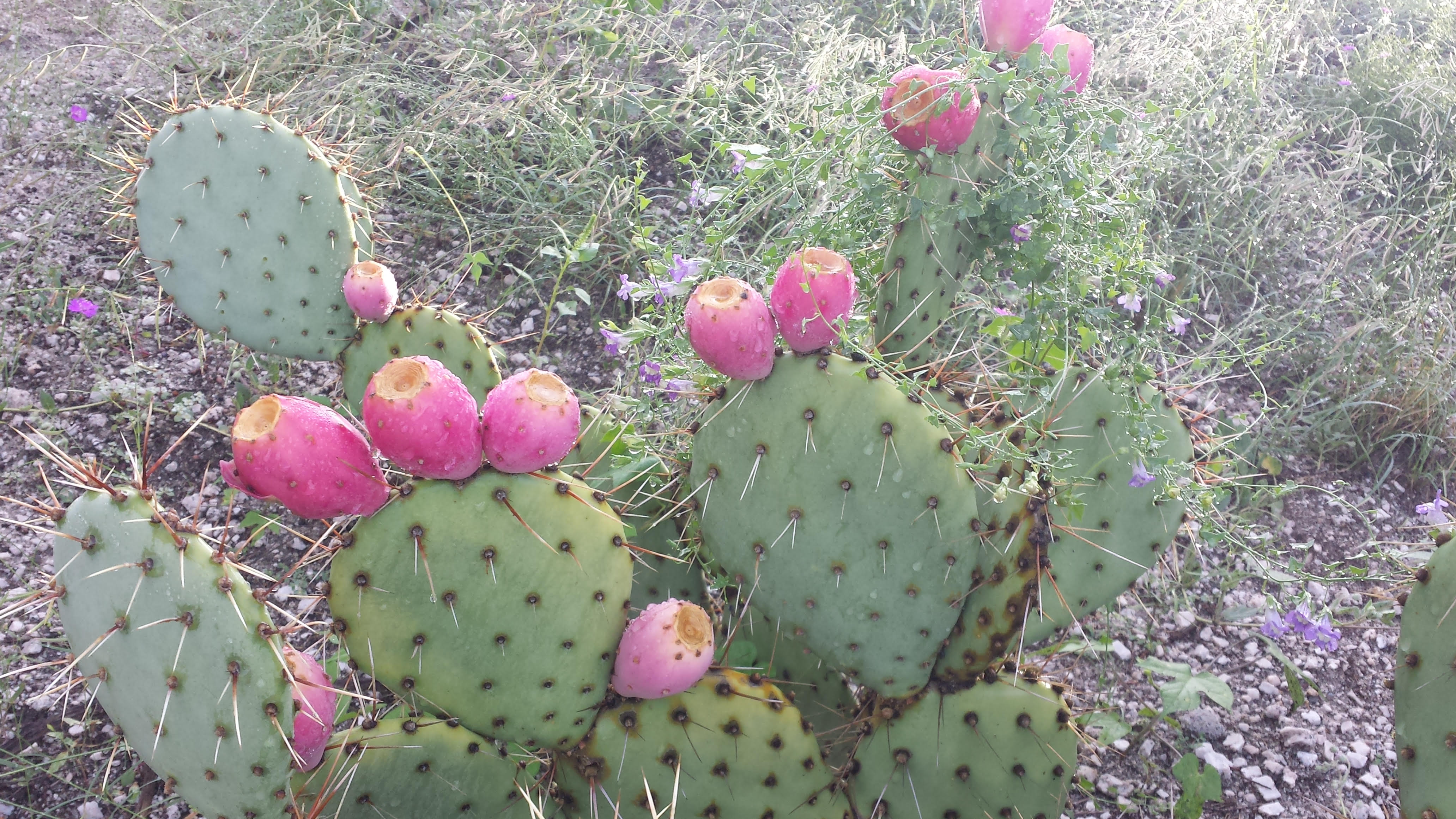
  • The desert hills of Tucson and the sugar white dunes of Pensacola both support prickly pear cacti and similar species of horny toads!

    Prickly Pear Fruiting
    Prickly Pear Fruiting

I also found that we are on very close latitude lines: Tucson is   32.2217° N and Pensacola is 30.4213° N.


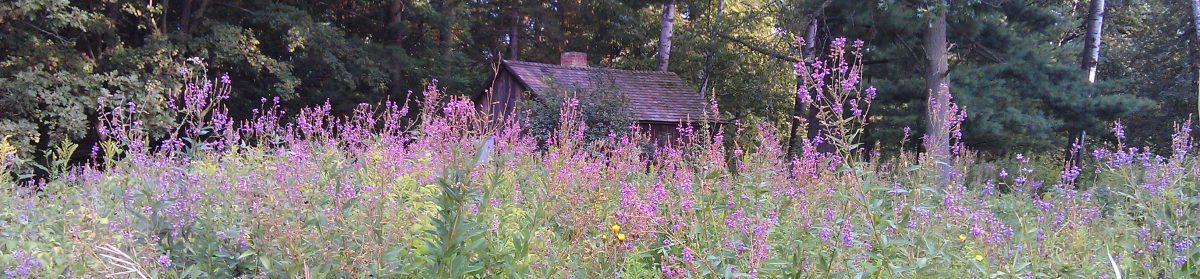
Where I live!
Where I live!

Strains of Jimmy Buffet come to mind:

It’s those changes in latitudes,
changes in attitudes nothing remains quite the same.
With all of our running and all of our cunning,
If we couldn’t laugh, we would all go insane.

Right of Passage in a Monsoon Storm

moth-daturacroppedWhen I fist moved to Tucson, Arizona, I was new to the high desert. Biologists refer to its flora and fauna as “lush”–a term that up until then I would not have chosen for a desert.

Through colleagues at the Arizona-Sonora Desert Museum, I learned about a poetry reading at University of Arizona by Dr. Ofelia Zepeda, 

Dr. Zepeda is a member of the Tohono O’odham Nation, a lifelong desert dweller, a linguist, and cultural preservationist. In 1999 she was awarded the MacArthur Fellowship for her work creating a Tohono O’odham book of grammar. However, Dr. Zepeda’s poetry is what I wish to focus on and how the chance encounter with her performance in the first week of my residency in Tucson led to my deep feeling for a place and community as culturally rich as any I’ve known.

The poetry reading took place in the circular auditorium (kiva) in the American Indian Studies Department at U.A. In the large room with rows pitched down toward the lectern in its center, a soft voice rose and fell. Dr. Zepeda’s was reading from her book, Ocean Power She spoke in O’odham and English, alternating between each as she read.  I closed my eyes to listen to the language of desert communities at Tucson’s origin.

She explained the relationship of her family and community to rain in the desert, its precious nature, and how, after the long hot, dry foresummer, the first monsoon clouds gather, and people point and wait for the first cold dollops of rain.

After her lecture, I walked to my hot, dusty car to drive home. Not long after I was on the road, a massive monsoon cloud, as black as coal, threw lightening strikes like explosions on the ground, and rain burst from the sky, falling n buckets, cleansing the car and blinding my sight. I had to pull over. Flood waters gushed around drains, cars stalled as the water rose, but all the people smiled behind their windshields or stood outside their vehicles with open arms, letting the storm soak them to the bone. It was a celebration, first delivered through Dr. Zepeda’s poetry and, then, by the monsoon itself.  I believe to this day that hearing about rain on the desert in O’odham made the impact of the storm much deeper for me. It was a true rite of passage. Listen to a short video about Dr. Zepeda.


Ecopoetics and Anne Waldman

Pensacola is blessed with many strong writers and poets. The West Florida Literary Federation leads the region in advancing the creative spirit. That includes supporting a Poet Laureate. Jamey Jones is the current Poet Laureate in Residence. He and the Federation brought my attention to Anne Waldman.

That I had never heard of Anne is both a testament to my ignorance and to the important role of the Federation in enriching individual artists’ and the public’s experiences in the arts.

From CNN - http://www.cnn.com/2016/01/08/living/manatee-endangered-species-feat/
From CNN – http://www.cnn.com/2016/01/08/living/manatee-endangered-species-feat/

Check out Anne’s moving Manatee Humanity. Her reading introduced me to the potential of poetry to advance understanding and compassion for a fellow mammal.

Anne talks about an encounter with a manatee in an aquarium in Florida.  In other interviews on her website, Waldman describes Ecopoetics, a term I had never read.  While you are on Waldman’s website, click around to listen to other performances. You are in for a treat and a powerful force for good. There is nothing ambivalent about Anne.

More:

The Eye of the Falcon