
that the world should become so immune to its own losses seemed inconceivable 25 years ago. Now that we have re-learned how remarkably obtuse humankind can be when dazzled by monetary and material gain, we must shine the light all the brighter on the singularity and prescience of Schumacher’s work and vision.
–Paul Hawken in “Small is Beautiful: Economics as if People Mattered: 25 Years Later…
When I first read Small is Beautiful by E.F. Schumacher, it was 1981. I was concerned then by food security and exploring why hunger and poverty persist. At that time, I was leading a community effort to raise funding for hunger relief with the goal that at least some of it would be invested in longer term solutions. That project is the Harry Chapin Run Against Hunger, now in its 46th year.
Schumacher called his understanding of sustaining economics as “economics as if people mattered.” He was a British Economist who had identified the most effective size and orientation for production to address the needs of the community where it operates.
He showed in real time examples that the ideal size for a company was no more than 500 employees. A company that size can achieve economic wealth while improving the lives of employees and contributing to the community it impacts.
As time progressed, and I studied to become an environmental educator, his research and understanding about “economics as if people mattered,” I saw these principles at work in nature Herself.
On Earth five principles of sustainability are followed. 1. a limitless, nonpolluting energy source; 2. avoidance of over drafting the carrying capacity of an ecosystem;3. maintenance of biodiversity generation to generation; 4. recycling of waste; and 5. adaptation to change.
We are operating at a deficit.
The World Meteorological Organization (WMO) has released its 2026 report on the state of heating of the Earth and contributing factors. Here is the Press Release.
The Global Annual-to-Decadal Update also takes a look at the observed climate over the past five years and gives regional predictions for temperatures and precipitation over the next five years.
Annual global mean near-surface temperatures during 2026–2030 are predicted to range between 1.3°C and 1.9°C above the 1850-1900 average. It is likely (86% chance) that one year between 2026 and 2030 will surpass 2024 as the warmest year on record, according to the update.
It is very likely (91% chance) that the global mean near-surface temperature will temporarily exceed 1.5°C above the 1850-1900 average levels for at least one year between 2026 and 2030. This level was also temporarily exceeded in 2024, when the global average surface temperature was about 1.55 °C above the pre-industrial baseline.
It is likely (75% chance) that the 2026-2030 five-year mean will exceed 1.5°C above the 1850-1900 average. It is considered exceptionally unlikely (less than 1%) that any single year will exceed 2°C above the 1850-1900 average in the next five years.
Everybody and everyone will be impacted due to this global heating mostly from fossil fuel burning which through the industrial age to the tech age has exceeded the carrying capacity of the Earth’s ecosystems. We are seriously overdrawn on all measures of sustainable living.
The operational principles of Mother Earth’s body from which we all derive our lives, give us the signs to follow now. While we as yet cannot remove the greenhouse gases already in excess, we can at least stabilize our climate by countries switching as quick as possible away from burning fossil fuels.
Meantime, its all about adaptation. How we live, what we eat, how well we care for our families and others, and having the right kind of leaders in place.
America is in a world of hurt from an ignorant and ideologically driven autocracy forced on its citizens by traitors to our government and people. So here we must work at all levels to adapt. Innovative ideas for reducing our impact on nature (i.e. fresh and ocean water; soil quality; affordability; homes that make their own energy; grid development for clean electrical sources; moratoria on any technology that threatens the well-being of all life on earth; thinking outside the box of conventional thinking…these all can generate exciting new jobs for upcoming generations. Lets get to that.
To be continued …
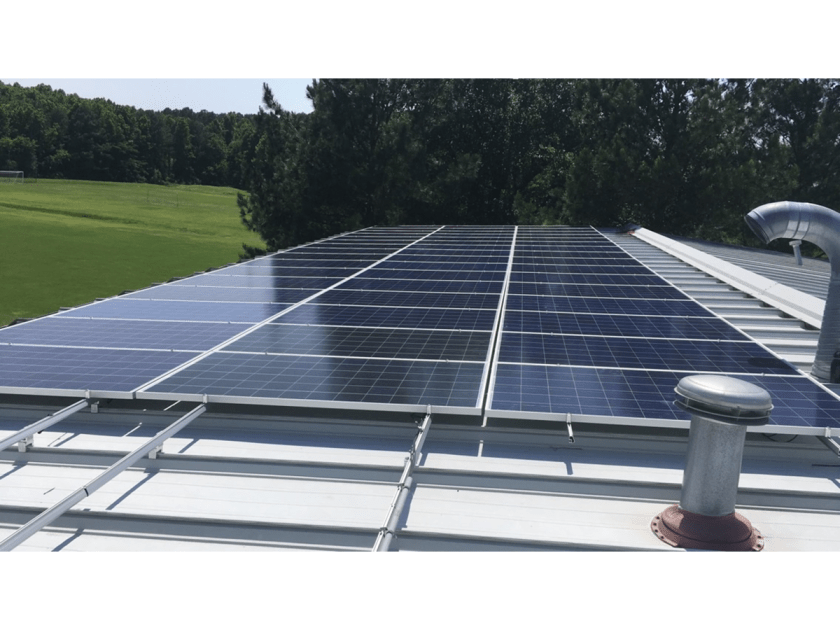
Photo above from Norfolk Academy in Norfolk, Virginia. All new public schools should install roof top solar and existing schools can install on schools when they replace the roofing. Just put into policy.

 Susan Feathers
Overdrawn is a great word for this blog. We are careful not to be overdrawn on our checking account, not so careful on robbing one priority (climate change) to pay for another (making money a lot of money). Bill use to consider himself a Rockefeller Republican, fiscally conservative, socially compassionate. Balanced. Betty
>
LikeLiked by 1 person
Bill was wise in those choices. Money is not evil per se; its how it builds better lives for everyone.
LikeLike
Susan you are so perceptive. I too am a fan of Small is Beautiful. I used Schumacher’s work extensively in The Ecology of Childhood. I had almost forgotten in the craziness of our current situation.
LikeLiked by 1 person
He was so far ahead of his time. Now, we must come together to make the changes in our government that will effectively prevent greed and focus the country on our shared future. I foresee a broad new America following in the rubble left by greed and unbridled power. We can make something much better that is new and wise to meet the challenges we collectively face in climate change.
LikeLike